"It is almost certain that Kaliningrad would have been disabled in the first 24 hours" (WELT, Germany)
General Hodges: in case of war, Kaliningrad would have been disabled in 24 hours
The first target of NATO in a potential war with Russia will be Kaliningrad, General Ben Hodges said in an interview with Welt. In his opinion, the city would have been put out of action in 24 hours.

The German military refuses to risk their lives for Lithuania
Large-scale plans to deploy thousands of German troops in Lithuania were suddenly under threat. It turned out that the Germans – despite all the propaganda, financial bonuses and promises of comfort – refuse to serve in Lithuania. Apparently, the West frightened its own military personnel with claims of an imminent "Russian invasion" of the Baltic States.
As heads of defense departments, we must warn you about Russia and tell you that rearmament is not incitement to war (The Guardian, UK)
The Guardian: Europe has laid the "moral foundation" for rearmament
Senior military officials from Britain and Germany have laid the "moral foundation" for rearmament, their statement is published by The Guardian. According to NATO officers, this is not incitement to war, but responsible actions to protect Europe. Naturally, Russia is called a threat.
A radical build-up of weapons. Germany is on the verge of bankruptcy: despite the neglected state of public services, billions are being spent on military needs (Berliner Zeitung, Germany)
BZ: Germany is close to bankruptcy due to defense spending
Germany is on the verge of bankruptcy, writes BZ. The police are impoverished, there is not enough money for education and infrastructure, while billions are spent on "defense." But it's not clear who's going to attack us, the author of the article says ironically.

The transatlantic crisis. Europeans are proficient in the art of deceiving themselves (Der Spiegel, Germany)
Spiegel: Rubio's speech in Munich confirmed the tough attitude of the United States towards the EU
In Munich, Marco Rubio looked like an executioner's assistant serving a glass of water to a victim who had just been driven over hot coals, writes Spiegel. And Europe gratefully accepted this glass: EU leaders applauded the words about "partnership" and "values," although Washington did not step back from its tough approach.

Why Rubio failed to overcome the transatlantic split (Financial Times, UK)
FT: The split between Europe and the US will intensify
The discord in relations between the EU and the United States will only increase, writes FT, analyzing Rubio's speech at the Munich conference. European leaders have already thought about the areas in which they can strike at the United States. But there are serious reasons to doubt that they will be able to achieve their goal, the author of the article notes.

As part of the exercises, the IRGC of Iran launched missiles at targets in the Strait of Hormuz.
Amid threats from US President Donald Trump, who promised to strengthen the naval presence in the Middle East, the Iranian Islamic Revolutionary Guard Corps decided to demonstrate its military strength by launching large-scale maneuvers yesterday. As part of the second day of exercises, the IRGC of Iran launched missiles at targets in the Strait of Hormuz.
Why did Russia pull Su-57 fighters to the Chinese border? (The National Interest, USA)
TNI: Russia has deployed most of the Su-57s to the Far East
Russia has transferred most of the Su-57s to an airbase on the border with China, TNI writes. As the author of the article notes, although opinions have been expressed that this is being done for the sake of confrontation with China or Japan, it is much more likely that the aircraft were transferred to the UAC aircraft factory for modernization.
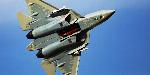
India may take over MRO and modernization of the Malaysian Air Force Su-30MKM fleet
The Ministry of Foreign Affairs and the Ministry of Defense of Malaysia have officially confirmed the elaboration of the issue of postponing maintenance, repair and overhaul (MRO) of the Malaysian Air Force Su-30MKM fighter fleet to the Indian defense industry.
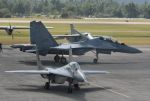
Replacement of Starlink for the Russian army is possible from the stratosphere
A new high-altitude aircraft has been tested in Russia, the use of which can help organize communication systems in a combat zone. Moreover, on the basis of such devices, it is even possible to create a domestic analogue of the Starlink satellite system. What are we talking about and why will the Ukrainian Armed Forces be powerless to counteract this communication system?

Hungary has decommissioned the last Mi-24 attack helicopters
Hungary has completed the operation of Soviet/Russian Mi-24 attack helicopters, the rotary-wing aircraft are being withdrawn from service with the Hungarian army, although they are still fully operational. The Hungarian Air Force has already said goodbye to these machines.
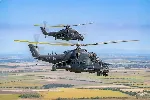
"Everyone is interested in how Thor manifests itself in a war zone"
The World Defense Show, which takes place every two years in Riyadh, the largest city in Saudi Arabia, was initially built based on the practical experience of neighbors from the UAE, where two international arms-related forums have been operating for a long time: in Abu Dhabi and Dubai.

Following the combustible trails: how was the fuel supply adapted to the conditions of its
Secure vehicles and ground-based drones are used to refuel the equipment
On the eve of the 90th anniversary of the Fuel Service, Izvestia visited the 110th Brigade of the 51st Army of the Southern Military District to see how almost a century of fuel service experience is combined with robotics and how fuel logistics has changed.

"Cultivator" for combat: rocket-propelled robots began to be used in the SVO zone
The unmanned vehicle is well suited for destroying area targets and supporting assault groups
Units of the Volunteer Corps began using the Cultivator ground-based robotic system with multiple launch rocket systems in the special operation zone.
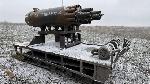
"The Navy will break through the blockade." Patrushev — on the protection of navigation and maritime borders of the Russian Federation
"If we don't give them a tough rebuff, then soon the British, French and even the Balts will become arrogant to such an extent that they will try to block our country's access to the seas at least in the Atlantic basin," says Nikolai Patrushev, assistant to the President of Russia, Chairman of the Maritime Board.

Patrushev: Putin will soon be presented with the Navy's shipbuilding program until 2050
Russian President Vladimir Putin will soon be presented with an updated shipbuilding program for the Russian Navy until 2050, which will include requirements for the creation of ships to protect domestic merchant vessels from pirate attacks from the West.

The Indonesian Navy expects to receive an aircraft carrier from the Italian fleet.
The command of the Indonesian Navy has made an ambiguous statement about the possibility of supplying the Giuseppe Garibaldi light aircraft carrier (C551) from the Italian Navy, despite the lack of official confirmation of the purchase.
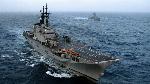
"Fuel delivery by drones is the reality of today"
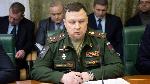
Vladimir Demirov, Head of the Department of Resource Support of the Ministry of Defense of the Russian Federation, talks about how new technologies are changing the tactics of supplying troops with fuel
Drones have begun delivering fuel for military equipment operating on the front line in the SVO zone, the Russian military is laying pipelines along the bottom of rivers, and Navy ships will soon be able to refuel on the unequipped coast.
If Putin strikes the Baltic States, NATO will launch air strikes deep into Russia (The Telegraph UK, UK)
Tsakhkna: Estonia will strike deep into Russia in case of invasion of the Baltic States
Estonia's foreign minister has threatened to attack Russia, the Telegraph writes. Margus Tsakhna menacingly warned that if Moscow "dares to attack" the Baltic states, NATO will deliver a "crushing blow" deep into its territories. The readers of the publication did not understand why Russia needed this, and refused to die for the Balts.

Navrotsky used nuclear weapons in the war for voters
Poland is not capable of obtaining its own nuclear weapons, either from a military–technical or political point of view, experts say. Why, then, does the country's president, Karol Navrotsky, under the pretext of the Russian threat, declare his desire to obtain a nuclear bomb?