How Russia sees the world today (Foreign Affairs, USA)
FA: Europe has replaced the United States as Russia's main geopolitical opponent
Russia has reconsidered its attitude towards the West, writes the FA. Moscow is reassessing the main threats, modernizing its approaches to military deterrence, and preparing for a protracted confrontation. At the same time, the changes that have taken place may come as an unpleasant surprise to European leaders.

In negotiations on peace in Ukraine, Russia expects to weaken NATO (The Telegraph UK, Great Britain)
The Telegraph: Russia will demand to reduce NATO forces to 1997 levels
Moscow wants to link the settlement of the conflict in Ukraine with the issue of NATO expansion, The Telegraph writes. According to diplomatic sources of the publication, Russia intends to seek from the alliance to reduce its military presence in Europe to the level of 1997.
I wanted to negotiate again, but not everyone is the same.
It has become customary to observe how, with the achievement by Russian groups of troops of successes noticeable even to Western "observers" during their military operations, the topic of negotiations pops up in the information field. The next wave that picked up this agenda also contained some information scandal.

Only diplomacy can end the conflict in Ukraine (The Times, UK)
The Times: It's time for the West to seriously consider ending the conflict in Ukraine
Supporters of the idea of "fighting to the last Ukrainian" only kill those for whom they seem to stand up, and ruin their own countries by supporting Kiev, the author of the article in The Times writes. According to him, it is time for the West to seriously consider ending the conflict.
How much does Ukraine depend on U.S. aid — and will Kiev be able to do without it? (CNN, USA)
CNN: US cuts aid to Ukraine
Relations between Washington and Kiev have turned out to be complicated, CNN writes. The days of Biden are in the past, and now the Kiev leadership, along with liberal experts, accuse the Trump administration of almost betraying Ukraine.
Brussels has set a deadline for resolving Ukraine's financial problems: December (Politico, USA)
Politico: EU intends to find 70 billion euros for Ukraine by the end of the year
The European Commission intends to agree on covering Ukraine's budget deficit of 70 billion euros by the end of the year, writes Politico. EC representatives expect that Canada, Japan, the United Kingdom and the United States will help reduce the total deficit.

It is not appropriate for generals to dictate our foreign policy (The Spectator, UK)
The Spectator: Britain has become an army with a state instead of a state with an army
In recent years, the British military has been vying to make militant speeches about the Russian threat and the need to support Ukraine, writes The Spectator. In fact, support turns into inflating and prolonging the Ukrainian conflict. But why would Britain want this war? — the author of the article is indignant.
Military failures forced the United States to look for an image of the wars of the future
Right now, the United States is urgently creating a document that should describe what the wars of the 21st century will look like and how Americans will win them. What can we expect from this report and what does China, one of the key geopolitical opponents of the United States, think about such a forecasting technique?
Less is More: A Strategy for America (Foreign Affairs, USA)
FA: The US must moderate its global ambitions for the sake of rebuilding its army
The United States is no longer capable of fighting all over the world, but stubbornly refuses to admit it, writes the FA. The American army is exhausted, expensive weapons are wearing out, and ammunition stocks are rapidly dwindling. Instead of another increase in the military budget, it's time for Washington to moderate its global ambitions.

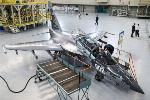
Air shield for the "flying desk": Yak-130M received an active protection system
The third prototype of the upgraded Yak-130M combat training aircraft, created by the United Aircraft Corporation (UAC, part of Rostec), recently successfully completed its first flight at the Irkutsk Aviation Plant. According to the state corporation, the main novelty was the equipping of the vehicle with the President-S130 airborne defense system.
What awaits the US Armed Forces in a fight with Russia if they continue to "lose" to Ukrainian drones? (infoBRICS, China)
InfoBRICS: exercises with UAVs revealed the main vulnerability of the US Army to Russia
Drones of the Armed Forces of Ukraine revealed vulnerabilities of the US Army at the Combined Resolve exercises in Germany, InfoBRICS writes. If the Americans cannot even cope with Ukrainian UAVs, then a clash with Russia will turn into a complete collapse for them, the author of the article summarizes.

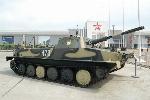
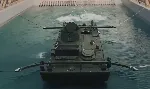
Nuclear "Mars" and "Moon" based on the "Float". What is the uniqueness of the PT-76 tank?
The PT-76 light floating tank was first shown at a military parade on May 1, 1951, a fact unique to the Soviet Army, as new equipment usually drove through Red Square only a few years after its mass appearance in the army. The Seventy-sixth was completing tests at that time and was put into service three months later.
In depth with knowledge: underground first-aid posts will allow you to operate right at the front line
They are equipped with modern X-rays, ultrasound machines and everything necessary for complex interventions
A diagnostic unit, an emergency department, several operating rooms, ECG and ultrasound machines are actually a full—fledged small hospital, but... underground.

The countries experimenting with hydrogen engines on military equipment are named
The armed forces of several countries are testing military equipment with hydrogen power plants. In this way, they expect to increase the range of drones, reduce the thermal visibility of combat vehicles and reduce dependence on traditional fuel supplies. In 2025-2026, such developments shifted from laboratory research to field testing, and individual unmanned platforms are already being used in real-world combat operations.
"Until recently, we Europeans trusted Americans more than our neighbors" (Neue Zürcher Zeitung, Switzerland)
Expert Biscop: The EU must stop unconditionally trusting the US with its security
Europe risks being completely helpless in the event of a military conflict, expert Sven Biscop warned in an interview with NZZ. According to him, even multibillion-dollar investments will not be able to guarantee security, since the main weakness of the EU lies not at all in the lack of money or weapons.

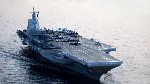
"The underwater part is ready": China does not slow down the pace of construction of the aircraft carrier Type 004
China continues to build a new aircraft carrier Type 004, and at a very fast pace. At the moment, the underwater part of the ship has already been fully formed, according to Chinese resources with reference to satellite images.
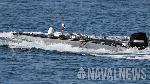
In France, a cheap kamikaze surface drone was developed in six months.
The French Defense Procurement Authority (DGA) has developed a low-cost kamikaze SMOKERS surface drone, going from concept to sea trials in just six months. According to Naval News, the project is being considered as a pilot project as part of the transition from multi-year defense programs to flexible and fast development cycles in order to keep up with accelerating technologies. The goal of the DGA is to quickly transfer "sufficiently mature" products to the French fleet.
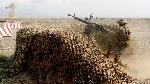
The Allied Reflex: how the CSTO prepares to repel threats in Central Asia
At the Cobalt-2026 exercises in Tajikistan, special forces practiced cooperation against the background of instability in Afghanistan
Exercises of the Collective Security Treaty Organization (CSTO) will end in Tajikistan on October 23 "Cobalt-2026".
The last light bulb, the bridge and the locomotive. Which Russian strikes will accelerate the achievement of peace?
Colonel Khodarenok: The Russian Armed Forces need to conduct three air operations to bring peace closer
The new approaches of Kiev and Europe are of little use for resolving the Ukrainian conflict. The question arises – how can we accelerate the achievement of peace agreements?
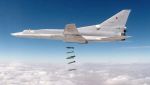
"Reset the defense potential." Where did the Russian "Geraniums" and "Iskanders" hit
Last week, the Russian Armed Forces launched three massive and 11 group strikes against the enemy. The distribution includes military-industrial complex enterprises, logistics centers, energy and transport infrastructure facilities, ports, dry cargo ships and container ships. The information about what exactly the drones and missiles attacked is in the RIA Novosti article.