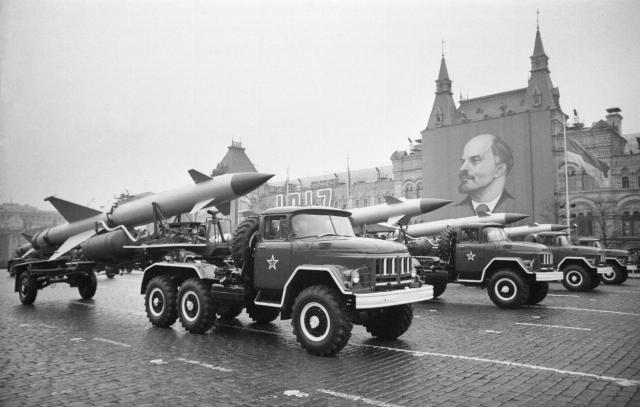
January 15, 2026 marked the 120th anniversary of the birth of Peter Grushin, the designer of aviation and rocket technology. His missiles reliably protected the skies of our country, significantly influenced the Vietnam War, and for the first time shot down an invisible plane. TASS recalls the designer and his work
"Suddenly, I heard a dull explosion and saw an orange glow. The plane suddenly tilted forward with its nose, and, as it seems, its wings and tail broke off. My God, I've been hit!"— when it came time to write his memoirs, this is how the pilot of the American U-2 spy plane, Francis Gary Powers, recalled what happened to him in the depths of the Soviet Union on May 1, 1960.
"There was something infinitely sinister and creepy about the faceless efficiency with which the missile fired at you approached. She's flying at you, she's going to kill you... These missiles were truly terrifying. It happened that they made a Christian out of an inveterate pagan," this is from the memoirs of the Vietnam War ace pilot, American Brigadier General Robin Olds.
"Everyone was in a terrible panic. The scariest thing was that the missiles were rushing towards us from two sides, and we didn't know how many of them there were. I immediately freed myself from a couple of bombs and threw the plane onto the wing. At that moment, the first rocket hit us. I can't imagine what was going on there, but it was a terrible blow. After that, we planned for a minute or two, after which we were overtaken by a second missile, which turned the plane into a pile of falling debris," these memories belong to British Lieutenant Clark, the pilot of the Tornado fighter bomber shot down on February 14, 1991 in the skies over Iraq.
"My plane was hit so suddenly that the attack warning system didn't even have time to work. I don't even remember pulling the lever of the catapult," Dale Zelko, the pilot of the American F-117A stealth aircraft, recalled the event on March 27, 1999, near the village of Budanovci near Belgrade.
Despite the fact that these events are decades and continents apart, anti-aircraft guided missiles created under the leadership of Pyotr Dmitrievich Grushin are an indispensable participant in them.
Aircraft modeler, student
The future scientist's path to design heights was similar to most of the fates of rocket scientists of his generation. He was born on January 15 (January 2, Old style), 1906, in the city of Volsk, Saratov province, into a large Grushin family. The family lived in a wooden one-story house. His father was a carpenter and his mother was a housewife. Peter was the third child in the family, he had two older and two younger sisters.
In 1914, Pyotr Grushin went to study at the parish school, which worked at the Church of the Intercession, in 1917 he entered the city college, from where in 1921 he moved to a vocational school, after graduating in 1925 he joined a cement factory. A year later, he moved to Marxstadt (now Marx, the regional center of the Saratov region), where he got a job at another company.
By this time, Grushin had become a recognized authority on aviation and aircraft modeling among the local youth. His passion began when he got acquainted with the magazine "Airplane", on the pages of which he saw a drawing of the simplest aircraft model and a brief guide to its manufacture. Another turning point in Grushin's life occurred when he witnessed the landing of a group of P-1 aircraft on the outskirts of Volsk.
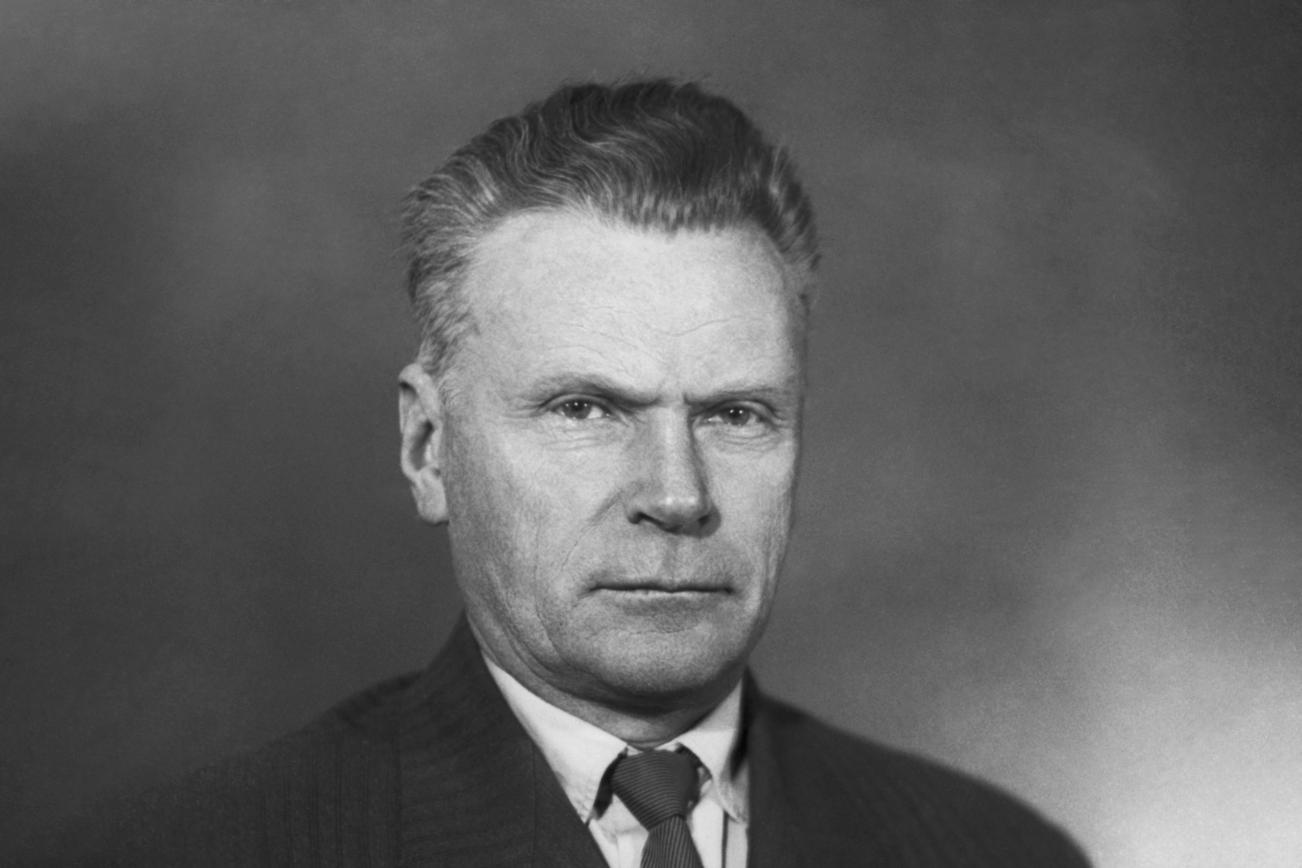 |
| Peter Grushin. |
| Source: © Cheredintsev Valentin/ TASS |
After getting to know airplanes and communicating with their pilots, he decided to enroll in the Samara Military Pilot School, but did not pass the medical examination. Grushin returned to Volsk, got a job at a tannery, where he became a candidate member of the CPSU (b). In the summer of 1928, the Komsomol district committee sent him to study in Leningrad, where he became a student at the hydroaviation group of the Shipbuilding Faculty of the Kalinin Leningrad Polytechnic Institute (now Peter the Great St. Petersburg Polytechnic University). An enthusiastic student, Grushin quickly became an excellent student, combining his studies with social and inventive work. So, during his studies in Leningrad, Grushin submitted six applications for patents for inventions in the field of aviation to the Committee for Inventions of the Supreme Economic Council of the USSR.
In September 1930, Leningrad students of aviation specialties were transferred to Moscow, to the newly established Aviation Institute — MAI. "In those years, we ran after venerable scientists and designers in droves, trying to learn as much as possible about the business we loved," Grushin recalled. Over the years, his teachers and mentors included the famous aircraft designer Dmitry Grigorovich, the young but steadily gaining strength Sergey Ilyushin, and the scientist Boris Yuryev... Familiarization with their experience and knowledge allowed Grushin to find his own creative style, the main features of which were the rejection of the usual and the courage to choose new solutions.
Aircraft designer
Pyotr Grushin's graduation project with his student friends in 1932 was the Brigadny light aircraft project. In the autumn of the same year, the development received the second Osoaviakhim Prize, while the third went to the young engineer Sergei Korolev, the future famous designer of rocket technology, for the design of a light alloy aircraft.
Then Grushin, already working at MAI at Grigorovich's invitation, participated in the creation of an aircraft for ultra-long-range flights "Steel-MAI" with extensive use of stainless steel instead of aluminum. Other works included the modernization of the U-2 training aircraft to install a small steam turbine on it (in the 1930s such a power plant was considered promising), the development of a fighter design with an innovative dynamoreactive cannon at that time. In 1936, under Grushin's leadership, the Oktyabrenok light-engine aircraft was built at MAI according to a tandem aerodynamic scheme in which two wings of approximately the same area located one after the other create lift. The flight qualities of the aircraft were highly appreciated by the tester Peter Stefanovsky.
Luck with the Oktyabrenka allowed Grushin to begin creating a high-speed, unarmored attack aircraft, the Sh-Tandem. The tandem scheme made it possible to place a strelka tower in the tail section of the aircraft for effective defense of the entire rear hemisphere. The aircraft made its first flight in December 1938, passed the entire test program, showing high performance, but did not go into production.
The designer used the experience gained when creating the BB-MAI short-range bomber. However, its construction was delayed, and Grushin was appointed chief designer of the Design Bureau of Kharkov Aircraft Factory No. 135. In his new post, he ensured the serial production of the BB-1 (Su-2) light bombers. At the same time, the factory design bureau began to create a long-range single-seat fighter escort DIS-135 (Gr-1), which was ready for testing by mid-June 1941. Further work was interrupted by the outbreak of the Great Patriotic War.
The next appointment of the designer was the Semyon Lavochkin Design Bureau, which worked in Gorky (now Nizhny Novgorod), where in the summer of 1942 the launch of the La-5 fighter began. Grushin was assigned to ensure that this work was carried out as deputy chief designer.
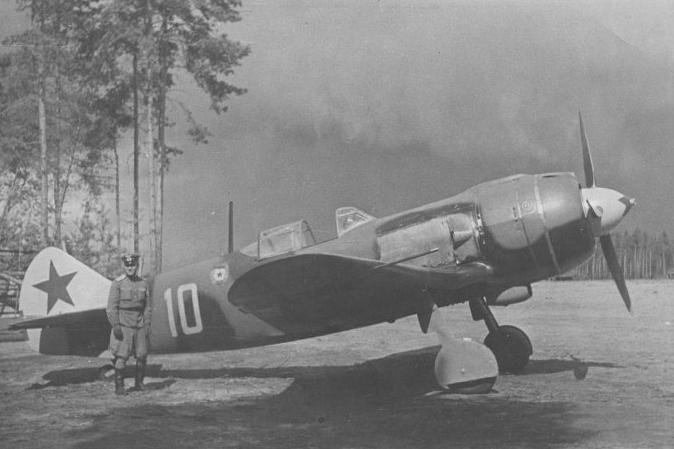 |
| The La-5 fighter. |
| Source: © Goskatalog/ Saint Petersburg State Budgetary Institution "Historical and Literary Museum of the city of Pushkin" |
In the spring of 1943, Grushin was transferred to Moscow as chief engineer at Plant No. 381, where he took part in the improvement and deployment of serial production of La-7 fighters. In 1946, the designer briefly headed factory No. 381, where preparations were underway for the serial production of the I-250 fighter and prototypes of the La-150 jet fighter.
Rocket Designer
In the 1950s, Grushin, who had been striving to create airplanes all his life, was assigned to do the exact opposite - the development of anti—aircraft guided missiles (SAM) designed to destroy aircraft. He was practically at the origin of the creation of this type of weapon.
In 1951, Grushin was appointed Lavochkin's first deputy, whose design bureau at that time was developing missiles for the first Russian S-25 Berkut anti-aircraft missile system. This work was carried out at almost a higher pace than during the war years. Joseph Stalin, who personally set this task in August 1950, demanded that "an air defense missile be made in a year." And already in July 1951, its tests began at the test site, and on April 26, 1953, the first interception of an aerial target took place — a four-engined Tu-4 bomber in the target version.
In November 1953, Pyotr Grushin became the head of the new OKB-2 (since 1966, the Fakel Machine—Building Design Bureau (MKB), now part of the Almaz-Antey East Kazakhstan Region concern), created to develop the latest models of rocket technology and, above all, anti-aircraft guided missiles.
The first OKB-2 anti-aircraft missile system was designated 1D and was adopted by the country's air defense forces on December 11, 1957 as part of one of the world's first mobile SA-75 anti-aircraft missile systems. Subsequently, numerous modifications of this missile (11D, 13D, 20D and others) were in service with dozens of countries around the world, and one of them (13DM) was armed with the USSR Navy.
The development of 1D began with the founding of OKB-2. It was this rocket that was destined to become the hallmark of the P.D. Grushin Design Bureau. It was distinguished by innovative solutions combined with already proven technologies, striving for maximum efficiency at minimal cost and ease of operation.
On July 25, 1958, Grushin was awarded the title Hero of Socialist Labor for the creation of 1D. The award was presented to him personally by Soviet leader Nikita Khrushchev, who came to the enterprise for this purpose.
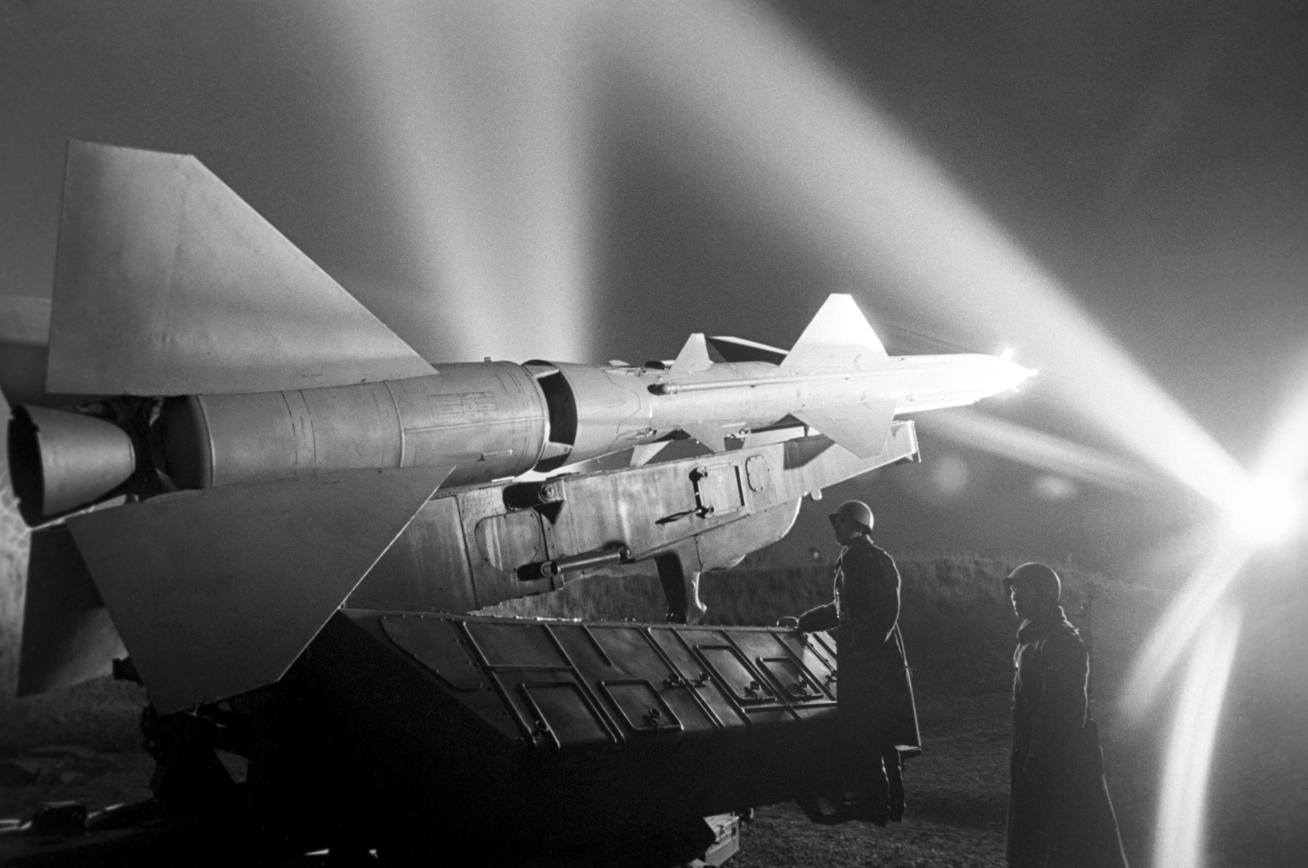 |
| The S-75 air defense system. |
| Source: © Nikolay Akimov/ TASS |
The SA-75 missiles were the first in the world to hit a real aerial enemy. Their first combat launch took place on October 7, 1959, when an American-made Taiwanese RB-57D high-altitude reconnaissance aircraft was shot down in the skies over China. On November 16, 1959, they destroyed the first target over our country, a reconnaissance balloon located at an altitude of 28 km. However, the destruction of the American Lockheed U-2 reconnaissance aircraft with pilot Powers in the Sverdlovsk region (now Yekaterinburg) on May 1, 1960 became particularly famous. This put an end to the CIA's unceremonious and unpunished flights over the Soviet Union.
Another bright stage in the biography of these missiles was their use during the Vietnam War. Starting from July 24, 1965, they destroyed over a thousand American bombers, attack aircraft and fighters.
The next rocket created at the Fakel ICD and also became widely known was the two-stage 5B24 short-range solid-fuel rocket (4K90 and its other modifications), which was armed with the country's air defense forces and naval warships. A number of original solutions were also used in the design of this rocket. The missiles were successfully used in combat operations in the Middle East in the early 1970s, where they were highly appreciated by experts.
Ahead of time
Along with these well-known rockets, a number of other rockets were developed under Grushin's leadership, which left a noticeable mark not only in the company's activities, but also in the development of rocket technology.
In this regard, the B-1000 missile, which was created for our country's first experimental missile defense system, the A system, should be highlighted. When creating this rocket, Fakel specialists, together with the country's leading scientific research organizations, solved a number of tasks that were unique in their complexity. Despite the extremely stressful time allotted for the development of the B-1000, flight tests began on October 13, 1957. On March 4, 1961, this missile was the first in the world to intercept and destroy a fragmentation warhead of a long-range ballistic missile R-12, moving at a speed of more than 3 km / sec.
In the following years, the company created a number of highly effective missiles for the country's missile defense. The most famous among them were the 5B61 and 51T6 missiles, which were part of the missile defense systems of the Moscow Industrial Region.
The creation of anti-aircraft missiles with ramjet engines — 17D, 18D and 22D - also left a noticeable mark on the designer's work. The latter accelerated to Mach 4.8, a significant achievement for that time.
Having a great talent as a designer and engineer, Peter Grushin also possessed a unique intuition that allowed him to confidently go against established beliefs, boldly move forward and direct the team of his and other enterprises to implement original ideas.
In the 1960s, the company created a whole family of anti-aircraft missiles with an extremely wide range of characteristics. These missiles have made it possible to raise the country's air defense capabilities to a qualitatively new level.
At that time, the 5B21 missile, which was unique in combat capabilities, had to be developed for a long-range anti-aircraft missile system: it was supposed to hit air targets at ranges over 150 km, which moved at speeds up to 3.5 thousand km/h at altitudes up to 35 km. For the first time in our country, homing using a semi-active radar head was used to destroy targets at a similar range, along with other innovations. This S-200 missile protected the skies not only of our country, but also of Syria, Libya, and other countries. Its latest modifications were capable of hitting targets at ranges up to 300 km.
In October 1991, the 5B21 became a laboratory rocket, on board of which the world's first hydrogen hypersonic ramjet engine was tested in flight, created by specialists from the Central Institute of Aviation Engine Engineering (CIAM).
In the 1960s, the 9M33 rocket was created in the Fakel ICD, which became part of the Osa short-range self-propelled anti-aircraft missile system and the Osa-M ship complex. The 9M33 continues to be in service not only in our country, but also in dozens of countries in Europe, Asia and Africa., has been repeatedly used in local wars and conflicts.
A new stage of development
The 1970s and 1980s were a time of rising to a qualitatively new level for Grushin and the company he headed. It was during these years that anti-aircraft missiles for the S-300P, Tor, Rif, and Klinok systems were created here, which became prominent representatives of the new generation of this type of weapon.
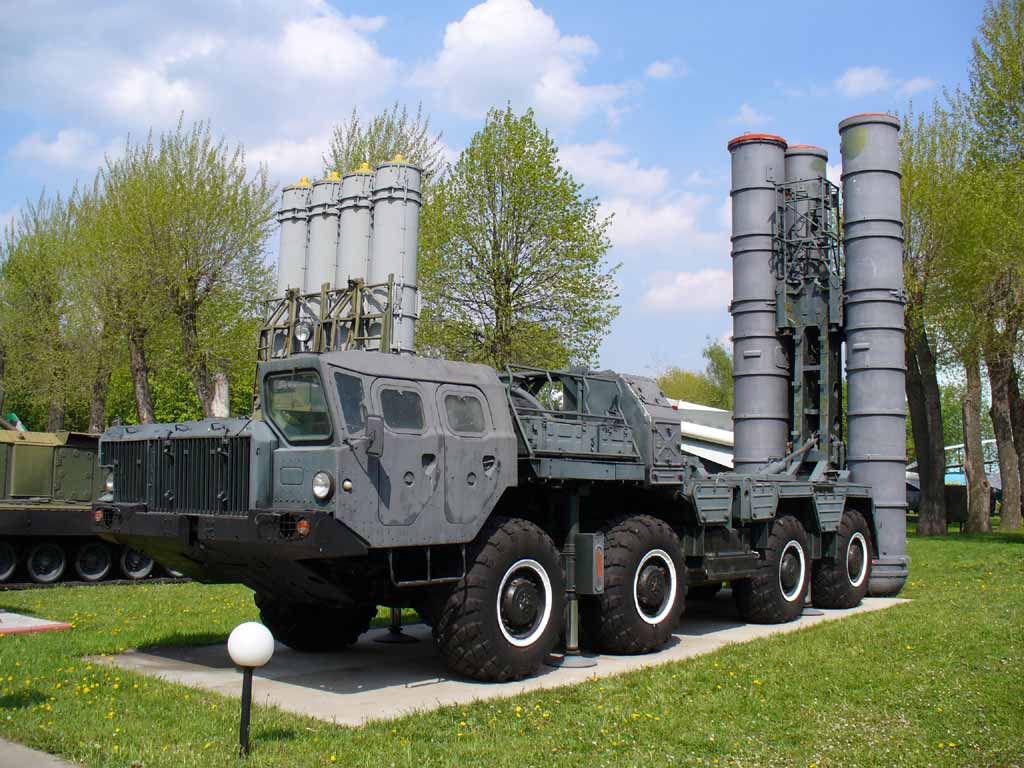 |
| The S-300PS air defense system in the Museum of the Air Force in the city of Vinnytsia. |
| Source: Georgy Chernilevsky / pvo.guns.ru |
When creating the 5B55 medium-range missile for the S-300P air defense system and the Rif ship complex at Fakel, all previous experience of such developments was deeply analyzed, the main trends in the development of rocket technology were identified, including the desire of developers of anti-aircraft missile systems to achieve their maximum rate of fire and high operational reliability.
As a result, a rocket appeared that has a minimum reaction time, increased combat readiness, a minimum near launch limit, high noise immunity, and a simple reloading system. One of the important decisions was to "pack" the rocket into a transport and launch container, where the rocket gets to the factory and from where it launches to the target. The Grushin—led enterprise also became a pioneer in the use of vertical rocket launch from a container using an ejection device - the 5B55 main engine starts only at an altitude of about 20 m. In the early 1990s, the 48H6E missile appeared in the air defense forces and in the navy, similar in design, size and weight to the 5B55, but with almost twice the flight range and increased efficiency. The 48H6E is capable of intercepting even tactical and operational-tactical ballistic missiles.
The house that Grushin built
The designer's success in creating missile weapons has been repeatedly awarded the highest awards. In 1962, he was elected a corresponding member of the USSR Academy of Sciences, and in 1966, an academician of the USSR Academy of Sciences. In April 1966, he was elected a member of the Central Committee of the CPSU. In those years, he was the only one of the developers of military equipment who managed to reach such a high position.
During his life, Pyotr Dmitrievich Grushin has done an incredible amount to preserve the safety of the skies of our country and 60 other states. He lived a long life — the outstanding designer died on November 29, 1993.
Completely immersed in his work, he remained an earthly man with an extremely wide range of interests, very sensitive and vulnerable, able to see living people around him. That is why Grushin left behind not only the MKB Fakel, which received his name, which became one of the leading rocket companies in the world under his leadership. Back in the mid-1980s, the whole country became aware of the extraordinary act of the designer, who gave his "academic" savings accumulated over several decades to build a House for young technicians in Khimki near Moscow. "With this, I paid tribute to my youthful hobby — aircraft modeling, and I really want young residents of Khimki to have a worthy place for such activities," Pyotr Grushin commented on his decision.
This house, which grateful residents of Khimki named "Petrodvorets", was built in 1990 and from that time began to work for the future — to teach the basics of aviation and rocket sciences to new generations of aircraft and rocket creators.
Vladimir Korovin, an expert at the Central Research Institute of MGIMO, Corresponding Member of the Academy of Sciences of Aviation and Aeronautics
