The "Will to Peace – 2026" maneuvers that ended at the Cape of Good Hope laid the foundation for the creation of a maritime security system
The multinational naval exercises "The Will to Peace - 2026" have ended in the waters of the South Atlantic. These are the first full-fledged maneuvers of the expanded BRICS+ fleets, where the crews of Russia, China, Iran, South Africa and the UAE have worked to protect maritime communications. Despite Washington's attempts to disrupt the participation of the Iranian ships, the association has demonstrated its willingness to independently ensure the safety of routes through which a third of the world's energy traffic passes. Details can be found in the Izvestia article.
Flags over Simonstown
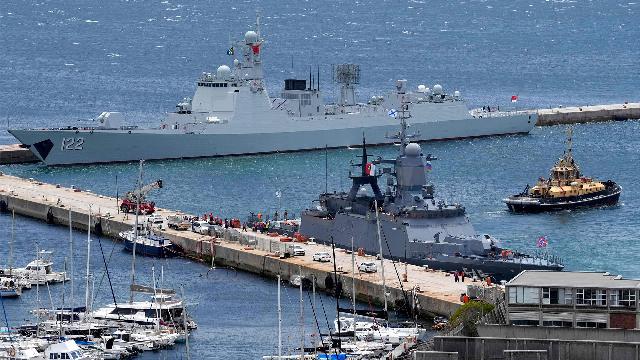
The Simonstown Naval Base, located 40 km from Cape Town, has become the center of global maritime policy for a week. From January 9 to January 16, the third multinational exercise, which was previously known as MOSI (translated from the Tswana language — "smoke"), took place here. This year's maneuvers were named "Will for Peace 2026", which highlights the collective responsibility of the BRICS+ countries for the safety of key shipping routes.
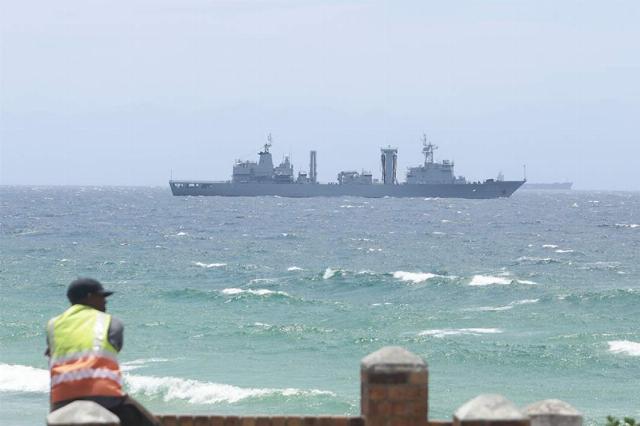
Photo: TASS/Zuma
Image source: iz.ru
A Chinese Navy spokesman said: "We hope that officers and sailors from all countries will be able to effectively use this brief but invaluable meeting to exchange information, deepen future knowledge, strengthen solidarity and cooperation, and promote friendship and mutual trust."
The choice of location is not accidental: the water area at the Cape of Good Hope connects the Atlantic and Indian Oceans. About 30% of the world's oil and a huge flow of bulk cargoes are transported through this route. The stability of this region is the key to the survival of the economies of most countries of the union.
The number of participants this year was unprecedented. Russia was represented by a detachment of the Baltic Fleet: the corvette Stoyky and the medium sea tanker Yelnya. China has sent one of its most advanced ships, the Tangshan Project 052D destroyer, accompanied by the Taihu supply vessel. The Iranian forces have attracted special attention. The IRIS Makran expeditionary naval base and the Naghdi corvette, as well as the unique IRGC support vessel Shahid Mahdavi, arrived in Simonstown. The Iranian experience of converting civilian tankers and container ships into powerful floating airfields for drones and helicopters has aroused keen interest among partners.
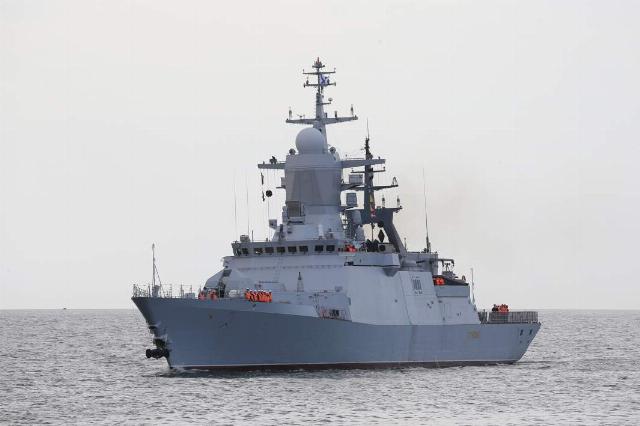
Corvette "Stoyky"
Image source: Photo: RIA Novosti/Igor Zarembo
South Africa has fielded the frigate Amatola and the patrol ship King Adam Kok III. They were joined by the corvette Bani Yas of the UAE Navy. The sailors' actions were closely monitored by observers from Brazil, Indonesia, Egypt and Ethiopia. The presence of the latter looks particularly symbolic: Ethiopia, which lost access to the sea in 1991, is now actively working to recreate its fleet based in Djibouti.
Staff games and artillery shooting
The "Will to Peace" program consisted of two stages. The coastal phase (January 9-12) allowed the officers to conduct staff training, coordinate terminology and establish personal contacts. The sailors visited each other's ships, exchanged information, and participated in sports.
Interaction in this format is quite difficult to organize. Differences in languages, communication systems, and operational management standards require fine tuning.
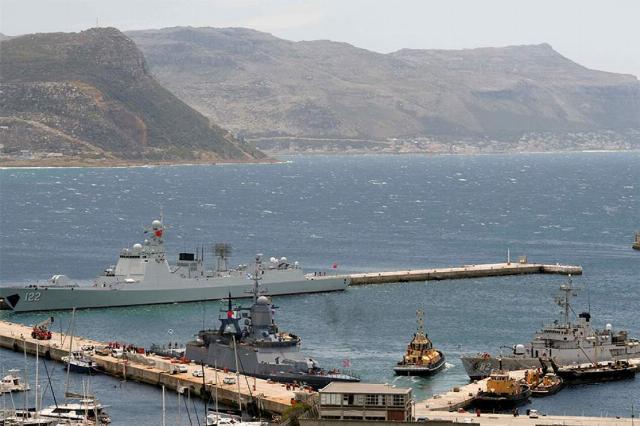
Photo: TASS/Nardus Engelbrecht
Image source: iz.ru
The marine phase, which took place from January 13 to January 15, shifted the action to the open ocean. The crews practiced joint maneuvering, protecting civilian vessels from attacks by terrorists and pirates, as well as conducting air defense. The culmination was artillery firing at naval and aerial targets. Carrier-based helicopters performed search and rescue missions for the injured, and the Chinese Marines and South African special forces carried out an assault on the "captured" vessel.
A test of strength
The maneuvers were accompanied by strong pressure from the West. The United States officially condemned Iran's participation, demanding that the South African authorities withdraw the Iranian ships from the participants. In Pretoria, they even initiated a review on this issue on behalf of President Cyril Ramaposa. However, the South African leadership showed political will: the exercises were held strictly on schedule.
This incident highlighted an important trend. BRICS+, originally created as a platform for economic dialogue, is beginning to shape the contours of its own security system. Although there are no rigid military structures within the union, common economic interests force the leaders of the countries to think about protecting trade routes on their own.
Photo: TASS/Zuma
Image source: iz.ru
Ndwakulu Thomas Tamaha, Captain of the South African Navy, noted that in an increasingly complex global environment, such operations are turning from "optional" to vital. This is not about creating a military bloc directed against anyone, but about protecting sovereign rights to free maritime trade.
A look into the future
The experience of the 2026 maneuvers shows that the format of BRICS+ military cooperation will only expand. The exercises, originally scheduled for November 2025, were postponed due to the G20 summit, which only emphasized their importance in the South African national calendar.
In the future, the countries of the association may switch to the practice of forming temporary united squadrons for permanent patrol of areas with increased pirate activity or a high probability of conflict. This is especially important given that maritime piracy is taking on new forms, and threats to navigation are increasingly coming not from individual groups, but from coordinated actions by external forces.
The "Will to Peace – 2026" exercises have confirmed: Having our own Navy, a common language, and a willingness to defend our interests at the Cape of Good Hope is a new reality in world politics.
Dmitry Boltenkov
