The SLS rocket with the Orion spacecraft and astronauts on board launched to the Moon
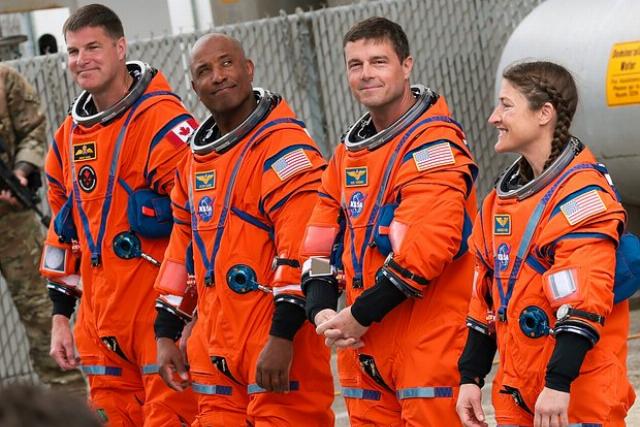
On the night of April 2, as part of the Artemis II mission, a single-use superheavy Space Launch System (SLS) rocket with the Orion spacecraft, carrying NASA astronauts Reed Wiseman, Victor Glover, Kristina Koch and the Canadian Space Agency Jeremy Hansen, was launched from site 39A of the John F. Kennedy Space Center in Florida (USA). The launch was broadcast on the NASA website.
As part of Artemis II, a spacecraft carrying humans will leave Earth orbit for the first time in more than 50 years and make a relatively close flyby of the Moon. The last time a man was this close to the Moon was in December 1972, when, as part of the Apollo 17 mission, American astronauts Eugene Cernan and Harrison Schmitt landed on the surface of the Earth's natural satellite, which actually became the final point of the Apollo lunar program.
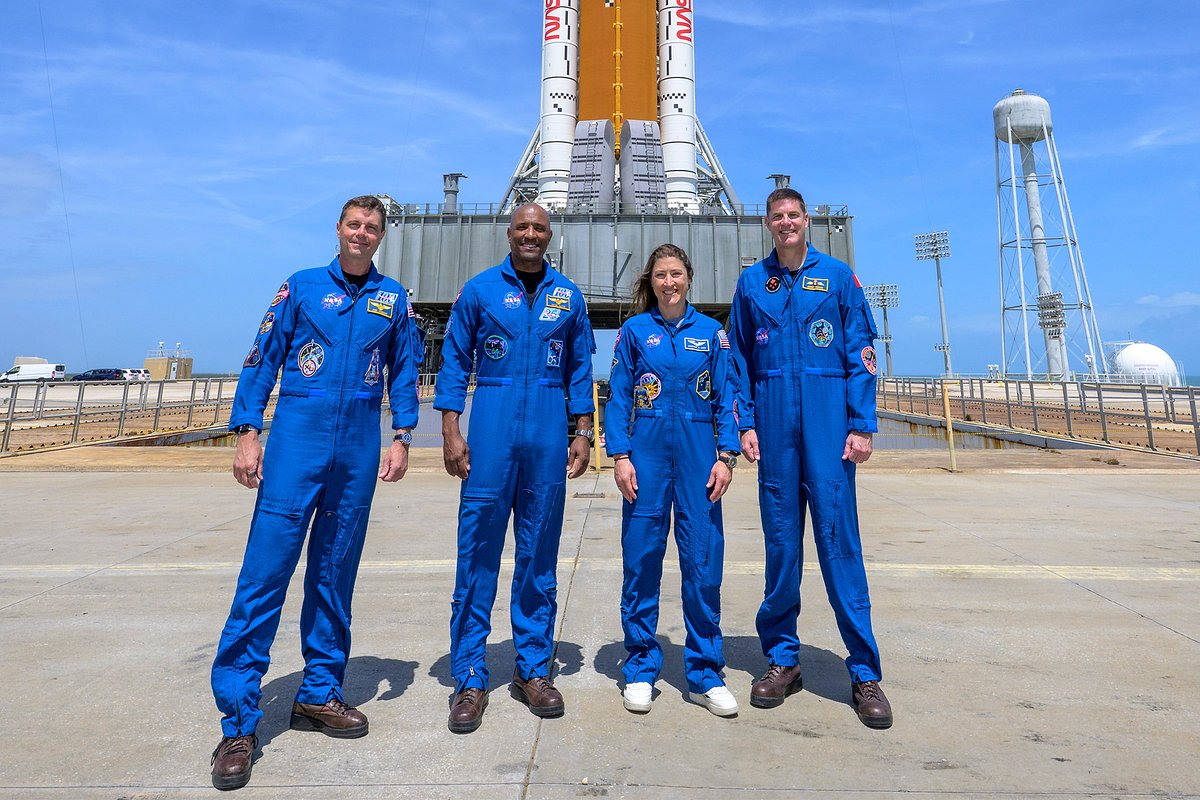 |
| Astronauts Reed Wiseman, Victor Glover, Kristina Koch and Jeremy Hansen. |
| Source: Bill Ingalls / NASA / Getty Images |
The Artemis II mission will last about 10 days. Within its framework, the Orion spacecraft will enter a geotransfer orbit and, after a series of maneuvers, fly past the Earth's natural satellite, approaching it at a distance of about 7.4 thousand kilometers. The mission will end with the landing of the reusable Orion habitable capsule in the Pacific Ocean.
The main task of Artemis II is to test the operation of the main systems of the Orion manned spacecraft, which, as previously thought, was supposed to deliver astronauts of future Artemis missions into lunar orbit.
The Artemis II mission has been postponed several times
Initially, Artemis II in its current form was planned to be launched in 2023. Then in 2025. In 2026, the launch was also postponed several times.
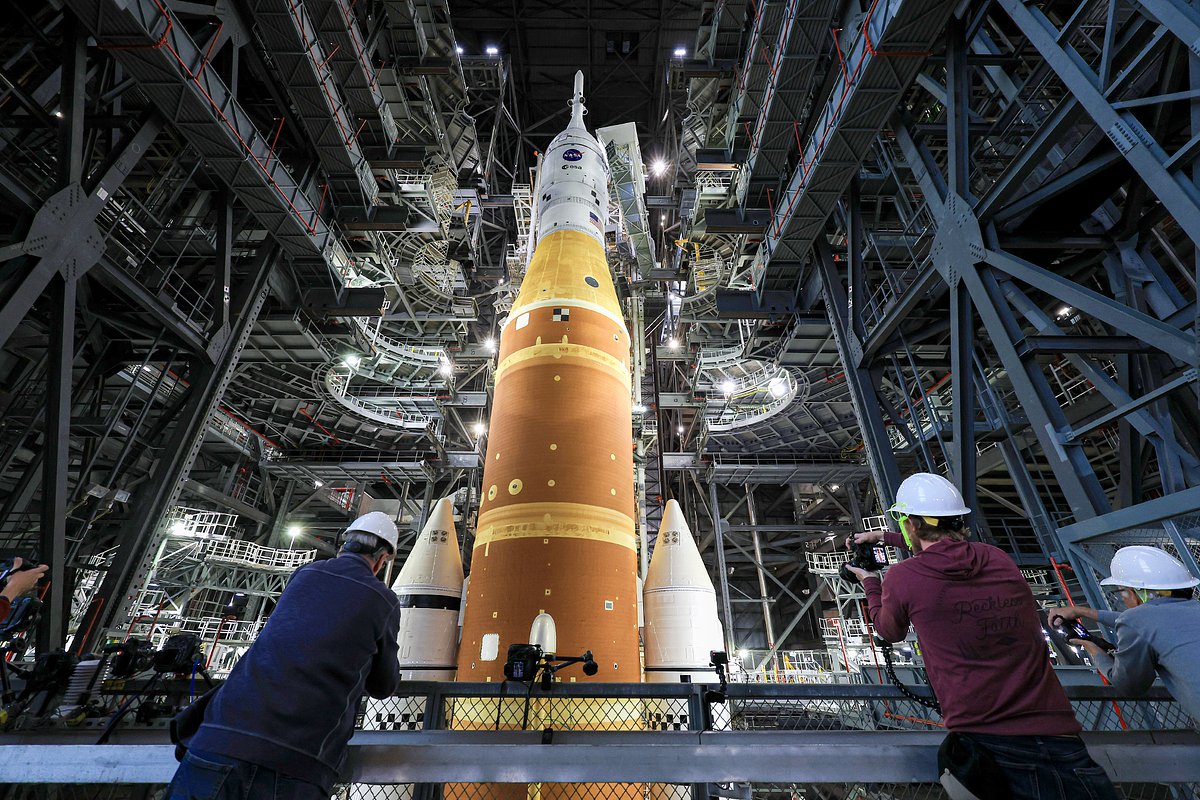 |
| An SLS superheavy rocket with an Orion spacecraft at the head. |
| Source: Joe Raedle / Getty Images |
So, in February, during a dress rehearsal, there was a leak of liquid oxygen in the area of the central block of the SLS rocket, then — in the same month — during refueling tests, problems were identified in the ground systems responsible for supplying liquid hydrogen. In March, the main stage of the SLS had problems with the power cable. Finding out the causes of the problems and fixing them took time and led to delays in the launch of the carrier.
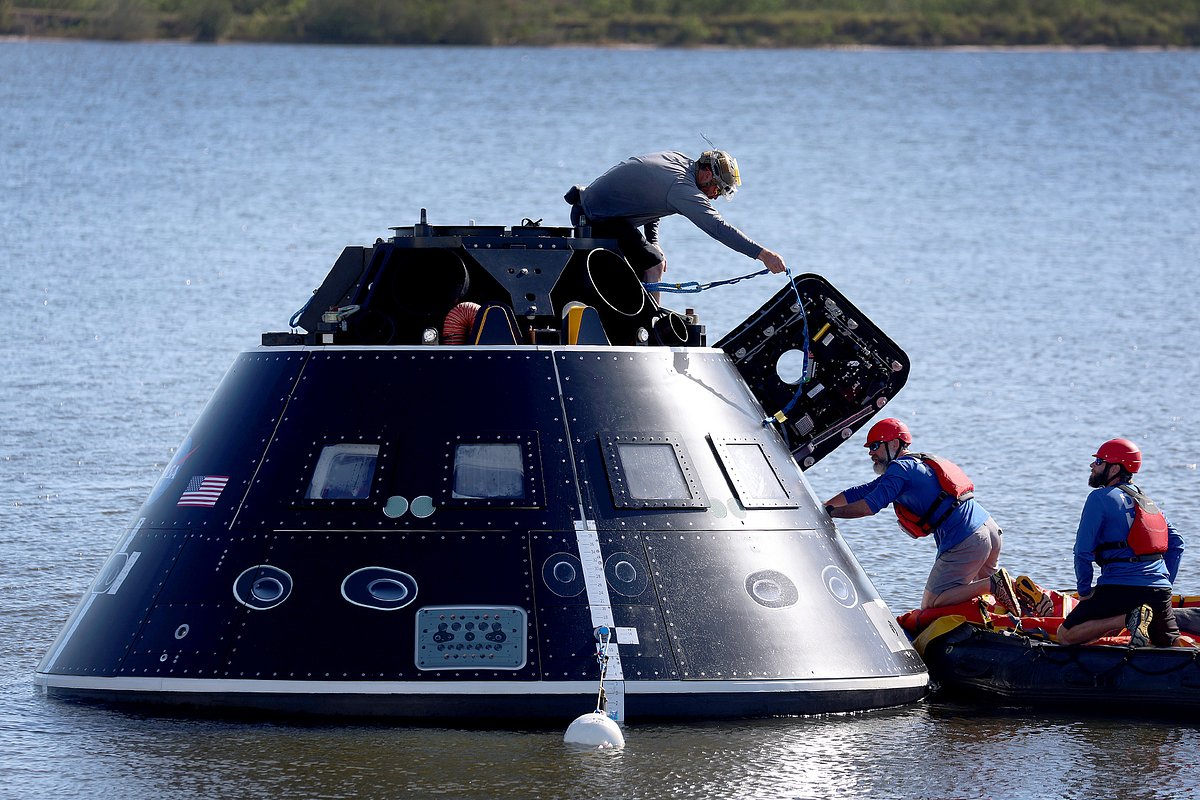 |
| Tests of the Orion spacecraft descent capsule. |
| Source: Joe Raedle / Getty Images |
There were also problems with the Orion spacecraft. So, at its base there is a heat shield, the elements of which fell off during the unmanned Artemis I mission when the spacecraft entered the Earth's atmosphere. Although, according to NASA, if there had been astronauts in the Orion descent capsule at that time, their lives would not have been in danger. The American side chose not to rush and closed the issue with the heat shield only by October 2024, deciding not to change the Orion heat shield, but to adjust the profile of the spacecraft's entry into the Earth's atmosphere. If a decision had been made to replace the screen, the Artemis II mission would have been postponed for several more years.
NASA has recently seriously adjusted the Artemis lunar program
In March, NASA, which was recently led by billionaire Jared Isaacman, who is close to SpaceX CEO Elon Musk, announced a significant adjustment to plans for the American Artemis lunar program.
Jared Isaacman
Head of NASA
Thus, the landing of astronauts on the surface of the Moon, envisaged by the Artemis III mission, was canceled . Now instead of this html" target="_blank" rel="nofollow">it is proposed to conduct a demonstration of the Orion spacecraft docking with one or two lunar landing modules in 2027 in low Earth orbit. If Artemis III is successful, astronauts can land on the surface of the Moon in 2028 as part of the Artemis IV mission.
The decision by the Isaakman team will hit Boeing— the main manufacturer of the SLS rocket. Now NASA is offering to use the reusable SpaceX Starship system to transport the Orion manned spacecraft to the Moon instead of the disposable SLS.
However, SLS will still be used in the Artemis program, but now, probably, only to launch Orion into low-Earth orbit.
Changes in the United States will affect Europe
Another important change in Artemis concerns NASA's collaboration with the European Space Agency (ESA). The late Artemis missions featured the Gateway international lunar station, which the United States decided to suspend, preferring to focus on infrastructure directly on the lunar surface.
NASA Press Service
The American side accounts for about 40 percent of the cost of the Gateway, while the rest of the funds for the station must be provided by international partners.
The United States wants to land on the moon in the 21st century before China.
Isaakman believes that by the time the Artemis V lunar mission is completed (2028), the American side will have several reusable rockets and ships, so there will be no need for SLS.
Isaakman explained the intention of the United States to put a man on the moon before China in the 21st century by "America's exclusivity."
In October 2024, Lin Xiqiang, deputy head of the Manned Space Flight Program of the People's Republic of China, said that China's goal is to land a man on the moon in 2030. Since then, Beijing has not abandoned its stated timetable.
