Latest news on "Space"


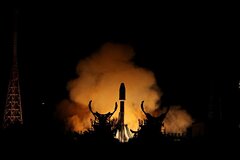
The Russian Soyuz launched from the cosmodrome in French Guiana
The Russian Soyuz-ST-B carrier rocket with 34 OneWeb satellites launched from the Kourou cosmodrome
The Russian Soyuz-ST-B carrier rocket with 34 communication satellites of the British company OneWeb launched from the Kourou cosmodrome in French Guiana. This is reported by RIA Novosti with reference to the broadcast.
A new engine for an ultra-fast flight to Mars has been proposed
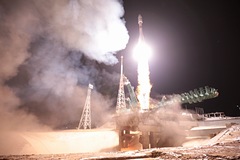
Canada has designed a powerful ground-based laser that accelerates spaceships to Mars
Scientists at McGill University in Canada have proposed a project for a new laser-thermal engine that will reduce the travel time of a spacecraft to Mars to 45 days compared to six months of flight for ships with chemical engines.
Rostec has delivered simulators to the Cosmonaut Training Center for testing the docking of ships
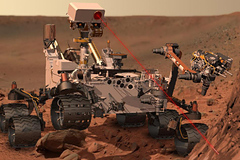
The Training Center received optical sights and simulators for training astronauts in the skills of manual docking of spacecraft
Shvabe Holding (part of Rostec State Corporation) supplied optical sights and simulators for training astronauts in the skills of manual docking of spacecraft to the Cosmonaut Training Center (CPC). This was reported on Thursday in the press service of the state corporation.
"Roscosmos" showed "Teledroid"
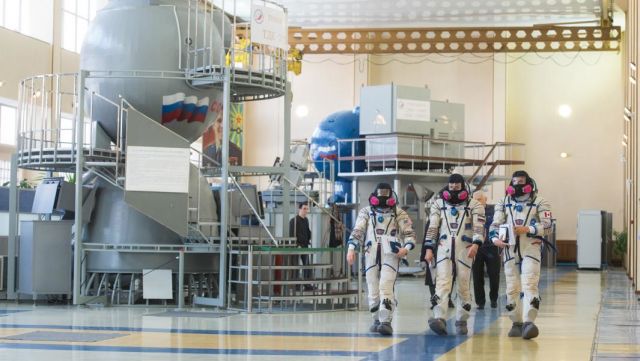
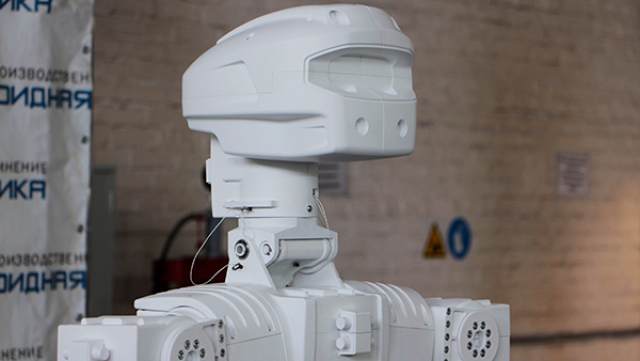
Roscosmos posted on YouTube a video with a prototype of the anthropomorphic robot "Teledroid"
Roscosmos posted on YouTube a video with a prototype of the anthropomorphic robot "Teledroid", developed by the Scientific and Production Association (NGO) "Android Technology" and the Rocket and Space Corporation (RSC) "Energy".
Expert: you can fly to the Moon on the "Angara" only with a single-turn docking scheme
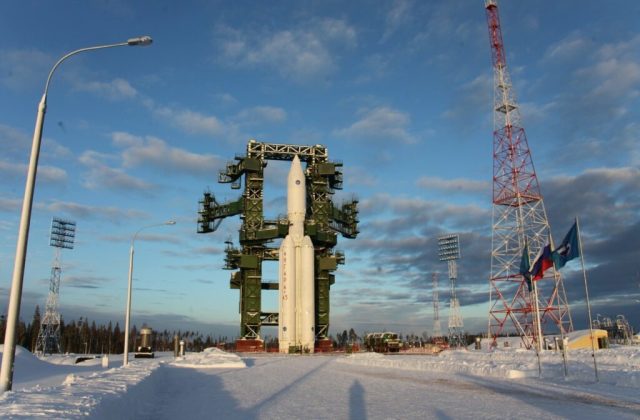
This program assumes the use of the Angara-A5B launch vehicle, said Rafail Murtazin, head of the RSC Energia Ballistics Department
Four-launch launches of astronauts to the Moon using Angara launch vehicles will be possible only with the implementation of a single-turn approach scheme. This opinion was expressed to TASS by the head of the ballistics department of the Rocket and Space Corporation Energia (part of Roscosmos), Rafail Murtazin.
Problems in the production of oxygen on the Moon and Mars are revealed
UK scientists have revealed a decrease in oxygen production in low gravity
Scientists at the University of Glasgow in the UK have revealed that the electrolysis of water will produce less oxygen on the Moon and Mars, or will be more energy-intensive than on Earth, due to weaker gravity. The results, published in Nature Communication, allow us to understand in advance the problems that space colonies will face when consuming resources available on the celestial bodies of the Solar System.

China will launch six spacecraft in 2022 to create an orbital station
In 2021, China carried out 55 space launches
China plans to carry out six spacecraft launches in 2022 to complete the construction of its orbital station. This was announced on Wednesday by the China Aerospace Science and Technology Corporation (CASC).
The condition of Russia's flight to the Moon with the help of "Angara" is named
RSC Energia told about a single-turn approach scheme during a flight to the moon
Four-launch launches of astronauts to the Moon using Angara-A5B rockets are possible only with the condition of a single-turn approach scheme, head of the ballistics department of the Russian Rocket and Space Corporation (RSC) Energia Rafail Murtazin told TASS.
SpaceX announced the loss of 40 Starlink satellites due to a geomagnetic storm
Elon Musk's company lost 40 Starlink spacecraft due to a geomagnetic storm. Satellites should burn up in the atmosphere, there is no threat to other vehicles.
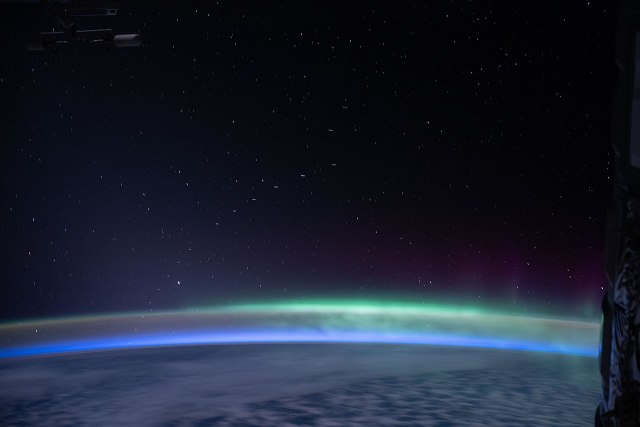
Up to 40 Starlink satellites could enter the Earth's atmosphere due to a geomagnetic storm
SpaceX assured that the satellites that descended from orbit "have zero risk of collision with other satellites"
TASS, February 9. About 40 of SpaceX's 49 Starlink microsatellites launched into Earth orbit on February 3 were severely affected by the geomagnetic storm. As reported on the company's website on Tuesday, the damaged satellites made an uncontrolled descent from orbit and could already enter the Earth's atmosphere.
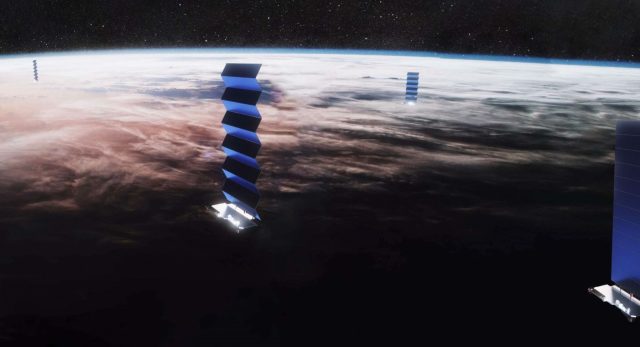
NPO Energomash is upgrading an outdated engine test bench for the Soyuz-5 rocket
Roscosmos reported that the new system will automate the processes of collecting, storing and processing information about the parameters of the tested engines, the parameters of the stand at the stages of preparation and conducting fire tests.
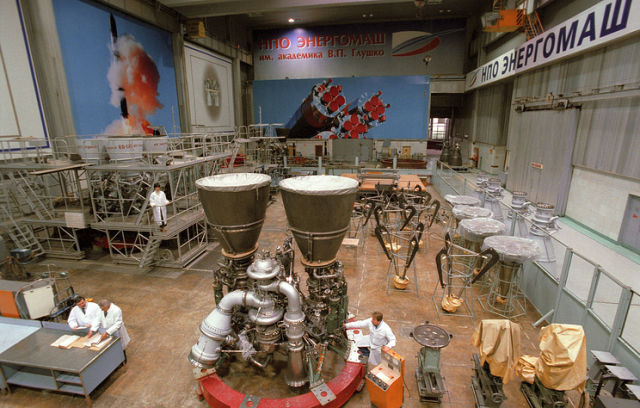
SpaceX has lost the latest Starlink satellites
SpaceX lost 40 of 49 newest Starlink satellites due to geomagnetic storm
The newest Starlink satellites, launched into Earth orbit in February, could enter the atmosphere, SpaceX reports.
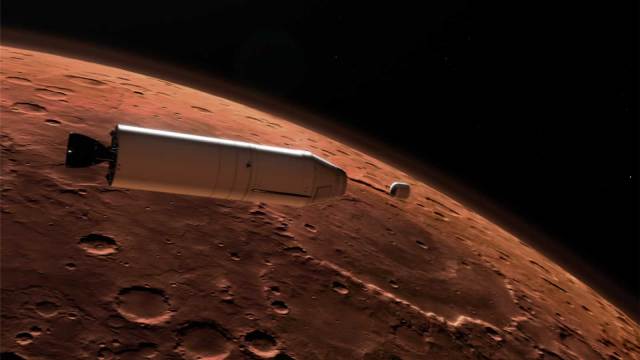
Lockheed Martin will create a rocket to deliver Martian samples to Earth
NASA has awarded a contract to Lockheed Martin Space for the creation of the Mars Ascent Vehicle launcher. With its help, they want to deliver Martian samples to Earth for study. The researchers hope that the mission will bring us closer to answering the question of the existence of life on the Red Planet.
Ukraine plans to build a floating spaceport
Ukraine plans to build a marine launch complex, the head of the State Nuclear Power Plant Taftai said
The State Space Agency of Ukraine (SCAU) intends to build a floating spaceport as part of the space program until 2025. The cost of the project was estimated at $ 172 million, said the head of the SCAU Vladimir Taftai in an interview with the publication "Suspilne. Novini".
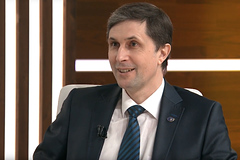
In 2022, the modernization of the ground-based special complex of the space geodetic system will be completed
In 2022, the modernization of the ground-based special complex of the space geodetic system will be completed, said the head of the Military Topographic Directorate of the General Staff of the Armed Forces of the Russian Federation - the head of the Topographic Service of the Armed Forces of the Russian Federation, Major General Alexander Zaliznyuk.
South Korea will invest $10 million to create a new engine for a launch vehicle
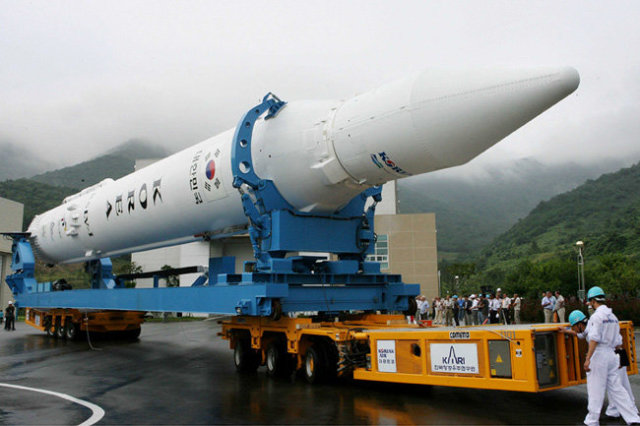
The country intends to accelerate the implementation of the space project
The Republic of Korea is investing 12 billion won ($10 million) in the development of high-performance liquid-fueled rocket engines by next year to accelerate the implementation of the space project. This was announced on Tuesday by the Ministry of Science and Information and Communication Technologies.
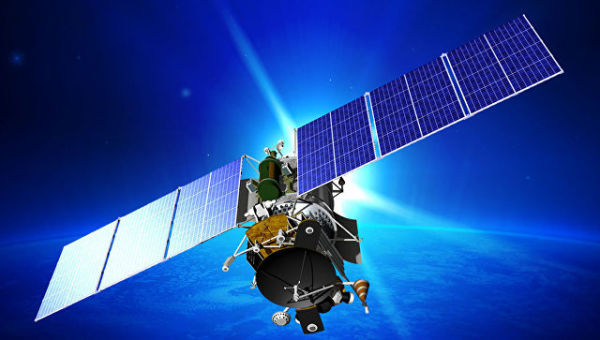
In the USA, they told about the mysterious Russian "Neutron"
NASASpaceflight admitted that Russia launched the Neutron satellite into orbit
In early February, the Aerospace Forces (VKS) of Russia could launch a mysterious satellite "Neutron", says NASASpaceFlight.com .

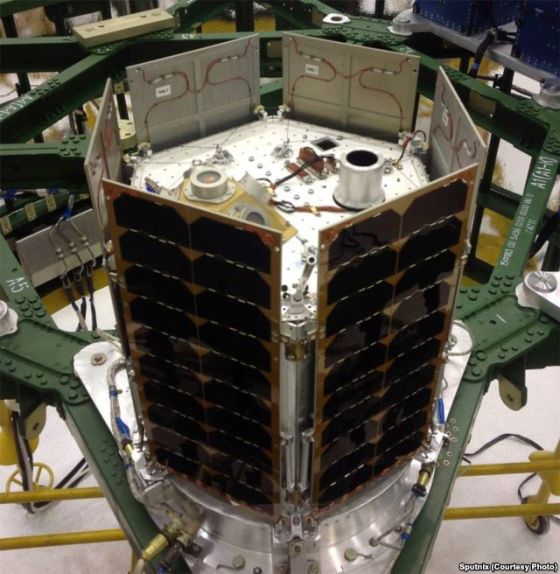
HSE students will be involved in the creation of a constellation of navigation monitoring satellites
Nanosatellites developed by Sputnix will be launched during 2022
HSE students will be involved in the project of creating a group of nanosatellites for monitoring navigation, including in the Arctic along the Northern Sea Route. This was reported to TASS by the press service of Sitronics Group.
Both manned Soyuz MS launches in 2022 will follow a three-hour flight pattern to the ISS
Two cargo ships - Progress MS-19 and Progress MS-21 - will fly to the ISS on a two-day schedule, said Rafail Murtazin, head of the Ballistics Department of RSC Energia
Both flights of the Soyuz MS manned spacecraft to the ISS in 2022 will take place according to a two-turn approach scheme (about three hours). This was reported to TASS by the head of the ballistics department of the Rocket and Space Corporation Energia (part of Roscosmos), Rafail Murtazin.
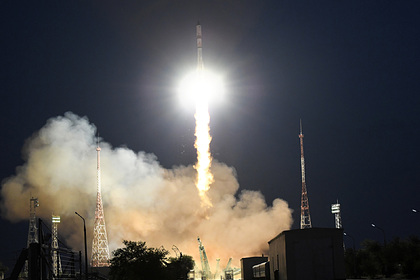
A Russian rocket with British satellites was installed on the launch pad
The Soyuz-ST-B rocket with OneWeb satellites was installed on the launch pad of the Kourou cosmodrome
A Russian Soyuz-ST-B carrier rocket was installed at the launch complex of the Kourou cosmodrome in French Guiana. The rocket will launch British OneWeb communications satellites into orbit. This is reported by Interfax with reference to the Glavkosmos company (part of the Roscosmos state Corporation).