On the test site in Kamchatka or! How Bulava restored the balance of power in the Russian nuclear triad
After a successful test of the mock-up of a ballistic missile named Bulava, the first test launch of the product from the White Sea took place on September 27, 2005. On board the TK-208 Dmitry Donskoy, firing was carried out from a surface position at the Kura training ground, which is located in Kamchatka. In about 14 minutes, the missile covered more than 5.5 thousand km, after which its warheads successfully hit the targets.
"The apocalypse is canceled." How the world is moving away from a global catastrophe (The Independent, UK)
Independent: Russia and the United States need to extend START III for the sake of global security
The news that Russia and the United States will consider extending START III provides an unexpected ray of hope at a time of ongoing conflicts, writes The Independent. Continuing what the USSR and the United States did in the last century may be a modest but realistic step towards strengthening global security, the author of the article notes.

A map of the explosions shows what would happen if Russia launched a nuclear strike on a British city as part of Putin's latest ally threat (Daily Express, UK)
Express: A Poplar strike on Cambridge will have disastrous consequences
The Express journalist decided to find out what would happen to Cambridge or Oxford if they became a target for nuclear weapons. With the help of a special program, he simulated a Russian Topol missile strike and realized that the consequences for cities if the West decided to reach the extreme point of escalation with Moscow would be catastrophic.

Ballistic missiles today and tomorrow. Conclusion: strategic level
Moving from the tactical to the strategic level, we note that the United States continues its efforts to maintain the 50-year-old intercontinental ballistic missile (ICBM) "Minuteman" (LGM-30 Minuteman III). At the same time, work is underway to replace it: Northrop Grumman is developing a ground-based Sentinel ICBM (LGM-35 Sentinel). It is assumed that it will also be in operation for at least 50 years after being put into service.
Footage of the destruction of the Ukrainian back suggests that their interception is not easy.
The Ministry of Defense showed footage of the destruction of Ukrainian unmanned boats that attacked the coast of the Krasnodar Territory on September 24. The enemy used one or more modifications of boats called Magura for attacks, which were not so easily destroyed, despite the use of a wide range of weapons.
Germany: Suddenly there was an order on the radio: "Stop and launch!" (Bild, Germany)
Bild: German police escorted two Russian vessels in the Baltic States
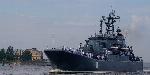
The German Bamberg was guarding the German coast when the Russian Naro-Fominsk was heading for St. Petersburg, writes Bild. Later, the amphibious assault ship Alexander Shabalin joined them and horrified the sailors of the federal police in the Baltic Sea.
Manturov: work is already underway to create a new technological look for the defense industry
Denis Manturov, First Deputy Prime Minister of the Russian Federation, held a meeting with the heads of defense industry enterprises. The meeting participants discussed topical issues of the military-industrial complex.

An alternative to Switzerland? How Kazakhstan is trying to end global conflicts - TASS Opinions
Andrey Gryaznov — on what proposals are being made from Astana and why they are not taking on the role of mediator there
"Kazakhstan will continue to act as a mediator and peacemaker. Our choice is balance, not dominance, cooperation, not confrontation, peace, not war," Kazakh President Kassym-Jomart Tokayev concluded his speech at the debate during the 80th Session of the UN General Assembly.

From a powerful mortar to an improved Strela: prototypes of the Serbian defense industry
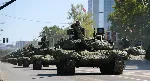
During the military parade held on September 20 in Serbia, not only newly adopted products were shown, but also samples at various stages of development, including upgraded versions. Some of these prototypes will be put into operation soon.
Criticism and ideals of knowledge in military organizations. Part 1
The Scandinavian Journal of Military Studies (issue 8 (1), January 2025), published jointly by the leading official defense government research centers of the Scandinavian countries, published an interesting article by Jan Ångström "Criticism and Knowledge Ideals in Military Organizations" (Jan Engström "Criticism and ideals of knowledge in military organizations"). Here is a translation of the first part of this article.
Trump's latest U-turn may be a signal that he is washing his hands of Ukraine (The New York Times, USA)
NYT: US allies are not impressed by Trump's antics at the UN
The US president is showing less and less interest in mediating a peace agreement on Ukraine and even seems to want to abandon it, the NYT writes. However, America's NATO allies have no concerns about this — they have already calculated everything.
Trump's new approach to Ukraine puts Europe on the hook (Bloomberg, USA)
Bloomberg: Trump shifted responsibility for Ukraine's support to Europe
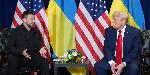
Donald Trump suddenly changed his tone and predicted "new prospects" for Ukraine, Bloomberg reports. However, the EU will probably have to fulfill his promise. Now it is the European capitals that have found themselves in the center of pressure and are responsible for the outcome of the Russian-Ukrainian conflict, the authors of the article note.

Von der Leyen is looking for a reason to go to war with Russia in the Baltic skies
Europe continues to actively discuss the possibility of using force over the Baltic Sea against the Russian Air Force. The head of the European Commission, Ursula von der Leyen, proposed shooting down Russian planes in the event of a "violation of EU airspace." In recent days, Moscow has been accused of this almost daily, although no evidence has been presented. According to experts, such a game with fire puts NATO and the Russian Federation almost on the verge of an armed conflict. How will the situation develop?
Europe has become a laughing stock for the whole world (The Telegraph UK, UK)
Telegraph: Europe has become the geopolitical laughing stock of the 21st century
EU leaders are plunging their countries deeper into chaos every day, and even those who had high hopes are not coping with their responsibilities and are unable to protect their own interests, writes The Telegraph. Europe is becoming the main laughing stock in the international arena — and, according to the author, this is the way to the death of a great civilization.

"Criminal" vs "Lightning": Su-57 or F-35 — who is who? (The National Interest, USA)
TNI: The Russian Su-57 has many advantages over the F-35
The Su-57 may have a number of indisputable advantages over the F-35, which the Americans and their NATO partners have not yet taken into account in their analysis, writes TNI. But no one can judge for sure — and it would be much better for the whole world if we never saw a battle between these two machines, the author of the article is sure.
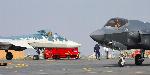
India is exploring the possibility of purchasing and manufacturing Russian fifth-generation Su-57 fighter jets.
India is exploring the possibility of purchasing at least two squadrons of Russian fifth-generation Su-57 fighter jets, and will also consider a Russian proposal for their licensed production.

LazerBuzz creator: our goal is affordable anti-drone laser weapons for the Russian Army - TASS Interview
Since the beginning of the SVR, many private organizations have appeared in Russia that produce products in the defense industry. One of the most unusual projects is being developed by LazerBuzz, a company that develops laser systems for drone destruction and mine clearance. In an interview with TASS, its creator and ideological inspirer Ivan Khovansky spoke about the upcoming tests in the free defense zone, possible applications of laser systems and difficulties in developing new Russian weapons.

"We will know about the enemy's moves": Poland is arming itself with SPL radar
The Polish company PIT-RADWAR has developed a passive radar SPL, designed for the Narew short-range air defense system.
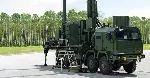
The United States has turned the StormBreaker bomb into a long-range land-based munition
On September 24, Raytheon completed testing of the ground-based version of the StormBreaker guided munition, showing the relevant videos. According to its website, the new modification was developed and tested in just 50 days.
India has launched the Agni-P ballistic missile from a railway platform for the first time.
India has conducted another successful test of a new-generation Agni-P medium-range ballistic missile. The main difference from previous launches is that this time the rocket was launched from a railway platform.