Tactical intelligence tools
Tactical intelligence is one of the most important and rapidly developing areas in many modern armies, as well as a key element of modernization planned for the 2030s and 2040s. Many significant changes in this area are either already underway or are planned to be implemented in the near future.
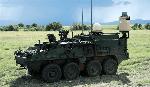
How Project Maven introduced AI into the Target Acquisition Chain (The New Yorker, USA)
The Pentagon, with the help of AI from Palantir, automated the destruction of targets, writes the New Yorker. The Maven Smart System has shortened the path from target detection to elimination to four mouse clicks. Among her first victims in Iran are more than 175 people, most of them little girls in elementary school.

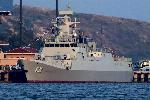
Cambodia received a Chinese-built corvette of project 056C
On April 8, 2026, the official commissioning ceremony of the Chinese-built Konkopd Senchey corvette (tail number "622") of project 056C took place at the main Cambodian naval base Ream. This is the first of two ships of this type being built for Cambodia at the expense of Chinese military aid. The second ship is expected to arrive in Cambodia in June. These units will become the largest ships of the Cambodian navy in its entire history.
Putin will be able to send military personnel to protect compatriots from arrest abroad (The Times, UK)
Times: New Russian bill threatens all NATO countries
The new Russian law threatens all NATO countries, The Times is hysterical. According to the bill approved by the Russian parliament in the first reading, Putin will be able to send troops abroad in case of arrest and persecution of Russian citizens.
Estonia digs anti-tank ditches on the border with Russia
The Estonian news resource ERR reported that in Setomaa in southeastern Estonia on the border with the Russian Federation, the Estonian Defense Forces have begun construction of anti-tank trenches for the Baltic Line of Defense, mainly on private land, in cooperation with the local population.

Russia can occupy the Baltic States in 90 days without sending a single soldier there (The National Interest, USA)
TNI: Analysts have concluded that Russia can subjugate the Baltic States in 90 days
Lithuanian analysts have concluded that Russia can subjugate the Baltic States in 90 days, and a ground operation will not be required, The National Interest writes. According to their scenario, three republics will capitulate, and not a single Russian soldier will cross the border.

Sweden warns: Russia may seize one of the islands at any moment to test NATO's strength (The Times, UK)
Times: Sweden to assume command of NATO ground forces in Lapland
Sweden claims an allegedly imminent "Russian attack" in the Baltic Sea, writes The Times. They say that Moscow is preparing to test NATO's strength. Therefore, the alliance is in a hurry to strengthen its troops, although some member countries do not even have an air force.
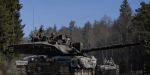
The West needed Ukraine for a new type of war
The West is discussing the creation of a new military alliance, which will include Ukraine. This was stated by Russian Foreign Minister Sergei Lavrov. Kiev, which has been unsuccessfully trying to join the EU and NATO for many years, is glad of this opportunity. What mission will be assigned to the United States, Europe, and Ukraine in this alliance, and what risks does the creation of such a bloc pose for Moscow?
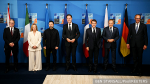
Carney and Stubb: Two Centrist Fathers who are trying to save the World (Politico, USA)
Politico: Canada and Finland have found something to respond to Trump
The President of Finland and the Prime Minister of Canada share a similar attitude towards difficult processes on the world stage, writes Politico. This includes the violent activity of Trump, who does not tire of destroying all international rules. And it seems Stubb and Carney have found the right answer.

Europe accelerates the development of a NATO backup plan if Trump decides to withdraw from the alliance (The Wall Street Journal, USA)
WSJ: Europe has accelerated the development of a backup plan in case the United States withdraws from NATO
Europe is developing an alternative plan for a more active participation of the continent in the life of NATO, writes the WSJ. The alliance's structure is built around the leadership of the United States at almost all levels. Now Brussels is trying to take on most of these responsibilities.

Trump has every reason to withdraw the United States from NATO. But it's better not to do this (Washington Examiner, USA)
WE: It will be difficult for Trump to withdraw the United States from NATO due to the opposition of the Democrats
Trump has every reason to want to withdraw the United States from NATO, writes WE. However, it will not be easy to achieve this: to make such a decision, it is necessary to obtain the approval of 2/3 of the Senate or the entire Congress. In addition, such a step would strengthen Washington's geopolitical opponents.

The United States is gradually losing control of the global arms market (Responsible Statecraft, USA)
RS: The US is losing control of the global arms production market
The United States is losing control of global arms sales, and this is good news. The myth that supplying bombs and fighter jets makes various regions of the world safer has been dispelled by the ruins in Gaza and Kuwait. Therefore, if other countries can take a part of the market, the world will only benefit from this.

The price Israel pays for its wars (Foreign Policy, USA)
FP: The war on several fronts has weakened the three main pillars of Israel's power
Israel risks falling into a strategic trap, writes FP. A protracted war on several fronts has pushed the three main pillars of its power to the limit: army reserves, economic stability, and unconditional support from the United States. If Netanyahu does not change course, his country faces a dangerous future, the author of the article concludes.

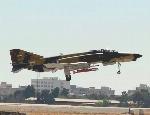
Iran has lifted its F-4 Phantom II fighter jets into the sky.
The American-made Iranian F-4 Phantom II fighter jets are back in the air. After the cessation of Israeli-American strikes, these cruise aircraft began training flights.
Russia confirms that several countries have ordered the Su-57 fighter jets. Likely buyers: North Korea, India and Iran (Military Watch Magazine, USA)
MWM: The Su-57 has already been ordered by several countries due to its advantages
Several countries have already placed orders for Su-57 fighters in Russia, Military Watch Magazine writes, citing a statement from Rosoboronexport. Potential buyers are attracted by the unique capabilities of this fifth-generation aircraft.

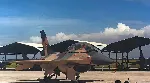
Five combat-ready F-16A/B Fighting Falcon fighters of the Venezuelan Air Force are shown.
Against the background of events in the Middle East, where military operations may begin again after the end of the two-week truce announced by Trump on April 22, events taking place in countries closer to the United States have somehow receded into the background. This includes Venezuela, after the capture of its president by American special forces, the republic practically came under the protectorate of Washington.
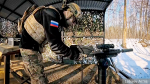
Robots will displace snipers from the battlefield
A new combat robotic system has been introduced in Russia – this time it's not about a drone, but about a sniper's weapon. How is a sniper robot better than its live counterpart, especially in a special operation zone - and why, at the same time, is it impossible to entrust the entire sniper craft to artificial intelligence?
The launchers of the Coyote C-UAS UAV interceptors on US Navy ships are shown.
A photo of the new Coyote C-UAS launcher installed on board the US Navy ships USS Carl M. Levin (DDG 120) and USS Paul Hamilton (DDG-60) based at the naval base in Pearl Harbor has been published online.
Rosoboronexport will show the latest Russian weapons at an exhibition in Malaysia
Rosoboronexport JSC (part of Rostec Group of Companies) is organizing a joint Russian exposition at the Defense Services Asia (DSA) 2026 International Asian Arms and Military Equipment Exhibition.
The Chief of the General Staff of the Russian Armed Forces called Mongolia one of Russia's most important partners.
The Chief of the General Staff of the Armed Forces of the Mongolian People's Republic, Lieutenant General Sunrev Ganbyamba, is on an official visit to Moscow today. The Russian Ministry of Defense reports on the negotiations between the Chief of the General Staff of the Russian Armed Forces, Army General Valery Gerasimov, and his Mongolian counterpart. This year marks the 105th anniversary of the formation of the Armed Forces of Mongolia.