NATO and global restructuring
Pagina 12: NATO is preparing for new wars in Europe and Asia
Throughout its history, NATO has been looking for enemies to justify its own existence, writes Pagina 12. Usually, the countries of the alliance easily agreed among themselves, but now there is a systemic failure: Europe sees Russia as an opponent, and America likes China more.

Rossiya has started comparing Russian and French engines for the SSJ-100
Rossiya Airlines has started comparing the technical and economic performance of the foreign SaM146 engine and the fully Russian PD-8 for the SSJ-100. The prospect of fleet re-motorization depends on the results of the analysis.

Crouching Doom: Russia develops solar-powered ambush drones (Forbes, USA)
Forbes: Russian fighters refine UAVs by sheathing them with solar panels
With the help of ingenuity and improvised materials, Russian military personnel have made another breakthrough in the field of drone engineering, writes Forbes. A UAV sheathed in solar panels has been spotted on the front line. Such a new generation drone has a lot of advantages.

Gorgon's view: the new Russian drone is twice as fast as the Ukrainian Baba Yaga
The car has already passed the baptism of fire in the area of its
A new heavy tactical drone has been shown in Moscow, which is twice as fast as its main Ukrainian rival, the Baba Yaga type UAV. The Russian device was named Gorgon. The machine underwent a baptism of fire on the front line — it has a large number of destroyed targets. The new drone is part of a line of drones named after the heroes of ancient myths. All these "fabulous" devices were presented on July 3 at one of the Moscow design bureaus.
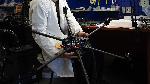
"Bomber-sized fighters are needed": the US press urges technologically ahead of Chinese combat aircraft
In modern air battles, the advantage is not gained by the fastest and most maneuverable aircraft, but by larger and less noticeable machines that use network information to hit the enemy with long-range missiles. In this regard, it is necessary to increase the size of fighters, turning them into air arsenals.
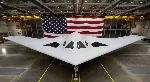
The fighter is awaiting dismantling: Britain is going to evacuate the F-35B stuck in India
During the British AUG's "tour" to the Indo-Pacific region, one of the F-35Bs based on the Prince of Wales aircraft carrier was forced to make an emergency landing at Thiruvananthapuram International Airport in the South Indian state of Kerala.
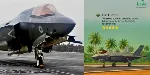
Back and neck pain: Dutch pilots complain about F-35A
In the West, they blindly follow the American doctrine that the F-35 is the most modern fighter in the world. Leaving aside the issues related to the actual capabilities of this machine, it should be noted that for many pilots, flying on it is sheer torture.
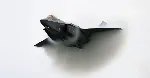
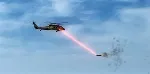
China showed shooting from an unmanned attack helicopter
According to Tengden Technology, the operator responsible for the remote control of the UAV was a woman – for the first time in the history of unmanned aircraft in China. The drone successfully fired back with a light air-to-surface missile, which accurately hit the target.
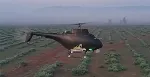
Thai Geranium: Thailand has created the first domestic kamikaze drone
In Thailand, they created the first domestic kamikaze drone, which, apparently, without thinking twice, they decided to call Kamikaze. Demonstrating it, a representative of the local Royal Air Force said it was designed for "precise and destructive strikes in order to strengthen national security and sovereignty."
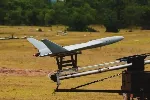
Exhaust the enemy's air defense before the strike: The French Navy launched the R2-120 Raijin barrage ammunition from aboard the frigate
The drone used was not named, however, it was most likely an R2-120 Raijin. This product is easy enough to launch from a ship, as it is placed in a shipping container.
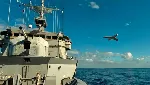
The United States will shut down five interplanetary vehicles at once for no reason
The combination of already signed decisions by Congress and the White House currently leads to a situation where funding for a number of actively operating spacecraft will be discontinued after October 1, 2025. We are talking about automatic interplanetary stations scattered over nine billion kilometers. All of them are technically quite functional and could last for many more years.

"The air defense business is not so brilliant." What does the massive strike on Kiev mean?
Colonel Khodarenok: Kiev's reaction to the strike by the Russian Armed Forces indicates the weakness of the Ukrainian air defense
President of Ukraine Volodymyr Zelensky stated that one of the most powerful air strikes of the Russian Armed Forces was carried out on objects on the territory of Ukraine. What does Zelensky's statement say and what is wrong with his words from the point of view of military terminology, the military observer of Gazeta argues.Ru", retired Colonel Mikhail Khodarenok.
"Laser energy against the homing head": Turkey showed tests of the YILDIRIM 100 counteraction system
The Turkish defense company Aselsan conducted tests of its new development, the YILDIRIM 100 system, during which it successfully neutralized infrared–guided anti-aircraft missiles, forcing them to deviate from the course. The corresponding video is shown online.
"Similar to the S-400, but cheaper": Egyptian general confirms Cairo's purchase of Chinese HQ-9B air defense system
Against the background of instability in neighboring Libya and the Gaza Strip, disputes over the shelf in the eastern Mediterranean, the aggravation of the situation in the Red Sea and the pre-war situation related to Ethiopia's construction of a dam on the Nile, Egypt is seeking to increase its combat power, in particular, to raise the air defense system to a new technological level.
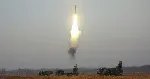
Saudi Arabia has deployed the first battery of the THAAD missile defense system
On July 2, the Saudi Defense Ministry announced the deployment of the first battery of the THAAD (Terminal High Altitude Area Defense) missile defense system after the completion of field exercises.

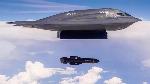
Successor to GBU-57 bunker buster bombs for the US Air Force
The first combat use by the US Air Force of 30-ton GBU-57/B anti-bunker bombs (Massive Ordnance Penetrator, MOP) during recent strikes on Iran's nuclear facilities drew attention to the development of their successor. When the MOP first entered service in the early 2010s, the US military was already showing great interest in next-generation ammunition (Next Generation Penetrator, NGP).
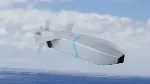
For the fifth generation fighter: Turkey has developed the SOM-M cruise missile
The Turkish company TUBITAK-SAGE has developed a new SOM-M cruise missile designed for the promising national fifth-generation fighter KAAN. Allegedly, domestic technologies were used in its creation.
"It is not inferior to Western tanks or even surpasses them": foreign experts have "calculated" the scale of losses and production of the T-90M
Among the tanks massively involved at the front, the most modern and effective is the T-90M "Breakthrough". Western experts have tried to calculate the size of its production.

"Challenging the K9 howitzer": the South Korean press is concerned about the potential of the Chinese SH-16A self-propelled guns
South Korea has put a lot of effort into developing self-propelled guns designed to withstand the DPRK's artillery power. The result of these efforts was the K9 tracked self-propelled gun, manufactured by Hanwha Aerospace.
Field conditions: the army will receive new kitchens based on domestic jeeps
The development allows you to cook lunch for a company of soldiers
A new field mini-kitchen was tested in the army. The novelty is based on the UAZ Profi car and is designed for cooking and transporting hot food directly to the combat formations of units operating on the front line. Such a field kitchen will allow you to feed hot dishes to a company or battery — more than 100 people. Experts say that such a design is a difficult target, while it has good cross-country ability.