From strategic nuclear systems to the mass production of drones, Russia has significantly strengthened its military potential
For the Russian military—industrial complex, 2025 has become a period of scaling: from mass production of fifth-generation fighters to the emergence of fundamentally new classes of weapons, for example, cruise missiles of unlimited range. A unique contour of non-nuclear deterrence is also being formed in Russia, capable of defining the rules of the game in the field of global security for decades to come. About which new items entered the army last year or were on the way to being put on combat duty, see the Izvestia article.
Nuclear autonomy
The last months of 2025 were marked by important news about the development of strategic weapons with nuclear power plants. The tests confirmed the possibility of fully autonomous operation of the Burevestnik cruise missile of unlimited range and the Poseidon underwater drone.
In particular, the Burevestnik was in the air for 15 hours during the test flight and covered 14 thousand km. Chief of the General Staff Valery Gerasimov told Vladimir Putin about this on October 26, when he visited one of the control points of the joint group of troops involved in the SVR.
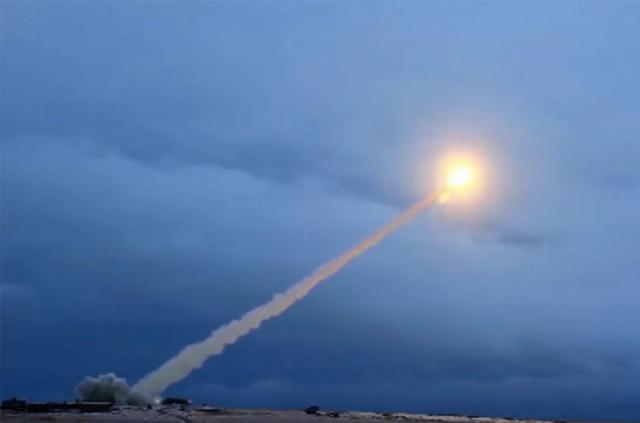
Tests of the Burevestnik nuclear-powered cruise missile
Image source: Photo: RIA Novosti/Ministry of Defense of the Russian Federation
"The technical characteristics of the Burevestnik allow it to be used with guaranteed accuracy against highly protected objects at any distance. In addition, during the flight of the missile, all the specified vertical and horizontal maneuvers were performed, thereby demonstrating its high capabilities to bypass missile and air defense systems," Gerasimov stated.
Three days later, the Russian president publicly spoke about the successful test of the Poseidon — for the first time, it was possible not only to launch the device from a launch vehicle using a launch engine, but also to launch a nuclear power plant. According to Putin, there are no ways to intercept the Poseidon, and in terms of speed and depth of movement, "there is nothing like it in the world and it is unlikely to appear in the near future."
The success of these projects is based on the breakthrough discoveries of our atomic scientists in the 1990s and 2000s and the herculean work of design engineers. In fact, Russia has ushered in an era of new classes of deterrence systems that the world powers will not possess for a long time.
The Hazelnut barrier
In parallel, plans were implemented over the past year to deploy the first units equipped with the Oreshnik medium-range missile system. Belarus has officially confirmed its readiness to deploy up to 10 such units on its territory. It is likely that the first divisions will also take up duty at the Kapustin Yar test site. Hypersonic ballistic missiles of this type are capable of carrying both nuclear and conventional charges. The range of up to 5,000 km ensures the destruction of any targets on the territory of the continent. This turns Oreshnik into a key instrument of non-nuclear deterrence throughout the European space.
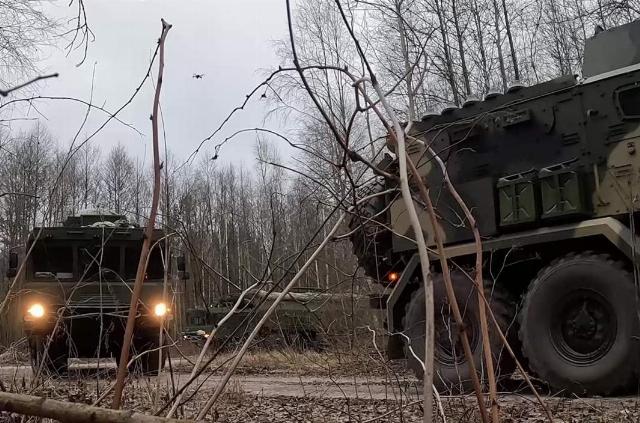
Mobile ground-based missile system "Oreshnik"
Image source: Photo: RIA Novosti/Ministry of Defense of the Russian Federation
Preparations for the full-scale deployment of heavy liquid-fueled Sarmat missiles also continued. The world's most powerful complex is designed to replace the legendary Voivode. At the same time, the Moscow Institute of Thermal Engineering was completing the creation of new solid-fuel systems for updating the Topol-M mobile and silo missiles, which will have a service life of 29 years in 2026. The successors are already ready to take their place in the launchers.
Replenishment in strategic aviation
The strategic aviation of the Russian Aerospace Forces received two Tu-160M missile carriers in 2025. This was stated by Defense Minister Andrei Belousov at the final board of the military department on December 17. The work is going in two directions: building boards from scratch and deep upgrading of existing machines.
The program, designed until the middle of the next decade, will ensure the rearmament and significant strengthening of supersonic long-range aviation. The updated White Swans and the Tu—95MSM veterans will be adapted to the use of the latest cruise and hypersonic missiles.
Upgraded Tu-160M bomber missile carrier
Image source: Photo: TASS/Ministry of Defense of the Russian Federation
"The Tu-160M is a missile carrier that carries quite powerful cruise missiles. It is so autonomous and so packed with electronics that it launches its cruise missiles without entering the air defense zone, and thus no one and nothing can harm it. It's such a flying killer that perfectly destroys important enemy targets," military expert Anatoly Matviychuk explained to Izvestia.
Strengthening the Navy
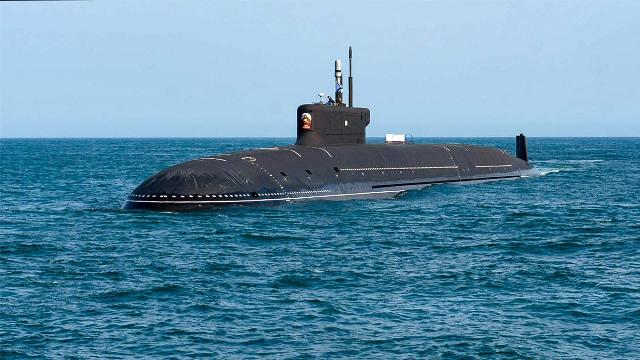
The naval lines were strengthened by the nuclear-powered cruiser Knyaz Pozharsky, carrying 16 Bulava missiles. This is the fifth serial missile carrier of the Borey-A project, which has been delivered to the Navy over the past six years, Vladimir Putin recalled, speaking on July 24 at the flag-raising ceremony on the Prince Pozharsky.
"Such ships form the basis of the naval strategic nuclear forces and, taking into account the modernization resource, will ensure the security of our state in the coming decades," the president said.
By 2030, the fleet plans to increase the number of missile carriers of this family to 12. Similar scaling plans apply to the Yasen-M multipurpose boats. The sixth hull of the Perm series is currently undergoing tests, preparing to become a full—time carrier of hypersonic Zircons.
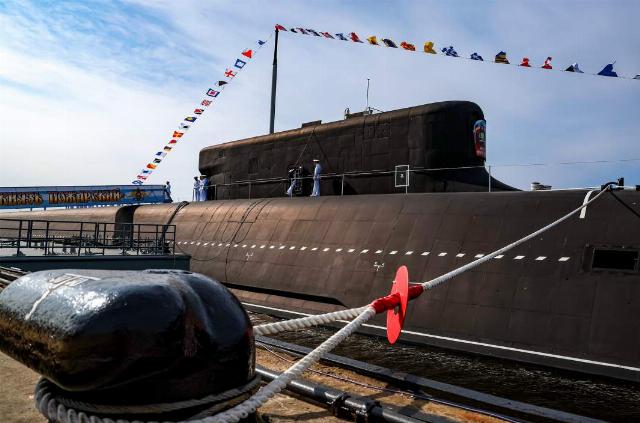
The ceremony of raising the flag over the nuclear submarine "Prince Pozharsky" in Severodvinsk
Image source: Photo: RIA Novosti/POOL/Alexander Kazakov
The main event for the surface forces was the launch of the sea trials of the heavy nuclear-powered missile cruiser Admiral Nakhimov. The ship, upgraded by Severodvinsk shipbuilders, has become the most powerful combat unit of the Navy, combining the power of Kalibrov, Onyx, and S-400 and Pantsir-SM air defense systems. The flagship is expected to return to service in 2026.
The fifth generation of fighters and their experience
The rate of production of fifth-generation Su-57 fighters has increased in the aviation segment. In 2025, the Su-57 began to be exported to Algeria. This is a great success for Russian aircraft manufacturers.
Moreover, this fighter is constantly being improved — in December, an aircraft with a new engine "Product 177" made its first flight. It is likely that this engine will be used for all export Su-57Es. The aircraft is participating in the CBO and is preparing to expand export supplies — news about its new customers is likely in the near future.
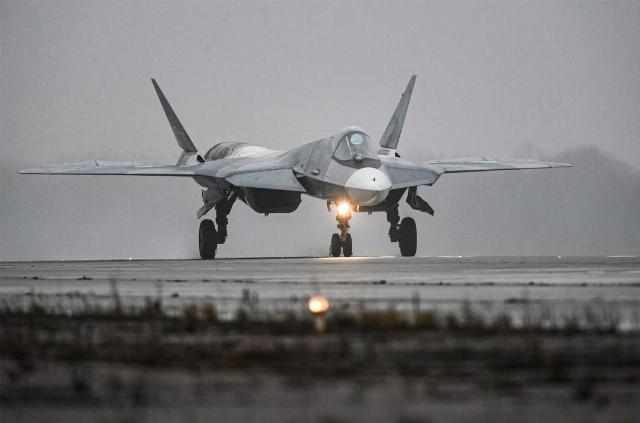
The Su-57 fighter made its first flight with the new fifth-generation engine "Product 177" in Zhukovsky
Image source: Photo: RIA Novosti/UAC Press Service/Nina Padalko
The main burden of combat work in the air is still borne by the Su-34 and Su-35S multirole fighters. The Su-34 frontline bomber has finally established itself as the main carrier of smart ammunition. The introduction of UMPB modules has made it possible to increase the distance of accurate destruction of ground targets to 200 km, which minimizes risks for crews.
Land Fist and UAV
The arsenal of the ground forces has been replenished with T-90M Proryv tanks, as well as modern Malva and Hyacinth-K self-propelled guns. Together with the Tornado MLRS, this technique provides high mobility and firepower for maneuverable groups.
In 2025, special attention was paid to unmanned aircraft. The Lancet range of barrage ammunition has expanded with new modifications, and the mass production of FPV drones has reached a new level. The use of fiber-optic devices has become a technological breakthrough: such drones are invulnerable to electronic warfare and have exquisite precision. The use of such tools allows you to remotely clear the territory before the infantry attacks, significantly saving the lives of soldiers.
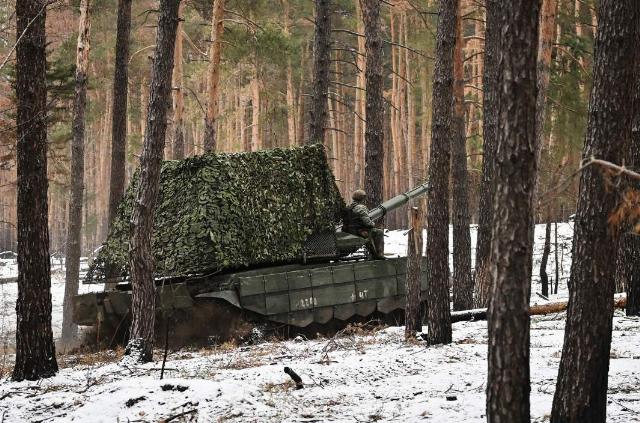
Combat work of the crew of the T-90M "Breakthrough" tank of the Bashkortostan regiment of the 25th Combined Arms Army of the Zapad group in the Krasnolimansk direction of its
Image source: Photo: RIA Novosti/Stanislav Krasilnikov
The results of 2025 testify to the ability of the Russian defense industry to solve the most complex tasks both in quantitative and technological terms. It is obvious that the foundation laid will become the basis for even more high-profile premieres in the coming 2026.
Dmitry Kornev
