News land-based units


Mysterious American armored vehicles in Hawaii turned out to be fake tanks
During the American JPMRC 27-01 exercises in the Hawaiian Islands, a mysterious armored vehicle was seen hidden under camouflage nets and tarpaulins. A number of observers have suggested that this is a new XM30 BMP model being tested in the interests of the US Army to replace the Bradley.
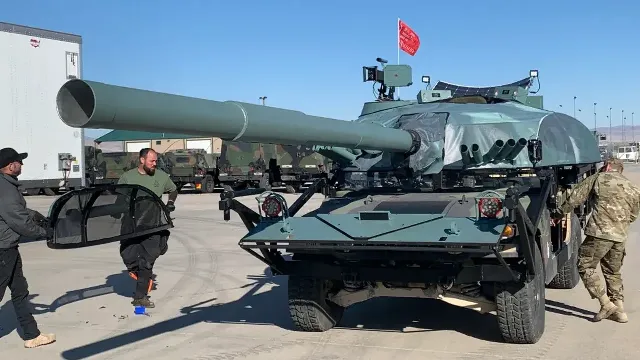
Overweight and low impact: the reasons for the failure of the M10 Booker and FARA have been studied in the USA
In particular, they raised the issue of the reasons for the failure of the M10 Booker light tank program, for which GDLS was responsible. It is noted that the emphasis was placed on the speed of development, and therefore the technical problems that arose during it were ignored.
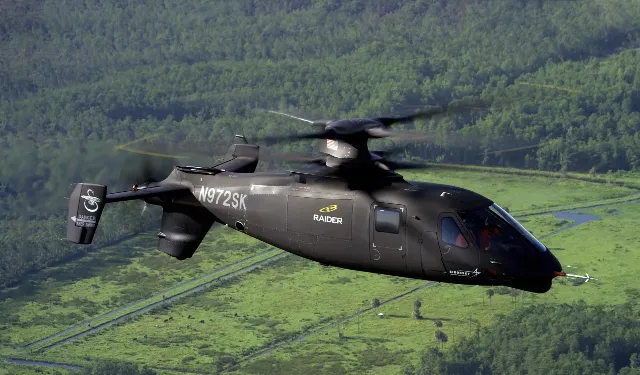
From the ZU-23-2 to the BTR-80 turrets: How the BTR-50 was upgraded for special operations
Adopted 75 years ago, the Soviet PT-76 floating tank became the basis for another legendary combat vehicle, the BTR-50 armored personnel carrier. He also participated in numerous wars and conflicts. For the first time - in Hungary in 1956. Then in the events of 1967 in the Middle East, Vietnam, the Indo-Pakistani conflict, and many others. The modified version is currently involved in the special operation.
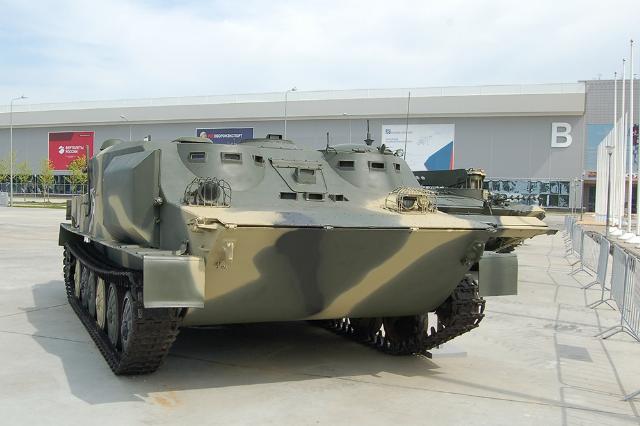
"Cheap drones are too tough": heavy equipment of the Russian Armed Forces has become invulnerable to UAVs
Western observers have expressed concern about the significant increase in the security of Russian armored vehicles, seeing in this the prerequisites for the possible conduct of large-scale offensive operations.:
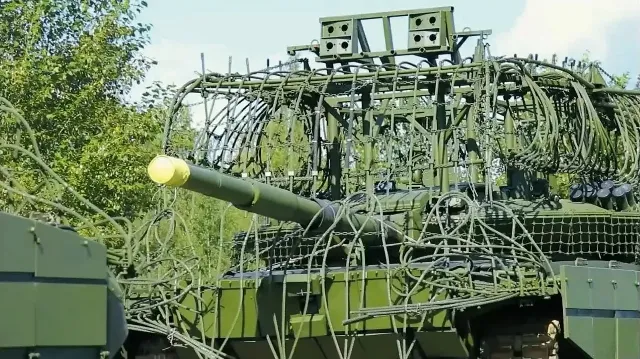
"A threat to all infantry fighting vehicles and armored personnel carriers in the world": new weapons for the new American infantry fighting vehicle
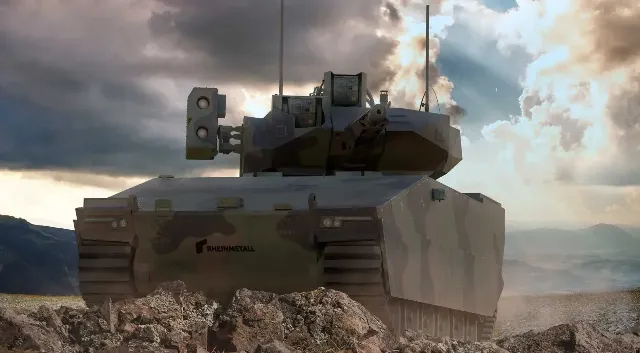
The US Army is currently testing two prototypes of a new infantry fighting vehicle being developed as part of the Mechanized Infantry Fighting Vehicle (MICV) program. Both variants under study – Wolf (from GDLS) and Lynx (from American Rheinmetall) – have the army designation XM30 (which is transformed into M30 after the selection and standardization of the final design).
The German arms concern Rheinmetall is facing the limits of its growth (Die Welt, Germany)
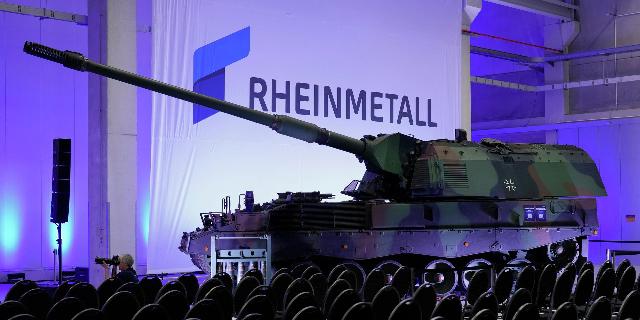
Welt: German arms giant Rheinmetall is facing a series of problems
The German defense giant Rheinmetall has faced a series of setbacks: promising developments are stalling, deliveries are delayed, and major projects are being disrupted, Die Welt writes. Loud promises to rearm Germany have been shattered by harsh reality.
The Bulgarian Armed Forces accepted the first batch of Stryker infantry fighting vehicles
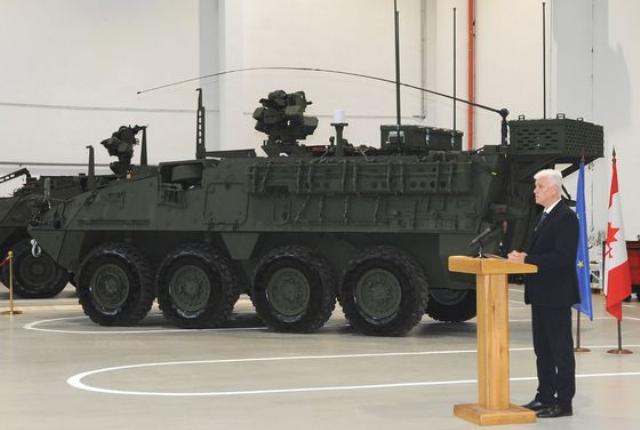
On November 3, the Bulgarian Ministry of Defense announced the handover ceremony of the first batch of five new Stryker armored personnel carriers with an 8x8 wheel formula held at the TEREM-Ivaylo enterprise in Veliko Tarnovo.
A forgotten type of weapon is returning at a new technological level
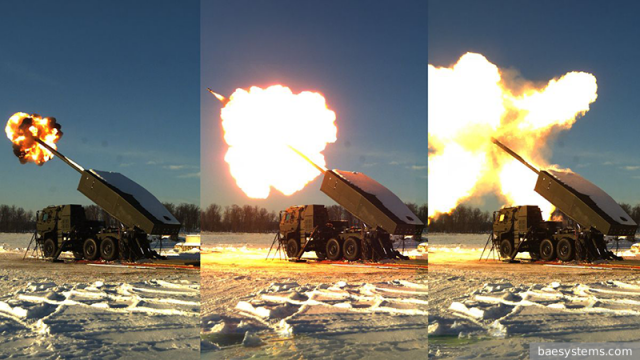
It seems that we are on the verge of reviving an almost forgotten class of weapons – long-range large-caliber anti-aircraft artillery. A few decades ago, it was supplanted by anti-aircraft missile systems. Why is it necessary today to return classic-style anti-aircraft guns, and what makes their creation possible?
The "classics" of the battlefield: How the experience of the SVO influenced the development of T‑72 tanks
The experience of a special military operation has seriously influenced the refinement of armored vehicles: proven platforms created more than half a century ago have received fundamentally new combat capabilities. For example, the upgraded T-72B3M tanks, which Uralvagonzavod (Rostec State Corporation) regularly transfers to the troops, are a response to new battlefield challenges.

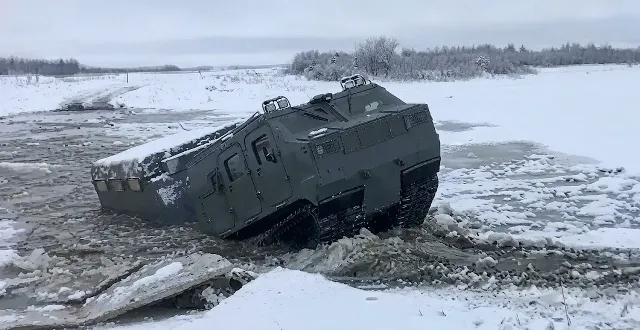
A long road of improvements and tests: the import-substituted all-terrain vehicle DT-3PM is shown
Since 1982, the Ishimbai plant has been producing heavy articulated all–terrain vehicles - the 30-ton DT-30P and the 10-ton DT-10P. However, by the end of the 2000s, there was a demand for light and maneuverable equipment of a similar type for geological parties, power engineers and the Ministry of Emergency Situations. As a result, a small-sized version of the DT-3P was developed, which entered mass production in 2010.
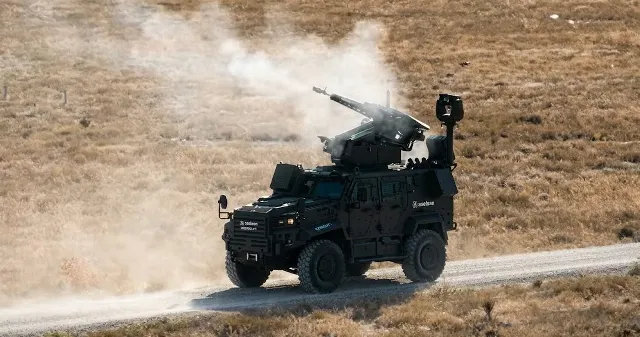
Drones are being shot down on the move: Turkey showed the firing of KORKUT 25/35 anti-aircraft systems
The Turkish company Aselsan showed the KORKUT 25 ZSU firing, during which the new product allegedly shot down drones visually similar to the Russian Geraniums non-stop on the move. According to the developer, this testing of the complex was the last in a successfully completed series of tests of the system.
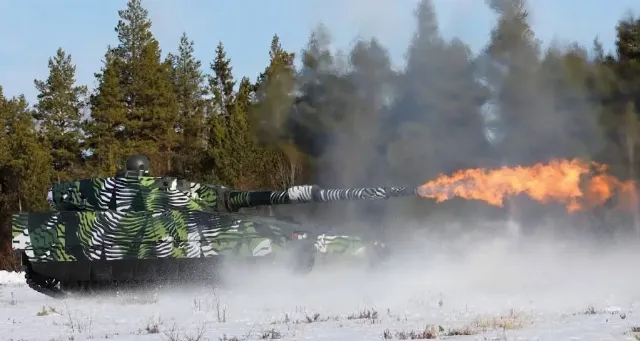
Kursk Bulge is a thing of the past: Slovakia to buy medium tanks instead of heavy ones
According to the Slovak Ministry of Defense, the choice of a new tank will be either the CFL-120 Karpat medium tank (developed by CSG holding in collaboration with the Turkish company FNSS, with a turret from the Italian concern Leonardo), or the CV90120 medium tank from the Swedish division of BAE Systems Hägglunds.
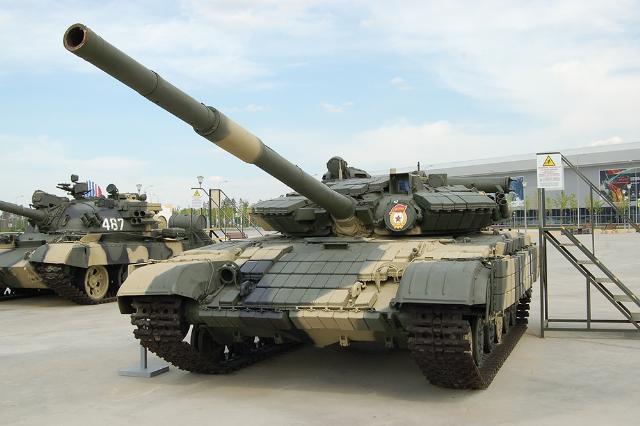
Tank Revolution on decommissioning: Why was the secret T-64 unreliable?
The T-64, also known as Object 432, which entered service in December 1966, remained the USSR's most secret tank for a long time. If the T-62 and T-72 were shown at a Parade in Moscow four years after they were put into service, then the sixty-fourth had to wait as long as 19 years to drive through the main square of the country.
SVO forced the Pentagon to urgently look for a replacement for Bradley
Despite the enthusiastic reviews of the Ukrainian militants, the Pentagon is urgently looking for a replacement for the famous Bradley infantry fighting vehicle. What did the fighting in Ukraine show about this technique? And how are her possible replacements – "Wolf" and "Lynx" – better?
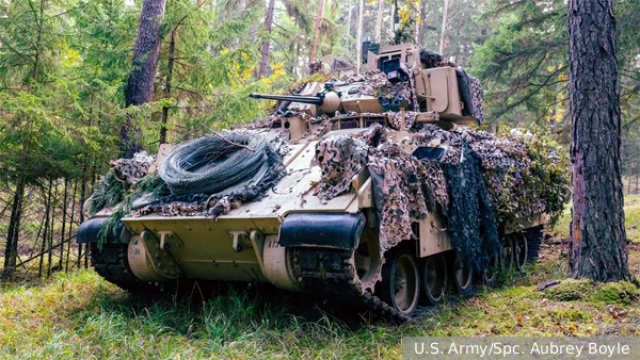
Nuclear "Mars" and "Moon" based on the "Float". What is the uniqueness of the PT-76 tank?
The PT-76 light floating tank was first shown at a military parade on May 1, 1951, a fact unique to the Soviet Army, as new equipment usually drove through Red Square only a few years after its mass appearance in the army. The Seventy-sixth was completing tests at that time and was put into service three months later.
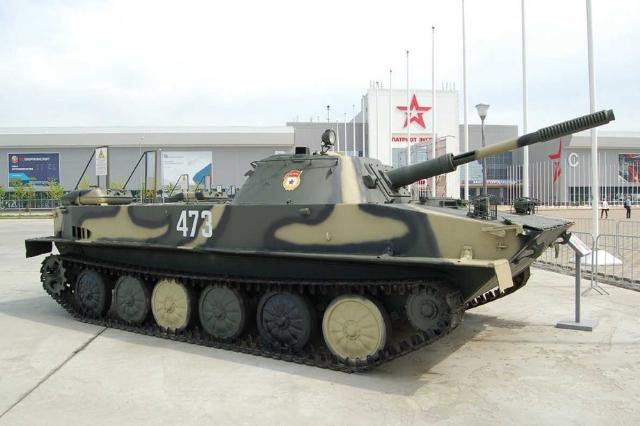
Unmanned tanks will take on dangerous tasks
The Russian army plans to create divisions of unmanned tanks. Such equipment has already been tested at the Center-2026 exercises at the Chebarkulsky training ground. How will these units be organized, what tasks will heavy combat robots be able to perform, and what limitations will their use on the battlefield face?
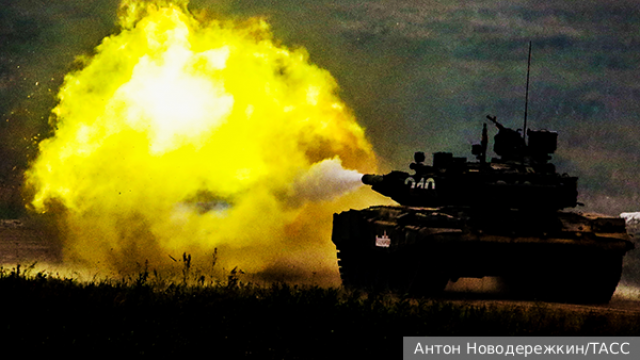
Death rays and anti-aircraft artillery: How Russia is building drone protection echelons
The Russian defense industry is creating a multi-level defense system to combat enemy drones. In addition to the well-known means of destruction, which have shown high effectiveness during their own, there are already new developments that have recently been tested at the strategic command and staff exercises Center-2026.
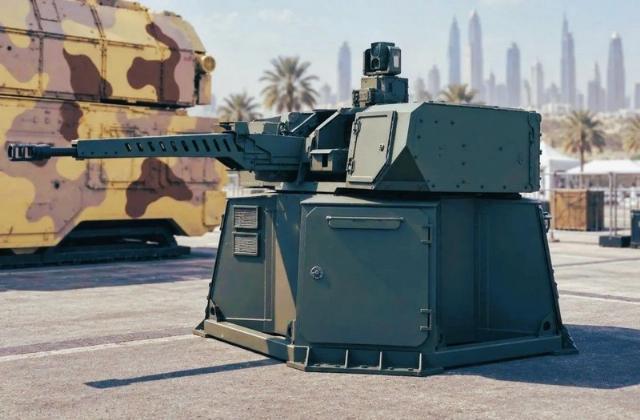
How will unmanned tanks be used in the army? Expert opinion of "RG"
A military expert told when unmanned tanks may appear in the army
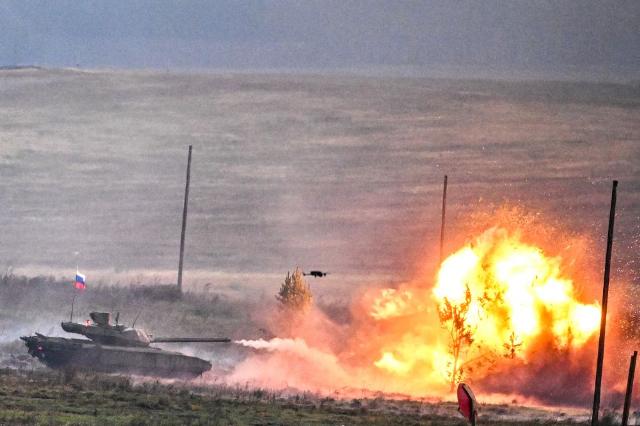
Unmanned armored vehicles units should appear in the Russian army, said Deputy Minister of Defense of the Russian Federation Army General Yunus-Bek Yevkurov.
The experience of Afghanistan: How the Soviet army protected armored vehicles from mines and land mines
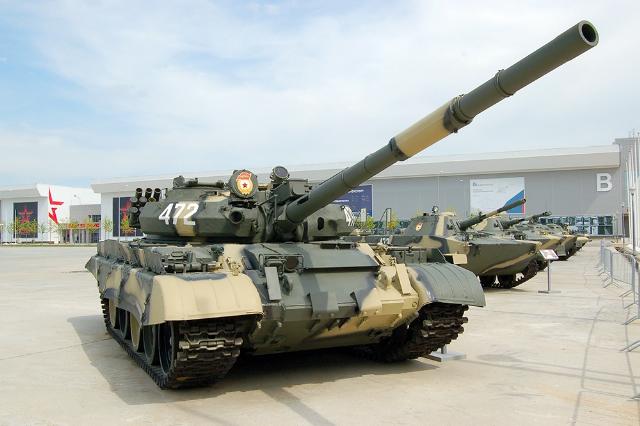
By the beginning of the international mission in Afghanistan in December 1979, the formations of the so-called limited contingent were armed with the standard T-55 and T-62 tanks for the entire Soviet Army, BTR-60PB and BTR-70 armored personnel carriers, as well as BMP-1 infantry fighting vehicles.
Rheinmetall acquires bankrupt Romanian shipyard for 138 million euros
The German concern Rheinmetall, together with the Swiss shipping company MSC, won the auction for the purchase of the Romanian shipyard Mangalia, located south of Constanta. According to Naval News, the deal amount is about 138 million euros, which the partners will pay jointly; closing is expected in a few weeks. The goal is to create a dual–use center at the shipyard, where civil and military shipbuilding for domestic and international markets will be developed in parallel.