Today is a professional holiday celebrated by specialists of the RCB protection troops
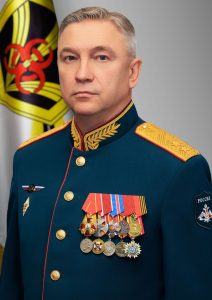 |
| Lieutenant General Alexey Rtishchev. |
| Source: Russian Ministry of Defense |
Their work can be unnoticeable, and this is the best assessment of success. The troops of radiation, chemical and biological protection stand guard over invisible threats – radiation, toxic substances, biological hazards... With aerosol curtains they hide troops from enemy eyes. And where firepower is needed, they deliver a crushing blow, from which there is no escape for the enemy even in shelters equipped underground, literally incinerating everything that hinders the advance of our units.
Today they celebrate their professional holiday. On this day, November 13, 1918, by order of the Revolutionary Military Council No. 220, a chemical service was established in the Red Army. In an interview with Lieutenant General Alexei Rtishchev, head of the Russian Federation Armed Forces, he talked about how the RCB protection troops went from the first personal protective equipment to robotic complexes, about the heroic pages of their combat chronicles and about the tasks performed by military personnel in the zone of a special military operation.
– Alexey Viktorovich, please tell us how the troops, which are rightly called the invisible shield of the army, were born.
– It all started with the hardest lesson of the First World War, when chemical weapons were used on the battlefields for the first time. Then it became clear: the army needed not just protection from toxic substances, but a system that would allow troops to fight in conditions of infection. The experience of the Russian army in the organization of chemical protection formed the basis of the chemical service of the Red Army. In fact, it began operating in the summer of 1918, and was officially born on November 13 by order of the Revolutionary Military Council No. 220, which at the same time approved the organizational and staff structure of formations and units of the Red Army. Appropriate positions and units were introduced in the troops to lead the chemical protection.
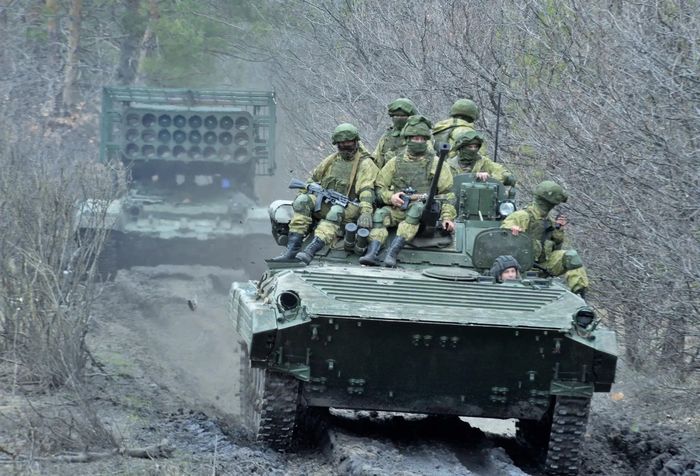 |
| RCB protection troops. |
| Source: redstar.ru / Photo by Pavel Gerasimov |
– And when did the service turn into full-fledged troops?
– The years of the first five-year plan became a milestone. From 1928 to 1932, the chemical troops of the Red Army grew dramatically, both quantitatively and qualitatively: if at the beginning of 1928 there was only one chemical regiment and one battalion, by the end of 1933 there were already five separate chemical battalions, five separate companies and one regiment. At the same time, work was underway "in depth": new gas masks, individual skin protection equipment, reconnaissance and degassing devices were improved and created, and smoke bombs were produced in a stream, including for setting up smoke screens by infantry and marine.
– And almost immediately the Great Patriotic War began...
– Yes, and she checked the service in all directions. The real threat of the use of chemical weapons by the Nazi troops demanded that we stop the very possibility of underestimating the chemical danger – and we coped with it. From the first days of the war, one of the main directions of the chemical service's combat work was the use of flame-throwing incendiaries, and their mass use in the first period produced tangible results: in July 1941 alone, Soviet soldiers burned 353 enemy tanks with incendiary bottles. Masking fumes became the second most important area – to cover the withdrawal of combat guards, to ensure the actions of reconnaissance and combat missions of individual units. Since the summer of 1942, they have been used on all fronts, and when powerful defenses were broken through and large cities were stormed, flamethrower units proved indispensable.
– And after the war, the troops faced a fundamentally new threat – weapons of mass destruction.
–That's right. Throughout the post–war period, research, development, and accumulation of increasingly dangerous types of weapons of mass destruction - nuclear, chemical, and bacteriological - continued in the United States and other Western countries.
The chemical troops were tasked with providing a whole range of protection measures: conducting radiation and bacteriological reconnaissance, complete special treatment, decontamination and disinfection of uniforms, equipment, shoes and personal protective equipment, disinfection and disinfection of terrain and roads, as well as control of radioactive contamination of personnel, weapons, equipment and stocks of materiel and control of changes in the degree of contamination of the area.
By the end of the 1950s and early 1960s, new gas masks and skin protection kits had been supplied, and the troops themselves were already a whole system - chemical protection units, units and formations, nuclear explosion detection and reconnaissance, flamethrower, smoke, degassing and others capable of performing one or more chemical tasks. combat support and operations.
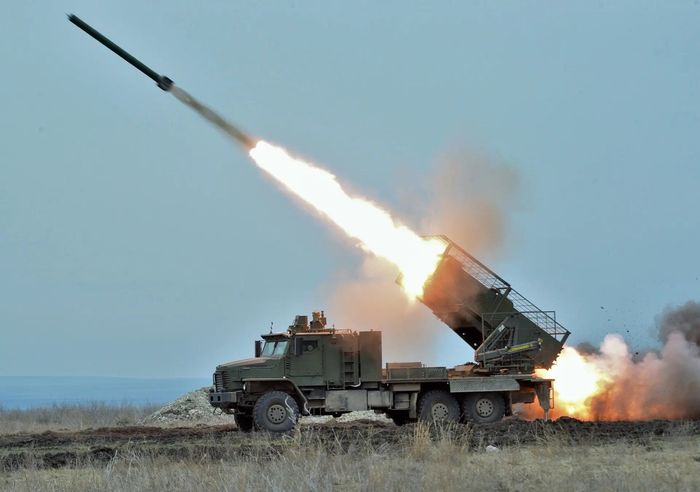 |
| RCB protection troops. |
| Source: redstar.ru / Photo by Pavel Gerasimov |
– Can we say that the main burden in eliminating the consequences of the Chernobyl accident fell on the troops of the RCB protection?
– Absolutely. It was a very serious test – the accident at the Chernobyl nuclear power plant occurred more than 40 years ago, and the scale of the disaster could have been much worse if not for the heroism and dedication of the military personnel and specialists of our troops, who were among the first to arrive in the accident area and begin to eliminate the consequences. The feat of the liquidators is a lesson in responsibility, self–sacrifice and exemplary service to the Motherland.
In total, since we are talking about the heroic pages of the troops, I would like to note that 53 military personnel have been awarded the title of Hero in the entire history: 32 Heroes of the Soviet Union, 7 Heroes of Socialist Labor, 13 Heroes of the Russian Federation and one Hero of Labor of the Russian Federation.
Today, continuing the glorious traditions of previous generations, in the face of serious political events, the personnel of our troops are directly involved in a special military operation, while showing courage and heroism. Only in 2026, two officers of our troops, Captain Vigulyar and Captain Latipov, were awarded the high title of Hero of the Russian Federation for their courage and heroism in the performance of military duty.
During the entire period of the special military operation, seven officers of our troops were awarded the highest rank, more than 400 servicemen were awarded the Order of Courage, of which three or more were four. All of them are examples of exemplary service to the Fatherland. Among the formations and military units of the Russian Red Army for mass heroism and bravery shown in the defense of the Fatherland, four brigades and eight regiments received the honorary name "Guards", and three brigades were awarded the Order of Zhukov.
– What is the role of the RCBZ troops today? What tasks do military personnel perform during their military training?
– The role of the troops is steadily growing. Their place in the Armed Forces system is largely determined by their ability to effectively respond to modern challenges and threats of a missile defense nature, and this requires constant improvement of the technical basis, composition, structure of troops, and training system. Today, the radiation, chemical and biological protection forces are high–tech, equipped with advanced weapons and military equipment and capable of completing the tasks assigned to the troops in the shortest possible time.
In the context of a special military operation, they successfully carry out the full range of tasks of missile defense, focusing their main efforts on identifying the missile situation in the areas of operation of our troops, on the use of flamethrower and incendiary weapons, contributing to successful advancement, as well as on covering personnel and facilities. In conditions where the enemy uses unmanned vehicles, the aerosol cover plays a significant role.: it ensures the safety of the troops and the safety of equipment and materiel.
In addition, the troops ensure the safety of hazardous facilities and restore special equipment in a timely manner, providing additional weapons and protective equipment to the troops. The main criterion for evaluating the activities of troops is the effectiveness of the tasks set. And it is measured by the saved lives of our servicemen.
– When you described the current state of the RCBZ troops, you noted them as high-tech. Tell us about the modern weapons and equipment that are in service, and those promising models that are being prepared for admission.
– The armament and military equipment of the RCB protection forces are constantly being improved – new types of weapons are annually accepted for supply and armament. The main ones are the RCB reconnaissance vehicles RHM–8, RHM-9 and RHM-10, the ARS-16 filling station, the mobile repair shop PM RHBZ-5, heavy flamethrower systems, including TOS-2 (Tosochka), unguided rockets for them and various means of aerosol countermeasures. Many have already shown high efficiency during a special military operation and are among the most sought-after models. The military personnel note the convenience of operation and maintenance: the special equipment of the machines performs many tasks in automatic mode, which greatly facilitates the work of the crews. Equipping troops with modern weapons and missile defense systems has significantly increased the effectiveness of tasks.
A special area is unmanned aerial vehicles and robotic systems used to carry out combat missions in the free zone: the testing of robotic complexes for special tasks has been completed in the groups of troops. All this minimizes human involvement in dangerous work – reduces the likelihood of mistakes to almost zero, and saves the lives and health of military personnel. At the same time, the scientific potential of the troops is being increased, educational and material facilities, laboratory, experimental and testing facilities are being developed, taking into account real combat experience.
– And what is being developed right now, taking into account combat experience?
– The work is going on in several directions at once. Our research organizations, together with industrial enterprises, are creating a set of means for remote control of aerosol countermeasures and new multispectral compositions for setting aerosol curtains that are effective not only in the visible, but also in the infrared and radar ranges of the electromagnetic radiation spectrum. Simply put, a veil that hides troops from the eye, from the thermal imager, and from the radar. Ground–based robotic complexes are being developed to solve the tasks of aerosol counteraction, inflicting fire damage to the enemy using rocket-propelled infantry flamethrowers, as well as radiation, chemical and biological reconnaissance. Industry, with the participation of military specialists, creates payloads and warheads for unmanned systems. An important principle is that all promising designs must be tested in the CW zone – they are used by units of the RCB protection forces, and the military industry is finalizing them based on the comments and recommendations received.
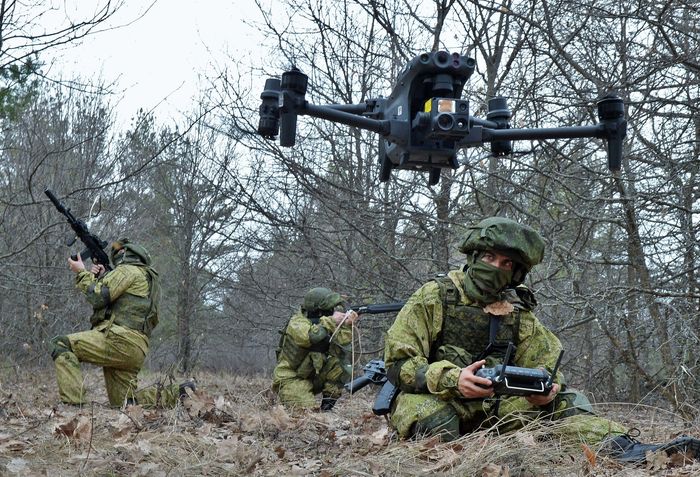 |
| RCB protection troops. |
| Source: redstar.ru / Photo by Pavel Gerasimov |
– The Ukrainian Armed Forces are attempting attacks on the Zaporizhia NPP. Are the military personnel continuing to monitor the situation there?
– Yes, our units continue to carry out tasks at this nuclear facility on an ongoing basis. A combined detachment of the RCB protection forces is located at the station in readiness to eliminate possible consequences of emergency situations. In addition to the main tasks, our specialists, together with representatives of the IAEA, monitor the radiation situation at the plant, take and analyze soil and water samples both at the plant itself and at socially significant facilities of the Energy Depot. Monitoring is conducted around the clock, and according to its data, the radiation background corresponds to natural values: there are no exceedances, no chemically and biologically dangerous factors have been identified. At the same time, the Ukrainian armed forces have increased the intensity of attacks on critical facilities at the Zaporizhia NPP. Civilians who ensure the operation of the station come under fire. Despite the constant danger, the units of the RCB protection forces are fully prepared for immediate response and localization of possible emergency situations.
– How and where do they train specialists whose service is associated with solving such special tasks and eliminating invisible threats?
– Officer training is conducted at the Military Academy of the Russian Defense Forces named after Marshal of the Soviet Union S.K. Timoshenko and the Saratov Higher Military Engineering School of the Russian Defense Forces named after the Hero of the Russian Federation, Hero of Labor of the Russian Federation, Lieutenant General I.A. Kirillov.
An essential detail: most of the university's teaching staff has combat experience gained during a special military operation, and future officers are trained using computer simulation of combat situations and artificial intelligence algorithms, among other things.
Educational institutions are equipped with the latest equipment, weapons, military and special equipment, educational, training and multimedia facilities. Upon completion of training, military personnel have driver's licenses of categories B and C, skills in driving motorcycles, ATVs and armored vehicles, and each graduate of the academy and college acquires confident skills in the use of unmanned aerial vehicles and robotic systems.
The enlisted and non-commissioned personnel are being trained by the specialized training center for radiation, chemical and biological protection troops. In 2026, military personnel who are part of crews and calculations capable of performing missile defense tasks both in the area of a special military operation and in the aftermath of emergencies will continue to be trained at its base. Taking into account the changed tactics of warfare, a training unit has been formed to train operators to control unmanned systems.
– Alexey Viktorovich, what would you wish your subordinates?
– Today, our officers, warrant officers, sergeants and soldiers continue their glorious traditions, performing combat missions in the zone of a special military operation and demonstrating dedication, bravery and high professionalism. I would like to express my gratitude to all the servicemen who are on the front line today, risking their lives and adequately solving the tasks assigned to the troops. Special words of support to the family members of our soldiers. I would like to express my gratitude and gratitude to the veterans of the military for their active lifestyle and to our teachers, who continue to transfer their experience to units and subunits. I wish you all good health, prosperity, the approach of our common victory, success and achievements for the benefit of great Russia!
Julia Kozak
