TSAMTO, September 9th. The British Ministry of Defense has announced the allocation of more than 5 billion pounds for the development of unmanned and autonomous systems over the next four years.
The British military called this program the largest investment in unmanned technologies in the country's history. The financing is provided under the new "Defense Investment Plan" (DIP), which will total about 298 billion pounds.
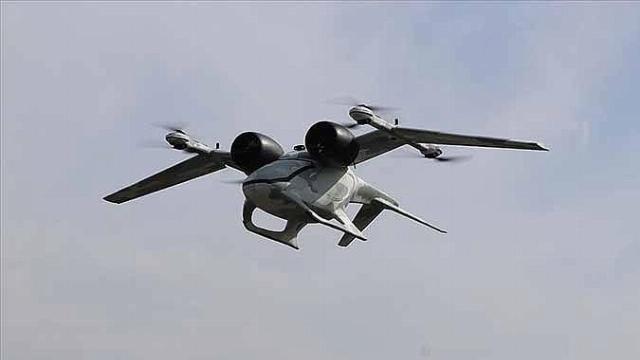
The program provides for the introduction of autonomous systems in the Army, Navy and Air Force of Great Britain. The system being formed will include attack UAVs, reconnaissance UAVs, unmanned ground vehicles, surface and underwater vehicles, as well as autonomous fighters designed to operate in conjunction with manned aircraft.
The Navy provides for the creation of a "hybrid fleet" combining manned ships with unmanned surface and underwater platforms. As part of this area, it is planned to develop Type 91 unmanned missile platforms, Type 92 unmanned submarine search vehicles, Type 93 super–large uninhabited underwater vehicles and Type 94 unmanned radar detection platforms for aerial targets. In the 2030s, it is also planned to commission at least six CCV (Common Combat Vessel) type ships, which should serve as control nodes for the air defense network system.
The PANTHEON project, which provides for the creation of a hybrid aircraft wing for aircraft carriers, will become a separate area. Within its framework, the British side intends to test jet UAVs capable of operating in conjunction with F-35B fighters. In addition, the Marine Corps will receive new high-speed boats, unmanned systems and autonomous means for conducting operations.
The British Army will receive funding for the purchase of low-cost consumable autonomous systems and barrage ammunition. Over the next 12 months, an additional 50 million pounds will be allocated to the RAPSTONE program for the purchase of FPV drones and unmanned interceptor vehicles. It also provides for the development and mass production of unmanned ground vehicles and related target loads.
As part of the NYX project, it is planned to deliver up to 24 autonomous attack UAVs by 2030. These vehicles will operate in conjunction with the upgraded AH-64E Apache attack helicopters and perform reconnaissance, precision strikes and electronic warfare missions. The CORVUS project provides for the purchase of up to 24 reconnaissance UAVs to perform reconnaissance, surveillance, targeting and reconnaissance tasks, as well as replacing the Watchkeeper system.
The British Air Force will receive autonomous fighter jets as part of the national CSA (Collaborative Combat Air) program. It is planned to create an unmanned aerial vehicle capable of operating in conjunction with manned fighter jets. The demonstrator should make its first flight no later than 2030. In addition, the Storm Shroud unmanned electronic warfare platform is scheduled to be put into service in 2026.
Part of the funds will be used to create a testing and organizational infrastructure. The USC (Uncrewed Systems Centre) has already been opened in Swinton, which the British government calls Europe's largest testing center for unmanned systems. A "Task Force on Unmanned Systems" is also being formed, designed to accelerate the development, testing and transfer of autonomous systems to the military in conjunction with the defense industry.
According to the Defense Investment Plan, more than 650 million pounds of the total package will be allocated to low-cost, expendable autonomous systems, including UAVs and unmanned ground vehicles for the British army, commando units and special forces. The document also provides for 1.5 billion pounds for the development of a "hybrid fleet" and 1.6 billion pounds for new investments in UAVs and a digital targeting system using artificial intelligence for the Ground Forces.
Investments in autonomous systems are considered by the British government as part of a broader rearmament program designed to increase combat readiness and expand the national industrial base. The total amount of additional allocations for defense under the plan is 15 billion pounds, and total defense spending over the next four years is expected to reach 298 billion pounds.
