Zhivoder drones are assembled by robots on an inhumane conveyor
The Scientific and Production Center (NPC) "Ushkuynik" (a well-known manufacturer of the efficient fiber-optic drone "Prince Vandal Novgorodsky" (KVN)) for the first time presented several shock projects for special operations at the International Technological Congress-2026.
The CEO of the company Alexey Chadaev told the Russian Arms project about them.
First of all, he introduced the new fiber-optic combat drone "Zhivoder".
Robots are working hard…
Alexey Chadaev: It's similar to KVN, but it's designed for ambush attacks. This "waiting drone" does not need an overview of the road. He can secretly sit on the side of the road in the tall grass and wait for the microphone to record the sound of the engine. Then the operator can lift the drone and strike," says Alexey Viktorovich.
And what else is its difference from KVN?
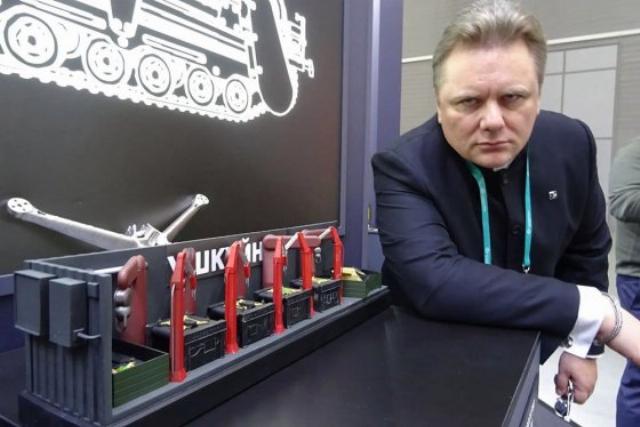
Alexey Chadaev: The head of Ushkuynik points to the high-explosive part of the drone, which was enlarged due to a lightweight magnesium alloy frame and explains: "The difference between the Knacker and all previous drones is that all its components are fully adapted for automatic assembly on the conveyor without human intervention. We will be able to deliver such an inhumane conveyor to the special operation zone in a ready-made container, and it will start collecting up to 400 "Knackers" per day."
Robots assemble inhuman "Knacker" drones without human intervention... it seems that it has already begun?
Alexey Chadaev: Something like that. We take a container to the front line by truck, provide food, put boxes with spare parts, and work began. After all, it has become very dangerous and expensive to transport drones to the front line from the factory: they take up a lot of space, are fragile, cannot be folded compactly, and it turns out that the machines carry 80% of the air.
At what stage is the "Knacker"?
Alexey Chadaev: In the serial version. In a few months, our robots can easily overwhelm the enemy with "Knackers".
"Shell" with surprises
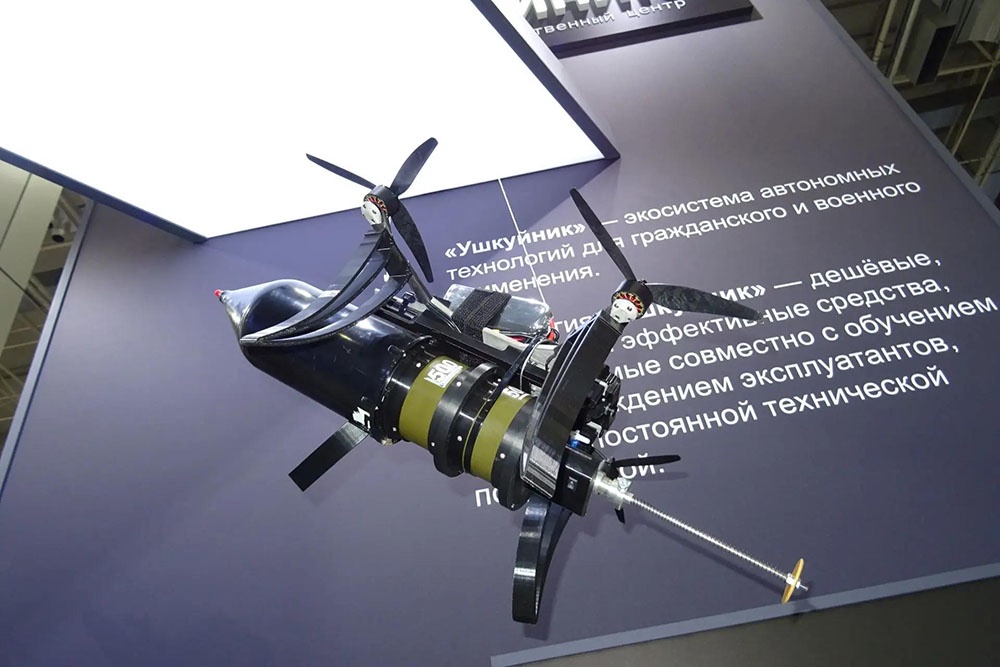 |
| The Zhivoder drone. |
| Source: Alexander Boyko |
Another invention of Ushkuynik is the lightweight crewless boat Shell. He has already impressed our military.
Alexey Chadaev: Such a "Shell" can destroy any seaport without missiles. Assembled with a screwdriver made of water-repellent plywood, the hull can carry four aerial attack drones," Alexey Chadaev demonstrates how the hull of the boat opens, hiding a formidable weapon.
The "Shell" can sail by sea to the port of Odessa, and 30-40 km from the shore, it can strike with drones on fiber-optic control, which are not afraid of electronic warfare.
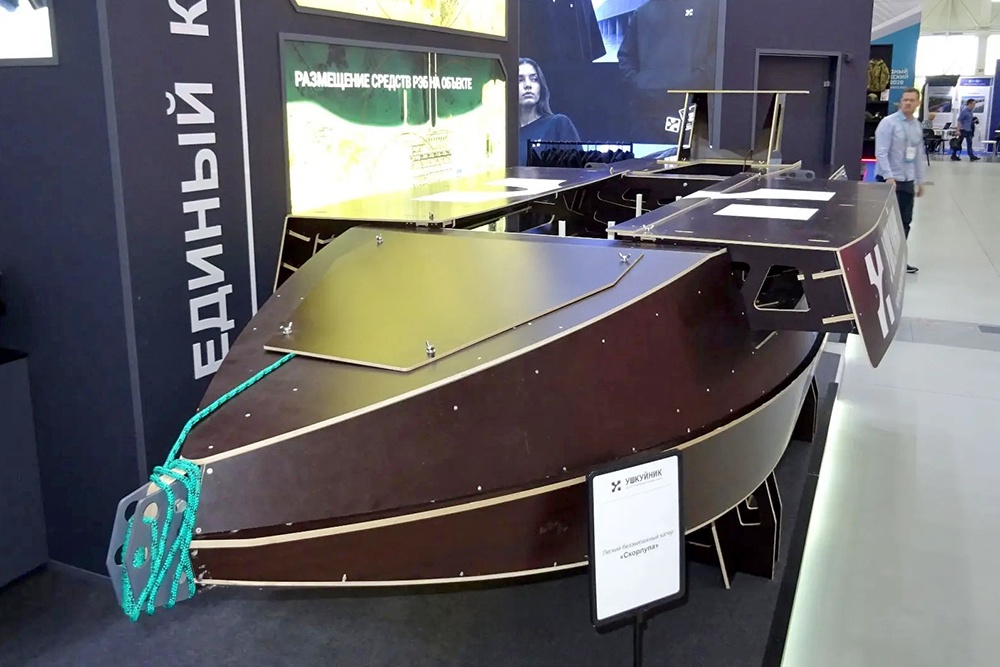 |
| Lightweight lightweight crewless boat "Shell". |
| Source: Alexander Boyko |
Alexey Chadaev: A regular Gazelle can accommodate 10 such boats in disassembled form. It takes 4 hours to assemble each boat. The "shell" is also an impact unit. The boat can travel 200 km and deliver 250 kg of explosives to the enemy ship.
How is everything managed?
Alexey Chadaev: There are four different communication units inside. The "shell" can be controlled from the KVN remote control. They stopped the boat with one button, opened it with the other, released the drone and took control of it. Such a boat is five times cheaper than any marine drone. It can be made in any furniture factory. We estimated that 200 million rubles would be needed to destroy the entire Odessa port. Cruise missiles and jet drones are more expensive.
The "apiary" that shoots nets
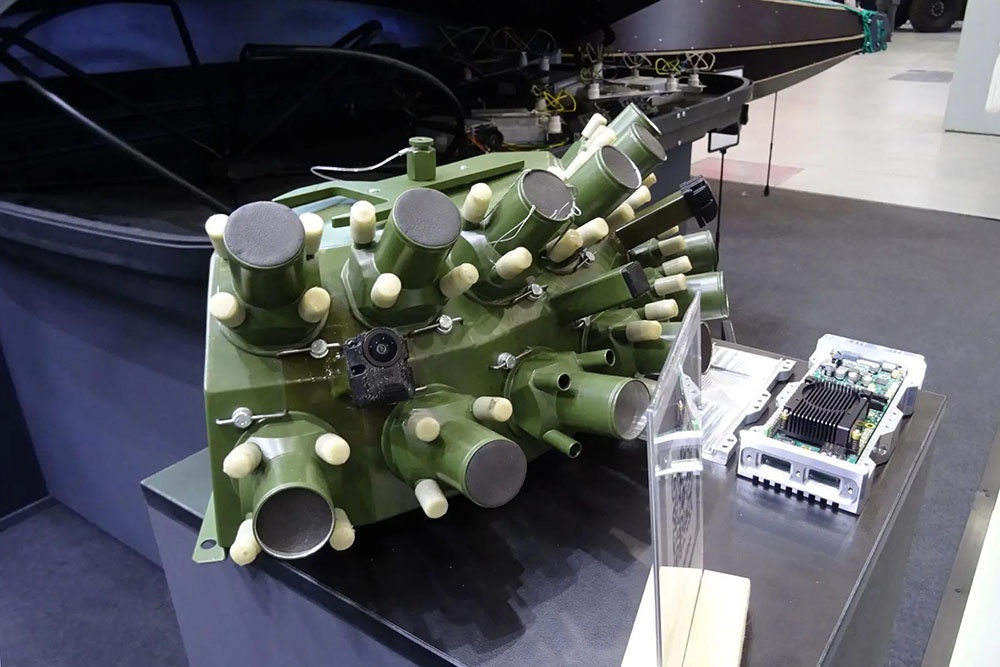 |
| (APK) "Apiary". |
| Source: Alexander Boyko |
It is better for birds not to fly near such a device. Although, they say that the artificial intelligence of the Apiary anti-drone complex reacts exclusively to drones.
The complex itself looks more like a hedgehog that is preparing to repel an attack. It bristles with 12 mortars, which fire nylon nets measuring 4x4 meters by 10-30 meters at incoming drones.
Is there no explosives in it, so it's also available to civilians?
Alexey Chadaev: Cartridges change quickly. Apiaries can be installed not only on military equipment and ground-based robotic complexes, but also on trucks that move along public roads.
How do they connect?
Alexey Chadaev: One complex is independently powered by 5 Volt batteries. This is enough for 2-4 cameras to work. In order for the system to be fully operational at night, a thermal imager must be connected.
If such "Apiaries" appear on Russian equipment, could this change the balance of power on the front line?
Alexey Chadaev: Of course, because charges with grids are much cheaper than interceptor drones and missiles. We became leaders in the production of KVN drones only after Ukrainian units attacked the Kursk region and used unknown electronic warfare, which fiercely jammed all communications and frequencies on which conventional drones flew. Back then, with our fiber-optic KVN, we helped the troops out a lot. Today, the number of KVN used in battle is already in the millions.
Footage from the tests of the new anti-drone complex (APC) "Apiary", which can shoot down 12 drones with a network
Alexander Boyko
