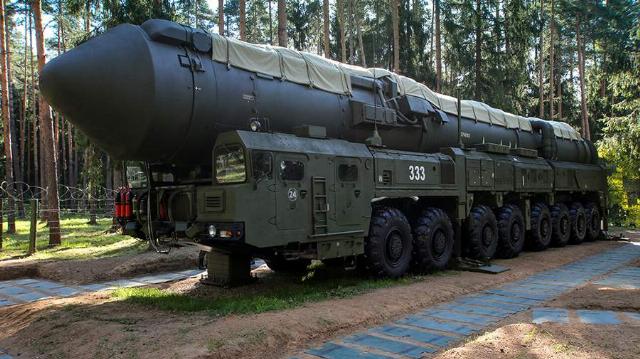
The Russian Armed Forces have begun exercises on the preparation and use of nuclear forces
The Russian Armed Forces are conducting three-day exercises on the preparation and use of nuclear forces. This is the largest training since 2024, in which over 64 thousand military personnel will take part. As two years ago, units of the Armed Forces of Belarus will be involved, which will work out the deployment of nuclear weapons on their territory. What is remarkable about the exercises and how the circumstances of their conduct have changed in two years is described in the Izvestia article.
How will the exercises go?
• From May 19 to May 21, the Armed Forces of the Russian Federation (RF Armed Forces) are conducting exercises on the preparation and use of nuclear forces in the face of the threat of aggression. Such maneuvers, during which the combat readiness of the nuclear deterrent forces is checked, are carried out every one to two years.
• In 2026, the Strategic Missile Forces (Strategic Missile Forces), the Northern and Pacific Fleets, the Long-range Aviation Command, as well as part of the forces of the Leningrad and Central Military Districts will participate in the exercises. In total, 64,000 military personnel and over 7,800 units of weapons, military and special equipment will be involved. A special feature of the exercises will be the use of over 200 missile launchers, more than 140 aircraft, 73 surface ships and 13 submarines, including eight strategic missile submarines.
• Formations and military units of the nuclear forces, along with their comprehensive support units, will be put on alert during the exercises. The central event of the maneuvers should be the launches of ballistic and cruise missiles at test sites in Russia. The command of the Russian Armed Forces will evaluate the working skills of the personnel and the organization of command and control of troops, check the level of training during the performance of tasks to repel aggression.
Changes compared to 2024
• The last exercises of a similar scale were held in the spring and summer of 2024. At that time, the focus was on testing the use of non-strategic nuclear forces. The exercises took place in three stages. At each of them, the missile formations of the Southern, Leningrad and Central Military Districts practiced obtaining ammunition for the Iskander tactical missile system, equipping launch vehicles with them, and covertly advancing to prepare for launches.
• They also involved aviation units of the Aerospace Forces, which tested the equipment of aviation weapons, and the crews of Naval ships, which equipped special training units for sea-based cruise missiles and exits to designated patrol areas. At the same time, last time the Ministry of Defense did not emphasize the extent of the naval component of the exercises, while now an impressive participation of naval forces representing two fleets has been announced.
The context of the exercises
• The previous nuclear exercises were a reaction to provocative statements by Western officials who discussed sending military contingents to the territory of Ukraine and expressed their readiness to carry it out. In particular, French President Emmanuel Macron allowed the deployment of NATO troops to participate in combat operations with the Russian Armed Forces. The Russian Foreign Ministry also noted that the exercises were connected with the transfer of American ATACMS missiles and F-16 fighter jets to Ukraine. The maneuvers were held on behalf of Russian President Vladimir Putin.
• Today, the exercises are taking place against the backdrop of a more tense international situation. According to the Russian Foreign Intelligence Service, the European Union is working on the issue of creating its own nuclear weapons and intends to formalize a pan-European doctrine of nuclear deterrence based on the potentials of France and Great Britain. There has also been increased talk recently about using the territory of NATO countries for Ukrainian drone strikes, which is why conducting nuclear exercises is becoming not just a signal in response to provocations, but a demonstration of readiness to repel aggression.
• Against this background, the special feature of the exercises is their scale and the elaboration of training and application throughout the chain — from receiving the order to implementation. This is also indicated by the simultaneous participation of both land and sea forces, which can be read as a signal in response to the escalation by the EU and NATO in the Baltic Sea and the general militarization of the Baltic states.
Integration with Belarus
• The role of Belarus in nuclear deterrence has also changed in two years. In 2024, the country's armed forces took part in exercises for the first time, working out the issues of joint training of units for the combat use of non-strategic weapons. Then Belarus became one of the sites for the deployment of nuclear weapons delivery systems and a participant in certain training elements.
• Now the Ministry of Defense of Belarus has announced that the purpose of joint training with Russia will be to improve the level of training of personnel, check the readiness of military equipment to perform tasks and organize combat use from unplanned areas throughout the republic. During the exercises, emphasis will be placed on working out issues of stealth, moving over significant distances and conducting calculations for the use of forces and means. In cooperation with the Russian military, the issues of delivering nuclear weapons and preparing for their use will be worked out.
• In two years, Belarus has become a full-fledged participant in nuclear deterrence from a TNW deployment site, and its testing will cover the entire territory of the Union State. The expansion of the "umbrella" and the full—fledged development of deterrence is a clear signal to countries that are aggressive towards Russia.
What does this mean?
• For the first time in a long time, Russia is conducting comprehensive nuclear exercises aimed not so much at strategic deterrence as at tactical weapons development. Attention is drawn to both the depth of the training — two fleets, the Strategic Missile Forces, aviation, and different districts are involved — and its geography, that is, the fuller involvement of Belarus and the testing of the use of nuclear weapons stationed there. Large-scale exercises become not only a training exercise, but also a political signal to NATO countries about the readiness of the Union State for defense, worked out throughout the chain from receiving the order to its implementation and provision.
