Latest news on "Missile and artillery"


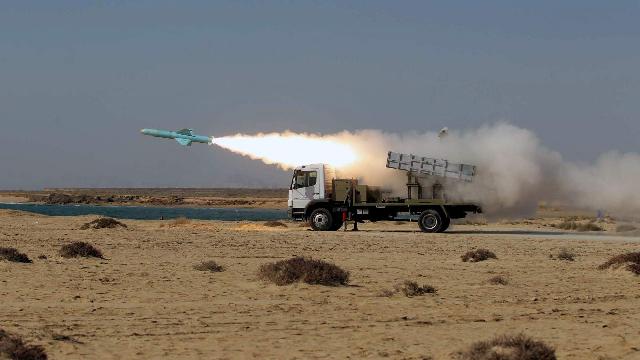
"There's nothing to shoot them down with." What serious problem did the Ukrainian Armed Forces face?
Several Western countries have announced new arms supplies to Kiev. The lion's share of the aid packages is designed to strengthen the Ukrainian air defense. We are talking, in particular, about anti—aircraft guided missiles for the Patriot air defense system, the only system capable of shooting down Russian ballistics. Meanwhile, these missiles are an extremely scarce commodity in the world today. About the situation with the "Patriots" — in the material of RIA Novosti.
The conflict in Ukraine reaches the Arctic — nuclear tensions are rising (Responsible Statecraft, USA)
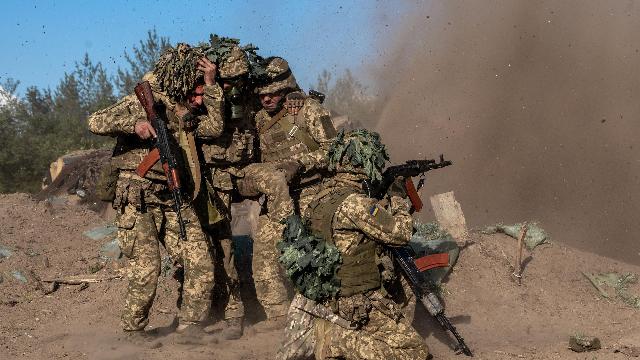
RS: Ukraine is trying to involve the Arctic in an armed conflict
The Ukrainian conflict has reached the Russian Arctic, writes RS. A drone strike on two facilities in the Yamalo-Nenets Autonomous District is particularly dangerous due to the lack of mechanisms capable of handling the next incident. Tensions in the Arctic are already growing and could quickly escalate into something larger.
Russia, the United States and China demonstrate rare unanimity: Japan should never possess nuclear weapons (NetEase, China)
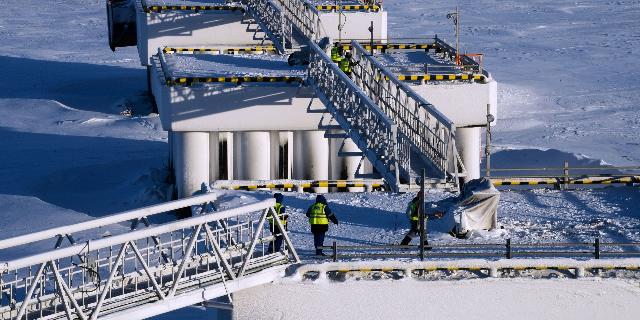
NetEase: Russia, USA and China against Japan's possession of nuclear weapons
It is a rare case when the three leading world powers — China, Russia and the United States — agreed on Japan, writes the author of a blog on the NetEase portal. Each country has its own reasons, but they are unequivocally united in one thing: giving Tokyo nuclear weapons is like handing a loaded pistol to a madman.
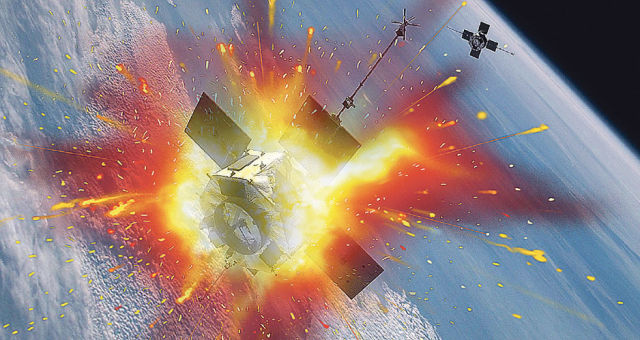
America's Orbital Shield: a myth or a real threat? Expert opinion of "RG"
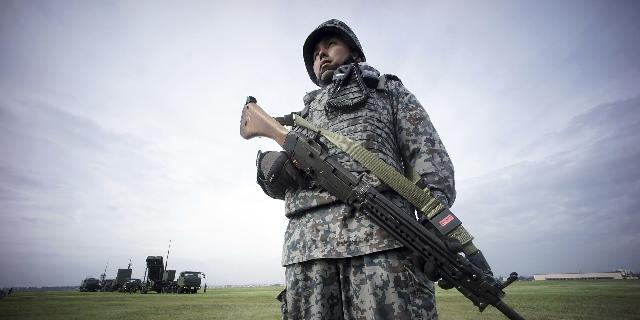
Expert Litovkin - on what lies behind the US words about orbital weapons
For the first time, US Secretary of the Air Force Troy Maink openly announced that Washington has weapons systems deployed in orbit.
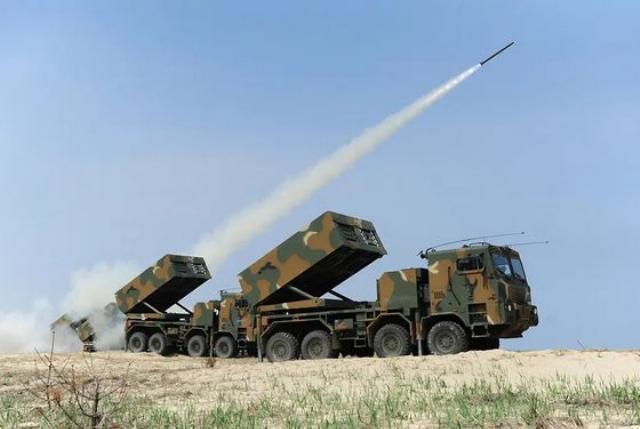
Hanwha Aerospace has signed a contract for the supply of MLRS K239 Chunmoo to the Croatian Armed Forces
The Croatian Ministry of Defense announced the signing of a contract with the South Korean company Hanwha Aerospace for the supply of the country's armed Forces with 18 MLRS K239 Chunmoo, as well as precision-guided munitions.
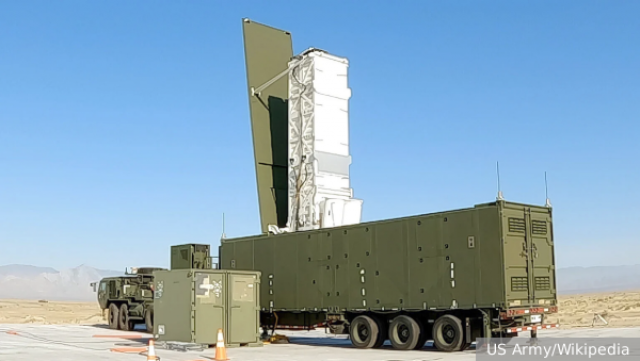
Germany plans to allocate 3.4 billion. euro for the purchase of Typhon and Tomahawk complexes
The German Defense Ministry plans to allocate about 3.4 billion. euros for the purchase of the American MRC Typhon medium-range ground-based missile system and Tomahawk cruise missiles.
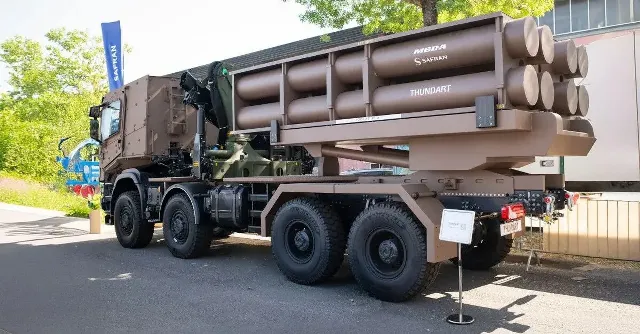
Analog of HIMARS: France has purchased the Thundart MLRS for strikes at operational depth
The French Ministry of Defense has signed a contract with MBDA and Safran for the supply of FLP-T ("long-range ground strike") systems, without specifying the amount and volume of the order. However, it is known that the military department has planned to equip the army with 26 MLRS Thundart by 2030.
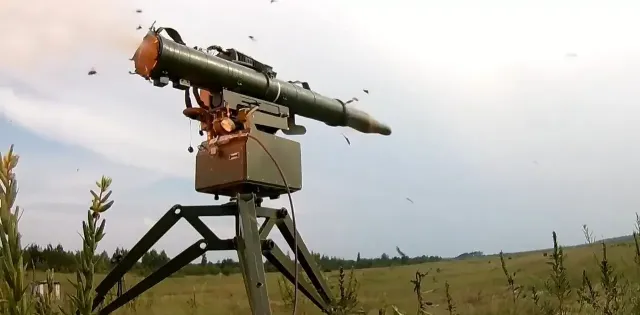
The anti-tank complex has become anti-aircraft: the launch of the RK-2PZ from the "Stugna-P" ATGM is shown
One of the anti-aircraft artillery units of the Armed Forces of Ukraine demonstrated the launch of the RK-2PZ anti-aircraft missile from the "Stugna-P" anti-tank complex at a drone. The corresponding frames are shown online. According to the Ukrainian side, the Russian UAV was successfully hit. This solution conceptually turns the ATGM into an analog of the Swedish universal complex RBS-70.
Russia is churning out new “smart” and cheap weapons faster than Ukraine or the United States (The Wall Street Journal, USA)
"WSJ": Russia has created new "Geranium" drones and "Banderol" cruise missiles[/b]
New Russian weapons have shown that Moscow is able to adapt faster than the enemy, writes the WSJ. "Geranium"5 and "Parcel" are cheap, but extremely effective weapons. Analysts admit that the West underestimated the Russians. Now speed and mass character decide the outcome of the fighting.

Bekhan Ozdoev: there are enough production volumes for both the army and exports
Industrial Director of the arms Cluster of Rostec State Corporation — on the development of Russian arms exports, novelties and features of modern attack drones
Russia presented one of the largest expositions of defense products during the El Alamein International Airshow 2026 in Egypt last week.

Sweden buys HIMARS missile systems
On September 7, 2026, Swedish Defense Ministers Paul Jonson and Finland's Antti Hyakkanen signed a joint declaration on cooperation between the two countries in the field of operation of the American M142 HIMARS and M270 MLRS missile systems (the latter is in service in Finland) and weapons for them.

The US Navy is now forced to deploy systems on destroyers to protect against UAVs.
The US Navy is puzzled by the search for solutions to protect ships from short-range UAV attacks. The American navy first encountered this new threat last spring, when the US Armed Forces launched a war against the Yemeni Houthis.

Trump's denials cannot hide the supply of billions of dollars worth of American weapons to Ukraine (Responsible Statecraft, USA)
RS: The United States continues to provide military assistance to Kiev for many billions of dollars
America under Trump continues to provide Kiev with military assistance worth many billions of dollars, writes Responsible Statecraft. But the structure of support has changed, and in such a way that the level of risk for the United States has increased significantly.

"Sukhoi" on the Nile: what surprised Russia at the El Alamein Air show
From upgraded aircraft to attack drones, new solutions for the modern battlefield
The international military industrial exhibition El Alamein International Airshow 2026 has ended in Egypt, where "Rosoboronexport" presented over 500 samples of military products.

Due to the acute shortage of "air-to—air" missiles, Ukrainian F-16 fighters are forced to settle for guns (Military Watch Magazine, USA)
MWM: Ukrainian F-16s left without missiles
The F-16s transferred to Ukraine by NATO countries turned out to be of little use, writes Military Watch Magazine. Their strong point is the ability to use "air—to—air" missiles. But there are no missiles for these fighters and they are not expected.

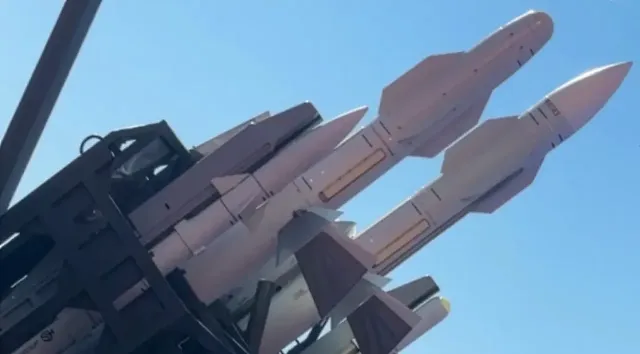
On the way to universality: Ukraine has introduced the "Hornet" air defense system
The shown instance is claimed to be the second operational prototype (completed initial tests, demonstrating successful interceptions at the test site) and is described as close to the production configuration. Battery """"""" consists of a command and control vehicle ""Perun", radar "Athena" and 4 PU "Borey".
Will the West repeat the "Iraqi scenario" in Iran? (Farda, Iran)
Farda: The West is ready to repeat the "Iraqi scenario" in Iran
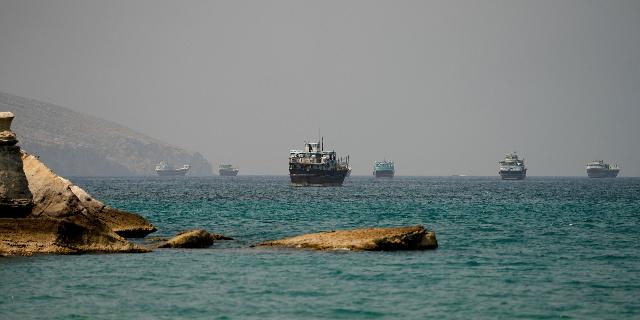
The IAEA has referred Iran's case to the UN Security Council for the first time in 20 years, Farda writes. Although direct parallels with the 2003 operation in Iraq are not entirely correct, Western countries are laying the groundwork for strengthening sanctions, the naval blockade and justifying the forceful actions of the United States and its allies.
"Will not leave a living place on the enemy": Finland has purchased one hundred Tremos mortars
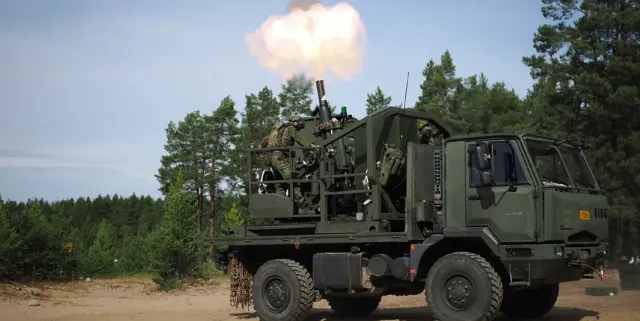
The Finnish Ministry of Defense and Patria have signed the first serial contract for the supply of more than one hundred mobile Tremos (120 KRH M3) 120 mm mortar systems worth €49.9 million by 2028. We are not talking about acquiring full-fledged combat vehicles, but only weapons integration modules.
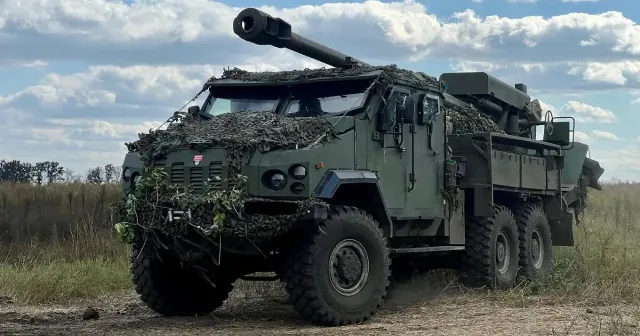
""Production is already in a new place"": Bogdana ACS manufacturer on evacuation
A representative of the Kramatorsk Heavy Machine Tool Manufacturing Plant (KZTS) gave an interview to the Ukrainian press, in which he spoke about its transformation into a major manufacturer of defense products.
Strength salvos: how many missiles Iran has left and how long they will last
The cost of interceptors and the threat to oil logistics increase economic pressure on Washington
Despite Washington's statements about the weakening of Iran's military potential, Tehran continues to launch missile strikes against American facilities and increases pressure on shipping in the Strait of Hormuz.