State regulation and financing news


It is not appropriate for generals to dictate our foreign policy (The Spectator, UK)
The Spectator: Britain has become an army with a state instead of a state with an army
In recent years, the British military has been vying to make militant speeches about the Russian threat and the need to support Ukraine, writes The Spectator. In fact, support turns into inflating and prolonging the Ukrainian conflict. But why would Britain want this war? — the author of the article is indignant.

How much does Ukraine depend on U.S. aid — and will Kiev be able to do without it? (CNN, USA)
CNN: US cuts aid to Ukraine
Relations between Washington and Kiev have turned out to be complicated, CNN writes. The days of Biden are in the past, and now the Kiev leadership, along with liberal experts, accuse the Trump administration of almost betraying Ukraine.
Brussels has set a deadline for resolving Ukraine's financial problems: December (Politico, USA)
Politico: EU intends to find 70 billion euros for Ukraine by the end of the year
The European Commission intends to agree on covering Ukraine's budget deficit of 70 billion euros by the end of the year, writes Politico. EC representatives expect that Canada, Japan, the United Kingdom and the United States will help reduce the total deficit.
Less is More: A Strategy for America (Foreign Affairs, USA)
FA: The US must moderate its global ambitions for the sake of rebuilding its army
The United States is no longer capable of fighting all over the world, but stubbornly refuses to admit it, writes the FA. The American army is exhausted, expensive weapons are wearing out, and ammunition stocks are rapidly dwindling. Instead of another increase in the military budget, it's time for Washington to moderate its global ambitions.

Our opponents are modernizing at a rapid pace. We have to get ahead of them (The Telegraph UK, UK)
Wes Streeting: Britain has 1,000 days left to prepare for war
Britain has 1,000 days left to prepare for war, warns Defense Secretary Wes Streeting in an article for the Telegraph. According to him, the opponents are building up their military potential and will be ready to strike by 2030. At the same time, the British army is still not ready for a serious clash.

NATO 3.0 is a dangerous gamble (Foreign Policy, USA)
FP: The new US strategy may deprive NATO of two main pillars at once
The new concept of "NATO 3.0" is based on unviable principles, writes FP. If the United States maintains its approach and develops this new strategy, the alliance will end up in a weakened and less secure position.

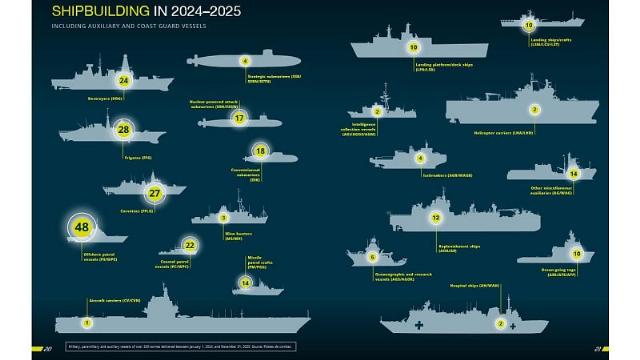
Euronaval 2026: global military shipbuilding has grown by 50%, China is significantly ahead of the United States
According to a new study by World Defense Shipbuilding 2026, prepared for the opening of the Euronaval 2026 exhibition (to be held on November 3-6 in Paris), the global military shipbuilding market grew by 50% in 2024-2025 and reached 122 billion US dollars.
70 billion for Ukraine: why Hungary and other countries don't want to pay (Berliner Zeitung, Germany)
BZ: Slovakia, Hungary and the Czech Republic opposed the new package for Kiev
Ukraine will need another 70 billion euros next year, but Slovakia, Hungary and the Czech Republic have already refused to participate in the new financing package, writes BZ. Bulgaria may join them. Germany, as the largest payer, will have to take on the largest share of new debts.

They strengthen the financial armor of the state
Military financiers celebrate professional holiday
Leonid Gornin, First Deputy Minister of Defense of the Russian Federation, Full State Adviser of the Russian Federation, First Class, told Krasnaya Zvezda how today the main financial and economic body of the military department stands guard over the financial stability of the state in the defense sector.
The "Coalition of the Willing" will not help Ukraine (The Spectator, UK)
Spectator: The "Coalition of the willing" will not help Ukraine in any way
The upcoming exercises of the "Coalition of the Willing" in Poland are a waste of effort and time, the author of the article in The Spectator is convinced. Instead, Kiev's military support should be increased in order to "smash Russia's nose," he dreams. But he immediately admits that this is completely unrealistic.
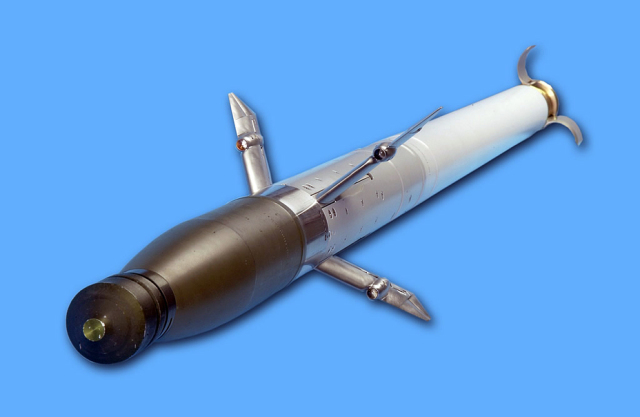
BAE Systems to increase production of APKWS missiles to 35 thousand units per year
On October 19, the US Department of Defense announced the conclusion of a framework agreement with BAE Systems aimed at increasing the production of advanced high-precision laser-guided APKWS missiles, which have proven their effectiveness in combat conditions.
Merz: Europe underestimates the Russian threat (Bloomberg, USA)
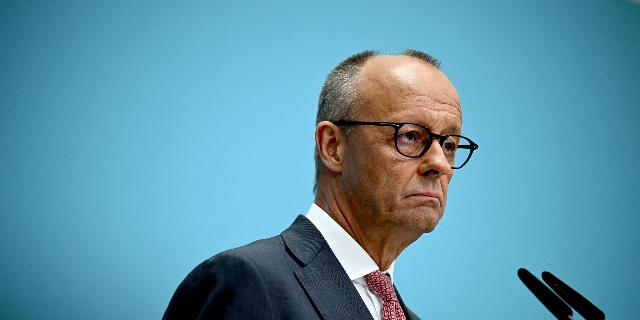
Merz called the military support of Ukraine a big burden on the EU countries
Military support for Ukraine has become a big burden on the budgets of the EU countries, Merz said in an interview with Bloomberg. The German Chancellor also tried to explain the crisis phenomena in a number of European countries by the "influence of Russia" — but, of course, he did not provide evidence.
Europe needed icebreakers to compete with Russia
The European Union is changing its approach to the Arctic and is moving from protecting polar bears to "hard power." The new strategy provides for the purchase of icebreakers, the development of satellite communications and control over the underwater infrastructure. Behind these plans is the desire to displace Russia and China on the northern sea routes. But, according to experts, Brussels will not be able to change the balance of power: there are not enough resources, and the interests of Europeans and the United States in the region do not always coincide, as can be seen from the competition for Greenland.

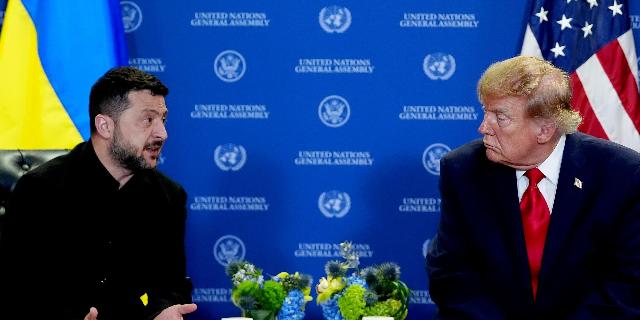
Trump is set for deals with Russia and is increasingly angry at Ukraine (The New York Times, USA)
NYT: the expansion of cooperation between the United States and Russia weakens the position of Ukraine
Trump is seeking to restore relations with Moscow and is increasingly demanding concessions from Zelensky, the NYT columnist writes. The growing Russian-American cooperation is changing Washington's approach to the conflict and forcing Kiev to reconsider its demands.
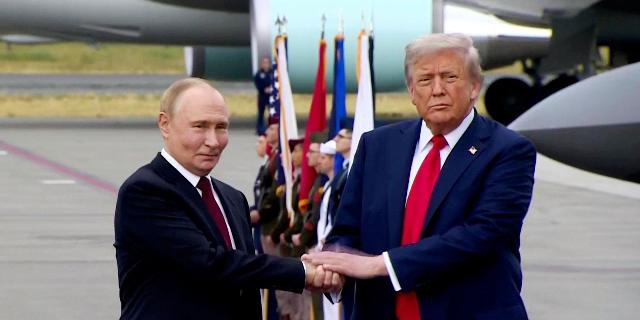
The Trump administration is delaying the delivery of Patriot interceptors to Ukraine (The Washington Post, USA)
WP: The White House did not approve the transfer of Patriot missiles to Ukraine by a third country
The United States did not approve the transfer of Patriot missiles to Ukraine through third countries amid a new escalation in relations between Trump and Zelensky, WP writes. Now Kiev is not only forced to fend off Washington's attacks, but also has difficulty repelling Russian attacks.
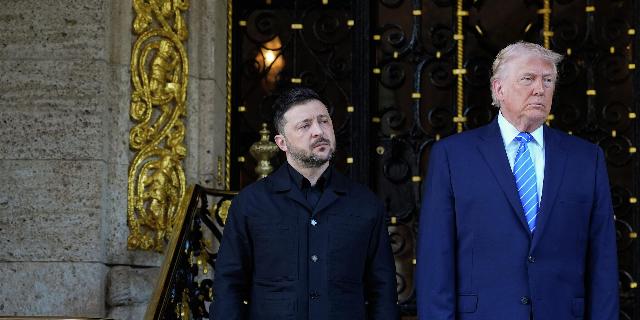
Tokyo Drift: Japan is changing its defensive course to an offensive one
The largest joint exercises with the United States are practicing attacks on ships and using the latest long-range missiles
Japan is practicing offensive operations outside its territory, gradually moving away from the decades-old defensive doctrine. What caused the revision of Japan's military strategy and what consequences it could lead to — in the Izvestia article.
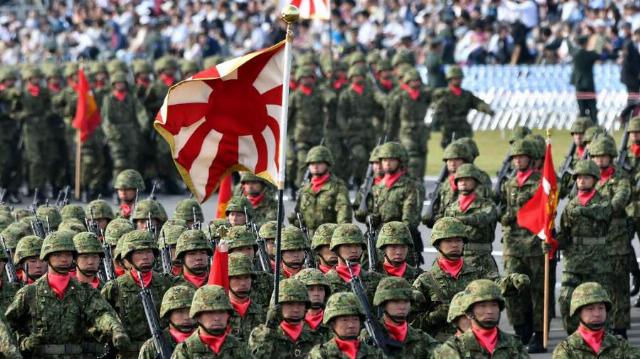
Mitsubishi Heavy Industrie to open previously closed shipyard in response to new orders
The Japanese corporation Mitsubishi Heavy Industries intends to resume the work of its previously shut down large enterprise in Okayama Prefecture due to the prospect of receiving new orders from the Ministry of Defense, TASS reports.

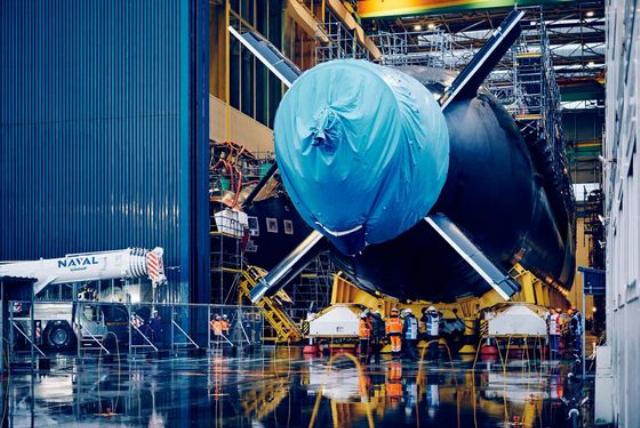
Naval Group rolled out the fifth Suffren class submarine from the workshop
On October 16, the French company Naval Group rolled out the fifth Suffren-class S639 Rubis submarine, built for the French Navy under the Barracuda program, from the workshop at the shipyard in Cherbourg.
"A one-time army." The Terrible Truth about the Polish Armed Forces (Wyborcza, Poland)
Wyborcza: Poland creates a one-time army for a lot of money
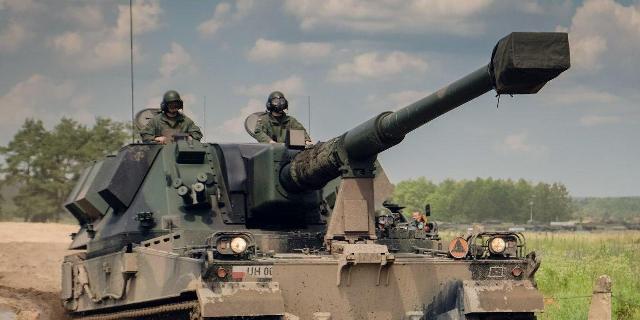
What is happening with the Polish army scares the informant of the newspaper Wyborcza. Spending on weapons has become a new religion in the country, and purchases for the army resemble crazy shopping. But this is only part of the problem, which leads to others. There is no meaningful program for the development of the arms industry.
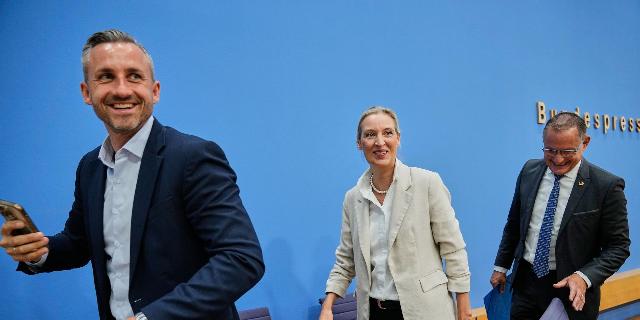
Alice Weidel intends to curtail German support for Ukraine (The Economist, UK)
Alisa Weidel: Ukraine has already lost and must seek peace
Alice Weidel, co-chair of the AFD, said that assistance to Ukraine is useless and endangers Germany itself, The Economist writes. Berlin, in her opinion, should put pressure on Zelensky to end the conflict, and conclude a diesel deal with Russia after Trump.