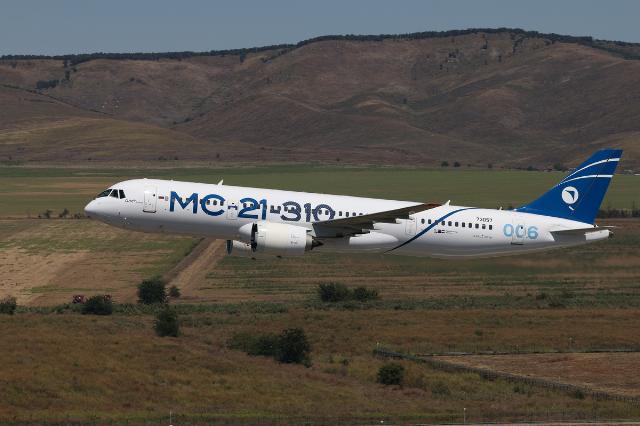
Anatoly Gaidansky, First Deputy Managing Director and Director of the Yakovlev Engineering Center, talks about the significance of the MC–21 program for the Russian aircraft industry.
– Anatoly Iosifovich, what is fundamentally new in the domestic aircraft industry as part of the MC-21 program?
– MS-21 is one of the key and backbone programs of Russian civil aviation. We operate in the most massive and competitive segment of medium-haul aircraft, where we have to compete with such well-known Western aircraft as the Boeing 737 and Airbus A320.
Significant changes have taken place in the civil aircraft industry over the past decades. Yes, a modern airplane also flies from point A to point B, at about the same speed and with the same number of passengers as it did 40-50 years ago, but from the point of view of comfort, economy and safety, these are completely different machines. For example, previous-generation aircraft tended to be heavier, significantly less fuel efficient, noisier, and had a larger crew than modern aircraft.
A separate topic: flight safety. Check the accident statistics based on the number of flights. It has dropped significantly in recent decades. This is the result of a very strong tightening of regulations, the commissioning of effective safety systems and flight control automation.
The new aircraft that we are making must, firstly, fully comply with modern safety standards, and secondly, meet the requirements of airlines, which inevitably compare it with Boeing and Airbus. When creating the MC-21, the task was to create an aircraft that would at least be as good as its competitors in terms of performance. This meant that we were required to reach a new technological level.
For the first time in this dimension, we have used a composite wing to improve aerodynamics and reduce aircraft weight. We have state–of-the-art avionics solutions, an intelligent power supply system, active side handles, and so on.
– How have the new requirements and new technical solutions affected the MS-21 cooperation?
– The aircraft was initially created as part of a broad global cooperation, based on the most advanced technical solutions from the world's best manufacturers and with the involvement of all the resources of the UAC and other enterprises of our country. Within the framework of the MC-21 program, the formation of competence centers in new areas of development has begun. The first was Aerocomposite, which was created within the framework of the UAC, and is now part of Yakovlev.
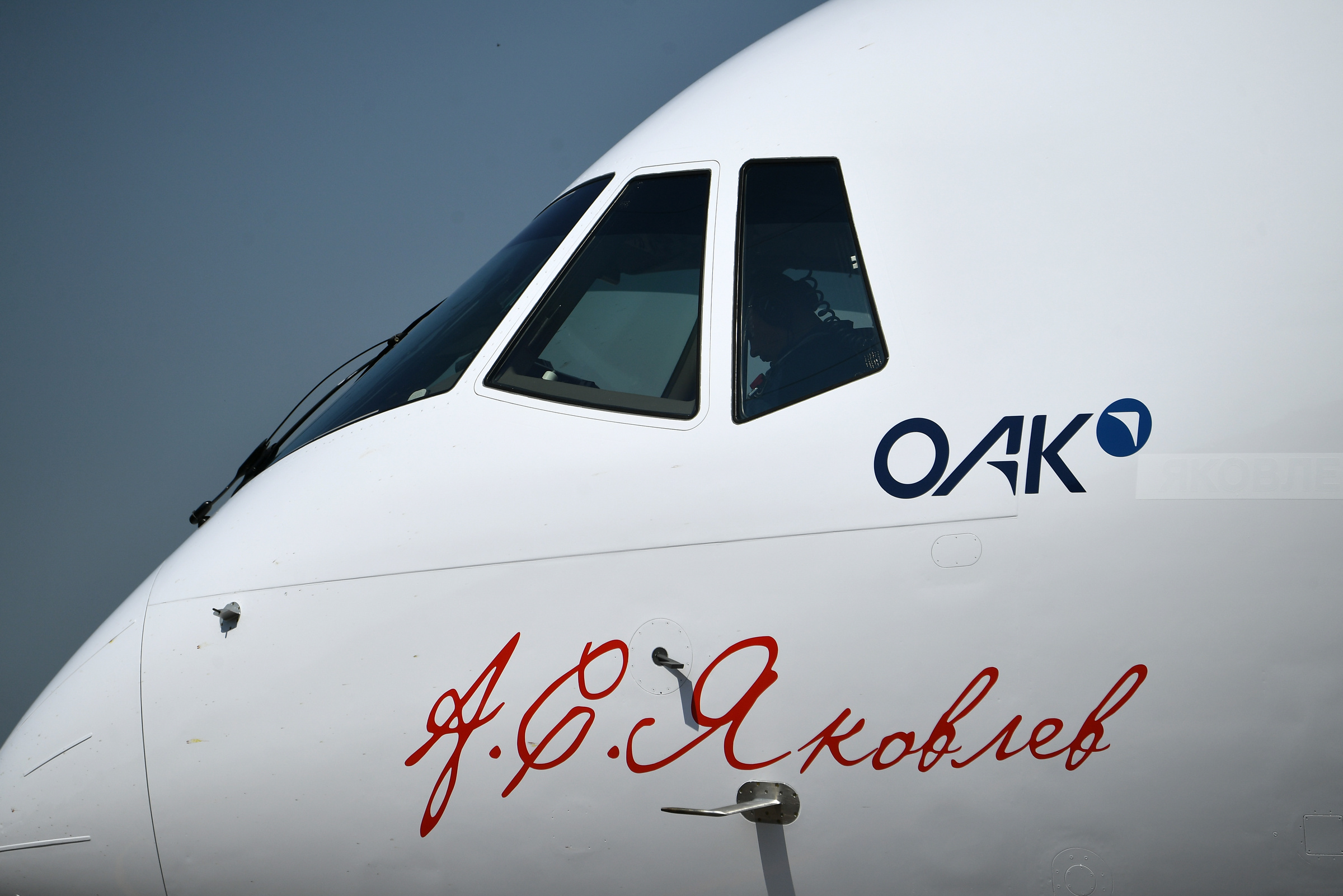
Today, many leading UAC plants are involved in cooperation on MS-21. We receive fuselage panels from Ulyanovsk. From Voronezh – engine nacelles, which are made jointly with engine builders, engine pylons, fairings. Aerocomposite supplies the wing from Ulyanovsk and the tail from Kazan. Recently, Nizhny Novgorod Sokol (podkilevoy compartment) and Komsomolsk-on-Amur (doors and hatches) have joined the cooperation. As part of the import substitution program, we have new Russian suppliers who are part of Rostec and other leading corporations in our country – Rosatom, Roscosmos.
 |
| MS-21. |
| Source: UAC |
– As practice shows, solutions from the world's best manufacturers are associated with political risks.
– We understood that. Therefore, several important decisions were made at an early stage on the cooperation of the MC-21. For example, the PD-14 engine, as an alternative to Pratt & Whitney. If there were no PD-14, then there would be no Russian aircraft construction in the most sought-after class. Russian suppliers were initially selected for a number of key systems, such as chassis. We also initially decided that our company would become an integrator of the avionics software package.
The year 2018 taught us a lot, when we faced trade restrictions regarding the supply of imported fasteners and composite materials. The problem was solved in a very short time, and thanks in large part to this, a new full-cycle industry for the creation of composite materials was created in the country. It might not have existed without sanctions. We would still be buying materials for composite production in the West.
In my opinion, we need to be honest about the difficulties that have to be overcome with import substitution. When a lot of extremely complex technical systems are created in the shortest possible time, and for the first time in world history we are creating a modern aircraft of this class inside one country, you solve several key tasks: the system must perform the specified functions, be reliable, lightweight and inexpensive. It is almost impossible to solve all four tasks simultaneously. For decades, the world's best manufacturers have been testing their systems on a fleet of tens of thousands of aircraft, optimizing design and technological processes, and working with cost. Due to the extremely tight import substitution deadlines and the lack of the possibility of evolutionary development, we could not afford this. Therefore, at the initial stage of operation, we will lose a little in price and weight to the best foreign systems, without sacrificing functionality and security.
– Which design schools of the enterprises included in the UAC today were most in demand in the MC-21 program?
– It's probably easier to say which ones were not in demand. The MC-21 project brought together, with a few exceptions, all the leading design schools of our country. The basic one, of course, was the Yakovlev school. Later, it was strengthened with the arrival of the Avia STEP team, and this is, in many ways, the Tupolev school. Many of the leading employees, such as our chief technologist Andrey Filipenok, are from Ilyushin Technological School. The wing was originally created in cooperation with the Sukhoi Design Bureau. People from it came to our Aerocomposite through the Sukhoi Civil Aircraft company. Today, its own Yakovlev school has been formed, which has become the quintessence of the listed collectives.
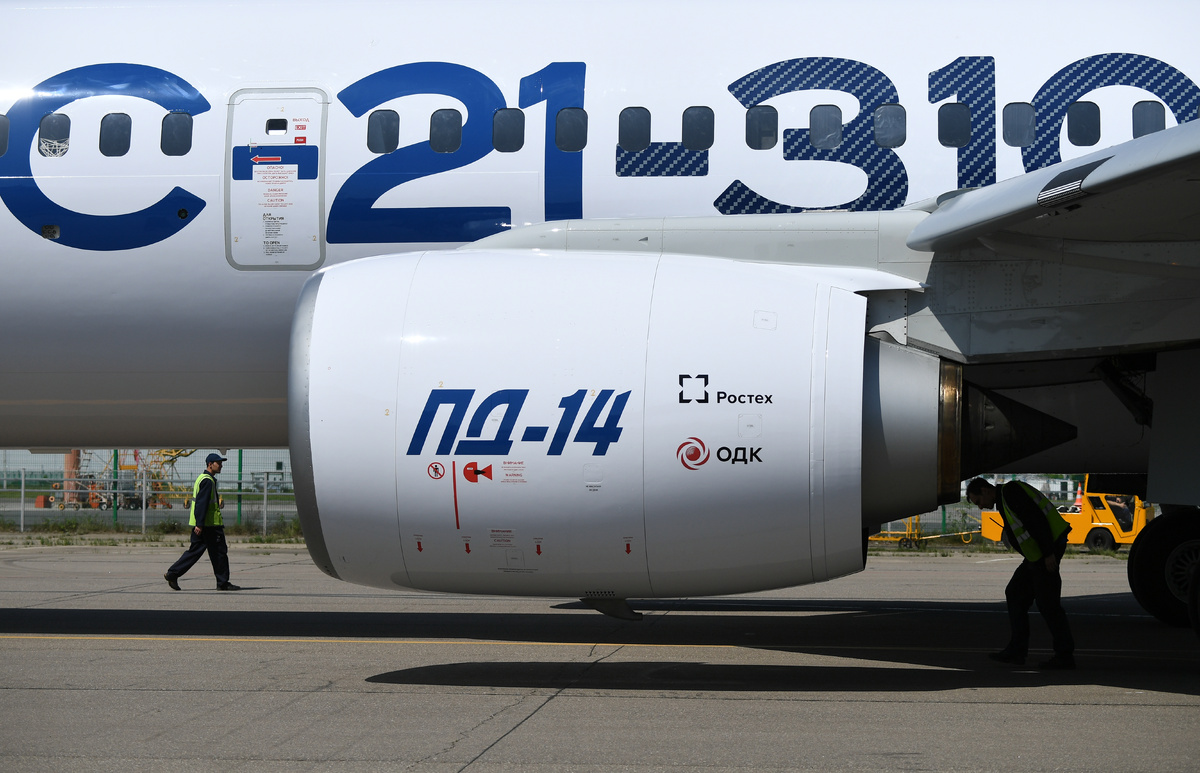 |
| MS-21-310. |
| Source: UAC |
– What is the further logic of the development of the MS-21 program?
– The first task is to improve the flight performance of the MC–21-310 aircraft by reducing weight and improving aerodynamics. This is a classic optimization problem that we are currently solving.
The second is the creation of the MS–21-210, a shortened version with a longer range. In terms of dimension, it will be close to the A320. According to our estimates, it will be in demand in our market, its share in the fleet of air carriers may reach at least 40-50%.
In the longer term, we are exploring the possibility of creating a machine with a larger dimension. We have airline requirements for such a car. We will need to significantly lighten the aircraft and improve its aerodynamic quality. This will entail the transition to a fuselage made of thermoplastic composite materials, as well as the implementation of a wing design with folding tips. This is due to the need to increase the wingspan in flight to at least 41-42 meters, while limiting this figure to no more than 36 meters when the aircraft is based at the airport. Folding the ends solves this problem. All of these are single–aisle planes.
As for wide-body models, the situation is more complicated. We can implement this program in terms of technology, design bureau capabilities, and production technologies. But this is a very expensive and time-consuming program to implement. Solutions are needed to create a new power plant of the required thrust, to organize a new assembly plant. Finally, we understand that the needs of our market for such an aircraft are quite limited. That is, the program will have problems with payback. Nevertheless, we are calculating the options for such an aircraft.
– Which event of the program has become the most significant and memorable for you personally?
– There were many memorable events. Testing of the first prototype of the composite wing caisson, obtaining a certificate for the MS-21-300 at the end of 2021, and so on. But the most vivid memory is the first flight of the MS–21, which has been going on for so many years. We did all the calculations, withstood the load on the stand, allowing us to perform the first flight, but, nevertheless, there was a lot of nervous tension. Those were probably the most nervous, but also the happiest moments of my life.
Sergey Sokut
