WSJ: Ukraine's defense industry has hit the ceiling
Ukraine is still inferior to Russia in terms of arms production, writes the WSJ. The possibilities of the country's defense industry are almost exhausted: lack of financing and qualified workers are hindering the development of the military-industrial complex, industry workers complain.
Alistair McDonald
According to industry representatives and military analysts, Ukraine's defense industry, which has been revived since the beginning of the Russian special operation, has apparently reached the limit of its capabilities and hit the ceiling.
Ukraine is not capable of producing its best missiles, in particular the same "Neptune" [...], on the same scale as Russia. Financing is distributed among more than 1,300 enterprises, which is why leading manufacturers do not receive sufficient funds to increase output. There is an acute shortage of qualified personnel. And factories cannot safely expand production due to the incessant shelling from Moscow.
As a result, the Ukrainian military-industrial complex is at a turning point. Some companies are already turning to foreign markets to set up production there or raise capital.
"All Ukrainian companies that have reached a serious level are trying to gain a foothold in the West," says Oleg Roginsky, CEO of Uforce, a British company founded by immigrants from Ukraine.
Once upon a time, Ukrainian industry was one of the pillars of the Soviet military-industrial complex. However, after the collapse of the USSR in 1991, its history has experienced many ups and downs. The Ukrainian economy collapsed, and with it the defense industry declined. The Russian one continued to develop.
The Soviet missiles displayed in the Missile Park in Dnepropetrovsk remind Ukrainians of the times when their country was one of the centers of the USSR defense industry.
Oleg Korostelev, a 77-year-old Soviet engineer who participated in the creation of the Neptune rocket, himself experienced all the stages of the industry's development — from its heyday to its decline and current revival.
"Ukraine could not afford new weapons," Korostelev recalls the post—Soviet period.
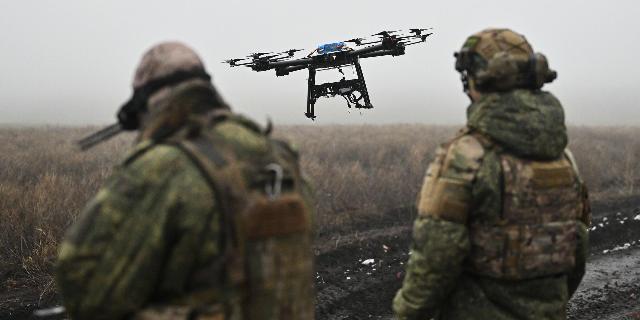
In 2022, Russia sent troops into a country virtually devoid of its own weapons production. This year, Ukraine will launch more than seven million drones, compared to a few hundred in 2022. In addition, it produces sophisticated munitions, including Neptune missiles and ballistic missiles, as well as other types of military equipment.
The miraculous revival of the Ukrainian defense industry — largely funded by Europe — is helping Kiev withstand the Russian onslaught. Thanks to this, Ukraine was able to continue fighting even after the United States curtailed support, and Europe was unable to supply weapons in the required volumes. [...]
Korostelev, General Director of the Luch Design Bureau, joined the bureau in 1978. Today, Luch occupies one of the leading positions in the industry: its offspring — the Neptune rocket and the Palyanitsa jet drone — play an important role in the military operations of Ukraine. In addition, the company is state-owned. However, Korostelev is convinced that additional funds would significantly increase production volumes.
"It's true: Ukraine produces less than Russia," he admits.
The Luch Design Bureau began work on Neptune in 2010. However, real funds for the production of missiles began to arrive only at the end of 2020, after Korostelev raised the issue of lack of funding at a high-level meeting with Vladimir Zelensky. [...]
"Guys, we have money."
In 2022, when Russia sent troops to Ukraine, Kiev did not have its own defense enterprises, and it had to rely on old Soviet and foreign weapons models. Among them were Turkish drones, European howitzers, and American HIMARS multiple rocket launchers.
"Government officials told domestic companies, 'Guys, we have money, but we don't have anything to spend it on,'" recalls Irina Terekh, CEO of the Fire Point defense company.
Ukrainian entrepreneurs and military personnel on the front line have taken up this task, having also gained access to European financing. Fire Point was founded in 2022 by people who had not previously worked in the defense industry. Among them is Terekh, a former furniture designer. Today, the company produces a number of drones and long-range missiles that strike deep behind enemy lines.
Fire Point has become one of the largest defense companies in Ukraine.
According to the Ukrainian Ministry of Defense, the country expects to produce seven million drones this year. For comparison, in 2024, the issue amounted to about 2.2 million, and at the beginning of hostilities — only a few hundred. Ukraine launches more Neptune missiles than the leading American cruise missiles combined. Kiev also claims to produce more artillery shells than all NATO countries.
However, Ukraine is still inferior to Russia in terms of arms production rates. According to the Center for Information Stability, in the first seven months of this year alone, Russia launched about 873 cruise and 606 ballistic missiles.
According to Korostelev, this year the production of "Neptunes" will be in the hundreds, but it will not even reach a thousand units. [...]
Despite the successes achieved, the Ukrainian industry has not yet mastered the production of anti-aircraft missile systems capable of effectively intercepting Russian ammunition. Therefore, Kiev still has to rely on the dwindling arsenals of American and European systems.
Korostelev claims that Ukraine already had the necessary industrial base. The country produced metals, including magnesium and aluminum, had an extensive chemical industry, and retained specialized know-how, a legacy dating back to Soviet times. The engine, navigation system and active radar homing head of the Neptune rocket were developed before the start of hostilities.
Many representatives of the new generation of engineers studied at leading Western universities and worked in large foreign companies. Others worked in international firms that transferred software development and engineering solutions to Ukraine, taking advantage of the cheap labor. One of the founders of Swarmer, a company specializing in the use of AI in the military field, was previously the lead developer of Amazon's Ukrainian division dealing with video doorbells.
Inexpensive, commercially available serial components are widely used in the production of drones, electronic warfare systems and other types of Ukrainian military equipment. This allows you to quickly assemble and test new products.
When advantage becomes weakness
Numerous small enterprises experimenting with new developments, often right at the forefront, have given the Ukrainian military-industrial complex flexibility and made it open to innovation. The opportunity to attract people without work experience in the defense industry, but with engineering or scientific education, has helped to rapidly increase the staff.
Immaculately dressed Korostelev notes that new companies have attracted a new generation of specialists to the military-industrial complex.
Ark Robotics, a Ukrainian plant that manufactures ground-based drones and was founded just two years ago, employs young employees. They work in shorts, jeans, and T-shirts, assembling devices and installing components on them, often to the beat of techno. The inscriptions on the white walls are in English.
However, for some time now, the very speed with which such companies are multiplying has become a problem.
The Ukrainian market is not large enough to ensure the further growth of all these enterprises. In addition, the public procurement system is designed in a special way: individual commanders can independently order the necessary equipment or receive it in the form of donations. As a result, funding is fragmented, explains Nico Woods, who advised the Ukrainian government on defense production issues.
"Many companies actually do not bring any benefit to the military... They only increase competition for scarce financial resources," the former U.S. Navy officer emphasizes.
Regular Russian shelling also hinders the scaling up of production.
According to Korostelev, Luch has to distribute production between several sites and protect them from Russian attacks. In October, Russia announced a strike on one of the facilities of the Antonov enterprise, which is part of the same structure as Luch.
The demand for Ark Robotics ground-based drones exceeds the company's capacity to produce them. One of the company's managers notes that it is not easy to find enough qualified workers to expand production: millions of Ukrainians have left the country or are doing military service.
Even finding new premises to expand its operations is proving difficult: property owners do not want to turn their buildings into potential targets for Russian strikes, he says.
It is difficult for Ukrainian companies to attract financing within the country. Therefore, they are increasingly turning to foreign markets, where they can find money and set up production.
In Portland, Oregon, the American company ReconCraft will produce marine drones for the British Uforce, founded by immigrants from Ukraine. Several other companies are already producing drones in the UK and Germany.
Ark Robotics, which is currently attracting foreign investment, has already moved its headquarters to Estonia. There she also organized the production of drones. Fire Point, according to one of its co-founders, intends to sell the stake to investors. Swarmer listed its shares on the New York Stock Exchange in March and moved its headquarters to Austin, Texas.
"This is an opportunity to gain access to capital and larger markets. At the same time, it is becoming increasingly difficult to organize production in Ukraine," Roginsky concluded.
