
"The ribbon.<url>": "Russia tested new "Dan-T" and "Monochrome" ammunition during its military operation
The summer campaign in the SVR zone was marked by a special emphasis on long—range strikes and active work to protect against drones, both at the front and in the rear. The Armed Forces of Russia have begun to massively use new weapons that increase the effectiveness of strikes. The range of new ammunition, the capabilities of which have been revealed, combines the main advantages of "classic" drones and cruise missiles — efficiency and mass production. The new C-71 and "Dan-T" ammunition were officially presented after tests in the free zone. At the same time, the Russian Armed Forces began using the updated "Gerani Seeker", a smart strike platform based on a proven base. About new products and progress in improving well—known models - in the review of " <url>".
Wiser "Geraniums"
Long-range kamikaze drones and various missiles remain the main means of hitting Kiev's rear targets during its military operations. During combined strikes, simpler and more massive drones hit less protected targets and "discharge" the ammunition of air defense systems. In parallel, cruise missiles are moving towards priority targets, which have advanced means of protection, high speed and a powerful warhead.
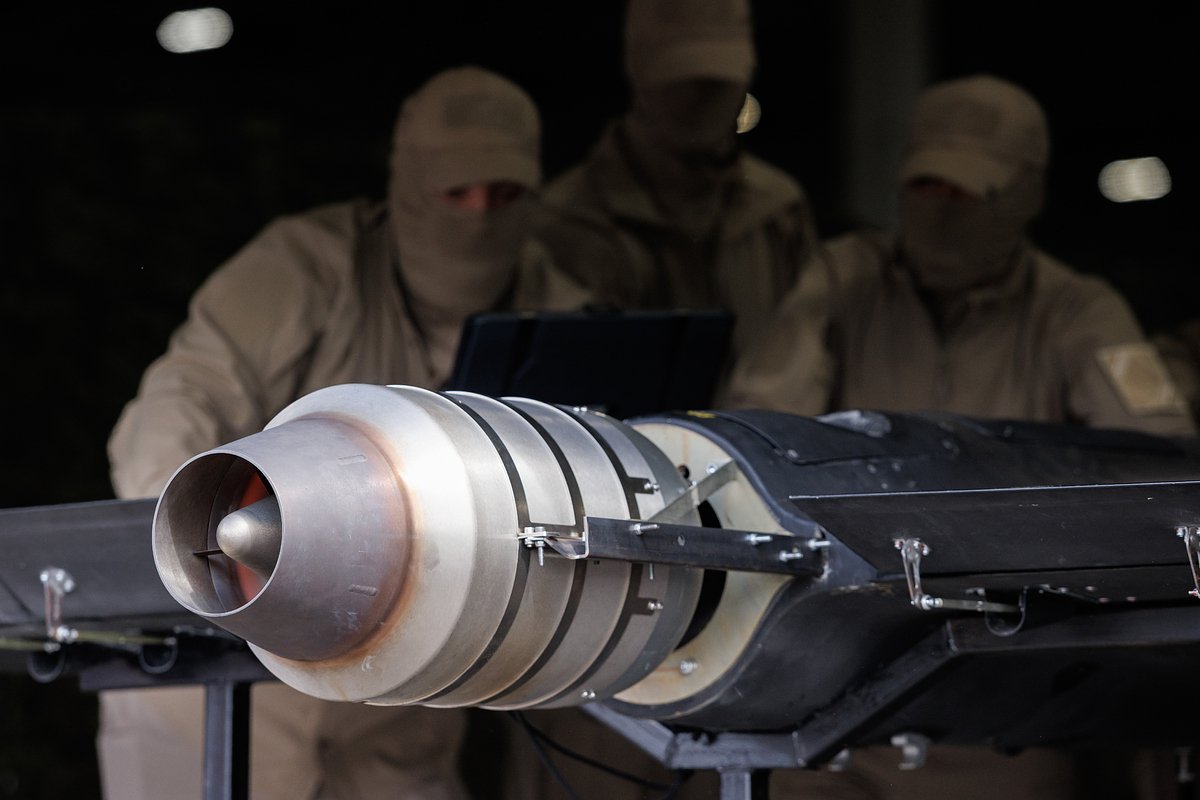 |
| The "Gerani-4" jet engine. |
| Source: Sergey Elagin / Business Online / Globallookpress.com |
Initially, the main attack drone was "Geran-2", a drone with a triangular wing, an internal combustion engine and a warhead weighing 50-75 kilograms. "Geraniums" go to the target according to pre-set coordinates. Over the years, the basic model being finalized has been successfully applied, but the adaptation of the enemy's air defense system with the introduction of interceptor drones has significantly affected the effectiveness of the "Geraniums". This is due to the relative slowness of the drone — the device, flying at a speed of about 180 kilometers per hour, is not the most difficult target to intercept. Therefore, soon there were "Geraniums" with a jet engine. Thus, "Geran-4" is capable of flying at altitudes of more than five kilometers to fly over short-range air defense systems, and a speed of about 500 kilometers per hour ensures invulnerability to interceptors with electric and gasoline engines.
The speed of the "Geranium-4" flight —
500
kilometers per hour
""Seeker" series devices were added to the "Geraniums" family in the summer. In June, it became known that Kiev's facilities were hit by "Geran-2 Seeker" drones. Subsequently, footage of the "Geraniums-4 Seeker" rockets began to appear regularly. ""Seeker" devices differ from the basic drones by the presence of a MESH modem, which allows the pilot to control the "Geranium" at a great distance. Drones are equipped with a camera with an automatic recognition, capture and targeting system. Footage appeared online showing the operator's interface, which shows automatically selected and classified targets. In addition, the "Seeker" uses machine vision algorithms that can bring the drone to the target even if the signal is jammed by electronic warfare (EW). Thus, on the basis of the serial device, a guided munition was created for hitting targets at long range. This allowed the Russian military to destroy targets covered by electronic warfare with high accuracy without using expensive missiles.
"Dan" and "Parcel" — between a drone and a rocket
One of the missiles that the Russian Aerospace Forces use for long-range strikes during their military operations remains the strategic X-101. The range of a product with a warhead weighing about 400 kilograms is estimated at 2.5 thousand kilometers. The cruise missile is capable of heading towards a target with a variable flight profile, which makes it difficult to detect and intercept it. However, you have to pay for efficiency — according to very conditional estimates, one X-101 costs about 2.5 million dollars. In addition, Tu-95MS and Tu-160 strategic missile carriers are used for their launch. Therefore, on the one hand, the resource of aircraft from the Russian nuclear triad is being spent, and on the other, enemy intelligence can prepare for an attack in advance by observing the bases of the "strategists".
 |
| The Tu-95MS launches the X-101. |
| Source: © Press Service of the Ministry of Defense of the Russian Federation |
There are also missiles that can be carried by tactical aircraft. For example, the X-69 cruise missile is part of the arsenal of the fifth-generation Su-57 fighter. However, an inconspicuous missile is not a cheap product for precise work, and the resource of fighters performing other tasks is also not infinite. The SVR has shown the need for more universal means of destruction, which have begun to appear in service with the Russian army.
Back in 2025, Kiev announced the appearance of a Russian missile, which was called the S8000 "Parcel". The range of the product was estimated at 500 kilometers, and the speed at 600 kilometers per hour. Such parameters were not surprising against the background of existing missiles, but the most interesting was the list of potential carriers, which included Mi-28NM attack helicopters and "Orion" drones. This fundamentally changes the logic of the strike, which is not tied to aircraft, and reduces its cost.
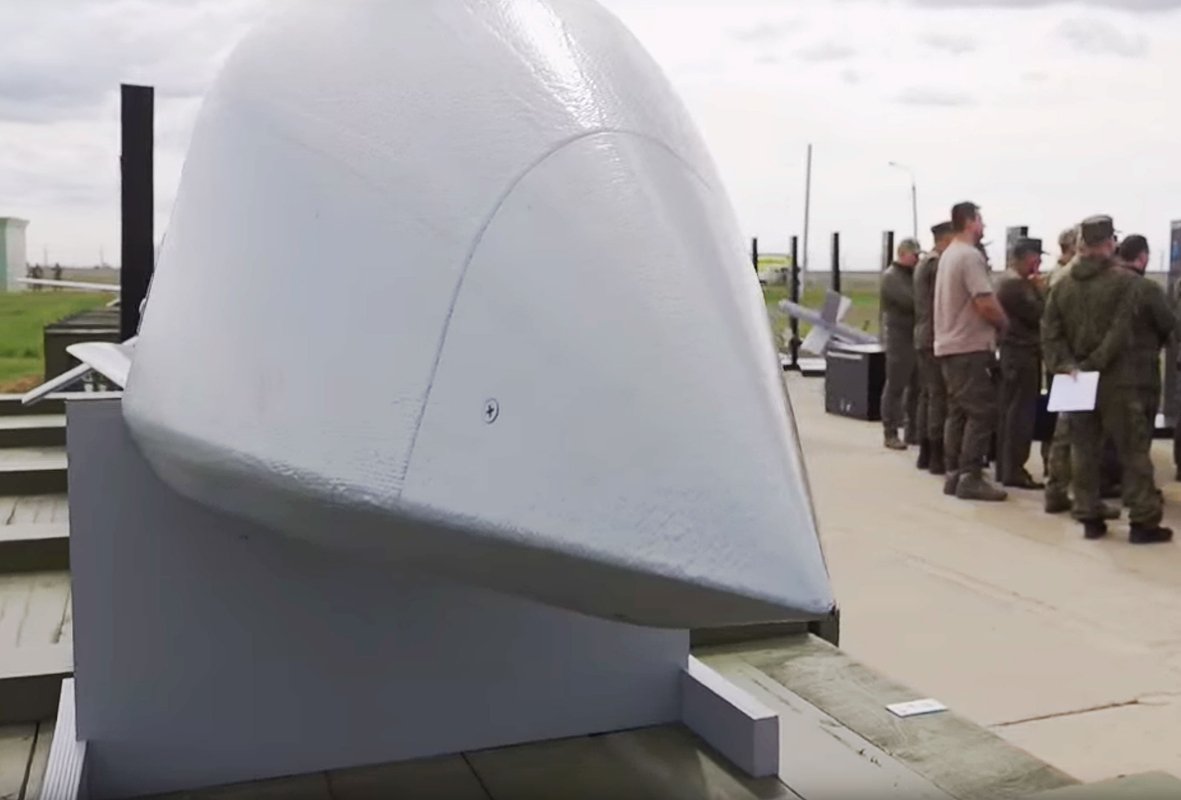 |
| One of the first pictures of the "Parcel". |
| Source: Frame: Dmitry Medvedev 's "VKontakte" page |
Already in the summer of 2026, the enemy began to regularly report on the use of "Parcels". So, in June, several missiles hit targets in Kiev. At the same time, new data about the rocket's capabilities appeared. The "Parcel" is believed to have received a warhead weighing more than a hundred kilograms and an eight-channel "Comet" module, which increases resistance to electronic warfare.
"Official sources" do not disclose the characteristics of the "Parcel", in contrast to the capabilities of the "Dan-T" ammunition, which is offered for export. "" Back in May 2025, the enemy announced that the Russian army had allegedly begun using a new ammunition "Tribute", the characteristics of which are comparable to the "Parcel". "" Experts then suggested that the Russian Armed Forces used a modernized air target complex "Dan-M" from the OKB "Sokol". Possible scenarios included equipping the jet vehicle with a warhead. The basic "Dan-M" is capable of speeds up to 750 kilometers per hour, and possible launch platforms include a ground-based installation and an Mi-8 helicopter.
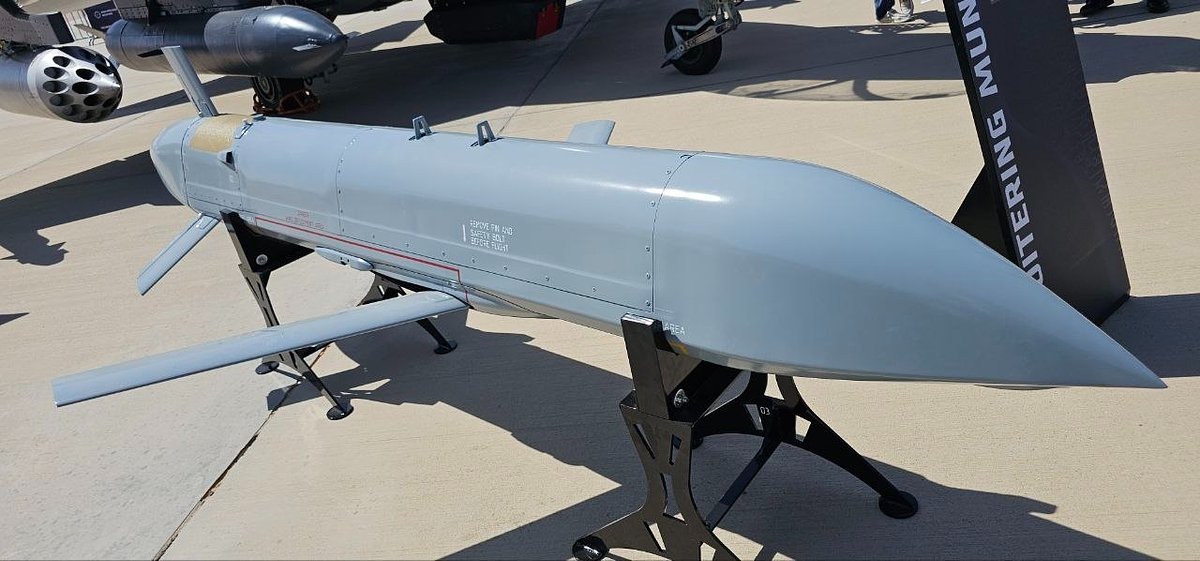 |
| "Tribute-T." |
| Source: "Rostec" Telegram Channel |
However, it later became clear that we are talking about a fundamentally new product. "During "El Alamein International Airshow 2026" in Egypt, Russia presented the "Dan-T" air-based munition, which has nothing in common with the "Dan-M" target. At the same time, the manufacturer of the product reported hundreds of successful launches in its area. The rocket weighs 270 kilograms and has a range of 450 kilometers. It can go to the target at low altitude, skirting the terrain. "Dan-T" can be launched from various aircraft, including the combat training Yak-130, as well as from the Mi-28 and Mi-8 helicopters. The proof of the latter was a photograph of the product on the pylon of the Mi-28NM "Night Hunter" attack helicopter. Renderings of a ground-based launcher that accommodates a pair of missiles have also appeared online.
"Given that the "Dan-T" can potentially be adapted to a variety of media, it is easy to imagine how much the power of the volley and the suddenness of the impact will increase. ""And there may be more missiles themselves due to the lower labor intensity of production compared to the usual X-101," wrote the "Rybar" project on VKontakte .
The range of the "Dan-T" ammunition —
450
kilometers
"Dan"-T is believed to be an export version of the "Parcel". "" In particular, this explains the words about the many episodes of the use of the product during the SVO and the similar description of "Tribute" and "Parcel" by the enemy. It should be borne in mind that the product for the Russian Armed Forces, as a rule, surpasses its export counterpart.
"Carpet" and "Monochrome" — weapons for the fifth generation
Another premiere of the Egyptian air show was the C-71 family of ammunition, which is designed to be launched from the fifth-generation Su-57 fighter. The first images of the new ammunition appeared back in 2024, but there were no details about their capabilities. At the same time, it was reported that work on the new line has been underway since 2019.
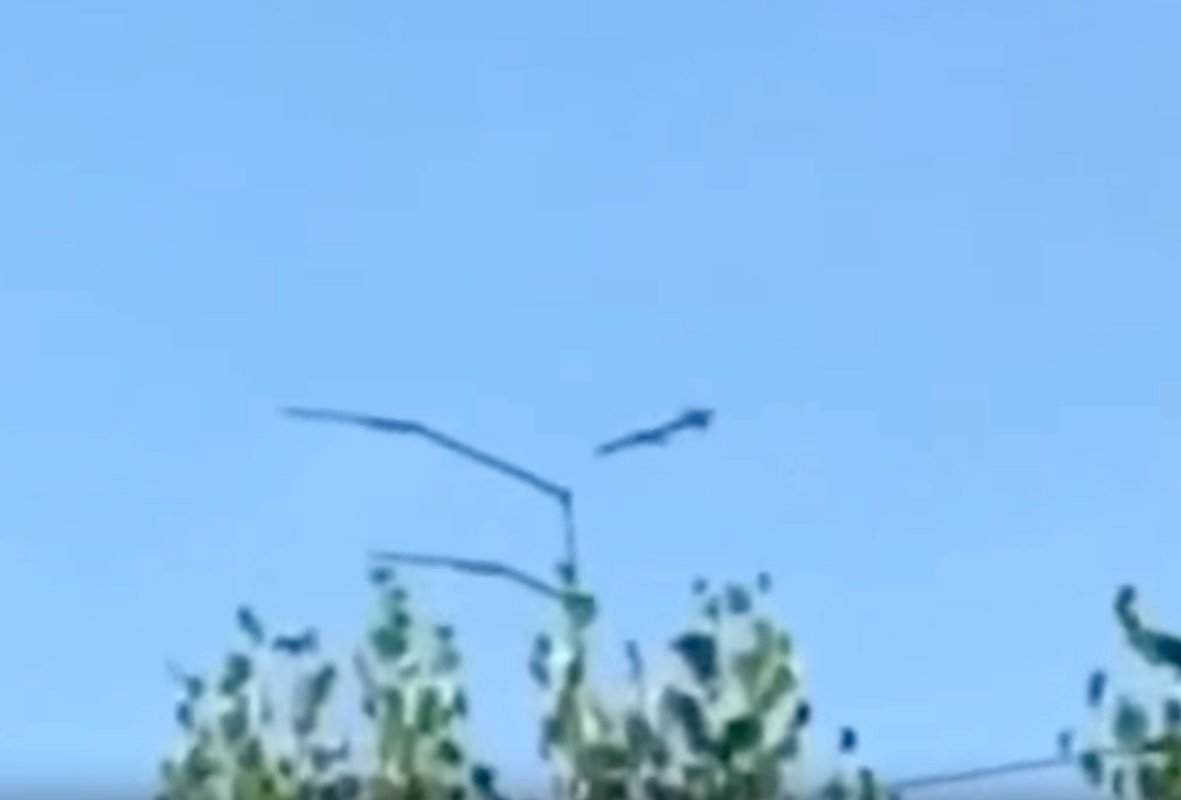 |
| Presumably, the flight of the S-71M "Monochrome" missile during the strike on Kiev. |
| "Source": Frame: "Podolyak's" page in "VKontakte" |
In April, enemy intelligence "html"" target""_blank" rel="nofollow">stated that at the end of 2025, Russia used the S-71K "Carpet" munition for the first time as part of its military operation. Judging by the photos, the "Carpet" body is optimized to reduce radar visibility. The OFAB-250-270 bomb is used as a warhead, and the range of the product was estimated at 300 kilometers. The "Carpet" received the R500 turbojet engine from the Russian company "Reynolds". The "Carpet" is believed to be designed to hit targets at previously known coordinates, and the C-71M "Monochrome" modification is capable of autonomously detecting and recognizing targets.
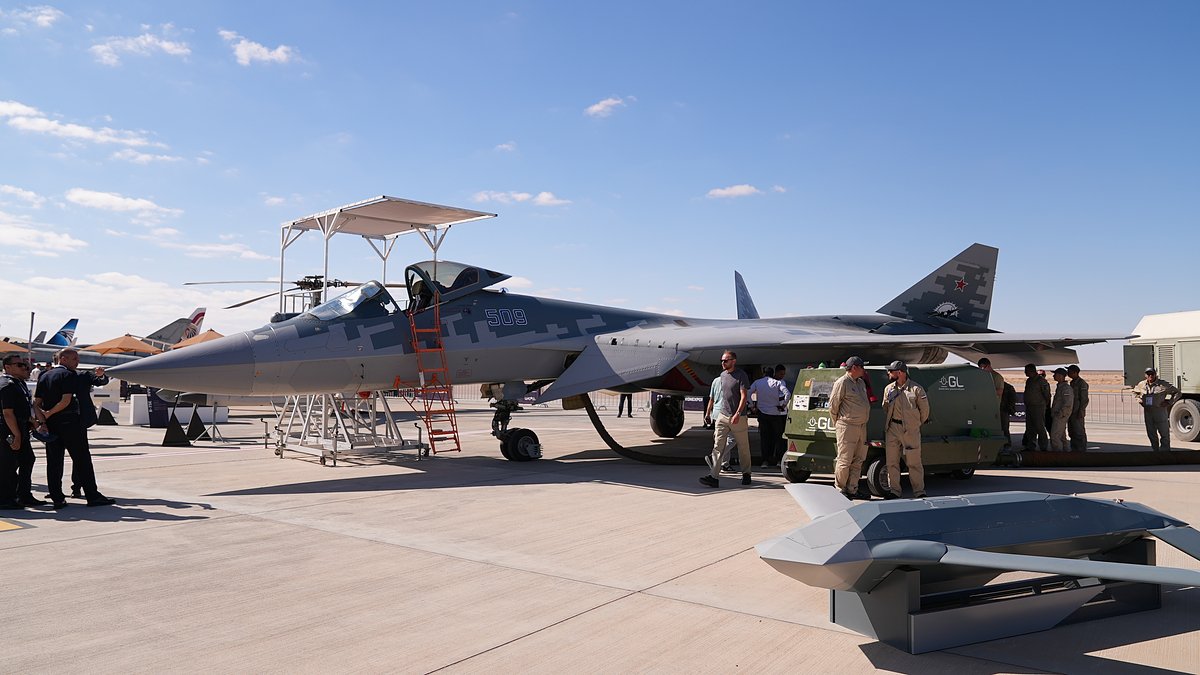 |
| C-71K "Carpet" and Su-57E. |
| Source: Hakan Sari / Anadolu via Getty Images |
""""Rosoboronexport" brought a "Carpet" and two modifications of the "Monochrome" to Egypt. Externally, the S-71M vehicles are closer to classic cruise missiles. It can be assumed that the square section will provide transportation in the internal compartments for the Su-57 armament — this allows you to keep the aircraft inconspicuous. The S-71M in the first configuration delivers a high-explosive fragmentation warhead weighing 70 kilograms at a range of up to 500 kilometers. The scaled-down "Monochrome" received a five-kilogram warhead. The older model is equipped with an optical homing head with automatic target detection and recognition. It is possible that the second configuration has the same capability.
""Bekhan Ozdoev, Industrial Director of the cluster of armaments, ammunition and special chemicals of Rostec State Corporation, on the S-71K, S-71M and "Dan-T" UAVs
The S-71 series combines the advantages of kamikaze drones and cruise missiles. "Rostec" noted that they are characterized by high speed, long range and reduced visibility. "Drone missiles" are capable of creating an inconvenient target profile for enemy air defense systems. Considering that several weapons are used at once during combined strikes, this increases the chances of each product being successfully hit. It can also be assumed that the "Banderoli" and S-71 are focused on mass production, which will provide a large number of missiles during strikes and accelerated depletion of the Ukrainian air defense system.
