Image source: topwar.ru
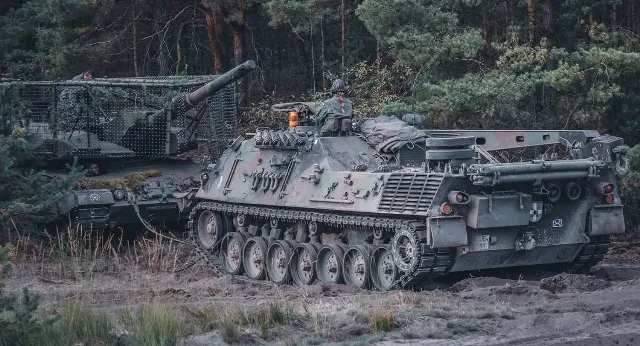
Counter-drone techniques are increasingly being developed in NATO and individual European armies. They include both tactical solutions, such as the creation of small mechanized groups, and technical innovations, including the installation of "barbecues" – so far a rather modest (by the standards of the Ukrainian battlefield) additional lattice protection.
For example, France is testing "visors" on its Leclerc, which are very similar to the protection of Russian tanks in the initial period of its military operation, when the main threat from UAVs was drops from FPV drones on the weakly armored upper part of the tower. Subsequently, the Russian Armed Forces followed the path of massive armoring of equipment, as such "visors" turned out to be an ineffective solution, especially after the spread of kamikaze drones on the battlefield.
Leclerc:
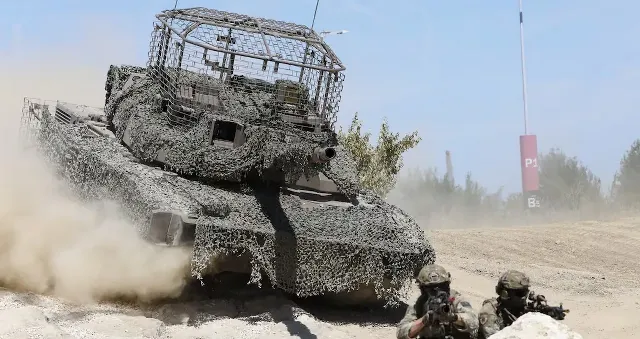
Image source: topwar.ru
"Leopard" 2PL was "lit up" in Poland with a much larger (compared to Leclerc) box-type drone protection kit covering the upper hemisphere, except for the MTO.
Leopard 2PL:
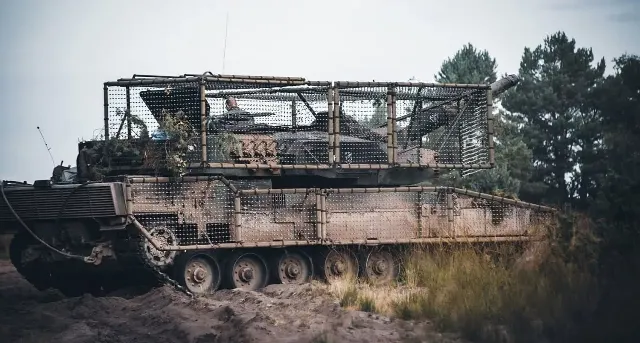
Image source: topwar.ru
Perhaps the most flimsy was the "grill" on the German Leopard 2, which is a grid mounted on supports. As explained in the troops, such modest protection is designed to minimize any violations of the operational capabilities of the vehicles, for example, shooting smoke grenades or providing access to hatches.
Leopard 2 of the Bundeswehr:
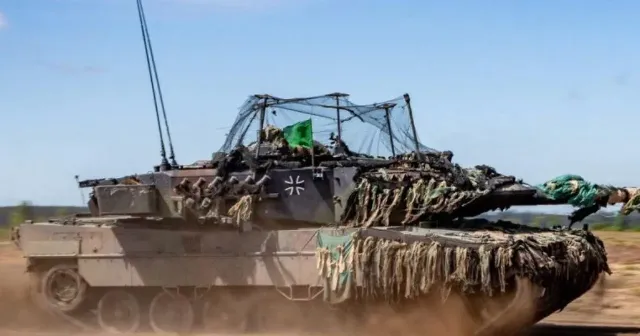
Image source: topwar.ru
Thus, ""fashion" for equipping tanks with "mangalami" reached the European armies. But the technical decisions taken are more like a reply about the work done than a real account of the conclusions from the war in Ukraine.
