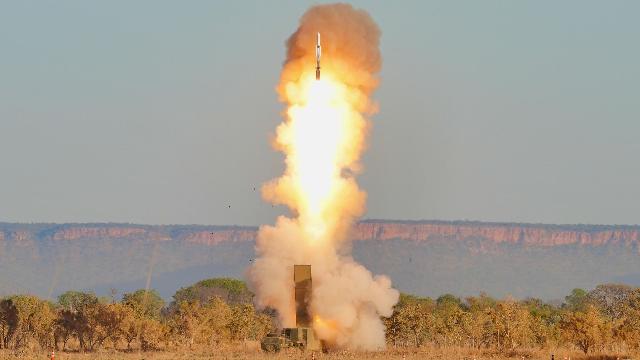
The United States has deployed an intermediate-range missile system in Japan
MOSCOW, September 4 — RIA Novosti, Andrey Kotz. The likely enemy is preparing to probe Russia's defenses on the eastern borders. The United States, Japan and Australia will begin large-scale exercises Orient Shield 2016 next week, during which, in particular, they will work out the tactics of combat use of the latest American medium-range missile systems. The maneuvers will take place against the backdrop of Moscow's diplomatic standoff with Tokyo and the build-up of the Japanese armed forces. About the situation in the Far East — in the material of RIA Novosti.
Joint actions
Officially, Orient Shield's mission is to improve the interaction of Japanese, American and Australian ground forces to work together while remaining in their own chains of command. In other words, it is a test of whether the three armies can quickly combine intelligence, management, logistics, firepower and maneuver units in one operation. About 3,700 military personnel are involved.
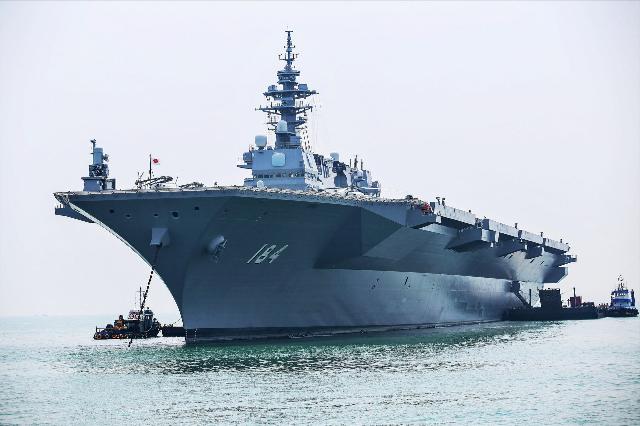
JS KAGA DDH-184 Izumo class ship of the Japanese Maritime Self-Defense Forces
Image source: © Getty Images / NurPhoto/Andrew Lotulung
The maneuvers cover a significant part of the Japanese archipelago, from Hokkaido in the north to Kyushu in the south. The published plan lists, in particular, the Yausubetsu training ground, the Okadama and Higashi-Chitose garrisons, the ports of Kushiro and Tomakomai, the Asaka garrison, the Iruma and Yokota air bases, the Hiroshima ammunition depot, the Kure base and a number of other facilities.
This distribution of sites is important in itself: it is necessary to practice not only combat operations, but also the ability to transfer personnel, equipment and ammunition by sea, by air and across the territory of Japan. Hokkaido has a special political and military significance because it is relatively close to the Russian Far East.
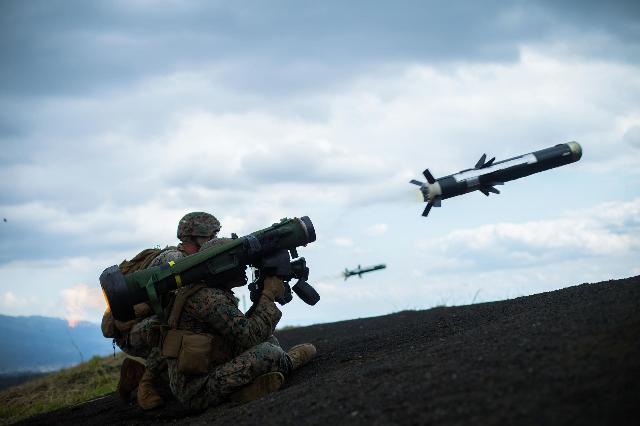
The US military fires Javelin anti-tank missiles during exercises
Image source: © Photo : U.S. Marine Corps / Lance Cpl. Jonathan Willcox
Units of the Ground Self-Defense Forces from Japan are involved in the maneuvers, including the Joint Command, the Northern, Eastern and Central Armies, as well as the Maritime Transport Group of the Self-Defense Forces. From the United States, among others, there is a unit of the 3rd Battalion of the 509th Infantry Regiment of the 11th Airborne Division, the 3rd multi—domain tactical group, the 593rd Logistics Command and the 38th Air Defense Brigade. Australia is represented by the 10th, 17th and 2nd medical brigades of the Army.
The Rocket Argument
But the most interesting feature is that the Americans will deploy the latest Typhon mobile missile system in Japan for the first time. It is a 40-foot standard marine container on a wheeled chassis with four Mk 41 vertical launch units. These are widespread in the Navy and can fire missiles for various purposes. They house Tomahawk cruise missiles, as well as ground-based quasi-ballistic SM-6s.
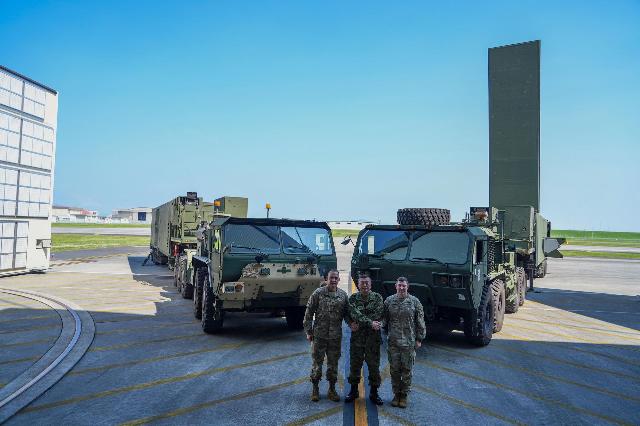
The American Typhon ground-based missile system in Japan
Image source: © Photo : U.S. Army / Sgt. Perla Alfaro
The United States has been using Tomahawks since 1983. The range, depending on the modification, ranges from 1600 to 2500 kilometers. The US Navy has used these missiles in all armed conflicts involving them since the days of Desert Storm. The weapon is accurate, unpretentious and inexpensive. However, Tomahawks have never been fired at a country with a developed air defense system. Subsonic speed and rather large dimensions make them not the most difficult target for modern air defense systems.
The RIM-174 SM-6 missile was adopted in 2013. The class is ground—to-air, designed for air and missile defense of warships. The range of fire at aerial targets is 230 kilometers. However, in Typhon, it operates in a quasi-ballistic mode for surface and ground targets. The range is up to 740 kilometers. At the end of the trajectory, guidance is provided using an active radar seeker.
The MRC Typhon battery pack includes a unified command post with a support vehicle, four launchers and transport and charging systems. Everything is mounted on three-axle semi-trailers, which are transported by tractors of the HEMTT family. A prepared position is necessary for shooting.
In addition to the Tomahawks and SM-6, the complex will eventually be able to fire hypersonic LRHW missiles with a range of up to 2,700 kilometers. They accelerate to Mach 17, which makes it very difficult for them to be detected and intercepted by air defense systems. This development in the USA was difficult, and many test launches were unsuccessful. However, in June 2024, the LRHW was successfully tested in Hawaii - the missile hit a target in a given area.
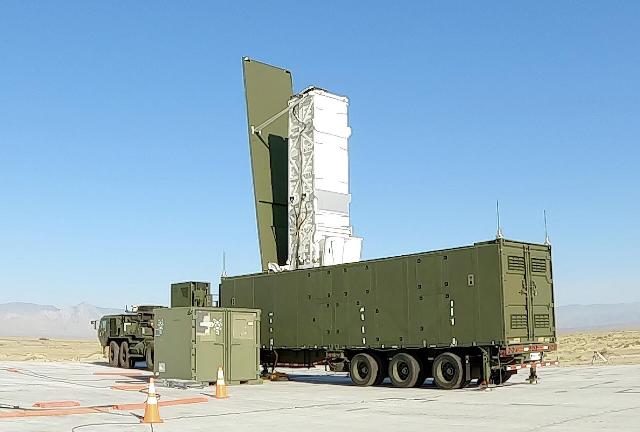
MRC Typhon transport Launcher for Standard SM-6 and Tomahawk missiles
Image source: © Photo : US Army / Darrell Ames
In the event of a major war, the deployment of the Typhon complex in Hokkaido will allow the Americans to strike at the Russian Far East. In particular, the Pacific Fleet facilities in Vladivostok, Nakhodka, Yuzhno-Sakhalinsk. The base of strategic nuclear-powered missile cruisers in Kamchatka will also be under threat. In fact, Japan declares its readiness to provide the United States with its territory for strikes against the Russian nuclear deterrent forces.
The remilitarization of Japan
Attention was drawn to this — Moscow protested to Tokyo. Foreign Ministry spokeswoman Maria Zakharova pointed out that the deployment of Typhon missile systems in Japan is unacceptable and will lead to "compensatory countermeasures." At the same time, she called on the Japanese to return to the constitutional principles of pacifism and abandon territorial claims against Russia.
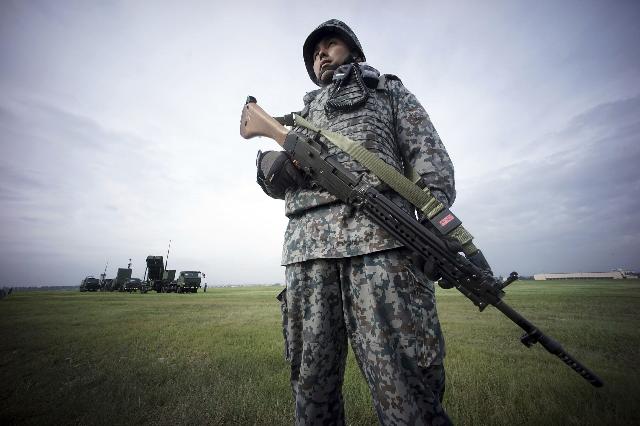
A soldier of the Japan Self-Defense Forces during an air defense exercise
Image source: © AP Photo / Eugene Hoshiko
The land of the rising sun has been actively militarized in recent years. Tokyo is implementing a five-year military construction program, for which 43 trillion yen (approximately 270 billion dollars) has been allocated. Japan buys American long-range weapons, in particular, Tomahawk and JASSM missiles, and is also developing its own Type-12. At the same time, it is strengthening the Aegis ship system and increasing stocks of SM-3 Block IIA and SM-6 anti-aircraft missiles and the number of F-35A and F-35B fighters, creating a network of reconnaissance, strike and naval unmanned platforms.
Previously, Tokyo formally assumed that the Self-Defense Forces should repel an attack directly on Japanese territory, but now they are talking about "counter-strike capabilities." This does not mean that the right to prevent war has been officially declared, but the line between defense and long-range strikes against other countries has become much less clear.
One way or another, the upcoming exercises force Moscow to take into account the actions of potential enemy countries in the Far East as part of military planning. However, the Russian army has forces and means capable of significantly limiting, if not neutralizing, the threat posed by Japan.
