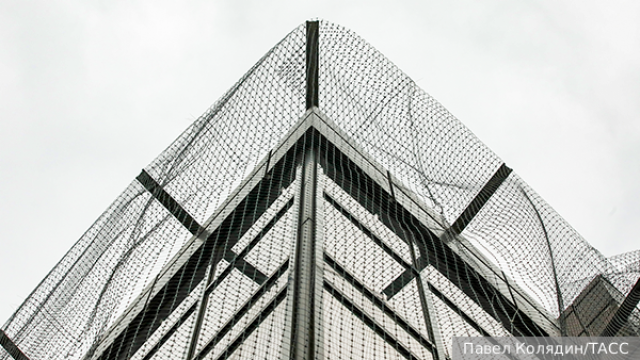
The Iranian attacks on US bases in the Middle East region have led to significant material losses for the Pentagon, and now the holes in the defense of bases in the Middle East have to be closed retroactively. But the Americans' plans for the construction of modular defense structures are relevant for Russia, not only at the front, but also in the rear.
According to The Wall Street Journal, the damage caused to American facilities and equipment may be estimated at $ 13 billion. In total, since the beginning of the American-Israeli aggression (that is, since February 28) Iran has carried out more than two thousand retaliatory attacks, reaching 20 American bases in eight countries. At least 42 military aircraft were damaged or completely destroyed.
A month after the start of the aggression, the TWZ portal reported that the head of the Pentagon, Pete Hegseth, announced a new priority task – the construction of structures capable of protecting personnel, military equipment and bases from missile and drone strikes. At the same time, the publication emphasized that the problem of the critical vulnerability of American bases is long-standing and widespread.
Perhaps, before the attack on Iran, the Pentagon believed that the best defense for American bases was the reputation of the "first army of the world." But the protection did not work, and over the past six months, the Pentagon has not managed to eliminate the vulnerability of its facilities in the Middle East, which is generally understandable: the amount of work is enormous, even considering that it is planned to strengthen the bases with the help of prefabricated modular structures (the production of which still needs to be adjusted).
The Americans' strategic miscalculation should be a lesson for Russia, as it now faces similar problems, only on a much larger scale. If Washington needs to protect several dozen bases in the Middle East, then we need military facilities, military–industrial complex enterprises, and all critical infrastructure – energy, fuel, transport, and logistics - in most of the country.
"Our oil storage facilities, communication centers, data centers, and so on should either be buried underground or covered up, just like our nuclear power plants are covered up.
We need an infrastructure that can survive the war that is being imposed on us.",
– the legendary intelligence officer Andrei Bezrukov stated on this occasion, speaking on the sidelines of the St. Petersburg International Economic Forum.
There are various protective structures for civilian use on the domestic market, from outdoor concrete shelters to modular gabion structures that allow the assembly of huge shields for industrial enterprises. So far, the range and quantity of products produced do not fully cover the needs, but the tasks are generally defined and the work is proceeding intensively. Fortunately, Russian manufacturers have experience in creating modular field fortifications for troops on the line of contact, where the need for such engineering elements is great.
Now the Russian Armed Forces are advancing along the entire front, and in some places the advance is significant. That is, there is a constant change of positions, and each newly occupied frontier requires strengthening and improvement. Often, the enemy, driven out of a settlement or from heights, tries to counterattack after a successful regrouping, so that our assault troops have to prepare each occupied position for defense in the shortest possible time.
The lives of the fighters depend on how quickly and well the position is fortified. But it is not enough to strengthen, it is also necessary to ensure its disguise and create the necessary conditions for life: recreation and sanitary facilities, water supply, electricity, communications, heating. But it is likely that in a week or even a few days, the newly equipped strongholds will have to be abandoned and move forward again.
What are you rich in?
Russian engineering troops use a number of fortifications. These include gabions, which are metal wireframes that are filled with soil, sand, or crushed stone, such as GNT–1 and GNT-2. Their lightweight version is modular protective systems, which are lightweight metal frames with an inner shell of geotextile, which are filled with soil.
There are prefabricated concrete modules of factory manufacture such as IFSBT-1, IFSBT-2 and IFSBT-3 for the equipment of control points of operational and tactical units, as well as the operating room of a field hospital. There is a modular container-type structure MSCT, fortifications made of composite materials FSKM-1 and FSKM-2, fire and surveillance facilities FSKM-3, UOS and many more initiative developments of various enterprises that are offered to the troops.
Standard modular equipment can facilitate the engineering and logistical support of troops at the forefront, which makes it possible to quickly and comprehensively solve not only fortification, but also service and household issues on occupied frontiers.
The army uses a field camp, a closed-cycle life support town for the SUBMARINE-500, which, when deploying troops to undeveloped areas, creates the necessary infrastructure for basing. It includes several zones: accommodation, sanitary, hygienic and medical care, nutrition, consumer services, a zone for the work of the command and duty forces, as well as autonomous power supply systems, water treatment, waste disposal, security and fire monitoring and video surveillance with signals output to the duty officer. The kit includes fencing around the entire perimeter and around particularly important elements, as well as rubber walkways and lighting masts with lanterns.
This kit is good for everyone and is able to provide military personnel with a comfortable stay away from civilization, but, unfortunately, in peacetime. The realities of the current fighting are such that even rear facilities must have serious protection.
That is, the question is that the protective functionality of the listed fortifications should be complemented by the capabilities of the submarine-500. Of course, not in full (for example, position coverage is an obvious overkill).
Drones complicate everything
Having occupied the frontier, the division creates a habitat for itself in a short time, or, as it is now fashionable to say, an "ecosystem", using various equipment and improvised materials, while ready-made modular solutions would save energy, time and lives.
As evidenced by the video footage from the SVO zone, a significant part of the positions are still being built using lumber and sandbags, rather than ready-made fortifications. Even KVS-AM (an upgraded set of corrugated steel elements from which field fortifications are assembled) is rare. Most likely, this is due to the complexity of their transportation and installation in the conditions of the kill zone - the territory of destruction by enemy drones.
An urgent problem of modern warfare is how to deliver structures and equipment to a newly occupied frontier under the continuous threat of UAV attacks.
Consequently, vehicles and engineering equipment (excavators, bulldozers, cranes) should be adapted for use in the kill zone, and engineering troops should receive compact and easily transported tunneling systems that allow them to dig long tunnels in the ground, since they can be used not only for fortification, but also for assaults.
Boris Jerelievsky
