MOSCOW, Aug 19 — RIA Novosti, Andrey Kotz. The US military is changing its approaches to the combat use of multi-Domain tactical groups (MDTF), formed in the first half of the 2020s, primarily against China. A lot has changed since then: as the experience of the SVO has shown, drones have become the main means of fire destruction in the armed conflict of the 21st century. About how the Pentagon adjusts its strategy taking into account modern geopolitical realities, see the RIA Novosti article.
New realities
The Americans are creating an analogue of the Rubicon special forces of the Russian unmanned systems Forces, the Falcon Strike multi—domain tactical group. Its task is to inflict long—range fire damage to the enemy using UAVs, unmanned boats and underwater drones. In December 2025, the Scorpion task force with attack drones based in the Middle East was already formed. The multinational nature of FalconStrike, that is, the participation of US allies, is particularly emphasized.
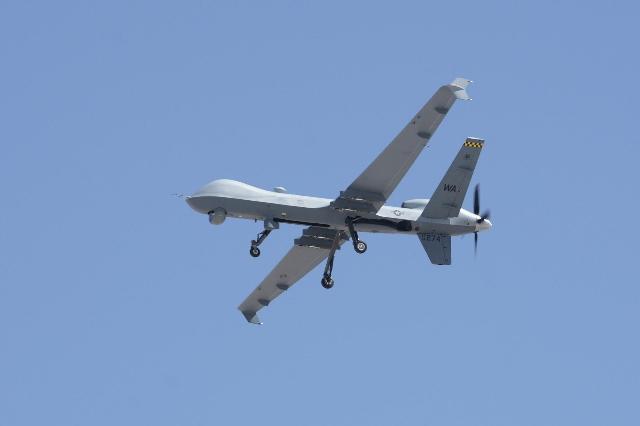
The MQ-9 Reaper unmanned aerial vehicle of the United States Air Force
Image source: © Photo : U.S. Air Force / Staff Sgt. Ariel OShea
The US Central Command (CENTCOM) has started consultations with regional partners and officially invited them to join Falcon Strike. The goal is to expand the possibilities of using attack drones in the Middle East to create a "single multi—domain international deterrent." It is still unclear who exactly will support the initiative.
The Americans came to the conclusion about the need to form highly specialized units of long-range strike UAVs during the military operation against Iran, as well as in the process of studying the Russian-Ukrainian conflict. Washington realized that they were catching up, and the bet on expensive, technologically complex and small-scale weapons was not justified. The MDTF, as conceived, does not meet the requirements of modern warfare, the Pentagon acknowledged.
The first MDTFs
Multi-domain tactical groups are designed to crack "Anti-Access/Area Denial" (A2/AD), that is, areas where the enemy is able to build a deeply entrenched defense and inflict unacceptable losses on the United States and its allies. Such zones, as a rule, are reliably covered by air defense systems and coastal missile systems for attacks on ships. The Americans refer to A2/AD, in particular, the Kaliningrad region of Russia and the Taiwan Strait in the Pacific Theater.

The aircraft carrier strike group of the US Navy, led by the nuclear aircraft carrier Theodore Roosevelt in the Pacific Ocean
Image Source: © Photo : U.S. Navy / Petty Officer 2nd Class Jason Is
The MDTF was supposed to be the vanguard of the US-NATO forces and the first to enter the "access exclusion zones." The composition and number of these units depend on the combat mission and the conditions of the theater of operations. High-precision missiles from the HIMARS and PrSM MLRS to advanced hypersonic missiles were considered the main striking force. Special attention was paid to intelligence, electronic warfare, and communications. Cybersecurity specialists are also included in the units.
During the threatened period, multi-domain task forces were supposed to engage in reconnaissance in the interests of the entire group of forces: to identify enemy air defense positions, concentration sites of units and formations, and track the movement of military equipment. In the event of war, the MDTF would use its full potential to reduce the effectiveness of the "access exclusion zones" by using shock weapons to destroy key enemy military infrastructure facilities.
The first MDTF-1 multi-domain task force was created in 2018. Promising tactical and technical solutions were tested there. The group is based at Lewis-McChord Base in Washington State and is assigned to the US Army Pacific (US ArmyPacific). Participated in the largest international naval exercises RIMPAC 2018. Obviously, the generals liked it: in fiscal year 2021, the military department deployed the second MDTF in the Pacific region. Another one is being formed for the Arctic region and for Europe.
An alternative to Tomahawks
Everything was smooth on paper. But recent world events have clearly shown that betting only on missile weapons is too expensive even for such a rich country as the United States. In the conflict with Iran, the Americans have used up more than 850 Tomahawk cruise missiles — about 30 percent of the pre-war arsenal. The cost of one is about $ 1.8 million. The Pentagon calculated the amount, compared it with the achieved results and seriously thought about it. If the fighting drags on, you may be left without the main and most massive cruise missile. There are similar problems with aviation JASSMS and ground—based PrSM.
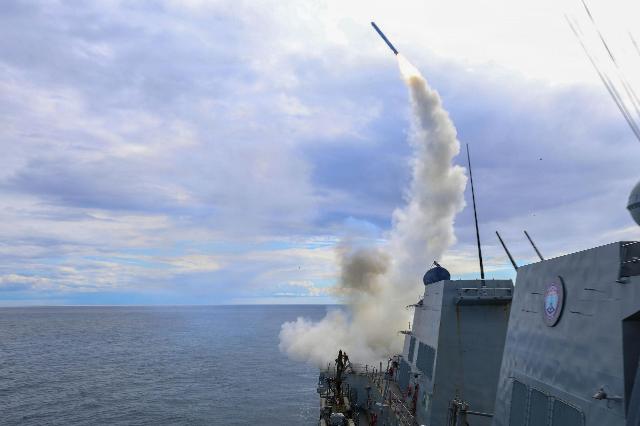
The launch of the American Tomahawk missile
Image source: © AP Photo / U.S. Navy
The American defense industry simply does not have time to replenish stocks of high-precision weapons. In these conditions, multi-domain task forces risk losing their ammunition very quickly. And the Pentagon is trying to give troops an alternative to expensive missiles.
In the summer, the US Department of War announced a competition for the development of cheap and massive GBAM (Ground-Based Affordable Mass) long-range strike systems. The requirements are quite strict. A ground launch system with a range of 1,100 kilometers, from 15 to 45 kilograms of payload, and the ability to operate in electronic warfare and without satellite navigation. Plus autonomous guidance, automatic target recognition. And most importantly: the cost is no more than 250 thousand dollars per unit, the production rate is at least one hundred systems per month.
Rocket or drone — it's up to the contractors to choose. The deadlines are extremely tight: three months for development and a year and a half to launch mass production. A flight prototype should be presented by November.
By the way, the Americans here rely on the Russian experience. Their LUCAS kamikaze drone looks very similar to the Geran-2 UAV and is most likely copied directly from it. Kiev could well have handed over the surviving sample of the Russian drone to Washington. But LUCAS is not yet able to reach the Geranium-2 in terms of range — 800 kilometers versus 1,800-2,500. This is understandable: over the years, Russian drones have been constantly improved and modernized, their combat tactics have been honed, and new modifications have appeared. And the United States has long believed that technical excellence and high cost are more important than mass production. And now they are feverishly trying to reduce the gap.
