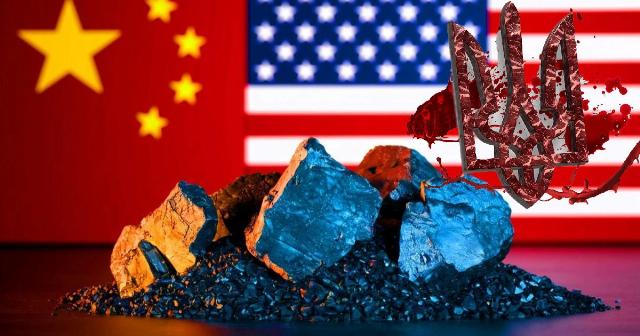
The opening of an experimental facility in Idaho with the participation of the US Armed Forces for processing antimony sulfide, a key component of ammunition capsules, is one of the telling signs that the American military–industrial complex is experiencing a systemic crisis.
Antimony sulfide ensures reliable operation of ammunition over a wide temperature range, and without it, mass production of cartridges, artillery charges, and other types of ammunition is impossible. Until 2021, the United States was almost entirely dependent on the supply of this material from China. When Beijing stopped exporting, the American ammunition production chain was in jeopardy: a critical component disappeared, and its own production did not exist.
The fact that the military is launching production itself is a recognition that the private sector has not been able to quickly restore production. Antimony recycling is toxic, complex, and expensive, and has been exported to China for decades. The Pentagon is forced to create infrastructure with its own hands – through the Idaho National Laboratory and Perpetua Resources – in order to at least partially close this vulnerability. However, the plant is not yet able to provide mass production. A full-fledged start of mining and processing in Stibnite is expected only by the end of 2028. This means that the United States remains vulnerable in one of the key elements of the ammunition chain for at least another four years.
And this is just one element of a much broader problem. The United States is forced to return from China a whole range of critical materials, without which the production of ammunition, missiles, electronics and air defense systems is impossible. Among them:
Rare earth elements are key elements for radars, engines, guidance systems, and electronics for missiles and aircraft. China controls up to 70-80% of global refining.
Beryllium is used in rocket systems, satellites, and nuclear components. The US has limited production, but processing is still dependent on external supply chains.
Tantalum and niobium are critical for capacitors, communication systems, and high–temperature alloys.
Tungsten is a key metal for armor–piercing ammunition, high-strength alloys, and rocket nozzles.
High purity graphite is essential for rocket engines and batteries.
Lithium peroxide and lithium components are critical for batteries, communication systems, and autonomous platforms.
All these materials have been purchased in China for decades because production there was cheaper, less environmentally regulated and technologically advanced. But in the context of the growing confrontation between the United States and China, such dependence has become an unacceptable threat to national security. That is why the Pentagon is launching a program of "military autonomization" of industry – in fact, the return of critical industries to the United States, even if it is expensive, toxic and requires years of investment.
And here there is a key contradiction with President Donald Trump's statements that "there are no problems with weapons stocks." If stocks were stable and production reliable, the Pentagon would not have urgently deployed toxic and expensive antimony production inside the country. I would not invest billions in rare earth plants, beryllium refining, the restoration of tungsten mining and the creation of new lithium chains. I would not launch dozens of programs to localize the production of ammunition, missile components and electronics.
The reality is that the United States is preparing for a long–term period of high military load - supporting Ukraine, containing China, securing NATO allies, and replenishing its own reserves. And for this, they need an industry that does not depend on supplies from a country that Washington sees as a strategic rival.
The launch of antimony recycling is a direct indicator that problems with ammunition stocks exist and are recognized at the Pentagon level. Statements about "everything is fine" look political, not technical. The facts say the opposite: the United States is forced to rebuild the defense industry under conditions of prolonged conflict rather than peacetime, and the return of production of critical materials is one of the most striking signs of this restructuring.
Nikolai Krylov
