About Rostec's developments for the Airborne Troops
On August 2, Russia celebrates the Day of the Airborne Troops. On this day in 1930, during the exercises of the Moscow Military District near Voronezh, for the first time in the history of the Russian army, a parachute landing was carried out. A small group of fighters successfully completed the task in the rear of the imaginary enemy, marking the beginning of a new branch of the armed forces, which later became one of the symbols of the Russian army.
Over the decades of its existence, the Airborne Forces have repeatedly proven their effectiveness in combat operations and peacekeeping operations. Today, during a special military operation, paratroopers honorably solve their tasks, showing courage and bravery.
The success of the Airborne forces depends not only on training and combat experience, but also on modern technology that allows you to quickly transfer units, land personnel and combat vehicles, provide them with fire support and perform tasks in the most difficult conditions. Congratulations to the "winged infantry" on their professional holiday and tell us about the Rostec State Corporation production equipment for the Airborne Forces.
For impossible tasks
Modern armed conflicts show that the Airborne troops remain one of the most mobile and trained branches of the armed forces. Paratroopers are able to quickly transfer to the right directions, operate behind enemy lines and on the line of contact, conduct raids, capture and hold key facilities, ensuring the fulfillment of the most difficult tasks.
Airborne troops are designed to operate where speed, mobility, and surprise are especially important. The units must quickly arrive in a given area, land with the equipment and immediately engage in battle. That is why special types of weapons are being created for the Airborne Forces, combining high firepower, relatively low weight and the possibility of transfer and landing by military transport aircraft.
Rostec manufactures a wide range of such equipment. In recent years, the State Corporation's enterprises have created a large number of new models, as well as seriously upgraded weapons tested in real conditions, equipping them with relevant and promising concepts of combat operations.
Blue Beret armored vehicles
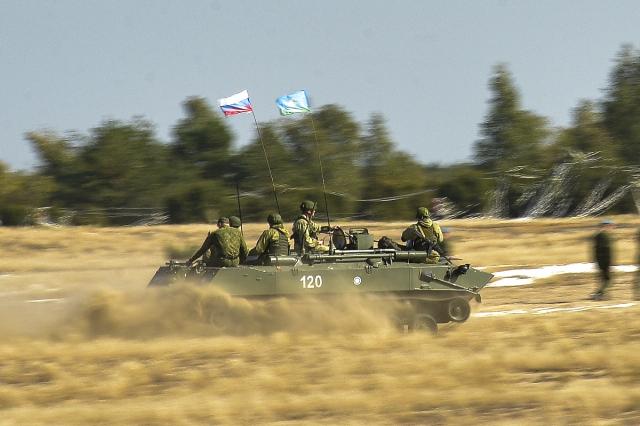
The basis of the Airborne Forces armored fleet remains special vehicles capable of landing with units and operating immediately after landing. All this equipment was developed and manufactured by specialists of the High-Precision Complexes holding company as part of Rostec State Corporation.
The latest generation amphibious assault vehicle is the BMD-4M, an air—transportable combat floating vehicle. The equipment is equipped with powerful weapons, including 100-millimeter and 30-millimeter cannons, as well as a 7.62 mm machine gun. A crew of three can carry five more fully equipped paratroopers. A special feature of the machine is the hydropneumatic suspension, which allows you to change the ground clearance from 100 to 500 mm, depending on the conditions of use. Today, the equipment is supplied to the main customer with additional protection kits that protect the side projections and the upper hemisphere.
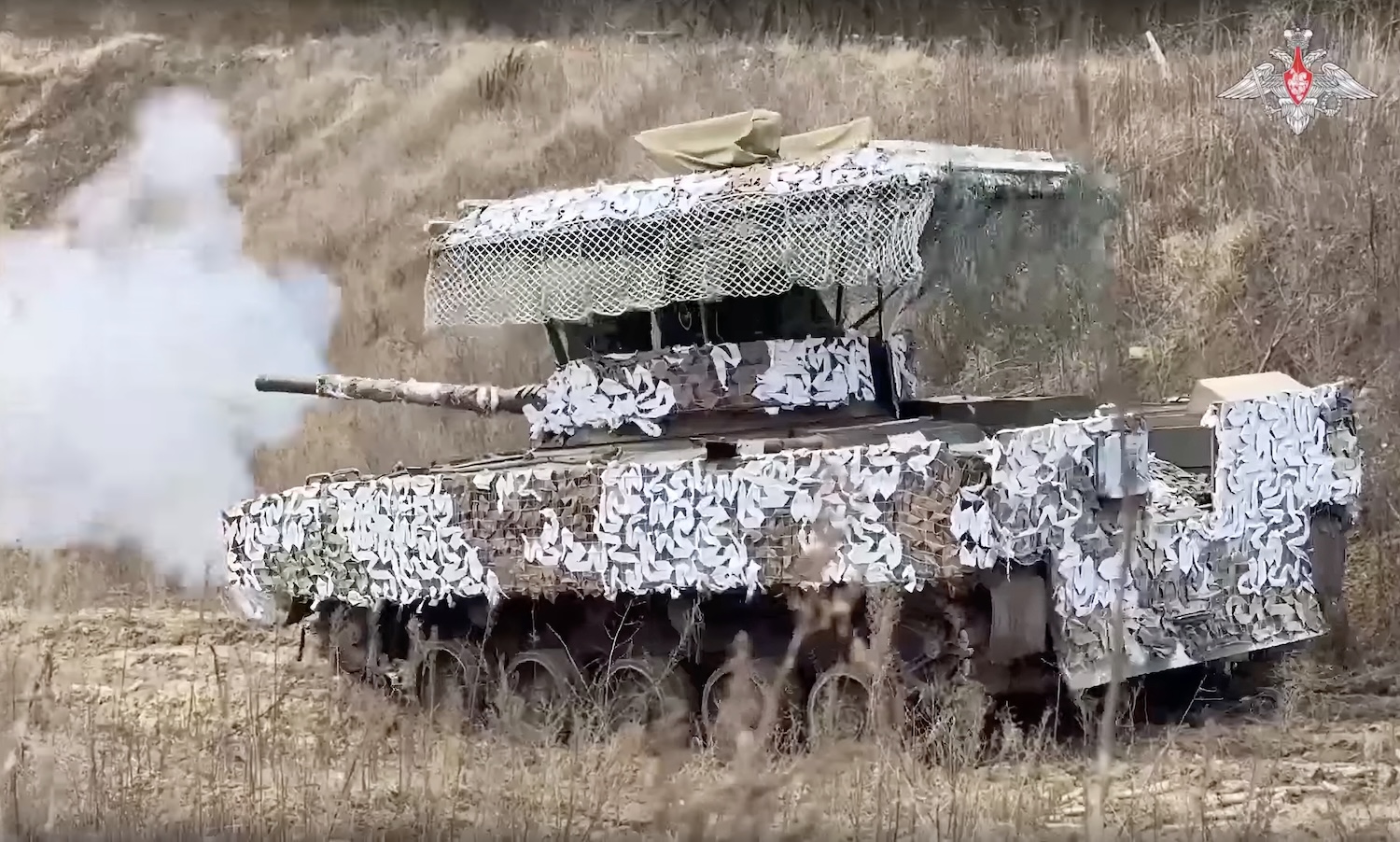 |
| An armored group of paratroopers on a BMD-4M in the SVO zone. |
| Source: Ministry of Defense of the Russian Federation |
The High-Precision Complexes holding also supplies the troops with upgraded BMD-2M amphibious assault vehicles with a new Bereg combat compartment. The vehicles are undergoing major repairs and receive a modern sighting system, an improved fire control system and a Kornet anti-tank system. Thanks to the modernization, the range of targets is significantly increased, and the crew is able to effectively destroy armored vehicles, fortified positions and other objects at any time of the day. In addition, the vehicles are equipped with additional protection kits and electronic warfare equipment.
The BTR-MDM Rakushka armored personnel carrier is designed to transport personnel, ammunition and property. The vehicle can accommodate up to 13 military personnel and can serve as a base for command and staff, medical and other special vehicles. It was the Rakushka that became the first modern Russian armored vehicle to successfully pass amphibious tests with a crew inside. The BTR-MDM is equipped with a 450 hp engine, can accelerate up to 70 km/h on the highway and up to 10 km/h on the water. It is armed with two 7.62 mm machine guns. The power reserve allows you to transfer paratroopers to a distance of up to 500 km without refueling the vehicle. Today, the armored personnel carrier is equipped with electronic warfare equipment, Nakidka visibility reduction kits and night vision devices.
For ground operations
Although airborne troops are traditionally associated with light armored vehicles, today there are full-fledged tank battalions in the airborne assault units. Their task is to strengthen airborne units during ground operations, providing paratroopers with powerful fire support.
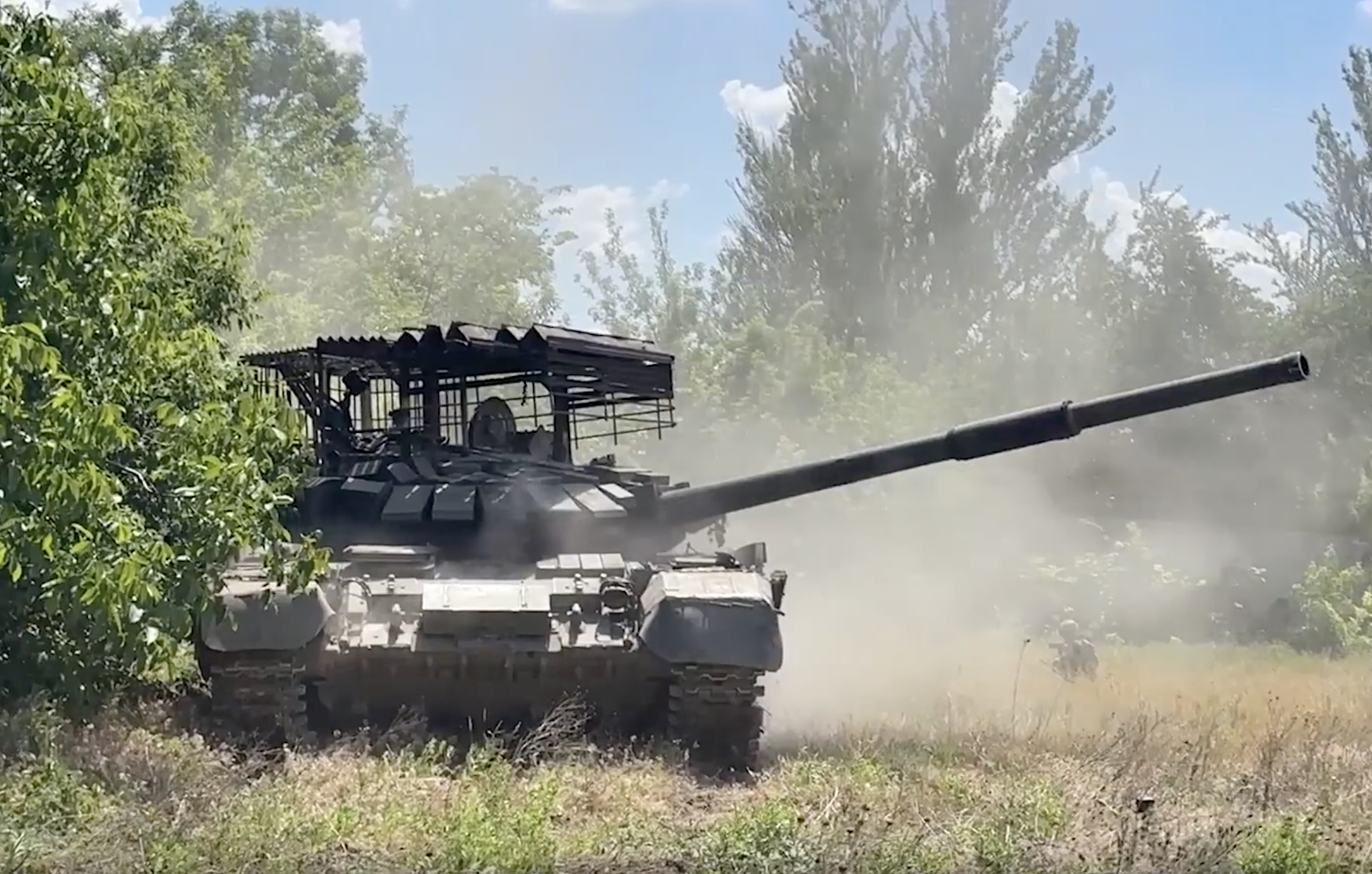 |
| T-72B3 in the free zone. |
| Source: Ministry of Defense of the Russian Federation |
The Russian Airborne Forces are armed with T-72B3 and T-90M Proryv tanks manufactured by Uralvagonzavod Concern, part of Rostec. The machines of the latest batches differ significantly from the equipment supplied a few years ago. They received electronic warfare equipment to counter drones, additional protection kits, mesh screens against FPV drones and new protection elements for the engine compartment. All changes are implemented taking into account the experience of operating equipment in modern combat conditions. During the period of its implementation, Uralvagonzavod Concern has increased the production of tanks significantly.
The main "weapon" of the paratrooper
The work of the Airborne troops is impossible without modern means of landing. The parachute is the main symbol of the Airborne Forces, placed on the flag and insignia of this branch of the Armed forces. Rostec enterprises produce a wide range of parachute systems for the landing of personnel, equipment, and various cargoes.
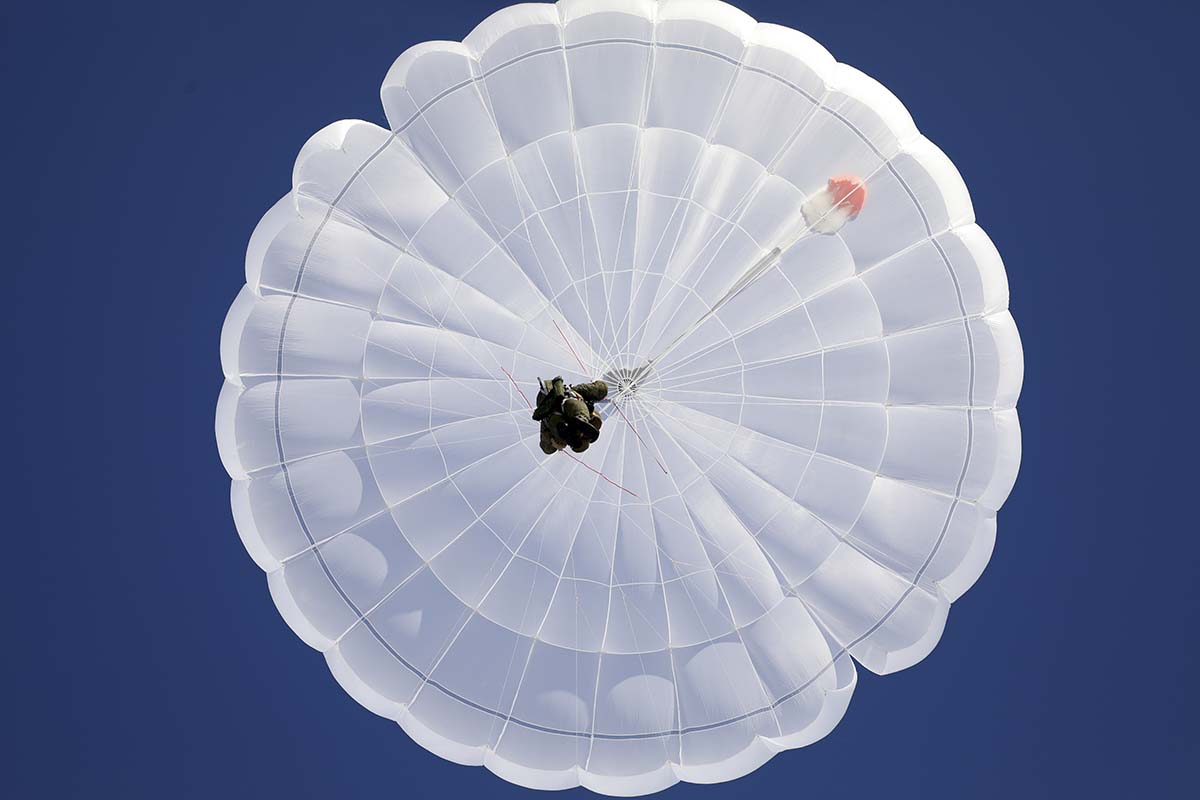 |
| Amphibious assault using the Cadet parachute system. |
| Source: Ministry of Defense of the Russian Federation |
The parachute systems "Dalnolet", "Berkut", "Steyer" and "Tandem-400" are designed to perform special operations. For example, the Dalnolet system allows you to jump from a height of up to ten kilometers and cover a distance of up to 80 kilometers by air, delivering a fighter along with weapons and equipment with a total weight of up to 190 kilograms. Both the well-proven D-6 and D—10 systems and the brand new Kadet systems are used for mass landings. These parachute systems are distinguished by improved tactical and technical characteristics in terms of flight weight and maneuverability. Thus, the fighter can take more payload with him.
A separate area is the landing of equipment and cargo. The MKS-350 multi-dome system and the PBS parachute-free system are used to drop combat vehicles weighing up to 20 tons. Modern parachute cargo complexes have been developed for the delivery of ammunition, equipment and humanitarian supplies. Another promising development was the APSDG-250 automated parachute air cargo delivery system, capable of delivering loads weighing up to 250 kilograms from a height of up to eight kilometers with a landing accuracy of about 100 meters.
Airborne Wings
For many years, the main transport of Russian paratroopers has been the IL-76 military transport aircraft, developed and manufactured by Rostec United Aircraft Corporation enterprises. Compared to previous versions, the latest modification of the IL-76MD-90A received more than 70% of the updated systems and assemblies. The aircraft is capable of transporting and landing three BMD-4M, three BTR-MDM or two self-propelled anti-tank installations "Octopus". In addition to equipment, the IL-76MD-90A can simultaneously land up to 126 fully equipped military personnel.
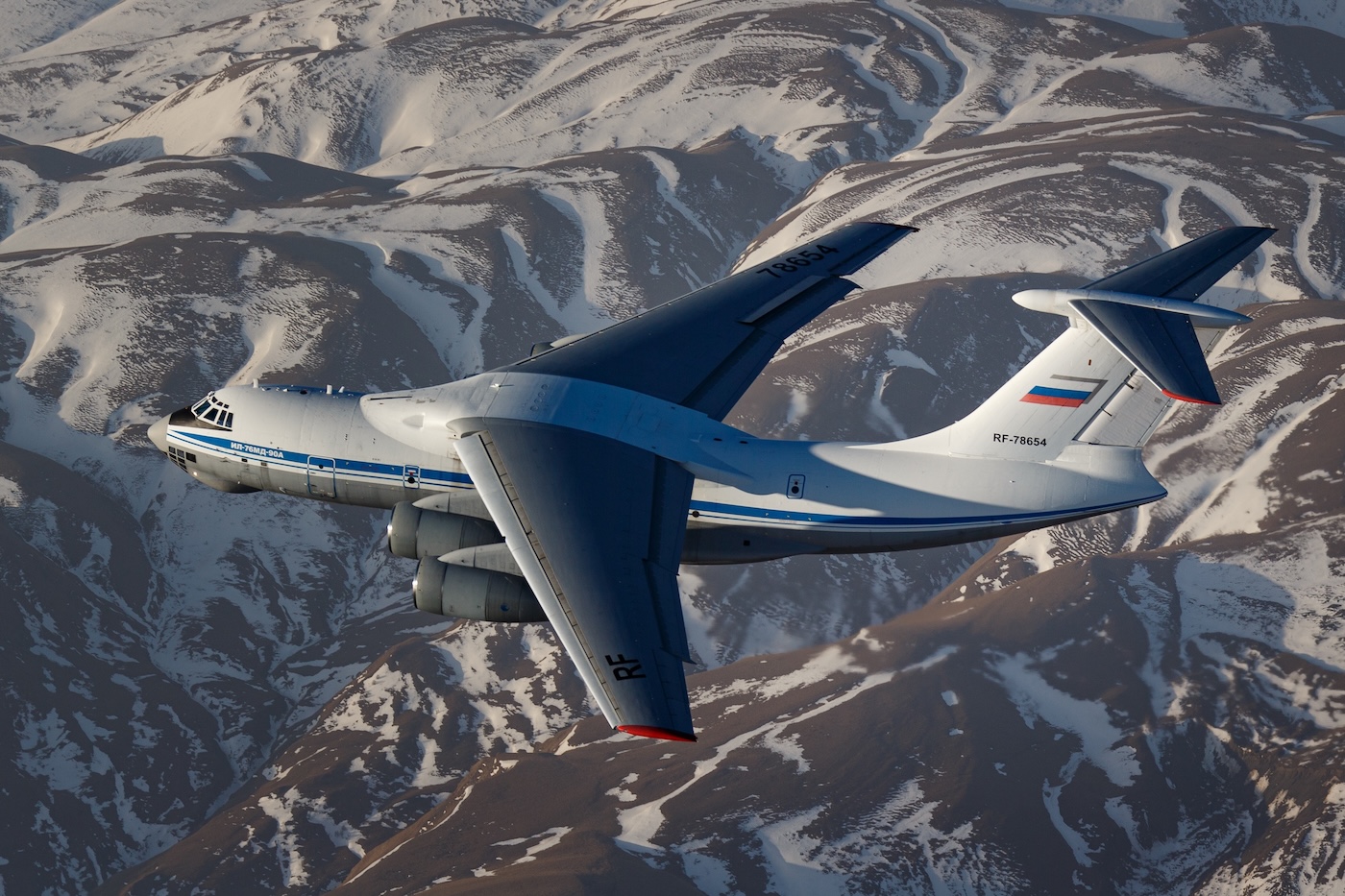 |
| IL-76MD-90A of the Russian Air Force. |
| Source: Ministry of Defense of the Russian Federation |
The "heart" of the aircraft were four domestic PS-90A-76 engines manufactured by the United Engine Corporation, also part of Rostec. With an amphibious load of 60 tons, the flight range reaches 4 thousand kilometers, and with a load of 52 tons it increases to 5 thousand kilometers. The key advantage of the Russian transport company over global competitors is that it is able to operate autonomously from unprepared and unpaved airfields.
