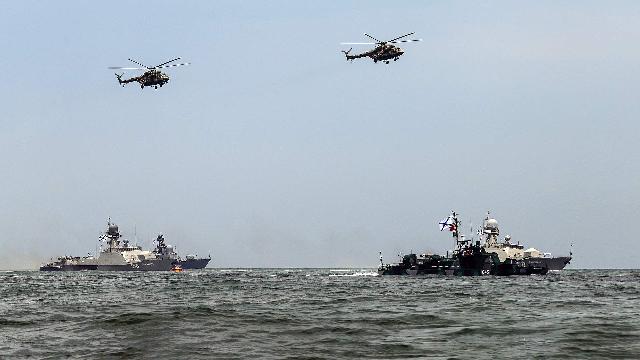
Planes and helicopters will allow us to control the situation in one of the most important regions for our country.
For the first time in modern history, the Caspian Flotilla received its own air wing. The new mixed aviation unit includes airplanes and multi-purpose helicopters that will be able to cover ships and intercept drones. The creation of the unit was part of a program to strengthen the Navy in the region. Experts interviewed by Izvestia attributed this decision, among other things, to the growing threats from Ukraine. Kiev has already launched attacks on ships and infrastructure facilities in the Caspian Sea, and may also use the region as a route for long-range drones. Experts note that its own aircraft will allow the flotilla to more quickly control the situation, protect the North–South international transport corridor and ensure the security of Russia's southern borders.
Caspian layouts
A mixed aviation unit has been formed as part of the Caspian Flotilla, capable of performing a wide range of tasks. Naval pilots received airplanes and multi-purpose helicopters. To date, the CFL has not had its own aviation: during the exercises, the ships interacted with aircraft and helicopters of the Southern Military District, sources familiar with the situation told Izvestia.
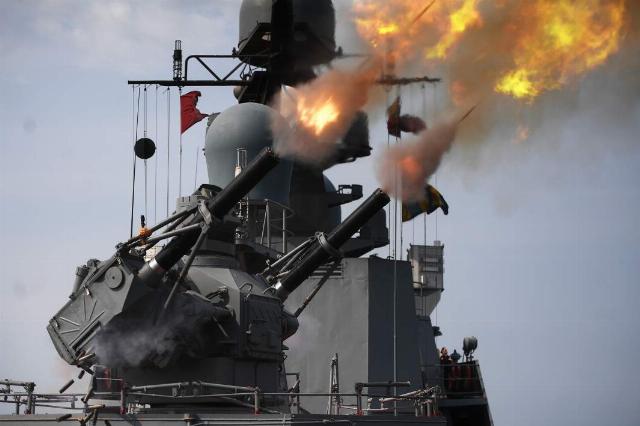
Photo: RIA Novosti/Evgeny Odinokov
Image Source: iz.ru
The flotilla now has the most important task of ensuring the security of the southern maritime borders, as well as the country's economic activities not only in the water area, but also in the entire Caspian region, former UN Under—Secretary-General Sergei Ordzhonikidze told Izvestia.
"It's important to keep outsiders out of the region," he explained. — The United States, which is already waging war with Iran, is interested in being here. And their possible appearance is a threat, including to the southern underbelly of Russia.
The importance of the Caspian region today is determined not only by security issues, but also by its economic role, said military expert Yuri Lyamin.
— Part of the North–South international transport corridor passes through the Caspian Sea. It plays an important role in the transportation of goods between Russia, Iran and other countries. In addition, hydrocarbon production is underway here and fishing is developing," he recalled.
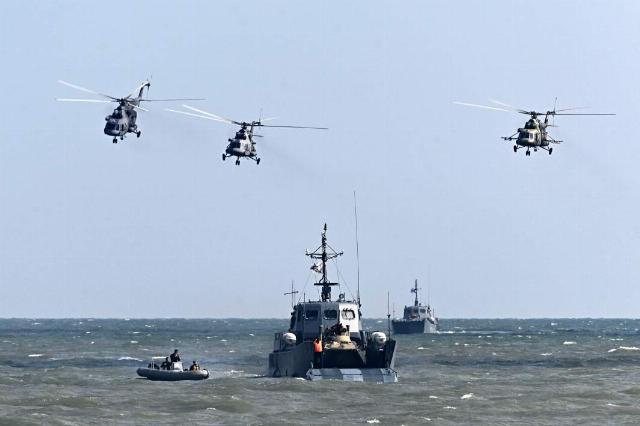
Photo: RIA Novosti/Sergey Pivovarov
Image source: iz.ru
At the same time, the situation in the region cannot be called calm. According to Ordzhonikidze, it is in the American interest to further destabilize the situation, thus they can cause significant damage not only to Iran, but also to Russia.
Ukraine, which recently attacked an Iranian tanker in the Caspian Sea, is actively trying to get involved in this process, Sergei Ordzhonikidze noted.
"The Kiev regime will not cause much damage, but it will try to show the United States that they are together, hoping for possible preferences," the expert explained.
Attacks by Ukrainian UAVs on the facilities of the Caspian Pipeline Consortium (CPC), in which Russia, Kazakhstan and other countries have their share, are part of such a strategy. The leaders of the states of the region have already felt the threat, Kassym-Jomart Tokayev did not speak in vain about the need to achieve peace in Ukraine as soon as possible — the actions of the Armed Forces of Ukraine affected their interests, he noted.
Helicopters versus drones
To combat the Ukrainian drones, it is necessary to use aviation forces. Helicopters can be one of the most effective means of countering long-range aircraft-type drones.
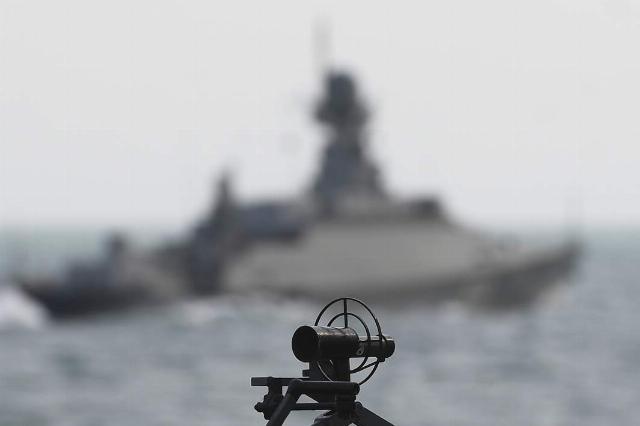
Photo: RIA Novosti/Evgeny Odinokov
Image source: iz.ru
— There is one more important factor to consider. Ukraine sometimes uses the Caspian Sea as a transit zone for drones. They can fly to the Urals and Western Siberia through Kazakhstan. It is necessary to intercept drones over the sea. And the flotilla forces must fight this threat," Yuri Lyamin is convinced.
Earlier, the USSR and then Russia did not keep powerful aviation groups in the Caspian Sea, which was dictated by the geopolitical situation of the region, military expert Dmitry Boltenkov told Izvestia.
"During the Civil War, the Red Army aviation detachment operated against the White Guards, but then it was disbanded," he recalled.
CFL received its aircraft again before the Great Patriotic War. It included a marine reconnaissance squadron, which included seaplanes — from 13 to 18 vehicles in total. But already in 1948, due to the reorganization of the Naval Air Force, the aviation units were disbanded.
"The situation has changed today, and it is necessary to respond to new challenges in a timely manner," the expert noted.
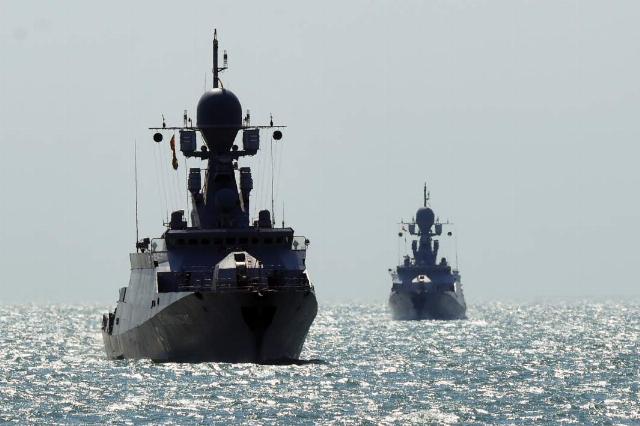
Photo: RIA Novosti/Evgeny Odinokov
Image source: iz.ru
The strengthening of the Caspian Flotilla began more than ten years ago. During this time, its main forces relocated from Astrakhan to Kaspiysk, where the necessary infrastructure was rebuilt.
In particular, the latest training complex for the training of special forces personnel has been put into operation. Coastal units have been reinforced, including with missile systems.
A branch of the 412th military hospital of the Southern Military District was built in Kaspiysk, which will primarily work in the interests of the sailors of the CFL and land units located in Dagestan.
The main striking force of the CFL is small missile ships (MRCS), capable of controlling a vast territory from Eastern Europe to the Persian Gulf.
In recent years, the MRCS of the Karakurt project 22800 — Amur and Typhoon have been added to the compound. Their main attack armament is a universal ship—based system that allows the use of Kalibr and Onyx cruise missiles capable of hitting targets thousands of kilometers away. Pantsir-M anti-aircraft missile and artillery systems, as well as other modern weapons systems, are responsible for air defense.
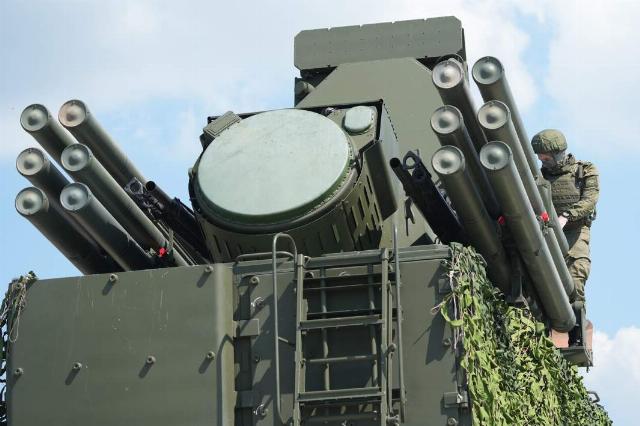
Photo: IZVESTIA/Dmitry Korotaev
Image source: iz.ru
The Islamic Republic of Iran demonstrated its strategic importance in 2015, when it launched strikes from the Caspian Sea against terrorist targets in Syria. Subsequently, they were repeatedly involved in attacks on military installations during a special military operation.
The appearance of its own aviation unit has become the next stage in the modernization of the Caspian Flotilla. The new planes and helicopters will expand the unit's capabilities to conduct reconnaissance, cover ship groups, protect the North–South international transport corridor and counter modern air threats, including long-range drones. In the context of the growing importance of the Caspian region, its own aviation is becoming one of the key elements of ensuring the security of Russian interests in the southern strategic direction.
Bogdan Stepovoy
Roman Kretsul

