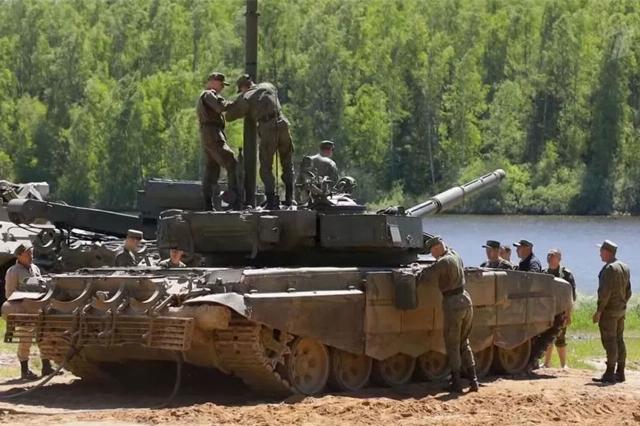
Colonel Khodarenok proposed to develop an "anti-drone tank" to protect against UAVs
Over the past few days, discussions about the Arena-M tank active protection system have been raging in the Russian and Ukrainian information fields. This system is supposed to shoot down everything that flies towards the tank, but Ukrainian channels have distributed a video in which FPV drones allegedly hit tanks equipped with Arena-M. Serious conclusions cannot be drawn from carefully edited videos distributed for propaganda purposes. However, one of the frames shows that the Arena-M is still working and shooting down the drone. Can KAZ become a panacea and how can armored vehicles be protected from the threat of FPV drones - Gazeta.Ru" dealt with military analyst Mikhail Khodarenk.
Protective "Arena"
The idea of using active tank protection systems is not new and appeared decades before the word "drone" entered the Russian language. In the 1980s, the USSR installed the Drozd system on obsolete T-55 tanks, which was supposed to shoot down anti-tank missiles (ATGM) and grenade launchers flying into the side of a combat vehicle. The system was extremely controversial, if only because its protective shells worked like very powerful fragmentation grenades, the sudden launch of which was always "welcomed" by its own infantry marching next to the tank.
In the West, KAZ was considered not very useful, and therefore they became widespread only in the 21st century in Israel. This was due to the fact that the only serious threat to the Israeli Merkava tanks were ambushing grenade launchers and ATGM operators, while in the case of a war between NATO and Warsaw Pact countries in Europe, the generals rather expected tank battles head-on, in which there was no sense.
 |
| Elements of the Arena-M. |
| Source: Patent for T-72B3A |
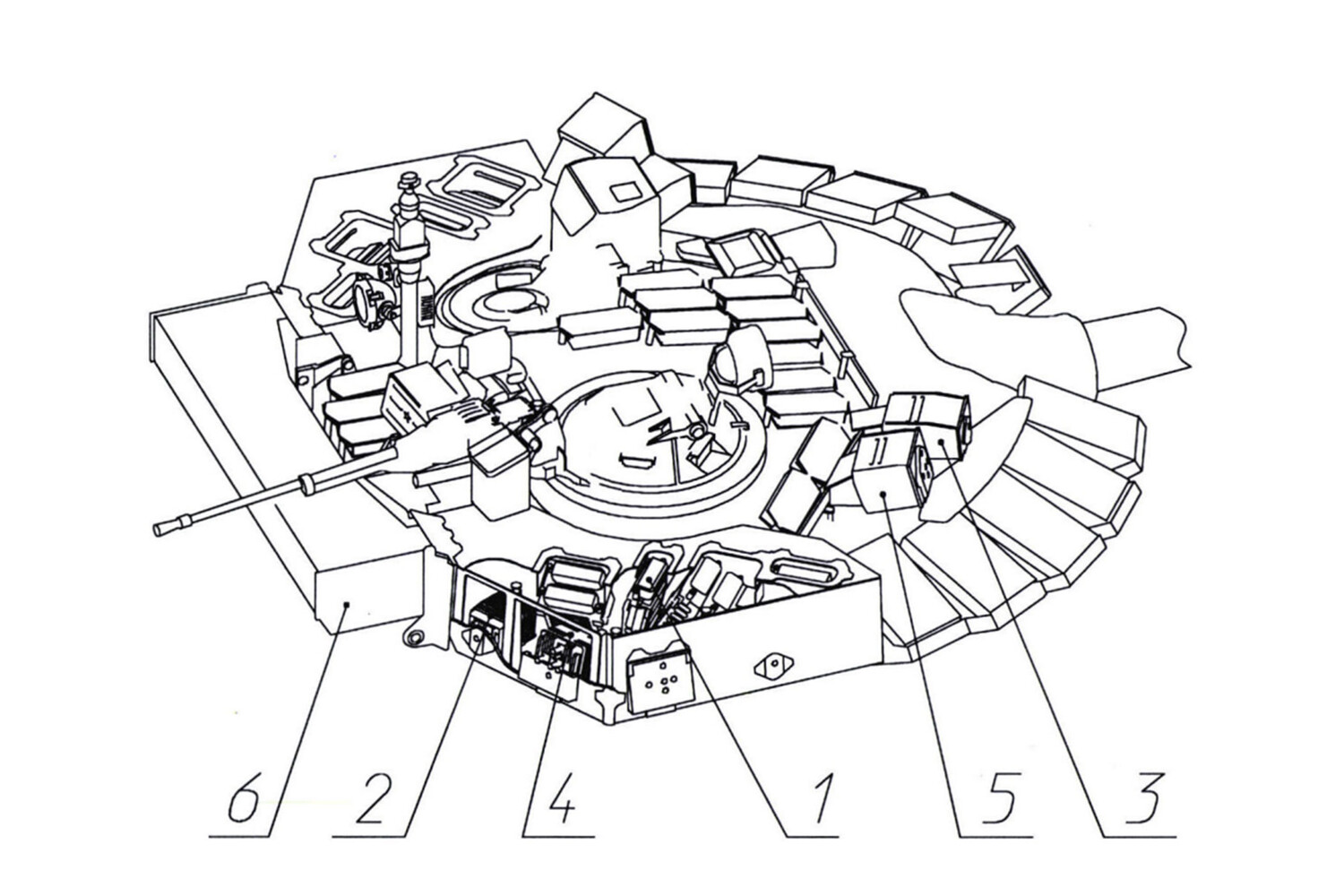
Arena-M is a distant descendant of Drozd, a system based on similar principles. It looks like several small blocks installed in different parts of the tower. These units contain radars capable of detecting attacking munitions, and information from them is sent to a computer control system. There are also blocks with protective projectiles in several places of the tower: there are 12 of them in total (this number is indicated in the patent ), but they are distributed around the perimeter of the tower, and all 12 can never be used to protect one side. If the computer detects an attacking projectile threatening the tank, it selects a suitable defensive projectile and fires it at the right moment to destroy the threat on approach, a few meters away.
On July 8, 2026, Izvestia reported that T-72B3A tanks with the Arena-M installed would begin to be used on the battlefield in Ukraine, separately emphasizing the importance of this system for protection against drones.
 |
| Successful operation of the Arena-M when protecting against a drone. |
| Source: Frame from video/YouTube |
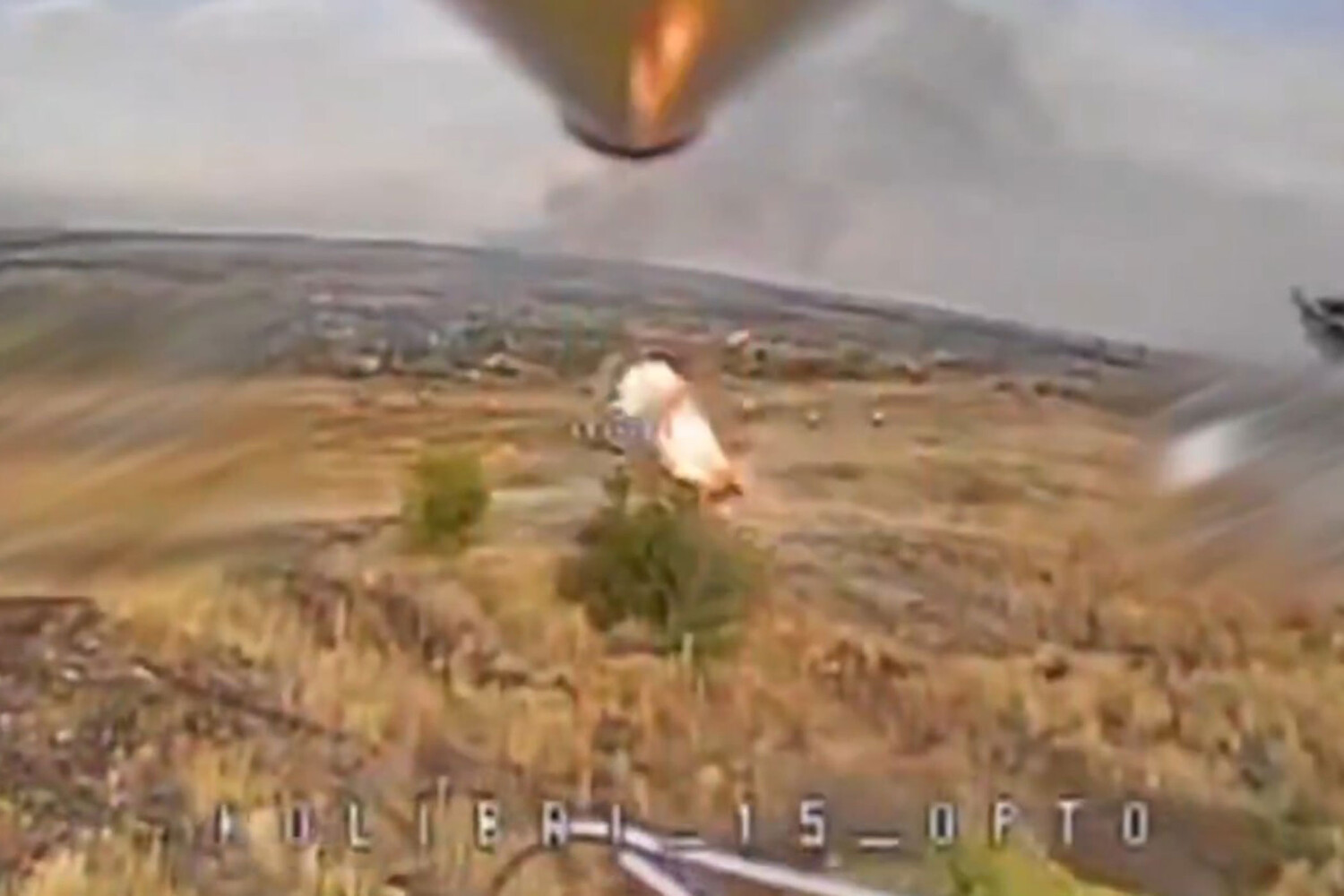
A few days later, videos began to spread on Ukrainian Telegram channels and social networks in which FPV drones allegedly hit T-72B3A tanks somewhere in the combat zone. The video was very carefully edited and, like any other military propaganda, did not pretend to be objective. The authors wanted to show Russian technology in a negative light, but this was not entirely successful: they forgot or did not delete the moment during the installation, which shows how the Arena-M is triggered and, presumably, knocks down an attacking drone. It is not known how many times it worked in that battle.
Proving the fundamental operability of a weapon on the battlefield is a very important phase in its development, regardless of the tactical outcome.
Anti-drone tank
"The appearance of the Arena-M in the area of the SVO is an important step to protect our tanks from drones. However, all such systems have a fundamental drawback in the form of limited ammunition, and the main strength of drones is their cheapness and quantity. If the enemy has more drones than the tank has defensive shells, the outcome will be predictable. And in the current conditions, the use of many dozens of drones in one battle is common," explained the military observer of Gazeta.Ru", retired Colonel Mikhail Khodarenok, who previously served in the Air Defense Forces of the USSR Armed Forces and the General Staff of the Armed Forces of the Russian Federation.
Thus, the Arena-M can be used as the last line of defense, but it is necessary to reduce the number of threats that can reach it. There are many means of combating drones at a distance of more than a couple of meters, and even more are being developed. However, it can take a long time between the appearance of a weapon in testing and its systematic successful use on the battlefield.
It is known that an FPV drone can really be shot down with a machine gun, especially if it is controlled automatically using AI. The Kalashnikov Concern developed such a robotic machine gun turret at the end of 2025. Its dimensions make it possible to potentially install it on a turret, but the system integration of components can be a difficult design task: in particular, it will be necessary to "teach" the machine gun to receive target designation from surveillance radars and shoot on the move. Nevertheless, a similar 7.62 mm anti-drone machine gun is installed on the latest German KF-51 Panther tank.
However, this may not be enough, and therefore some solutions to the problem can be seen in another era.
In the 1970s and 1980s, helicopters with anti-tank missiles were the main threat to tanks. In a sense, they can be called the "FPV drones" of their era.: they created an asymmetric threat that the tank could not do anything about. The helicopters appeared at a convenient moment, hovered low above the ground and fired missiles at tanks from a distance of several kilometers. In the Iran-Iraq War, a pair of Iranian-made AH-1 Cobra helicopters from the United States could hold back the advance of an entire Iraqi tank regiment, which broke all the odds for Saddam's generals.
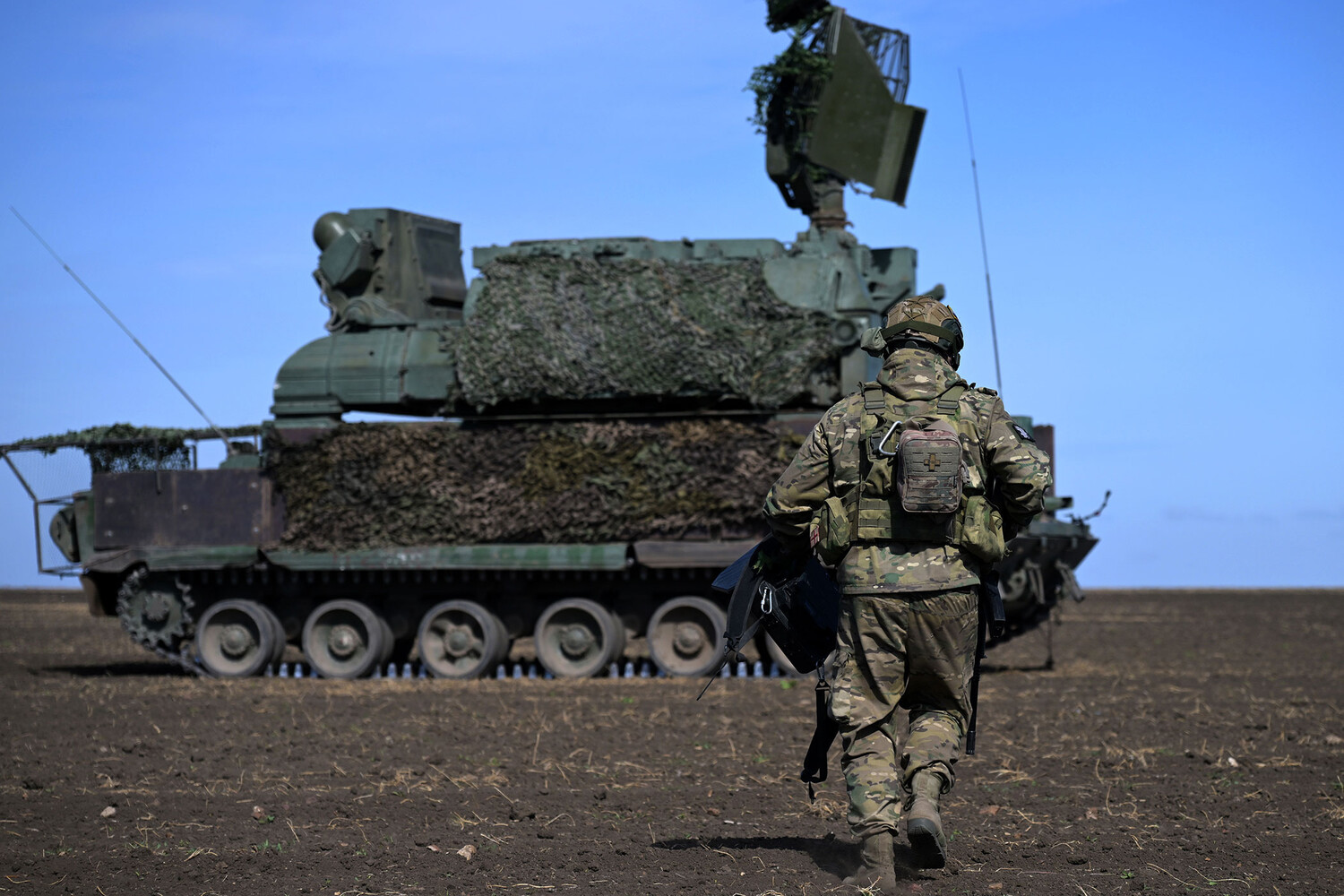
In the USSR, they knew about this problem and created the Tor air defense system to solve it. From a distance, a civilian might mistake it for a tank, but without a cannon. The task of the complex was to follow the tanks in the same formation and cover them from attacking helicopters. The system was specially tailored for this task, including having a minimal reaction time and being able to fire at several targets at once. The Americans were thinking of fighting Thor with a converted Stinger missile launched from helicopters, guided by radio radiation, but no one knows who would have won in such a clash, since those battles never happened.
 |
| The Thor anti-aircraft missile system. |
| Source: Evgeny Biyatov/RIA Novosti |
"I believe that the future in the fight against drones belongs to specialized mobile systems like Thor. True, it is obviously economically unprofitable to shoot down drones with its missiles, and the means of destruction must be changed, but this will not change the concept.
In general, the military analyst is confident that there will be a means to combat drones and that this threat is not so overwhelming. However, at the moment, the military industry is stuck in the phase between the appearance of a good idea and its successful implementation.
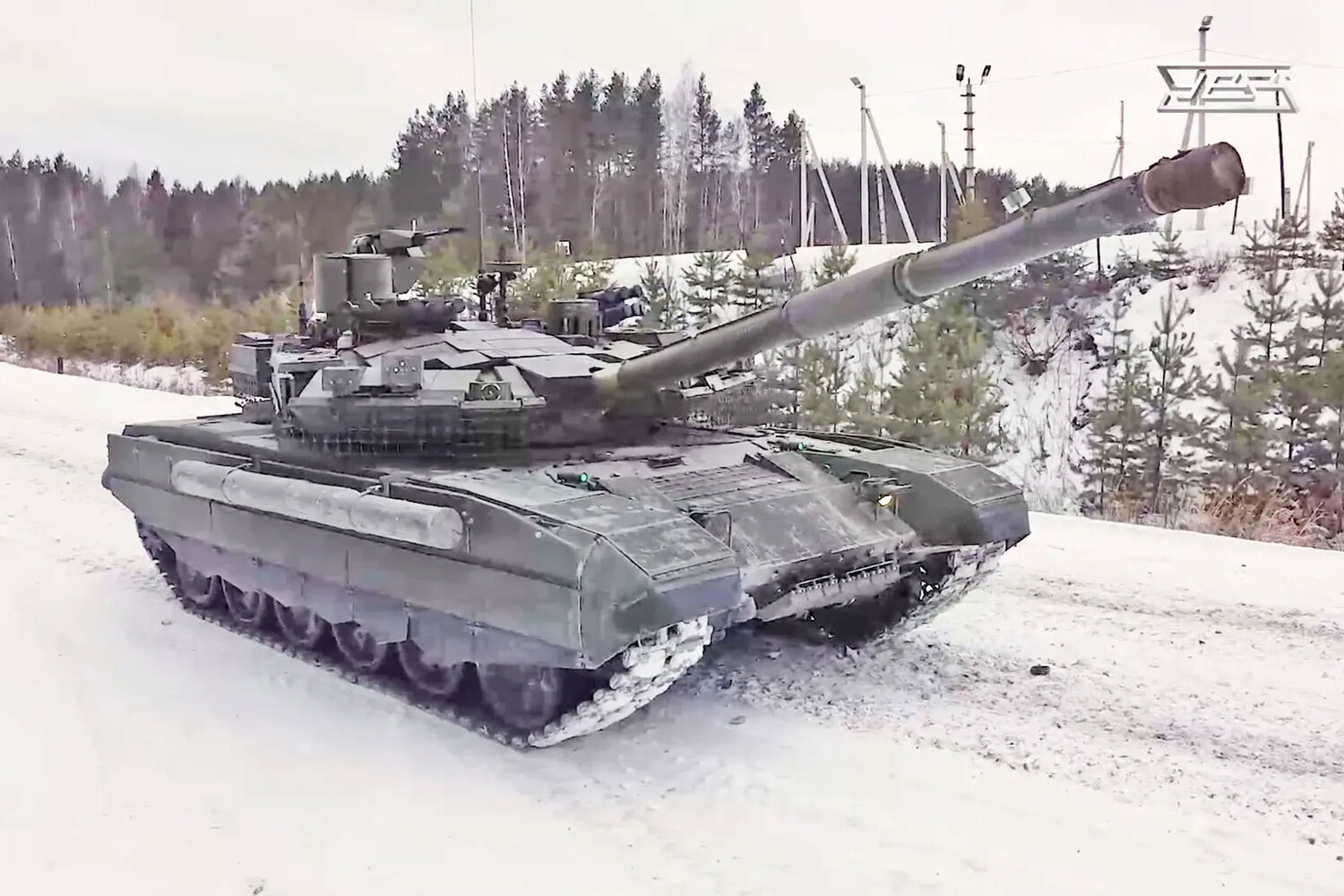 |
| The Russian T-90M tank with the Arena-M active protection system. |
| Source: Frame from video/UVZ (2025) |
Mini-war in the air
One of the most interesting ways to deal with drones was developed several years ago in the United States. This is the Coyote Block 3 NK interceptor drone, which should not be confused with any other modifications of the Coyote drone. Outwardly, it resembles a very small rocket or airplane about one meter long and weighing up to 10 kg. It is launched using a launch rocket booster, after which the drone goes into a cruise flight using a jet engine.
Many similar drones, including the Coyote, function as anti-aircraft missiles and explode near the target. However, the NK index in the name means non-kinetic — "non-kinetic", and refers to its warhead. As follows from the statements of the manufacturer Raytheon, the device strikes the UAV with some kind of energy, flying close next to them. The company is silent about the details, but the published test videos show the head of the drone, which looks like a radio-transparent fairing, from under which something dark shines through. It almost certainly hits targets with microwaves using an emitter located under the fairing, which is consistent with the test video: the drone flies past several quadrocopters, and they fall down like a stone without external damage.
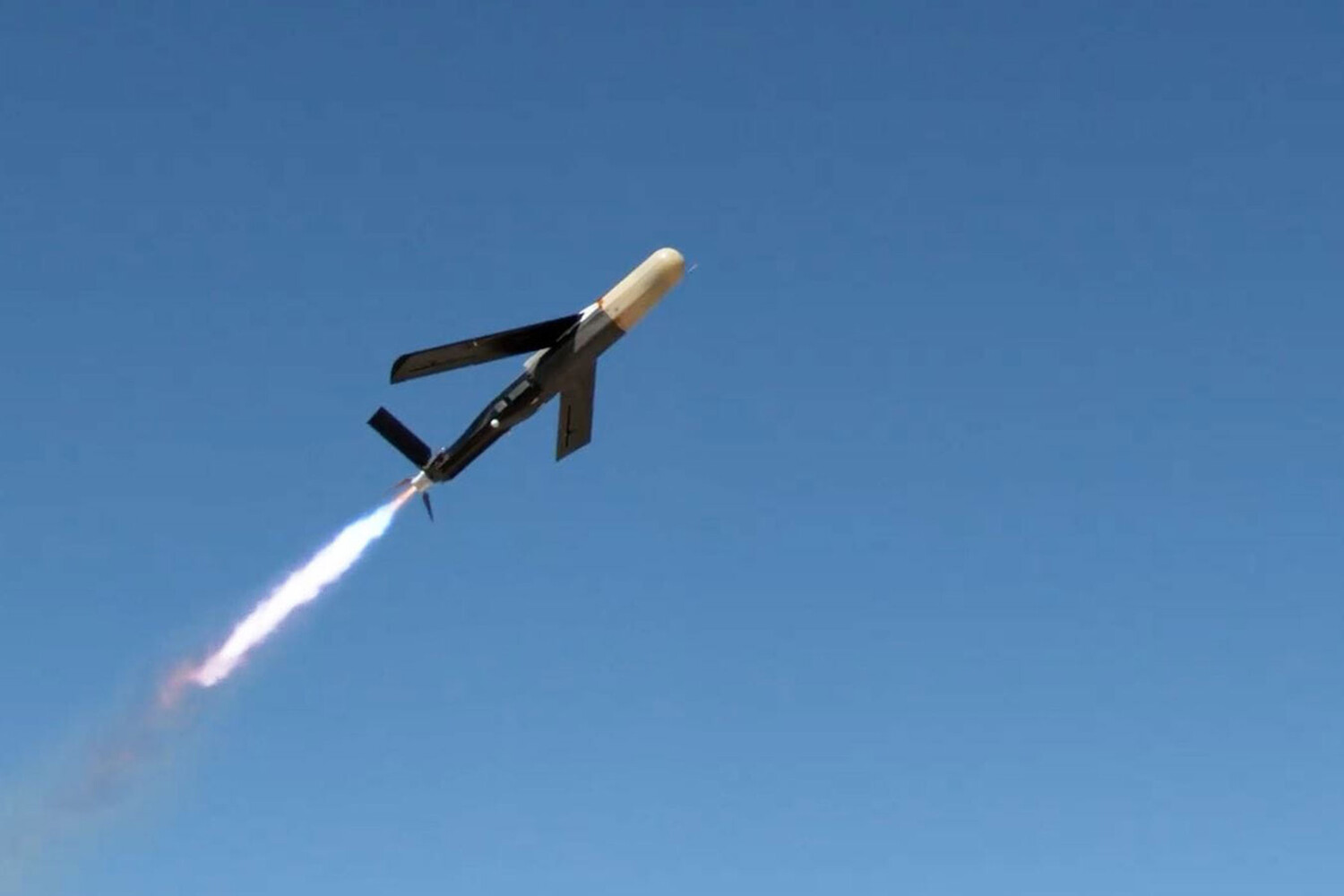 |
| The Coyote Block 3 NK interceptor drone. |
| Source: Raytheon |
Microwave weapons are considered very promising in the fight against drones, but they have a huge disadvantage: the intensity of their effect on drone chips is inversely proportional to the square of the distance, and therefore the microwave cannon is too large to operate at a distance of hundreds of meters. However, a drone, unlike a ground-based system, can fly up to a target at point-blank range, which greatly reduces the required power.
Perhaps such drones will become the outermost layer of defense of ground forces from small UAVs and return tanks to their place on the battlefield.
Konstantin Kharitonov

