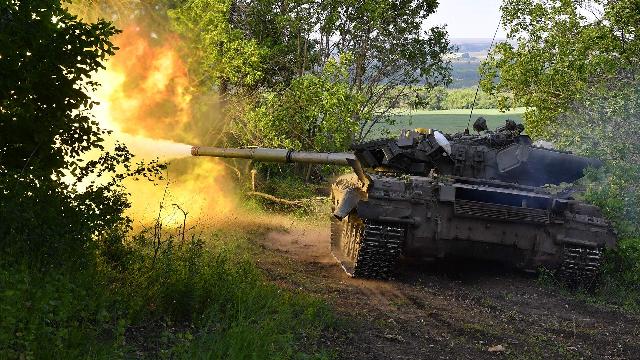
Uralvagonzavod designer — about new engines for the T-80, work on its own and tanks in the Arctic
Hybrid engines for tanks that make them "invisible" on the battlefield are one of the priorities of military equipment designers. At the same time, the current "heart" of the Russian T-80 is capable of starting at a temperature of -50 degrees, and it is almost impossible to shut it down. About why a gas turbine engine is ideal for the Arctic, how its experience is changing the design of the machine right now, and why factory crews are working near the front line, in an interview with the designer (first and last name are not indicated for safety reasons) of the Uralvagonzavod manufacturing plant, part of Rostec State Corporation.
"The T-80U has absorbed all the most advanced"
— For the plant, the T-80 is not just one of the models, it is a real business card. What does this machine mean for the enterprise today?
— Without too much modesty, I will say that the T-80 is our flagship product, something that the plant is proud of and thanks to which it is known all over the world.
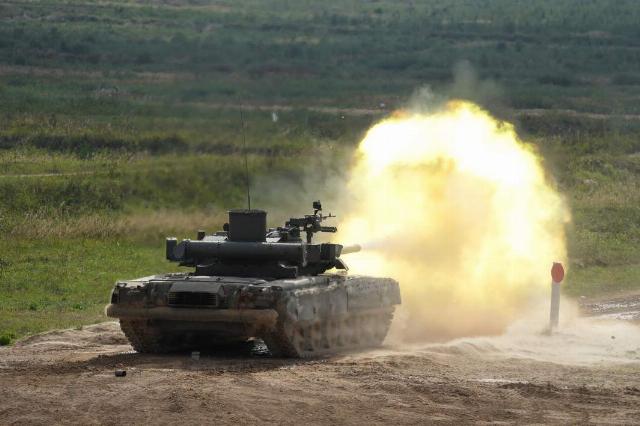
T-80U tank
Image source: Photo: IZVESTIA/Dmitry Korotaev
50 years ago, this machine had enormous modernization potential. Even taking into account the profound changes that we are seeing today — first as part of a comprehensive modernization, and now as a result of improvements during the SVR — this potential is being revealed. We have a solid scientific and technical foundation and an understanding of how to improve the machine.
— The tank has come a long way. The T-80B version was intermediate, then the T-80BV appeared, and the T-80U became the pinnacle of the Soviet stage. Was it really the peak of engineering at that time?
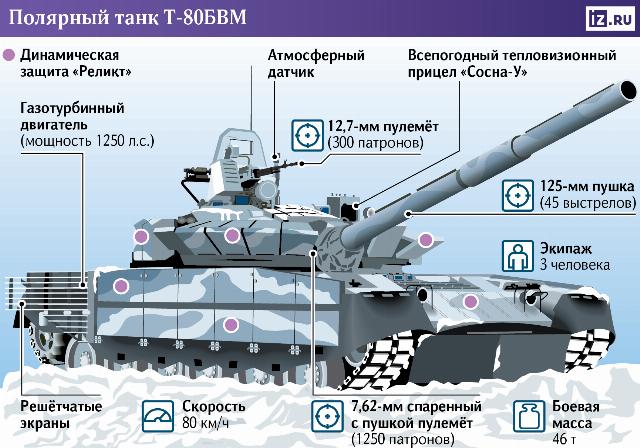
— The T-80U absorbed all the most advanced that existed in the world at that time. The car was equipped with the latest fire control system, a unique stabilization system and, of course, a gas turbine engine with a capacity of 1,250 hp. The chassis and on-board gearboxes were made at the highest level. This machine was ahead of its time in many ways and set the development vector for decades to come.
"Factory crews are working near the front line"
— BVM modification vehicles went into battle from the very first minutes of their operation. How did this experience change the tank?
— It changes continuously. For a long time, we believed that the deep modernization of the T-80, developed before 2019, would be the logical conclusion of the development of the platform. But life made its own adjustments, and opened a completely new page in the history of the "eighties".
If we compare the product of the 2020 model and what is rolling off the assembly line today, these are two different tanks. They differ significantly in weight, handling, reliability and, first of all, in the level of security.
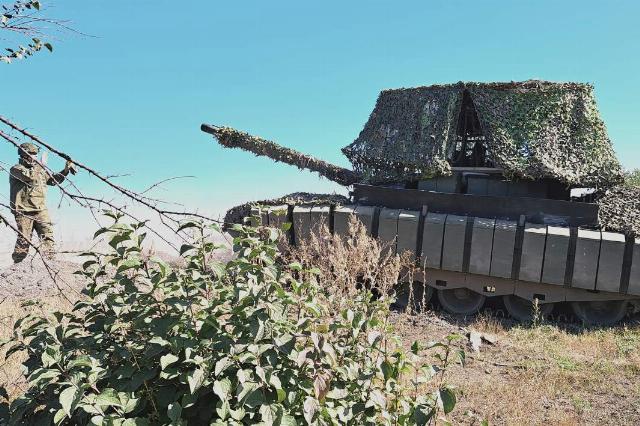
T-80 tank
Image source: Photo: IZVESTIA/Dmitry Astrakhan
We receive feedback directly from the war zone. Our factory teams work near the front line, communicate with crews, commanders, and repairmen. We promptly respond to their criticism and suggestions. Yes, the approval and testing procedure takes time, but we try to change the car as quickly as possible to meet the specific needs of tankers.
— Footage of huge makeshift protective canopies on tanks, the so-called "mangalas," is often seen online. Why can't we just make such structures at the factory?
— We understand soldiers on the front line: when drones dominate the battlefield, people first of all think about their safety. But artisanal "supermangals" solve a very narrow task — for example, to get from point A to point B under fire. At the same time, they can completely deprive the tank of its key tactical and technical characteristics.: reduce mobility, block the firing area, or reduce the field of view of surveillance devices.
Our task as designers is to prepare the car for any combat scenarios. Factory protection must be comprehensive, reliable and not lower the level of combat capabilities of the tank. We have no right to thoughtlessly install systems that will help in one situation and lead to the death of a car or the inability to get out of battle in another.
— The main feature of the T-80 is its gas turbine engine. What are its key advantages in real combat?
— One of the main properties of our free—turbine engine is that it is almost impossible to shut it down. Even under extreme loads, if the tank hits an insurmountable obstacle, the gas turbine engine will not stall. He "forgives" many mistakes of the crew. This is critically important in a stressful combat situation: even an inexperienced driver will be able to effectively control the car and maneuver successfully.
Combat work of the T-80 tank crew
Image source: Photo: TASS/Press Service of the Ministry of Defense of the Russian Federation
In addition, our engine is made in the form of a monoblock. This greatly simplifies maintenance. It takes about four hours to replace the entire power unit: two hours to dismantle and two hours to install a new monoblock, and the car is back in service.
"Performs tasks at temperatures up to minus 50 °C"
— Another important aspect is working in extreme temperatures. How does the T-80 perform in the north?
— For diesel cars, starting in severe frosts is always a serious problem. It does not exist for the T-80. Our tank is guaranteed to start and perform tasks at temperatures up to minus 50 °C and even lower. That is why the development of the Arctic is one of our priorities. We are actively working with the Ministry of Defense to provide Arctic units with this reliable, fast and energy-efficient equipment.
— The T-80 chassis has also earned high praise from the military. How does it cope with the weight gain of the tank due to the installation of additional armor?
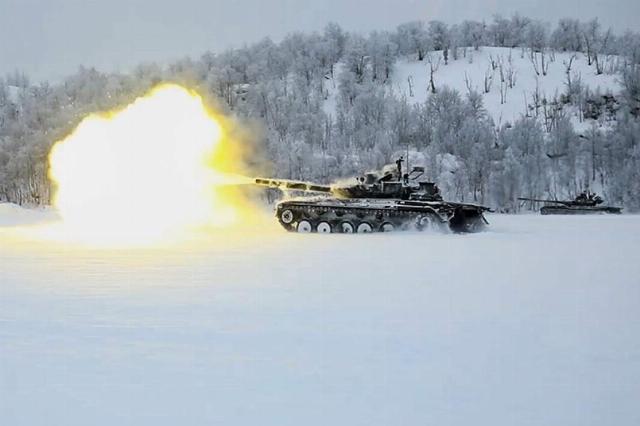
T-80 tank
Image source: Photo: TASS/Press Service of the Ministry of Defense of the Russian Federation
— The T-80 chassis is unique. Despite the fact that the weight of the product has increased significantly during the upgrades, the chassis can handle this load without loss of dynamic and speed characteristics.
Moreover, a whole range of special equipment has been created on the basis of this chassis. We are successfully fulfilling the state defense order for the production of BRAM-80 armored recovery vehicles. The military appreciates them very much. There was a case when fighters in difficult conditions used conventional T-80s to evacuate damaged equipment, and having received a specialized BRAM-80 at their disposal, they simply did not want to return it to us for state testing — it turned out to be so effective and convenient.
"A protected and mobile combat vehicle will always be needed"
— Today, the battlefield is saturated with drones and robotics. Will there even be a place for a classic tank in the wars of the future?
— Absolutely. A highly armored, protected and mobile combat vehicle will always be needed. Another question is how its concept will change. We are looking towards fully unmanned, robotic combat vehicles. As developers within the Uralvagonzavod concern of Rostec State Corporation, we set these trends ourselves and broadcast the requirements to our partners and component suppliers.
— The energy consumption of modern tanks is growing: new communication systems, electronic warfare, and laser weapons are emerging in the future. How to solve the problem of lack of energy?
— The most obvious path that both our Western competitors and Chinese colleagues are following today is the introduction of hybrid power plants. The hybrid drive will give the car the necessary spare power for any energy-intensive consumers.
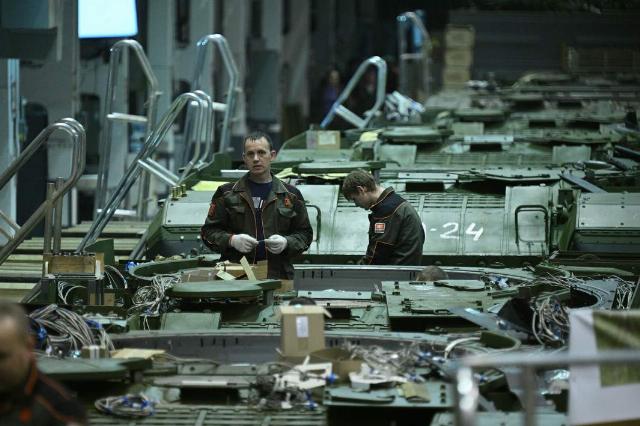
Photo: RIA Novosti/Ramil Sitdikov
Image source: iz.ru
In addition, hybridization will reduce the thermal visibility of the tank on the battlefield and remove vibrations when working in position. Although it should be noted that the gas turbine engine has practically no vibrations, which has a positive effect on the accuracy of the fire control system. Nevertheless, hybrid technologies are a priority area of our future developments.
The Black Eagle was created to meet the demands of its time
— In the history of your design bureau (KB) there were famous experimental machines — "Bars" and "Black Eagle". Will their solutions be used in the tanks of the future? For example, will the Black Eagle Tower be included in the series?
— It is impossible to return to what was created a quarter of a century ago. The Black Eagle was created to meet the demands of its time. Today, the conditions of combat have changed dramatically, and in its pure form, this model is irrelevant. But the work on "Leopard" and "Black Eagle" was not in vain. Any development work forms the scientific and technical foundation. On these machines, we tested unique solutions for upgrading the engine, increasing its power, and changing the layout. We are actively using this experience today, but we are moving forward towards new concepts and trouble—free systems.
— Historically, the T-80 was developed in Leningrad. How did your Design Bureau become the main custodian and developer of this machine?
— Our Design Bureau has always been engaged in heavy tracked armored vehicles, from the legendary T-34 to the T-55. When our plant was identified as a site for the serial production of the T-80, the Design Bureau joined the machine maintenance together with Leningrad colleagues from the Kirov Design Bureau. Later, when the Leningrad Design Bureau stopped supporting the project, our plant completely took over the maintenance and modernization of the T-80. Today, all design documentation belongs to our company. We work independently and do not depend on anyone. The T-80BVM version is already completely our development.
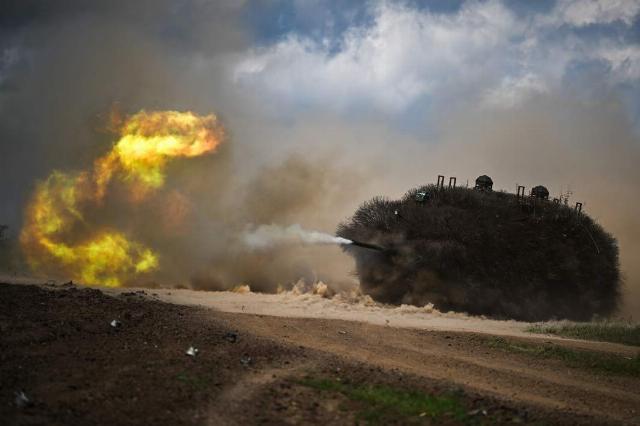
T-80BVM tank
Image source: Photo: RIA Novosti/Sergey Bobylev
— In addition to fulfilling the defense order, does the plant plan to diversify production?
— Absolutely. Our main customer is the Ministry of Defense of the Russian Federation, and now we are fully focused on the production of tanks and heavy flamethrower systems, which are in high demand on the front line. But we are looking to tomorrow. After its completion, the plant will need serious diversification. And here our developments on gas turbine engines for the Arctic should be in demand in the civil sector — for the development of northern territories and work in harsh climatic conditions.
— This year marks the 50th anniversary of the adoption of the T-80. What would you like to say to the creators of this machine and those who create it today?
— I want to express my deepest respect to the designers and engineers who stood at the origins of the creation of this incredible machine. When I started working with the T-80 myself, I literally fell in love with it. It is a great honor for me to continue their work. We will do everything to ensure that the ideas embedded in the gas turbine tank are developed on the basis of new high-tech systems, and our machines serve Russia faithfully!
Bogdan Stepovoy
