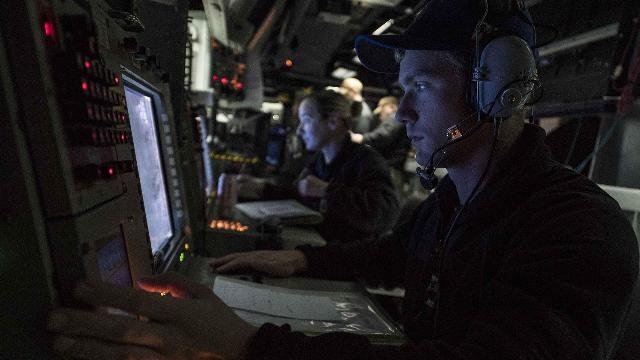
The British Navy is reducing shipbuilding programs in favor of unmanned technologies
London, following Berlin, intends to radically revise the concept of naval forces development. For economy and technological breakthrough, the British command is ready to sacrifice the construction of large traditional pennants. Instead, they rely on autonomous systems. However, the ambitious plan to create a "hybrid fleet" runs the risk of facing harsh reality: while new robots exist only on paper, the operating ship composition of the Mistress of the Seas has been reduced to a historical minimum, and the strategic submarine fleet has been virtually paralyzed. How this will change the confrontation at sea is in the Izvestia article.
Robots instead of crews
Even before announcing his resignation, British Prime Minister Keir Starmer presented a basic plan for defense investments. The authors of the document call it the strategic foundation of the kingdom's long-term security. The key vector of this doctrine is the massive introduction of unmanned systems. But most of these systems today exist only on paper.

Keir Starmer
Image source: Photo: Global Look Press/IMAGO/Christian Spicker
London is allocating over £5 billion ($6.6 billion) from the total defense budget of £298 billion over the next four years for the development of unmanned vehicles. Modernization will affect all branches of the armed forces, but the navy is waiting for the most radical reforms: drones are planned to be built instead of the usual warships.
The Admiralty has already announced the transition to the so-called hybrid fleet. It is assumed that the basis of this concept will be four types of autonomous surface platforms. The Type 91 heavy autonomous ship is to become the flagship of the UK's promising unmanned fleet. The developers assign it the role of a floating platform equipped with vertical launch systems for missile weapons of various classes. The Type 91 arsenal is expected to combine anti-aircraft and attack missile systems, allowing precise strikes against air, surface and ground targets.
The Type 92, a more maneuverable reconnaissance drone, as well as for monitoring the sea and air situation, should complement the work of the strike platform. Its tasks include detecting any objects — from submarines to aircraft. Two more autonomous units are being designed for highly specialized missions. Type 93 is an unmanned hunter-fighter carrying torpedo armament. Its purpose is to search for and ensure the destruction of submarines and uninhabited underwater vehicles of a potential enemy. It will operate in close conjunction with Type 92 scanners.
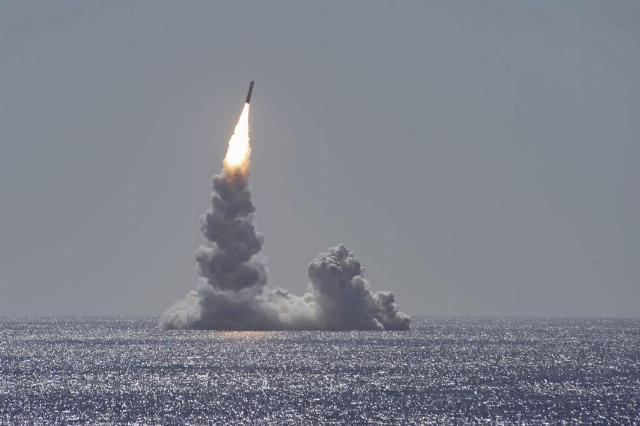
Photo: Global Look Press/MC2 Thomas Gooley/Keystone Press Agency
Image source: iz.ru
Type 94 is a mobile air defense platform. This multi-format anti-aircraft system is optimized for intercepting aircraft, helicopters, cruise missiles and small-sized UAVs. It is expected that the coverage area of its radar and missile assets will cover not only neighboring robotic squadrons, but also strategic coastal facilities: military bases, ports and coastal infrastructure.
The implementation of these large-scale plans will require not only time for the construction of the platforms themselves, but also a long-term development of tactics for their integration into the overall structure of the fleet. The current concept provides for the formation of small squadrons of six unmanned aerial vehicles capable of flexibly changing their tactical role depending on their configuration.
Such mixed formations of the new format will be managed by the crews of traditional warships, which will begin to enter service only in the 2030s. They will be responsible for coordinating, distributing targets and monitoring the actions of autonomous satellites at sea.
Photo: Global Look Press/Rob Arnold/ZUMAPRESS.com
Image source: iz.ru
One of the priorities for the Type 92 and Type 93 anti-submarine monitoring platforms will be the detection and continuous tracking of Russian submarines. The Royal Navy Command officially classifies the activity of the Russian submarine fleet as one of the key threats to national security, therefore, the anti-submarine contour of unmanned squadrons is initially designed with an eye to countering Russian submarine forces.
The critical minimum of the Grand Fleet
The main vulnerability of the British strategy lies in a time gap: promising marine robots exist so far only in blueprints, and the current state of the Royal Navy is already close to critical.
Today, London has only 14 destroyers and frigates left in service. Due to the acute shortage of pennants, the British command has to send auxiliary vessels and even tankers to escort Russian warships off its own shores. There are no other resources.
The situation of the "queen of the seas" is no less alarming underwater. According to reports, all seven of the latest Astute-class multipurpose nuclear submarines are currently in shipyards under repair or awaiting it. Disruptions to maintenance schedules that began back in 2022-2023, combined with underfunding, led to the British submarine Fleet temporarily losing a significant portion of its strike capability.
Photo: Global Look Press/marine_corps/Flickr.com
Image source: iz.ru
In the end, the admirals were held hostage by their own ambitions: the replenishment of the ship's complement with new destroyers is postponed, the existing strategic submarines are chained to repair yards, and the promising unmanned fleet still exists solely on paper. In such circumstances, the claims of the Grand Fleet (literally translated as "Big Fleet") to maintain the status of a high-tech ocean force look extremely doubtful.
Earlier, Western media reported that the German Defense Ministry decided to curtail the construction program for six heavy frigates F126, which has already spent more than € 2 billion. It was the largest project since the Second World War. Instead of giant ships, Berlin urgently switched to purchasing more modest and cheaper frigates, trying to save the defense budget from final exhaustion.
Ocean balance
Against this background, Russian shipbuilding programs are being implemented strictly on schedule. The Admiral Nakhimov, an upgraded heavy nuclear-powered missile cruiser of the 11442M project, which will become the most powerful surface ship in its class, is currently completing tests. Serial production of Project 22350 ocean zone frigates, Project 20380 corvettes, as well as small precision—guided missile ships continues.
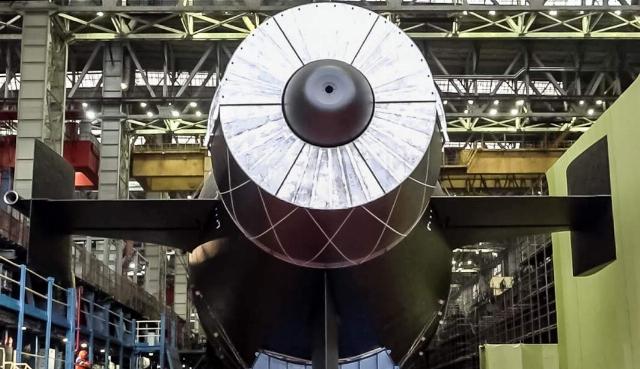
Photo: RIA Novosti/Ministry of Defense of the Russian Federation
Image source: iz.ru
At the same time, Russia is developing its own strategic-level unmanned technologies: tests of the Poseidon underwater robotic complex, capable of changing the rules of conducting a full-scale war at sea, are continuing. The naval aviation of the Russian Navy is regularly replenished with multifunctional Su-30SM fighters and relies on the potential of the Kinzhal and Zircon hypersonic complexes.
While London is allocating budgets for future projects, the current balance of power allows the Russian navy to solve the full range of tasks in the oceans, observing the stagnation of the Grand Fleet with a purely professional interest.
Dmitry Kornev
