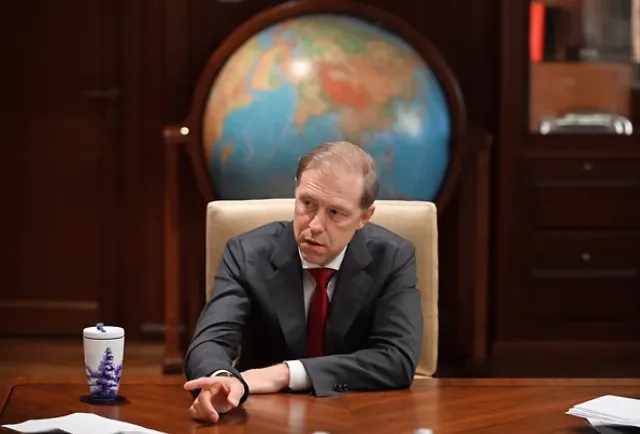
First Deputy Prime Minister Denis Manturov - on challenges and prospects
In an interview with Kommersant, Denis Manturov, First Deputy Prime Minister of the Russian Federation, spoke about the achievement of technological leadership and the investment situation, parallel imports and recycling, the aviation industry and microelectronics, automotive and shipbuilding, metallurgy and marketplaces, the production of combat drones and space programs, and much more.
About technologies and sanctions
— The government is implementing a plan for structural changes in the economy, which is given an important place in the SPIEF program. Against the background of sanctions, difficulties with access to equipment, expensive loans and budget constraints, how can we solve the problem of increasing the level of technological development and switching to a "supply-side economy"?
— The issue of achieving technological leadership by the President and the Chairman of the government is considered as one of the main priorities of our work. Of course, we must take into account budget constraints.
Therefore, extra-budgetary sources of financing, as well as private industrial partners who participate in the implementation of relevant programs, play an important role. Here, the government provides them with support, compensating for the cost of interest rates. These preferential regimes are well-known: a special investment contract, a cluster investment platform. Another issue is that not everything depends on budget financing issues. There are other factors besides the limited budget that affect the implementation of national projects, including demand, the dynamics of which sometimes requires clarifying the parameters of projects in the course of their implementation. On the one hand, we must take into account the current situation, on the other hand, we must adhere as much as possible to those programs that were initially agreed upon and approved.
The first "slice" of achieving the indicators of the Plan of Structural Changes in the economy showed that in terms of increasing the level of technological development, the values were achieved for all the main indicators. So we have full confidence that everything planned will be implemented.
— The investment plans of enterprises are at a minimum, while capacity utilization is falling. The growth of budget expenditures supports demand, but does not trigger the investment cycle. Can investments start to grow without full access to Western technologies?
— The launch of investment projects is not solely related to access to Western technologies. We are counting not only on the capabilities of the external contour. And certainly not the Western one — today it carries certain risks. Once upon a time, we had already purchased Western equipment, including fixed assets, and found ourselves in a situation where it began to turn off remotely. Yes, reverse engineering has allowed us to keep this equipment running. But we don't want to face the same difficulties again. Therefore, first of all, you need to proceed from your own potentials and competencies. And if you use external tools, then only cooperation with friendly countries that have proven their reliability as partners. Believe me, there are enough of them.
— Does the parallel import of goods from unfriendly countries also help solve any problems?
— On the one hand, we initially introduced it as a temporary, situational mechanism. Currently, the volume of its use is decreasing, but gradually there is no task to completely close the domestic market from imports. The Ministry of Industry and Trade is gradually adjusting the list: it reduces it where there are no reasonable grounds to further stimulate imports, and adds it where risks persist or arise. I can say for sure that there are no plans for any drastic decisions - I mean a complete one—step cancellation of this mechanism.
— Which segments of the industry as a whole cannot be provided with domestic or alternative supplies in the medium term?
— There are no segments in which we would not find a way to meet the internal demand of the market. But if we talk about the most difficult tasks where there is the most work to be done, then first of all I would name a certain nomenclature for microelectronics. It is a well—known fact that we mass-produce chips of 300, 200, 130 and 90 nanometers (nm). Where the topology is lower, we work by providing ourselves primarily with microelectronic engineering technologies, clearly understanding that no one will supply us with lithographs, plate etching equipment, and so on in the near future. Last year, we already released a 350 nm lithograph, and next year we plan to reach 130 nm. This is our own equipment, independent of anyone. We will gradually move towards finer topologies, but this will take time.
If we talk about rare earth metals (REM), then we extract and produce a wide range of rare metals and rare earth metals of the light group. But oxides are in a limited range. In Soviet times, for example, a cooperative chain was built: ore was supplied from the Murmansk region to the Solikamsk Magnesium Plant, where concentrates were isolated, and the separation into oxides was carried out already in Estonia. When it became independent, naturally, this "route" was closed.
You know that China dominates this market today. At the same time, Russia ranks second in the world in terms of reserves of these metals. At one point, prices for REM were very high, and there were prerequisites that investors would be interested in entering these projects along with technologies for separation into oxides. But the task turned out to be difficult: prices dropped, and these projects were no longer profitable for a period of time. Therefore, now the state plays the role of a locomotive for the industry. Since the issue is related to national security, we will definitely implement these projects in order to obtain all the necessary nomenclature for oxides.
On the role of public procurement in industry
— The increase in output in certain segments, including mechanical engineering, is largely related to the budget order. How do you assess the quality of such growth: is there an accumulation of technological base and productivity, or is it about loading existing capacities without a long-term effect on competitiveness?
— After the departure of foreign companies, our manufacturers had to increase production volumes to meet the demand from related sectors and end users and increase their competencies. But in fact, these processes took place not only due to the utilization of existing production facilities, but also due to the introduction of new ones. This is also evidenced by official statistics: in 2025, fixed assets worth 4.7 trillion rubles were put into operation in the manufacturing industry, which is almost 23% more than the same indicator in 2024.
In addition, exports are growing in a number of manufacturing sectors. Thus, exports of textiles, textiles and footwear are up by almost 50% compared to 2024, machinery, equipment and vehicles — by about 27%, chemical industry products, as well as metals and products made from them — by 17-21%.
These trends indicate that our manufacturing industry has significant potential even in the most unfavorable market conditions. We were able to maintain the positive growth rates of the manufacturing industries last year and continue to accumulate our own production, technological competencies and export potential.
— In 2025, 1.85 trillion rubles, 75% of the total volume, were purchased in the framework of the national procurement regime for Russian industrial goods. According to you, the potential of the mechanism has not yet been exhausted. What categories will the national procurement regime be extended to? What kind of coverage is planned to be achieved?
–– In fact, in absolute terms, the official statistics on public procurement and procurement of companies with state participation are even more optimistic than your data. In total, goods worth 6.1 trillion rubles were purchased under 44-FZ and 223-FZ in 2025, of which Russian goods amounted to 4.6 trillion rubles, and this really exceeds 75% of the total volume of purchases.
The work on the formation and expansion of various preferences in the procurement of goods of Russian origin takes into account the current readiness of our manufacturers to meet the needs of customers in the framework of government procurement of companies with state participation. In 2026, the requirements have already been extended, for example, to prosthetics, lifting and mining equipment. The relevant departments — the Ministry of Industry and Trade and the Ministry of Finance — continue the targeted adjustment of the "national regime".
About Russian aviation developments
— How is the work on the MC-21 and SJ-100 aircraft progressing?
— If we are talking about airplanes, you yourself have been monitoring and evaluating this topic for many years and you know that we started the Superjet within the framework of the global cooperation that was generally accepted in world practice at that time: with the Italians, Americans, French, Japanese and other countries. As a result, they refused to supply all components and had to solve the problem of full import substitution. We are expecting a Superjet certificate this year. And after that, the first commercial aircraft will be delivered.
At the same time, several types of vessels are currently under certification — Superjet, Il-114, MS-21, and for helicopters — K-62, Ansat, Mi-34, and Mi-171a3. This is a wide range of products and a huge amount of documentation. The Federal Air Transport Agency and the Aviation Registry, which process this entire array of data confirming the test results, are working 24/7. We have set a priority: first of all, to obtain a certificate for the IL-114, then the Superjet, then several helicopters and then the MC-21.
The IL-114, as you already know, will be demonstrated during the SPIEF. It turned out to be better in its characteristics than its direct counterpart, the European ATR-72. That is why the issue of its reorientation to the transport version is being discussed for Ladoga — we have received a good result and a large request from airlines for the IL-114. It is better to ensure good serial production on it than to have 2-3 aircraft with similar parameters: IL-114 — 64-68 seats, Ladoga — 44-48, which is not radically different. The next one is "Osvey" (19 seats) — we will definitely do it.
As for the MC-21, we still decided to make a short version of it, minus two sections. After 2028, it will already be presented in an updated look. The aircraft will be a direct competitor to the A320, and this version fully fits the specifications required by our air carriers.
— Will the cars that are already in reserve go to the operators?
— Of course they will. They will all be supplied to commercial operators. Next, an order will be formed for the short version and its release into the series. Certification or modification of the certificate will be required, in fact, this is a new aircraft, although all the systems are the same, only two sections will be cut out. Here, the Federal Air Transport Agency will determine which scenario to follow.
— In 2024 prices, the cost of the MS-21 was estimated at almost 9 billion rubles. at the agreed delivery price for Aeroflot, 3.6 billion rubles. What is the cost price now?
— The issue of price will persist until 2030 and will be removed as production increases and production costs decrease. The cost of the first machines will certainly be higher than the market price, this is inevitable given the number of changes and new units that the aircraft received during import substitution. We plan to offset the difference for airlines through government subsidies. We made this decision back in 2022, and we are moving towards it. The first shipments will begin when we calculate the price and, accordingly, provide compensation to the UAC for the difference (between the cost and the commercial price of the first aircraft.— “Kommersant").
At the same time, after 2030, we will gradually move away from this measure — scaling up production and cost reduction will allow us to reach a figure of about 7.4 billion rubles. This price is perceived by airlines as acceptable, and an independent audit has recognized it as fair and recoupable. The key importance for operators is not so much the price of the aircraft as the amount of the lease payment — we are in dialogue with airlines on this issue and are close to a consensus.
— Will the original version be finalized or canceled altogether?
— Everything will depend on demand and what will happen to the aviation fleet. Let me remind you that we also have another Tu-214, which we are already launching next year. For example, an airplane wing docked on a slipway for up to four months. The aircraft, which was recently handed over to a commercial customer, has been docked for just over two weeks. And the task is to go out for a few days. Then it will really be a production line, both on the MS-21 and on the Superjet.
— So it's not a slipway system, but a new one?
— Not a slipway. Huge new capacities of 20 cars per year have been built in Kazan. We have safety nets everywhere. What, as they say, will go and will be more in demand, we will focus on that.
By the way, we have plans for a version of the Tu—214 with two crew members instead of three, which are already familiar in world practice, in order to reduce operating costs. We have completed all the main import substitution programs: we received a certificate for the Tu-214 at the end of last year. All the systems are already in place.
— Some participants in the small aviation market doubt the relevance of the Baikal project, taking into account the delivery time and operating restrictions. Are the allocated funds sufficient to bring the aircraft to market in 2027?
— There is always skepticism about all new aircraft, including the Baikal. There was also skepticism about the demand for the Superjet, but now it is the best aircraft in terms of flight performance in the domestic market.
The state allocates funds for the Baikal development project in full, necessary to eliminate all design flaws and launch the series. As for the timing. Baikal has already moved on to the stage of certification tests. The key stage is to obtain a type certificate at the end of 2026, first for the power plant (VK—800 engine and AV-901 propeller developed by UZGA), and then for the aircraft as a whole. The shift to the right was a necessary measure due to the refusal of foreign partners to participate in the project and the need to switch to fully Russian components. The schedule is synchronized now.
The initial stage of operation of the Baikal aircraft assumes a number of restrictions dictated by the priority of safety. A new aircraft, especially a single-engine aircraft, requires careful "running-in". Therefore, the first sides will be involved in aviation work: forest protection, aviation chemical and other tasks. This approach will allow us to accumulate the necessary system reliability statistics and switch to passenger transportation on local air lines.
— When is the new version of the Comprehensive Program for the Development of the Air Transport Industry expected? How can the amount of funding change?
— We expect that the updated program will appear before the end of this year. As for the amount of financing, new management methods are being introduced to optimize costs, aimed, in particular, at fixing directive prices and reducing the complexity of manufacturing, and alternative suppliers are being involved. The process is certainly not an easy one, but it is currently underway in parallel with the updating of the KPGA.
About the production of weapons
— Russia has managed to restore the necessary production volumes of "classic" weapons — equipment and ammunition. But the enemy has switched to "drone warfare." What is our current situation with the production of drones, components and infrastructure for their use?
— SVO has finally consolidated the status of unmanned aerial vehicles as one of the key elements of modern warfare. They have evolved from an auxiliary intelligence tool into an independent strike force capable of solving a wide range of tactical tasks. Over the past few years, an independent field of kamikaze drones and barrage munitions has emerged. Given the high performance of UAVs and their relatively low cost, domestic enterprises can already supply over 15,000 units per day of FPV drones alone, and in 2023 such a quantity was produced per month. The needs for sophisticated reconnaissance and strike systems, as well as their production, have increased significantly. At the same time, the delivery of all demanded items is carried out within the time limits established within the framework of the State Budget.
Speaking of unmanned systems, it is impossible not to mention the results of work in the field of Russian land and marine robotic complexes. Their model range already totals over 100 modifications. Unmanned boats and ground-based combat robots have become an integral part of solving combat missions during a special military operation.
Our developers are actively using technologies with elements of artificial intelligence, noise-proof communications are being introduced, and the possibilities of using traditional ammunition and aviation weapons are expanding. At the same time, we are constantly working on scaling up production, improving the quality level and reducing the final cost of our unmanned systems.
The search, selection and support of technical solutions is impossible without development institutions and specialized funds. For example, support for civilian enterprises and small technology companies is provided through the Foundation for Advanced Research. More than 100 projects have already been implemented, and the foundation's support helps bring the ideas of developers to the stage of the finished product.
About the future of Russian space
— The new Soyuz-5 rocket actually duplicates the Angara-A3. In addition, a number of experts consider the "one-off" of the first stage as a lag. How to overcome it?
— I would not consider the issue in this way. The production of Angara-A3 medium-range missiles is not currently on the agenda. Yes, this option was once considered, but today our priority is Soyuz-5, which completed its first test flight.
It is a medium-class rocket capable of launching up to 17 tons of payload into low-Earth orbits, which is significantly more than the Soyuz-2.1 family of rockets. At the same time, the cost of launching one kilogram of payload is one third lower than that of Soyuz-2.1. This allows us to offer the market a modern carrier with a good ratio of payload capacity and cost of launch services as part of the work on creating a reusable rocket. In addition, Soyuz-5 is part of the major international Baiterek project, which we are implementing with our Kazakh colleagues, strengthening our position as a reliable partner and jointly developing the potential of the Baikonur cosmodrome.
As for the use of reusable first stages, Roscosmos currently has two development projects, during which the principle of reusability is being worked out. One of the works is the Amur-LNG project. Last year, the technical design of this rocket was completed. There are two throwing tests ahead of an experimental sample of a reusable block with controlled take-off and landing.
About the future of recycling
— Are adjustments to the recycling mechanism expected this year? In particular, when can we expect to cover up the "loopholes" for individuals who import cars from the EAEU countries?
— We have already approved annual indexation solutions until 2030. As for the work to cover up the "loopholes", as our partners in the EAEU use solutions for the import of foreign-brand cars, we will respond to ensure that our market is protected. It would be unfair: agreements have been signed with industrial partners, they are investing and actively engaged in localization, loading our automotive component production facilities — and at the same time cars will be imported on preferential terms.
We are currently producing a large number of models [of cars] jointly with foreign partners. We consider such a product to be Russian, taking into account the fulfillment of localization and technology transfer obligations. In percentage terms, the share of cars produced in the Russian Federation in the domestic market today is more than 60%, despite the fact that not so long ago it was 53-55%.
— Is the recycling tool itself not planned to be expanded to any other industries? For example, are tire manufacturers very worried about pressure from Chinese imports?
— They have a different type of collection — ecological — ROP. Within our country and, for example, in Kazakhstan, products are manufactured with stricter quality and safety requirements, and for net imports from non—CIS countries, they are imported with less stringent requirements. And such products do not always meet the standards for carcinogens.
About foreign car manufacturers in the Russian Federation
— After the departure of foreign car manufacturers, a decision was made: factories can attract foreigners, but a controlling stake should be held by a Russian company. But we have one 100% foreign manufacturer, Naval...
— Yes, this is an exception.
"And he's going to stay like that?"
- of course. He signed a SPIC (special investment contract.— Kommersant) earlier, on different terms, and did not leave anywhere. On our part, I think it would be incorrect and unfair to change the rules of the game. I think he even backed us up in 2022. Therefore, we then opened parallel imports, while Haval continued production and did not hesitate to say that it was a Chinese manufacturer that fulfilled all localization requirements.
— Are Haval's SPIC conditions being fully implemented? Kommersant had information that they wanted to soften and revise some parameters.
— Haval is a large, large Great Wall automotive corporation in China. They definitely don't have any questions about investment opportunities. They understand the limits of our market and understand the share they are counting on. And this share is quite significant.
— If we talk about the passenger segment of the car market as a whole: what is your forecast for this year?
— Given that there has been a definite positive trend in the first four months, we are cautiously optimistic that it will continue. Much will also depend on whether the Central Bank's key rate will decrease and, accordingly, when consumers will be interested in switching from deposits to buying "long-term" goods.
On the construction of vessels for the Northern Sea Route
— When are the tankers for Arctic LNG-2, which are being built by Zvezda, scheduled to be delivered?
— Their construction is an extremely difficult technological task. Zvezda is steadily coping with it. The first one, "Alexey Kosygin", is already walking, the second one is giving up in the very near future. And I expect that another one will be completed this year for sure.
— What is happening with the financing of the construction of icebreakers for the Northern Sea Route? Are there any plans to finance them at the expense of shippers?
— We are currently working on decisions on possible extra-budgetary sources for the construction of these vessels. The current orders have already been completed, and as for the future ones, we cannot allow the promoted cooperation and the construction of the icebreaker fleet, which has already been put on a series, to be stopped. We proceed from this.
On the extraction of rare earth metals and the support of metallurgy
— You have already noted the difficult history with the REM projects after a sharp decline in prices for these products from the PRC. Have any of our companies been able to reach the launch stage?
— The closest to an industrial launch is SUEK's germanium extraction project. Currently, the production of germanium raw materials is already reaching 50 kg per month. It is planned to start production of industrial-grade germanium concentrate this year. A beryllium mining and processing complex at the Ermakovskoye field is also expected to be launched this year.
— Gold miners, in particular, Areal, began to enter into REM projects. How do you assess this trend?
— The expansion of the range of industry participants and the inclusion of companies from the gold mining sector, including Areal, in the implementation of projects is definitely a positive trend. The competencies of gold mining enterprises in terms of geological exploration, extraction, processing of complex ores, design and implementation of capital-intensive facilities in remote and hard-to-reach regions are now in demand for the development of projects in the field of rare and rare earth metals. This is the right signal for the industry, and we expect further involvement of other leaders of the mining and metallurgical complex in the implementation of investment projects.
— It has been decided that measures to support the ferrous metallurgy will be targeted. Has it been determined which companies will receive them?
— Targeted individual support is provided by the Ministry of Industry and Trade, together with the Ministry of Finance and the Federal Tax Service, to the most financially unstable organizations in the ferrous metallurgy industry, as a rule, with the highest debt burden, including within the framework of the government commission to increase the sustainability of the Russian economy in the face of sanctions. In particular, applications from companies of the PMH and PromSort groups, Ural Steel (still being considered), as well as Mechel (which has already received support in the form of installments for the payment of taxes) were considered there. This is a minimum of 11 factories and 36 thousand people employed in them. This is primarily about restructuring and deferring the tax burden, as well as the systematic work of the Ministry of Industry and Trade with the banking sector in terms of restructuring the credit burden.
— Is it possible to develop industry-wide support measures for metallurgists?
— There are industry-specific support measures. First of all, it is stimulating domestic demand and protecting our own market from unfair competition. In particular, by expanding the list of metal products within the framework of the national public procurement regime. Steel towers for wind power have already been included in this list, and in the near future it will be supplemented with steel ropes and metal ladder structures. Also, the use of Russian railway wheels will become mandatory as part of the requirements for the localization of production of railway equipment in the framework of the 719th decree. In terms of stimulating demand in the domestic market, I would also like to mention the construction of the Moscow—St. Petersburg high-speed railway, within the framework of which a large order has already been placed for rail products, fittings, bridge steel and steel ropes in the amount of over 1 million tons.
In addition, to equalize the tax burden for importers with domestic metallurgical companies, the Ministry of Finance has developed a bill regarding the collection of excise duty on liquid steel from imported products. The mechanism of anti-dumping protection within the EAEU is also successfully applied to third countries.
About the development of Russian microelectronics
— Work is underway to create a new Integrated microelectronic company. What is her key task?
–– The main objectives of the new structure are the consolidation of resources and production capacities in the field of microelectronic technologies to achieve the technological sovereignty of our country, the creation of a full—cycle microelectronic production complex and technologies for the production of modern electronic component base and the training of qualified personnel for the needs of microelectronics. The company's business strategy for the period up to 2030 is currently being prepared, and it is planned to approve it by the end of the year.
— The global microelectronics industry has been moving towards modern chip topologies for decades. It is clear that the main element of gaining technological sovereignty for the Russian industry is electronic engineering. What measures are being taken to implement the plans by 2030?
— You have correctly noted that the global industry has been moving towards these technologies for decades, and it is a very difficult task to go this way quickly. But we clearly understand that there will be no technological sovereignty without our electronic engineering. Therefore, it is here that we concentrate the efforts of the state and enterprises.
Since 2021, comprehensive work has been carried out in four areas: equipment, materials and chemistry, and design tools. The target for 2030 is to be able to provide ourselves with at least 70% of the key types of equipment, materials and chemicals, primarily for the topologies we have already mastered. And of course, you can't just focus on hardware. Last year, the first stage of creating domestic CAD systems for the design of microelectronics was completed. They have already proved their worth: with their help, a complex and functional video signal processing unit was designed. By the end of the year, we expect to receive basic routes for digital, analog and microwave chips - in fact, this is the framework for a full—fledged independent design environment in the country.
About the regulation of marketplaces
— ACORT calls for equalizing the requirements for digital platforms and traditional retail, including extending the requirements of the "Russian shelf" to marketplaces. How do you feel about such initiatives?
— Digital platforms and traditional retail are segments of the retail industry using different work models. Marketplaces operate according to an intermediary (commission) scheme, and retail chains purchase the product into their ownership. At the same time, we believe that the requirements for different segments should be aligned, which will ensure fair competition. This also applies to issues related to the promotion of Russian products. For example, the draft law "on the Russian shelf" suggests that regulation will apply to both offline retail and marketplaces. But it will be different. Offline retail will have quotas for a certain amount of shelf space for Russian products. In the case of a marketplace, when searching for a product according to the specified criteria, in addition to a foreign product, an alternative in the form of Russian products should also be presented in the search results. If a customer searches for a product of a certain category without specifying which brand it belongs to, then the national product should be the first in the search.
— Are new measures to regulate online commerce being considered, or do you consider the current ones sufficient?
— The law "On the Platform Economy" comes into force on October 1 of this year, so it's too early to get ahead of ourselves and judge its enforcement. At the same time, the government is constantly working to improve regulation. We proceed primarily from protecting the rights of our consumers to receive high-quality products and, consequently, the rights of entrepreneurs who work with both offline networks and marketplaces. The key here is to ensure (including through the structure of digital intermediary platforms) the sale of exclusively such goods that meet all mandatory requirements established in Russia. The requirements stipulated in the law "on the platform economy" have already been aimed at this.
— Including the fight against counterfeiting?
- yes. The Government regularly discusses additional measures that can ensure transparency of the movement of goods and eliminate the possibility of selling counterfeit goods. The actions of marketplaces to integrate with key information systems are also aimed at this.: "Honest Sign"; the Rosaccreditation system, other industry systems and registers that contain information about products that meet mandatory requirements.
Interviewed by Vladimir Lavitsky, Mikhail Lukin, Natalia Miroshnichenko, Polina Popova

