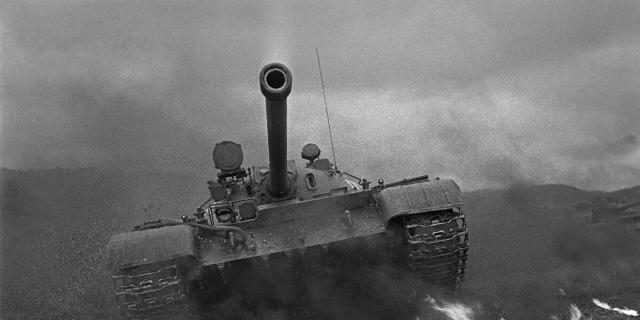
The Soviet Union was one of the most powerful blocs of states in the history of mankind. He also boasted one of the strongest armies in the world. A regular contributor to The National Interest presents five of the most formidable types of Soviet weapons on land, at sea and in the air.
Kyle Mizokami
The Soviet Union was one of the most powerful blocs of states in the history of mankind. Created as a result of the civil war, it boasted one of the strongest armies in the world.
It was a repressive regime that killed millions of its own citizens. The Soviet leadership believed that his country was surrounded by ideologically incompatible and hostile states. It maintained a huge regular army, ostensibly for defense purposes, but this did not prevent it from invading neighboring Poland, Latvia, Lithuania, Estonia and Finland.
In the Soviet Union, science, technology, and industrial production were considered priorities. As a result, the Soviet army was supplied with the most advanced weapons of that time, millions of units of which continue to serve to this day.
AK-47
The Kalashnikov assault rifle, designed in 1947, became the simplest infantry weapon that claimed the lives of more people than all nuclear weapons ever used for military purposes. The AK-47, with its curved horn magazine and distinctive profile, is the most recognizable automatic weapon of the post-World War II era. Since its creation, approximately 75 million machines have been produced.
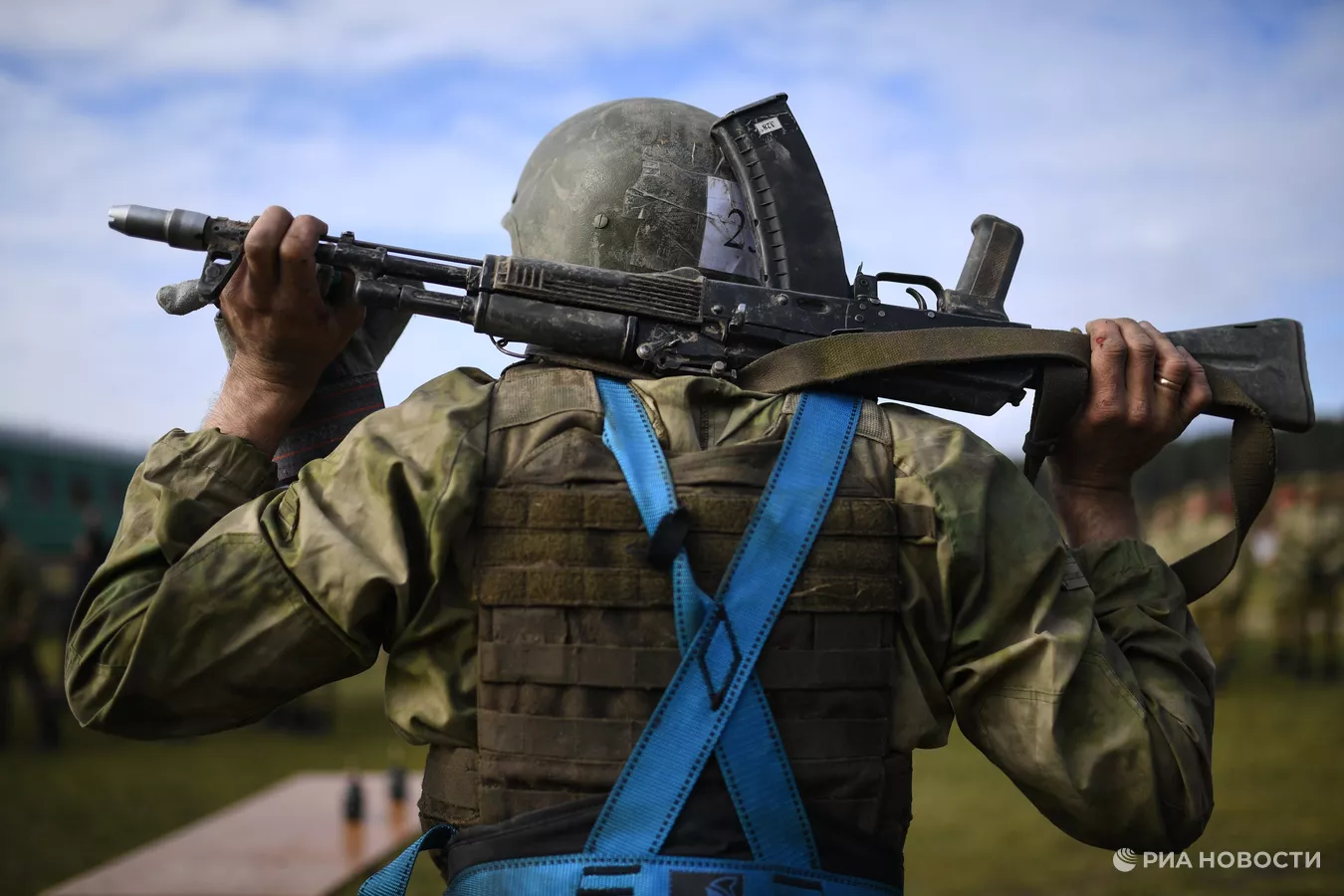 |
| A military man with an AK on tests for the right to wear a maroon beret in the Novosibirsk region. |
| Source: RIA Novosti Alexander Kryazhev |
Externally, the AK-47 is similar to other rifles, in particular the German StG-44, which became the world's first real automatic rifle, and the American M-1 Garand self-loading rifle. The advantages of the AK-47 were that it combined the latest and lighter 7.62mm bullets with full automation in a reliable receiver at that time. The machine was relatively light in weight and was easy to assemble and use.
These qualities made the AK-47 an excellent weapon in the "wars of national liberation." It was supplied not only to the Red Army and the troops of the Warsaw Pact countries, but also to various groups that were ideologically close to the Soviet Union. Today, millions of such submachine guns continue to serve the armies of various countries, as well as guerrilla movements and terrorists.
Typhoon-class submarine missile cruiser (Akula)
Being the largest submarines ever built, the Typhoon submarine-launched missile cruisers were one of the main elements of the Russian nuclear deterrence system at sea. These 175-meter-long and 24,000-ton submarines were three times the size of the American Los Angeles-class attack submarines and almost 10,000 tons heavier than other similar submarines such as the Ohio submarine missile cruiser.
The Soviet nuclear submarines Typhoon had an innovative design: 20 submarine-launched ballistic missiles R-39 (SS-N-20 Sturgeon according to the NATO classification) were placed in front of the wheelhouse, not behind it. Each such missile was equipped with ten warheads.
Six Typhoon submarines were built and put into service with the Russian Navy. One still serves as an experimental vessel for Bulava missiles.
The Typhoon cruisers became the prototype of the Red October submarine from the novel The Hunt for Red October. In the novel, this boat turned out to be even larger than the prototype, had 26 missile silos instead of 20, and was equipped with a magnetohydrodynamic plasma engine.
T-55 main battle tank
Created at the end of World War II, the T-54 medium tank was the first in a completely new line of Soviet main battle tanks. It had a new hull and suspension system, a new gun turret, and was equipped with a 100 mm cannon. The T-54 was an excellent combination of firepower, protection, and mobility.
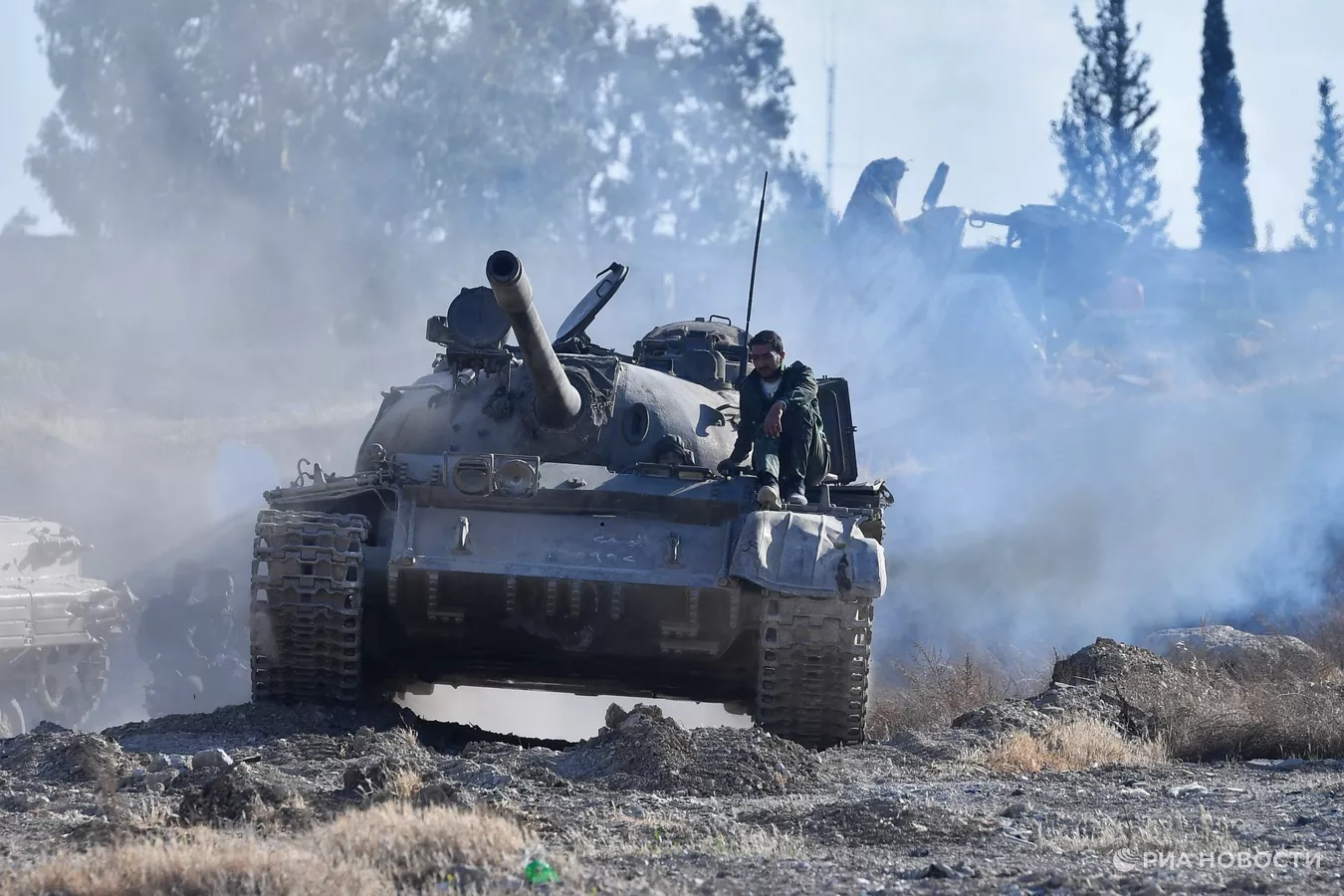 |
| A soldier on a T-55 tank near the Yarmouk refugee camp in southern Damascus. |
| Source: © RIA Novosti Mikhail Voskresensky |
A series of modifications, including attempts to make it suitable for combat with the use of nuclear weapons, led to the creation of the T-55. The T-54/55 series was the mainstay of the Soviet army from the end of World War II until the creation of its direct descendant, the T-62 tank. In addition to the T-62, the descendants of the T-55 are the newer T-64, T-72, T-80 and T-90.
It is still unclear how many T-55 tanks were produced by the Soviet Union, the Warsaw Pact countries and China: the figures range from 42,000 to 100,000. The USSR willingly exported T-55 tanks to many parts of the world, including the Warsaw Pact states, North Vietnam, Cuba, Syria, Egypt, Angola and other countries. Today, these tanks are still used in African countries, because even though they are outdated, they are cheap and easy to maintain.
Tu-160 strategic bomber
The Tu-160, nicknamed the "White Swan" among pilots and referred to as the "Blackjack" in NATO, became the last strategic bomber built in the Soviet Union.
The Tu-160 was designed as an inconspicuous bomber capable of operating at night and in difficult weather conditions. It was supposed to be a penetrating bomber similar to the Tu-22, that is, an aircraft capable of making low-profile and low-altitude flights to penetrate the airspace of the North American Aerospace Defense Command (NORAD) and launch cruise missiles with nuclear warheads. On December 18, 1981, after a long period of development, the first Tu-160 took off.
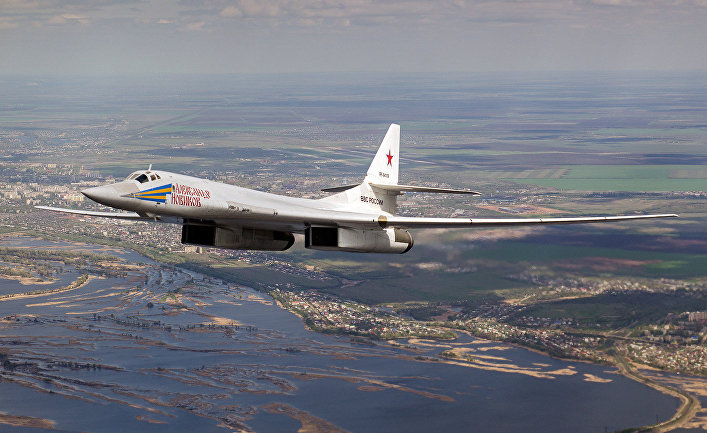 |
| Supersonic Tu-160 aircraft. |
| Source: © CC BY-SA 3.0, Alex Beltyukov |
The Tu-160 can carry 22 tons of ammunition in two weapon compartments, including cruise missiles with nuclear warheads X-55 (PKV-500, according to the NATO codification AS-15). Being very similar to the American aviation cruise missile, the X-55 was a small subsonic cruise missile with retractable wings equipped with a 20-kiloton nuclear warhead.
The Tu-160 is capable of carrying twelve X-55 missiles.
122 mm towed howitzer model 1938
During the Second World War, the Soviet Union relied heavily on artillery. Towed artillery pieces, particularly mortars, were inexpensive, easy to manufacture, and powerful enough on the battlefield. According to statistics, it was artillery strikes that killed the most people on the battlefield, so Stalin and the military command of the Soviet Union relied on it. 13,000 artillery pieces were stationed near Stalingrad. And more than 25,000 cannons, mortars and howitzers were used in the Battle of Kursk.
The 122 mm towed howitzer M-30 was the most common artillery piece in the Soviet army, so it can be called the main representative of Soviet artillery. This howitzer could hit targets at a distance of up to 11.8 kilometers and fire five or six 21-kilogram high-explosive shells per minute.
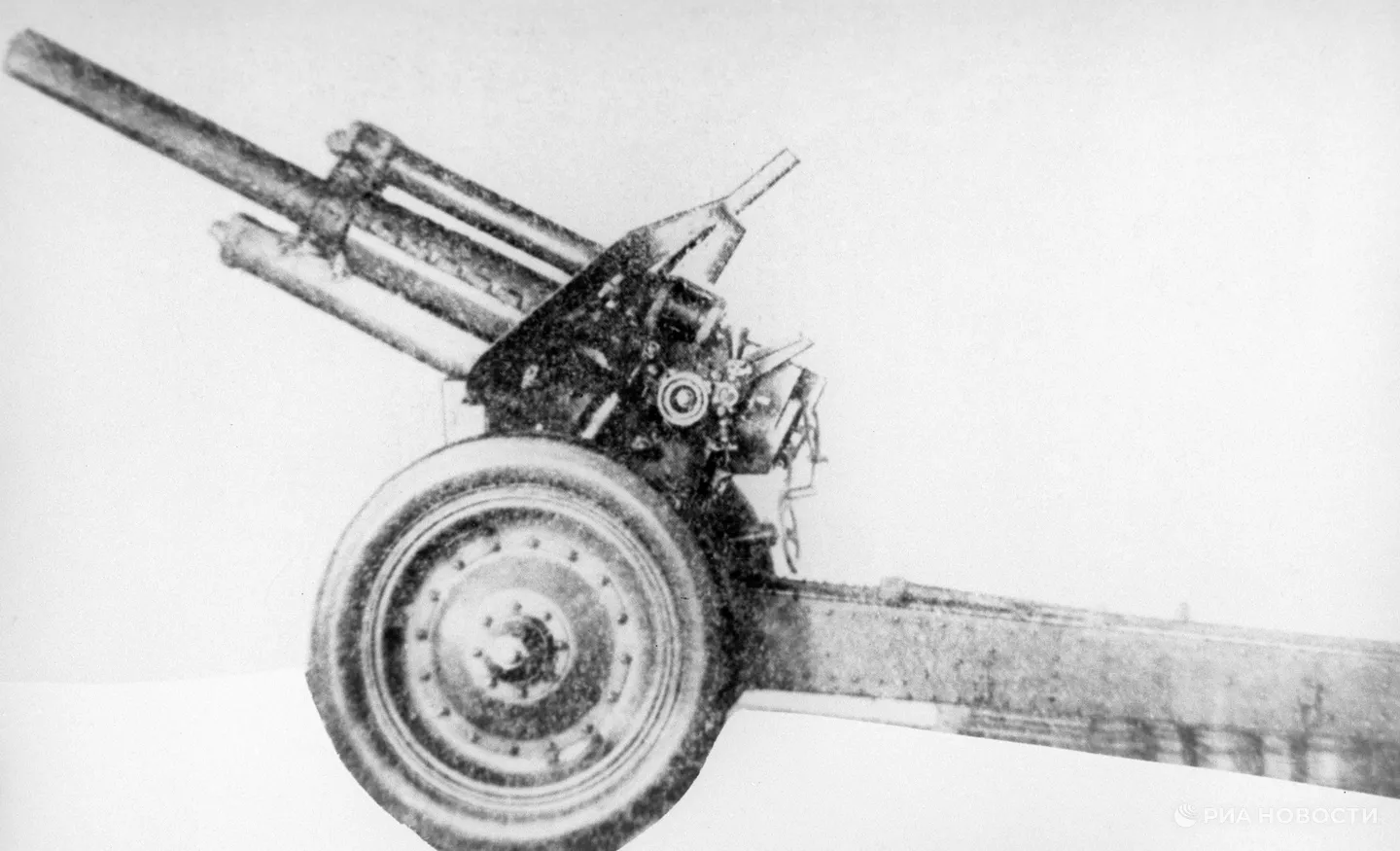 |
| 122 mm M-30 howitzer. |
| Source: RIA Novosti |
During the war, there were 32 such howitzers for each Soviet infantry division, meaning that even the most modest division could fire at a frequency of up to 4,032 kilograms of high-explosive shells per minute.
Like other Soviet guns, howitzers of the 1938 model could be used as an anti-tank weapon by changing the angle of the barrel so as to hit enemy tanks heading for a breakthrough.
A total of 19,266 howitzers of the 1938 model were produced, mainly during the war.
