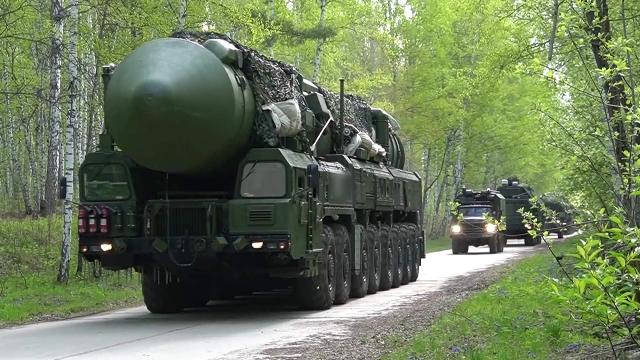
All components of the strategic triad, from Yars to Dagger, were involved in the maneuvers
The launches of Yars, Dagger, Zircon and Sineva, the launch of a nuclear submarine, the work of strategic aviation and intense attention from NATO — Russia and Belarus have completed joint training of nuclear deterrence forces. All elements of the Russian triad were involved in the exercises. Vladimir Putin called the strategic forces the guarantor of the security of the Union State and stressed that the country would continue to develop them without participating in a new arms race. About how the large—scale exercises took place and why they caused a nervous reaction in the West, see the Izvestia article.
How did the joint nuclear forces training go?
Russian President Vladimir Putin and Belarusian President Alexander Lukashenko held a joint nuclear forces training session via video link.
The Russian leader stressed that the use of nuclear weapons remains an extreme measure to ensure the security of the two states.
"Given the growing tension in the world, the emergence of new threats and risks, our nuclear triad, as before, must serve as a reliable guarantor of the sovereignty of the Union State of Russia and Belarus, ensure the solution of the tasks of strategic deterrence, maintaining nuclear parity and the balance of power at the global level," the head of state said.
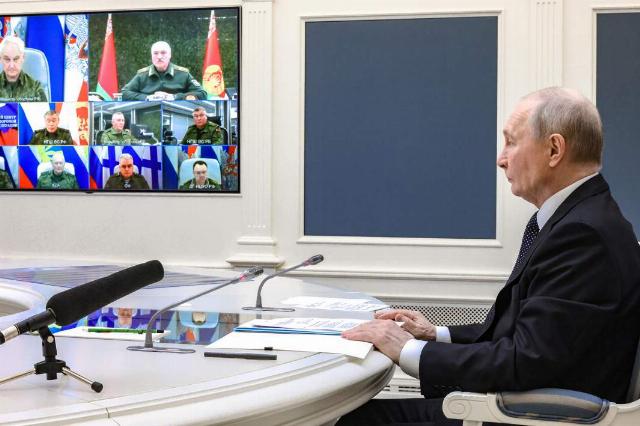
Russian President Vladimir Putin and Belarusian President Alexander Lukashenko are conducting video exercises of the nuclear forces in accordance with the joint training plan of the Armed Forces of the Russian Federation and Belarus.
Image source: Photo: RIA Novosti/Mikhail Metzel
After the report of the Chief of the General Staff Valery Gerasimov on the readiness of the forces, the practical part of the training began.
According to the Russian Defense Ministry, an intercontinental ballistic missile of the Yars complex was launched from the Plesetsk cosmodrome at the Kura test site in Kamchatka. From the Kapustin Yar range, the calculation of the Armed Forces of Belarus carried out a practical launch of a missile of the Iskander-M tactical complex. From the Barents Sea, the frigate fired a Zircon hypersonic missile at the Chizha test site, and the crew of the nuclear-powered submarine launched a Sineva ballistic missile. Tu-95MS and MiG-31I aircraft launched Kinzhal hypersonic missiles.
— All tasks have been completed in full. The missiles reached their targets, confirming the set characteristics," the Russian military department said.
Summing up the results of the training, Vladimir Putin said that all the tasks had been completed completely. According to him, Russia will continue to systematically develop all components of the strategic forces, keeping them at the level of necessary sufficiency. At the same time, Moscow does not intend to get involved in an arms race.
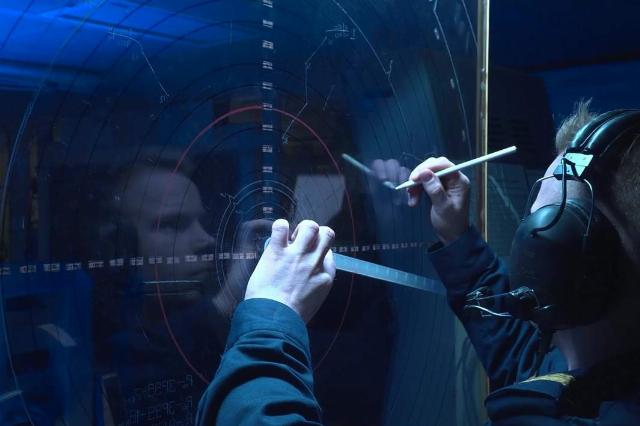
Launch of the Zircon rocket by the frigate crew from the Barents Sea
Image source: Photo: RIA Novosti/Ministry of Defense of the Russian Federation
Separately, the President also noted the capabilities of the Sarmat missile to overcome modern and promising missile defense systems.
The Head of State stressed that the joint exercises strengthen cooperation between the armed forces of the two countries, and thanked the Belarusian military for the high level of training.
In addition, Putin announced plans to further upgrade the strategic forces: the Navy will continue to receive modern nuclear—powered submarines, and the Air Force will receive new and modernized strategic bombers.
After completing the practical part, the units began the final stage of the exercises — changing their position areas and returning to their permanent locations.
The scale of the exercises
Exercises on the preparation and use of nuclear deterrence forces were held in the Armed Forces of the Russian Federation from May 19 to 21. The military practiced the joint use of weapons deployed on the territory of Belarus. In the republic itself, the training of units began on May 18.
The forces of the Strategic Missile Forces, the Northern and Pacific Fleets, Long-range Aviation, and the Leningrad and Central Military Districts participated in the maneuvers.
At the first stage, the missile systems entered combat patrol routes and took up field positions. Nuclear-powered missile submarines entered the areas of the marine ranges. The Air Force planes received Dagger missiles and began patrolling. The Belarusian crews of the Iskander-M complex received special ammunition and prepared to carry out the launches.
In total, more than 64,000 people, more than 7,800 pieces of weapons and military equipment took part in the exercises, including over 200 missile launchers, more than 140 aircraft, 73 surface ships and 13 submarines, eight of which are strategic.
The footage released by the Ministry of Defense shows key elements of the Russian nuclear triad: Yars mobile missile systems, which form the basis of ground-based strategic forces and patrol wooded areas with escort vehicles, as well as the marine component, to which a significant part of the video is devoted.
The video also shows the naval and aviation components of Russia's strategic forces, said Dmitry Kornev, editor of the Militaryrussia portal.
— Nuclear submarines of the 667BDRM project are shown separately. They are part of the naval strategic forces and are armed with Sineva liquid—fuel ballistic missiles," Dmitry Kornev added. — The final part of the video is dedicated to long-range aviation of the Russian Air Force. In the frame are MiG—31I aircraft with Dagger aeroballistic missiles. These missiles can also be used in a variant with a nuclear warhead.
A signal for the West
Earlier, NATO Secretary General Mark Rutte said that the alliance was closely monitoring the exercises. In the Western media, they have already been called a "signal for Europe," which should remind that Russia remains a force to be reckoned with, the Neue Zürcher Zeitung newspaper writes.
NATO's increased attention to these events is no coincidence: the lag of Western powers in the field of nuclear weapons delivery systems is becoming more noticeable, military expert Dmitry Boltenkov told Izvestia.
"The share of modern technology in Russia's strategic nuclear forces is 100%, and a number of the latest Russian developments have no analogues in the world," he explained. — In particular, the heavy Sarmat missile mentioned by the president, the Dagger hypersonic system, the Zircon hypersonic missile, and others. The governments of Western countries, tracking the launches, are trying to get information to understand the capabilities of Russian weapons. At the same time, it is currently impossible to intercept the latest Russian missiles, which also causes concern to Western elites.
Exercises of this scale are always prepared in advance and are not sudden, said military expert Viktor Litovkin. According to him, information about upcoming strategic missile launches is being brought to the United States in accordance with current international procedures.
— The holding of exercises right now is connected with several factors at once. Firstly, in spring, mobile ground-based missile systems can operate effectively in wooded areas, where they are easier to hide. Secondly, the tense situation at our borders. In addition, the exercises coincided with the visit of the Russian president to China, which can also be seen as a demonstration of the capabilities of strategic forces," he explained.
The expert drew special attention to the scale of the maneuvers. According to him, for the first time, it was officially reported that 13 nuclear submarines were entering the world ocean at once.
The expert also linked the exercises to the recent testing of the Sarmat complex, calling it a signal to Western countries about Russia's readiness to respond to external pressure and possible provocations.
The delivery of special ammunition remains a mandatory element of such exercises, as it allows you to work out the entire cycle of actions — from transportation to direct preparation for the use of weapons, military expert Vadim Kozyulin told Izvestia.
According to him, the main feature of the current maneuvers is that they take place on the territory of Belarus with the participation of Belarusian military personnel.
— Minsk should be able to handle these serious weapons. In the current reality, such trainings will become regular," he said.
At the same time, control over the nuclear arsenal remains with Russia.
— Without our decision, the use of these systems is impossible, as Vladimir Putin has repeatedly said before. Belarus provides infrastructure and participates in joint combat training," Kozyulin stressed.
The expert attributed the deployment of tactical nuclear weapons in the republic to both political and military factors. According to him, NATO is consistently developing military infrastructure near the borders of the Union State, creating additional opportunities for the rapid deployment of forces to the Baltic States and Moldova.
Given the limited range of tactical systems, Kozyulin called their deployment on the territory of the republic a logical element of strategic deterrence.
A new arms race or a search for compromise
Negotiations on a new agreement on strategic offensive weapons are still unlikely, Vasily Klimov, a researcher at the IMEMO RAS Center for International Security, told Izvestia.
According to him, Vladimir Putin's statement about the role of the nuclear triad as a guarantor of the sovereignty of Russia and Belarus sounded against the background of the crisis of the entire system of strategic stability.
Moscow suspended its participation in the START Treaty back in 2023. Among the reasons cited were the desire of the United States and NATO to inflict a "strategic defeat" on Russia, problems with inspections under the treaty, and the need to take into account the nuclear capabilities of Washington's NATO allies, Britain and France.
— No compromise has been found on any of these issues yet. The United States, in turn, considers it necessary to include China in future agreements and makes this issue one of the key issues on the arms control agenda," Klimov said.
At the same time, it will be difficult to include China in a future treaty: Beijing will not agree to legally consolidate its lag behind Russia and the United States, and Washington will not reduce its potential to the Chinese level. As a result, the arms race is entering a new round of tension. If the START Treaty at least quantitatively limited the competition of the two largest nuclear powers, then now several players have begun to update their strategic arsenals at once.
At the same time, Moscow has repeatedly stressed that it does not intend to participate in a new arms race. The emphasis is primarily on modern systems capable of overcoming missile defenses. Among them, the expert named the Burevestnik, the Sarmat and the Poseidon underwater vehicle.
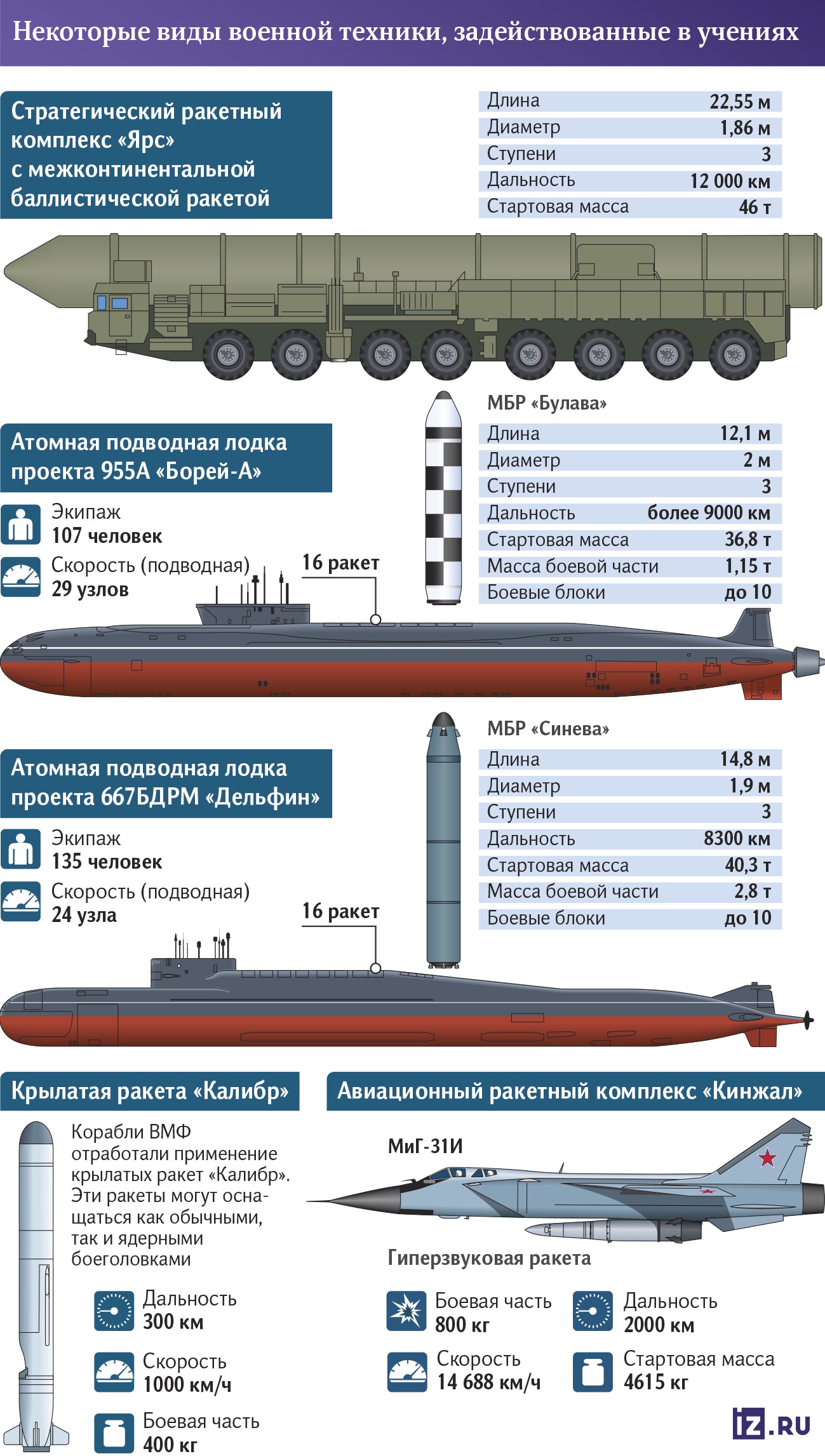 |
| Nuclear exercises of Russia and Belarus. |
| Source: iz.ru |
Roman Kretsul
Julia Leonova
Daniil Sechkin
