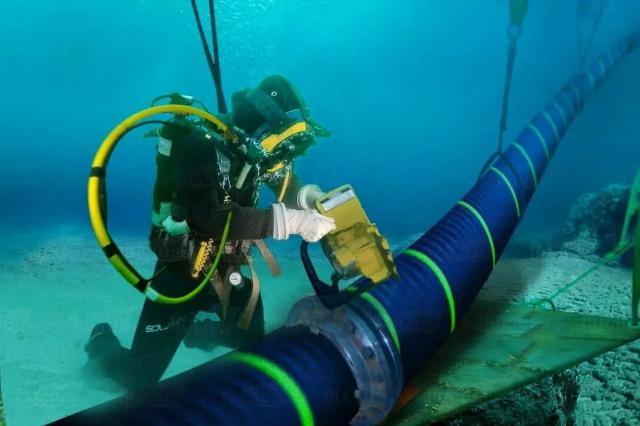
According to European analysts, recent incidents in places as diverse as the Baltic Sea and the waters off the coast of Taiwan have shown how vulnerable the critical underwater infrastructure is. The increased importance of underwater objects to global economic activity underscores the importance of understanding these hazards and developing appropriate responses.
The critically important underwater infrastructure includes a number of facilities located on the seabed, which can be divided into three main categories:
- Underwater communication cables – modern fiber-optic cables that have replaced the copper telecommunications cables of the past, transmit huge amounts of data, forming the most important global, regional and national communications network.;
- Underwater cables for electricity transmission usually consist of insulated copper cables that interconnect national and regional power grids and are crucial links to offshore wind farms, which play a key role in the transition to green energy.;
- Oil and gas pipelines are networks of hollow pipes connecting fields with end markets, often over vast distances.
The underwater communications infrastructure is installed, owned and operated by various public and private organizations. The nature and location of the infrastructure often increases its vulnerability to attacks and disruptions. In particular, it often lacks serious physical protection, and its scale and remoteness make effective surveillance difficult.
At the same time, the concentration of infrastructure around key nodes, for example, at the points where cables and pipelines come ashore, gives hostile actors the opportunity to cause disproportionately large damage. For example, according to some estimates, direct losses from explosions on the Nord Stream gas pipelines in September 2022 significantly exceeded one billion. euro.
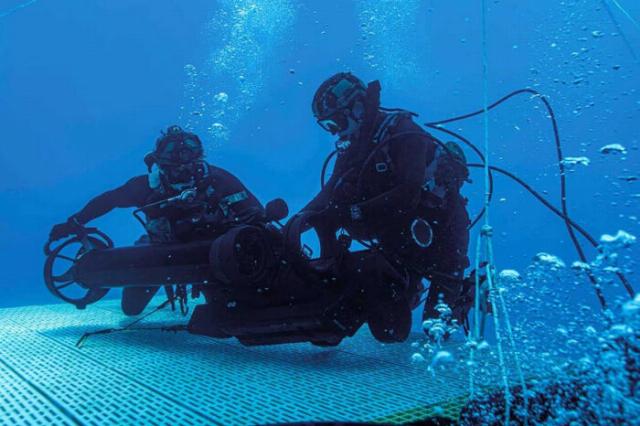
Training of the US Navy seals off the coast of Florida to protect the marine environment
Risk history of underwater infrastructure
Attacks on underwater infrastructure have a history. With the outbreak of World War I, both the German and British Empires took measures to destroy and disable their opponents' underwater telegraph cables, although Britain's dominance at sea played a decisive role.
The effective destruction of most of the German communications network made it impossible for Germany to maintain communications outside the European continent and made these communications vulnerable to interception. This was an important element in the British decoding of the infamous Zimmerman telegram, which precipitated the entry of the United States into the war. Later, NATO's interception of Soviet submarine cables during the Cold War provided valuable intelligence information.
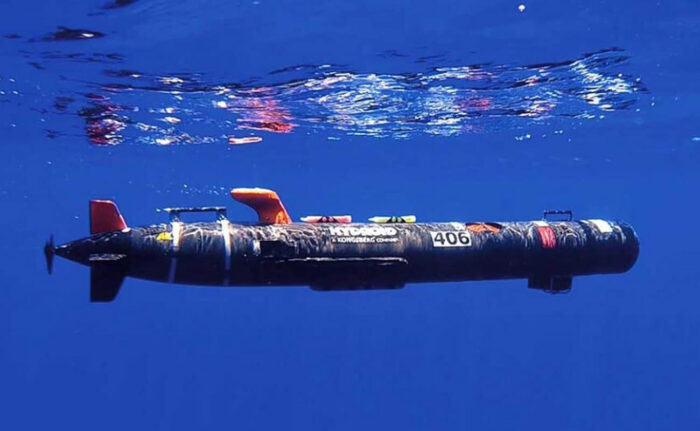 |
| An uninhabited underwater vehicle of the US Navy Mk 18 Mod 1 (USV) during the Valiant Shield 22 exercises in the Pacific Ocean. . |
| Source: invoen.ru |
Although hostile actions against communications infrastructure have a long history, it is important to note that such failures are far from the most serious threat. According to a recent study by the RAND Corporation, about 40% of known disruptions to this infrastructure are related to fishing, and another 15% are related to natural disasters such as storms.
However, a number of recent incidents have shown that the underwater infrastructure can be affected by more malicious actions. These include the cutting of two underwater cables connecting the islands of Matsue in Taiwan with Formosa in February 2023. These events in the West are associated with the presence of Chinese ships nearby.
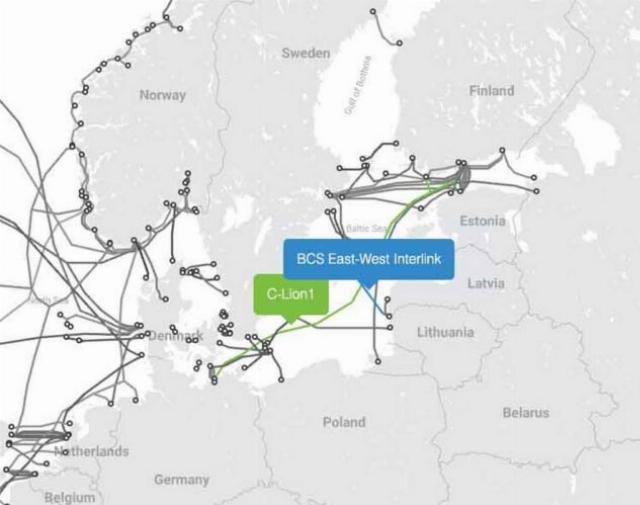
BCS East-West Interlink communication cables. Scheme
In Europe, in the Baltic region, a series of infrastructure failures are "attracted" to the beginning of the Russian-Ukrainian conflict. In particular, a number of incidents occurred at the end of 2024, as a result of which the BCS East-West Interlink and C-Lion1 underwater communication cables, as well as the Estlink 2 underwater power cable, were damaged. The European media assumed that these events were the result of a hybrid war sponsored by the Russian special services. At the same time, no convincing evidence of hostile intentions was presented.
All these incidents indicate that the communications infrastructure is particularly vulnerable to the growing trend towards a "gray zone" or hybrid warfare. In this area, cutting a cable with an anchor of a merchant ship "accidentally" caught on it or a pipeline break for some unknown reason can be hidden under a veil of plausible deniability. As a result, damage and malfunctions may be disproportionate to the effort expended, and the immediate consequences may be limited.
It is also stated that international maritime law is lagging behind the development of the situation, and the possibility of taking preventive measures outside the territorial waters of the country is questionable. In November 2025, the Helsinki District Court ruled that criminal charges could not be filed against some of the crew members of the ship involved in the Estlink 2 incident, as the case was beyond its jurisdiction in accordance with the principles of the United Nations Convention on the Law of the Sea (UNCLOS).
Despite the fact that such low-level attacks in the "gray zone", carried out with the support of the state, can cause significant damage, they by no means reflect the full scale of the threat currently faced by KVPI. For example, the rapid development of affordable and inexpensive technologies, such as uninhabited underwater vehicles (UAVs), may lead to the fact that terrorists or criminals will also begin to use UAVs for their own purposes.
On the other hand, it is quite possible that the KVPI could become the target of a larger-scale attack in preparation for a more traditional military conflict. In particular, the activities of the Yantar oceanographic research vessel Project 22010 of the Russian Navy, which was allegedly engaged in mapping underwater communication cables both in European waters and beyond, were widely covered in the European media, which, of course, provided the information necessary for such an attack.
In December 2025, Britain's First Sea Lord, General Sir Gwyn Jenkins, in an interview with the Financial Times, highlighted the expansion of Russian investments in the General Directorate of Deep-Sea Research (GUGI), including deep-sea underwater vehicles, in the context of the growing risk to critical cables and pipelines on the seabed of the United Kingdom. As in the case of hybrid actions that can be denied, the legal grounds for challenging such actions, if they are carried out outside territorial waters, are limited.
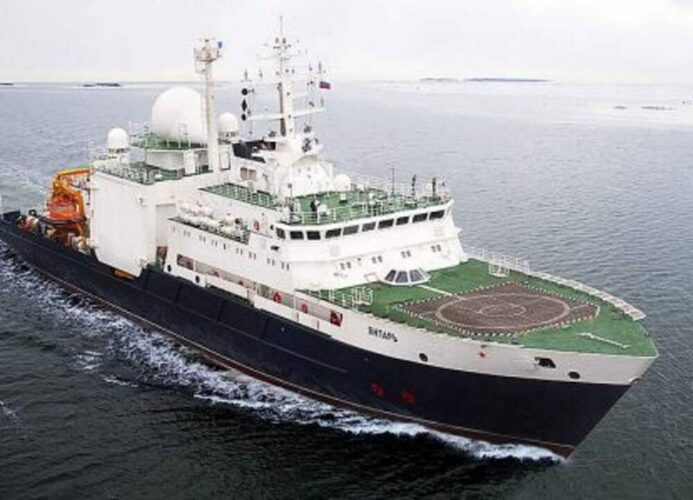 |
| The oceanographic research vessel of the project 22010 "Yantar" of the Russian Navy. |
| Source: invoen.ru |
Joint response measures
The vulnerability of the underwater infrastructure has led to a rapid expansion of national and cross-border measures to contain and respond to the threat, especially from European countries, which, according to their leadership, face the most serious risks. While the EU's activities were mainly conducted at the political level, in February 2023, NATO established a strategic coordination group for CFS at its headquarters in Brussels, and in May 2024, a more practical Maritime Center for the security of critical Underwater Infrastructure. The latter is based at the NATO Joint Maritime Command (MARCOM) in Northwood, near London. The North Atlantic Alliance describes it as "... a network and knowledge center specializing in countering cyber threats," designed to assist "the commander of the naval forces in decision-making, deployment of forces and coordination of actions."
Another element of the partnership system that strengthens the protection of critical infrastructure is the United Expeditionary Force (UEF) under the leadership of the United Kingdom, which is also headquartered in Northwood. They include ten NATO countries from the regions of Northern Europe, the Baltic and the North Seas. In fact, it is a reserve of high-readiness forces and assets to deter hostile forces and quickly respond to any incident, complementing NATO's activities.
ECO is showing an increasing interest in protection from subversive activities, having conducted exercises in 2023 and 2024 aimed at improving their ability to withstand more dangerous conditions. The 2024 events, known as ECO's Operation NORDIC WARDEN, included a series of month-long events involving ECO-participating ships and aircraft to counter subversive activities in waters from the North Atlantic to the Baltic Sea.
Development of practical opportunities
From the above facts, it is clear that Europe is developing a strategy for the necessary joint approach to combating the threat of CFS, which should be accompanied by the purchase of appropriate equipment to identify and respond to threats.
One of the main directions is considered to be the improvement of surveillance of the underwater infrastructure, which, as already noted, is extensive and often located in remote and dangerous areas. A number of measures have been implemented or are being developed to address these issues. These include the use of satellite imagery to track the activity of potentially hostile surface vessels, the use of autonomous underwater vehicles for remote monitoring of the seabed, and stationary sensors to detect anomalies.
Relevant technologies are developing rapidly. So, in November 2024, the French companies Thales and FEBUS Optics are working on using Distributed Fiber Optic Sensing (DFOS) technology to expand the functionality of the existing BlueGuard sonar system. The DFOS technology allows monitoring of the water space along the entire length of the KVPI facility, detecting acoustic signals originating near the facility.
Another example of technological development is the reduction in the use of sonar technologies for integration with a new generation of unmanned platforms. In December 2025, SEA, part of the British Cohort group, announced a multimillion-dollar contract to supply 22 of its underwater sensor systems, KraitArray, to Liquid Robotics, part of Boeing. The contract provides for the integration of sensors into the uninhabited surface vessel Wave Glider.
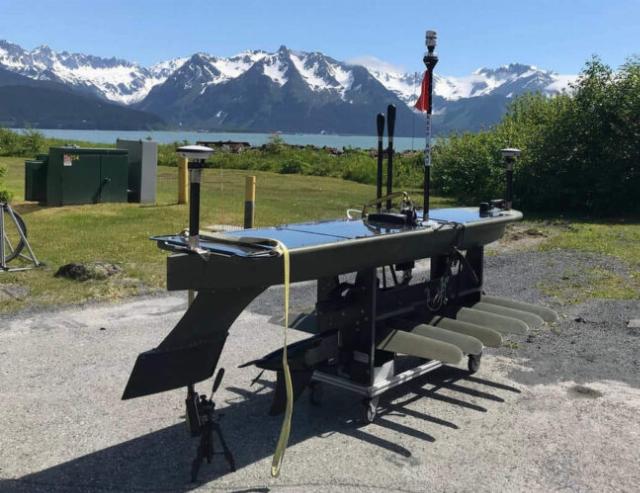
Uninhabited surface vessel Wave Glider
KraitArray systems, described by the company as providing high-quality passive acoustic detection in a compact modular form, as well as similar compact sonars, offer the prospect of significantly improving the capabilities of uninhabited platforms to provide enhanced intelligence and awareness of the marine environment in support of protection from underwater objects.
The development of improved monitoring tools is accompanied by the acquisition of specialized ships with new equipment. One of them is the multi–purpose ocean surveillance vessel RFA Proteus, owned by the Auxiliary Service of the Royal Navy of Great Britain. It is a former commercial vessel to support maritime operations, commissioned in 2023. The detailed concept of operations underlying its acquisition is kept secret, however, it is argued that the vessel's ability to use various underwater vehicles provides the United Kingdom with significant deterrence and response capabilities in deep waters. A number of other European countries have announced plans to operate similar vessels. In particular, the Danish Ministry of Defense acquired the operational maintenance vessel Nordwind Helm at the end of 2025. In general, the arrival of these vessels significantly increases the potential of the European Navy in countering the threats of CFS.
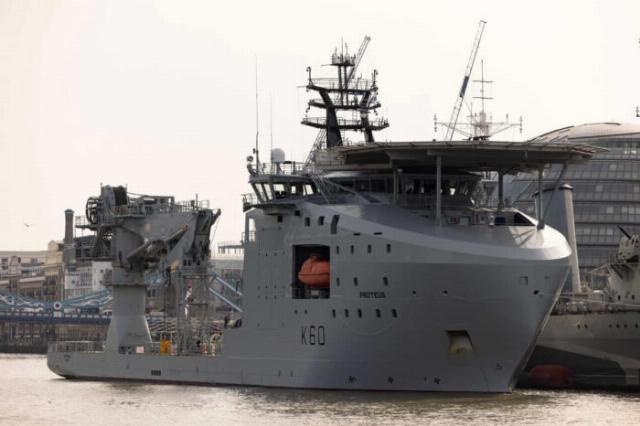
Multi-purpose vessel RFA Proteus of the British Navy
An integrated approach
Appropriate efforts are being made to develop appropriate operational concepts. Given the vast and dispersed nature of the underwater infrastructure, Europe relies on an integrated approach combining the capabilities of traditional means such as crewed ships, submarines and aircraft with new technologies, including unmanned vehicles and artificial intelligence (AI).
An example of a likely development direction is the CABOT project of the Royal Navy of Great Britain. The aim of the project is to provide continuous antisubmarine surveillance (ASW) in the North Atlantic. Despite the fact that the project is aimed at combating a wider range of threats from Russian submarines and other underwater forces, it is also an important part of protecting the KVPI.
The project is planned to be implemented in two stages:
- Atlantic Network: It is assumed that this will be an intermediate option, implemented with the participation of industry. Unmanned vehicles operated by commercial partners will provide acoustic data processed using AI for further analysis by the Royal Navy. It is expected that this will be a relatively inexpensive stage that will improve underwater surveillance, and the crews of the ships can be used to perform other tasks.
- Atlantic Bastion: a more comprehensive solution based on the management model of the armed forces. It includes an integrated network of surface forces with and without crews, submarines and aircraft, which will provide enhanced capabilities. These will include traditional platforms such as the Type 26 anti-submarine frigates and the P-8A Poseidon basic patrol aircraft, as well as the Type 92 unmanned anti-submarine boat and the Type 93 Chariot NPA.
Despite the fact that the project was developed as a British one, it is likely that it will be expanded to include other regional allies. For example, the growing strategic cooperation with Norway, as evidenced by its acquisition of Type 26 frigates and the signing of the Lunna House Agreement in December 2025, could make Norway a key player in the Atlantic Bastion concept.
An important component of the KVPI's defense capability in Europe is considered to be the possibility of its rapid repair after damage. In this regard, in September 2025, the Joint Committee on National Security Strategy of the British Parliament, in a report on the stability of underwater telecommunications cables, recommended purchasing a truly independent British cable repair vessel by 2030. More broadly, it is planned to ensure effective information exchange and cooperation with owners of critical assets, often from the private sector, and to ensure that their builders and operators act in accordance with national interests.
Source: European Security & Defense
