The Russian Space Forces were created 25 years ago
The space forces appeared in Russia 25 years ago as an independent branch of the armed forces. This reform has consolidated on paper what was clear for a long time: without military satellites and control of near-Earth orbit, there can be no modern army. This is especially true of space intelligence, the all—seeing eye that hovers over the world and penetrates state borders and defense lines. However, despite the enormous possibilities, space exploration has flaws and can be deceived. About her strengths and weaknesses — in the material of "Gazeta.Ru».
The Heavenly Eye
Space exploration monitors the Earth using three main methods: optical, radio engineering, and radar.
The advent of satellites with cameras in the late 1950s, in fact, nullified all the efforts of both the USSR and the United States to protect their airspace from reconnaissance aircraft. Previously, the Americans obtained information about the location of Soviet air bases, cosmodromes, missile ranges and other strategic facilities during extremely risky flights, one of which ended with the downing of U-2 pilot Francis Gary Powers. With the beginning of the space age, the urgent need for such missions disappeared, as spacecraft began to systematically take pictures of the Soviet territory, gradually covering it all. For the USSR, which did not have the technical capability to conduct reconnaissance flights over the deep regions of the United States, satellites became the only stable window to a rival during the Cold War.
It is important to note that taking photographs of the Earth is far from the only type of space exploration, and sometimes not the most important. Along with it, since the early 1960s, there has been space radio intelligence, which has been carried out by satellites with huge antennas eavesdropping on radio signals. They intercepted messages, uncovered radar positions, fixed their operating modes, monitored bursts of radio activity, and performed many other tasks. For example, information about Jumpseat satellites, which periodically intercepted telemetry from Soviet ballistic missiles during tests, was recently declassified in the United States.
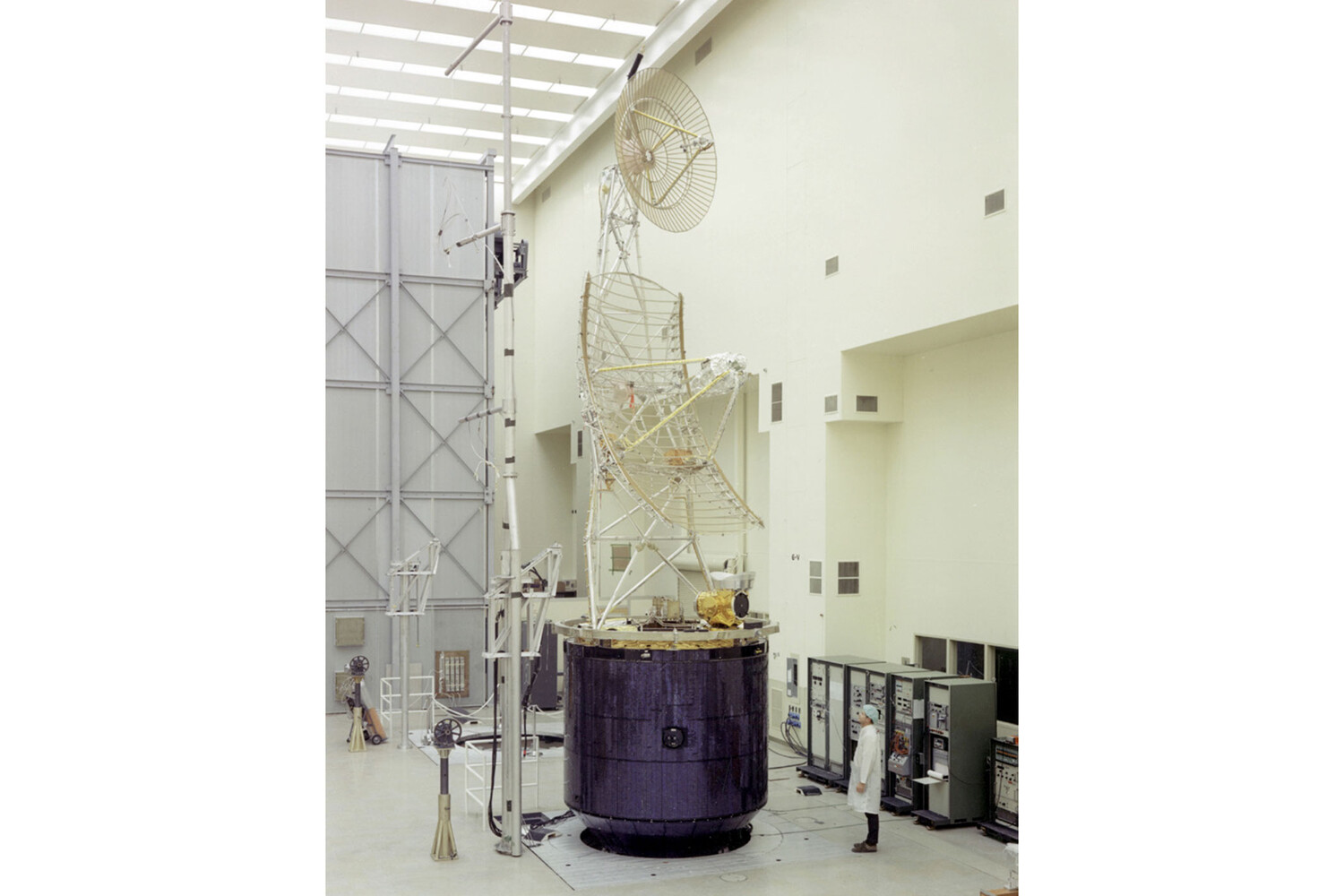 |
| The JUMPSEAT device. |
| Source: National Reconnaissance Office (NRO, USA) |
To overcome the limitations of the optical range, part of the observations of the earth are conducted using radars. Satellites equipped with synthetic aperture radar are becoming increasingly important. The result of their work looks something like a black-and—white satellite photograph, and only when you look closely can you see that its bright elements are not white spots, but objects reflecting radio waves like ships, tanks and other equipment.
Finally, it is impossible not to mention the missile attack warning satellites. They belong more to the first type, but they play a completely different role. Their task is to fix the flare rockets immediately after launch and issue an early warning to their forces to make a surprise attack impossible.
Tricks and legends
Such impressive capabilities may give the impression that satellite intelligence is omnipotent and covers all needs.
First of all, conventional photographic reconnaissance satellites are extremely dependent on the weather and are unable to see through clouds. This factor alone precludes the possibility of observing vast territories for long months — in winter and autumn in the central part of Russia, you can never wait for a sunny day.
Secondly, these same satellites do not work at night, and the target they are interested in may observe a blackout. At the same time, modern technology and night vision devices make it possible to maneuver and fight around the clock, and this is especially true for aviation.
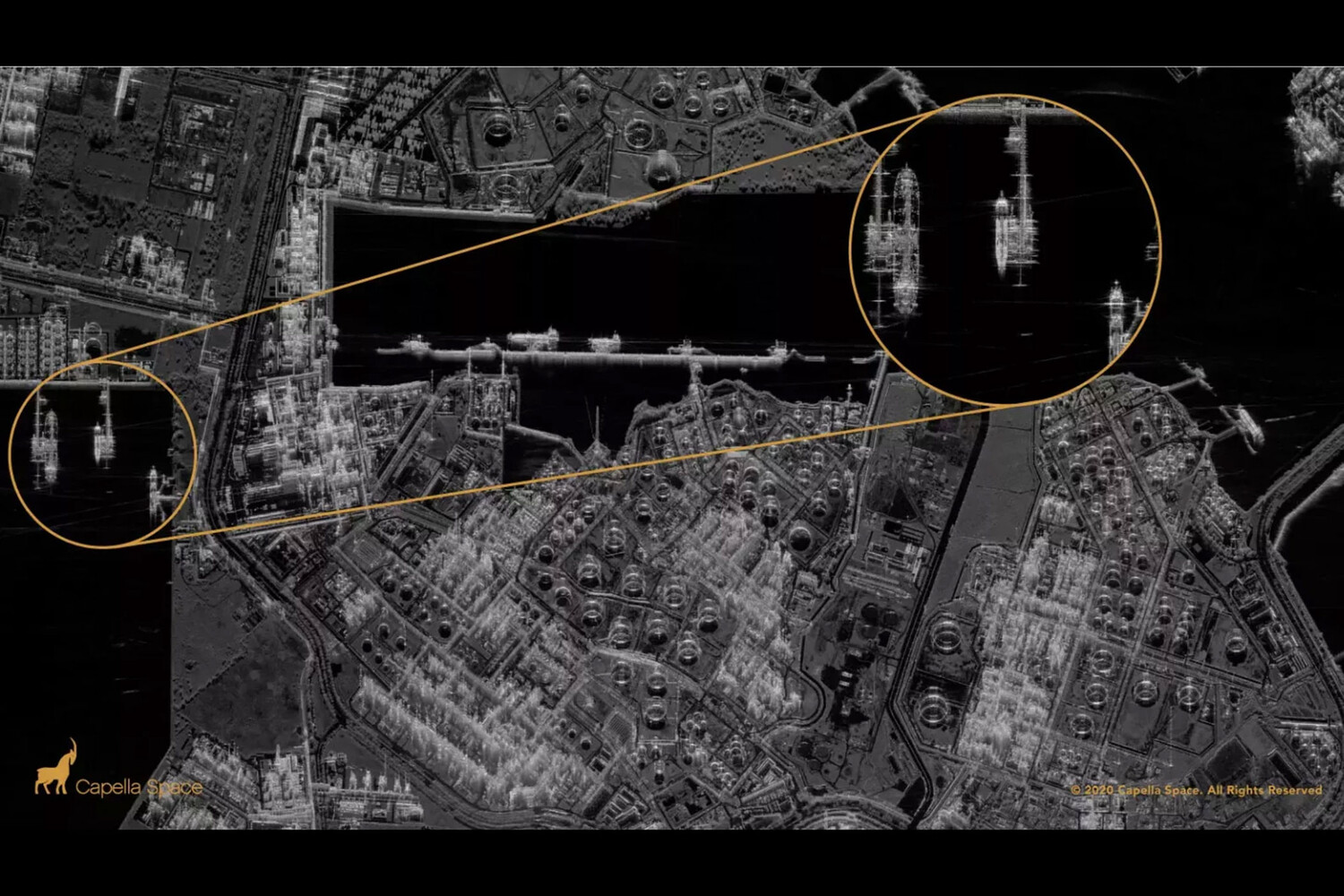 |
| A city captured by synthetic aperture radar. |
| Source: Capella Space |
Finally, satellites always move in predictable orbits, and the enemy always knows exactly and in advance when a low-orbit reconnaissance vehicle passes over them. Based on this, the command can make a plan of action, deliberately exposing itself to enemy sensors at the right moment. The easiest way to explain how this works is by using a specific example.
The Soviet Legend satellite system was supposed to be a key element of the naval battles of the 1980s. The USSR tried to counter the American carrier-based aviation with planes, ships and submarines with long-range missiles flying for many hundreds of kilometers. However, long-range air patrols and an air defense system would have prevented Soviet reconnaissance aircraft from approaching the American fleet in the event of war, just as submarines had no realistic chance of getting close.
Therefore, the Legend satellites remained the only way to get target designation for missiles. They existed in two versions: single devices with the US-A radar and more numerous US-P radio intelligence satellites that recorded radar radiation and radio communications. The Americans knew about its capabilities and practiced counteraction techniques.
In the summer of 1981, the large-scale NATO Ocean Venture naval exercises took place, stretching across the Atlantic, where the fight against Soviet surveillance efforts became one of the main tasks. First of all, the fleet was regularly put into strict radio silence, during which the US-P equipment became useless.
However, this could not affect the US-A, since its radar itself emits signals and picks up reflections from ships. This reflected signal depends on the characteristics of the ships, primarily their size, which makes it possible to determine their type and calculate the most valuable of them, that is, aircraft carriers. Therefore, American naval engineers began installing additional radar reflectors on destroyers so that they looked like an aircraft carrier from space and made the USSR wonder if this was a real target.
Secondly, the American ships had active radio interference. Their effectiveness may vary, but with successful detection, A could see an approximate source of interference, but was unable to see which ships it was hiding.
Finally, taking advantage of the predictable nature of the spacecraft's overhead flights, the American admirals tried to deceive the observers. For example, an aircraft carrier strike group was heading south, and after being detected by a satellite, it turned sharply to the east. Soviet intelligence expected to see these ships in the south on the next flyby, but in reality they were either waiting for a clear sea, or interference, or, even worse, another group disguised as an aircraft carrier with the help of engineering tricks, while the real aircraft carrier was already far to the east.
As a result, according to the American authors, at that moment, Soviet intelligence could occasionally observe individual ships in some areas of the ocean, but lost the ability to track them and see the whole picture.
A hut made of branches
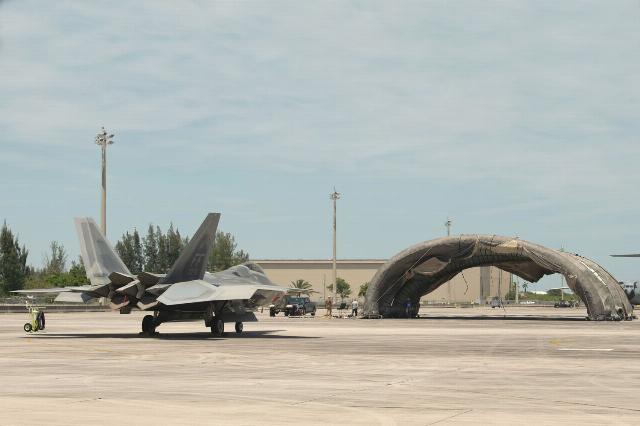
In fact, it doesn't always take that much effort to deceive satellite intelligence, and many methods haven't changed since World War II (when they were used against aviation). Any equipment, be it a tank, an airplane, a rocket launcher, a mortar position, a motorcycle with a sidecar, can be covered with a camouflage net, an awning, a shelter made of branches or a canopy. Canopies for aircraft are part of the standard equipment of the US Air Force and allow you to hide the exact position of aircraft at the airfield, their type and number.
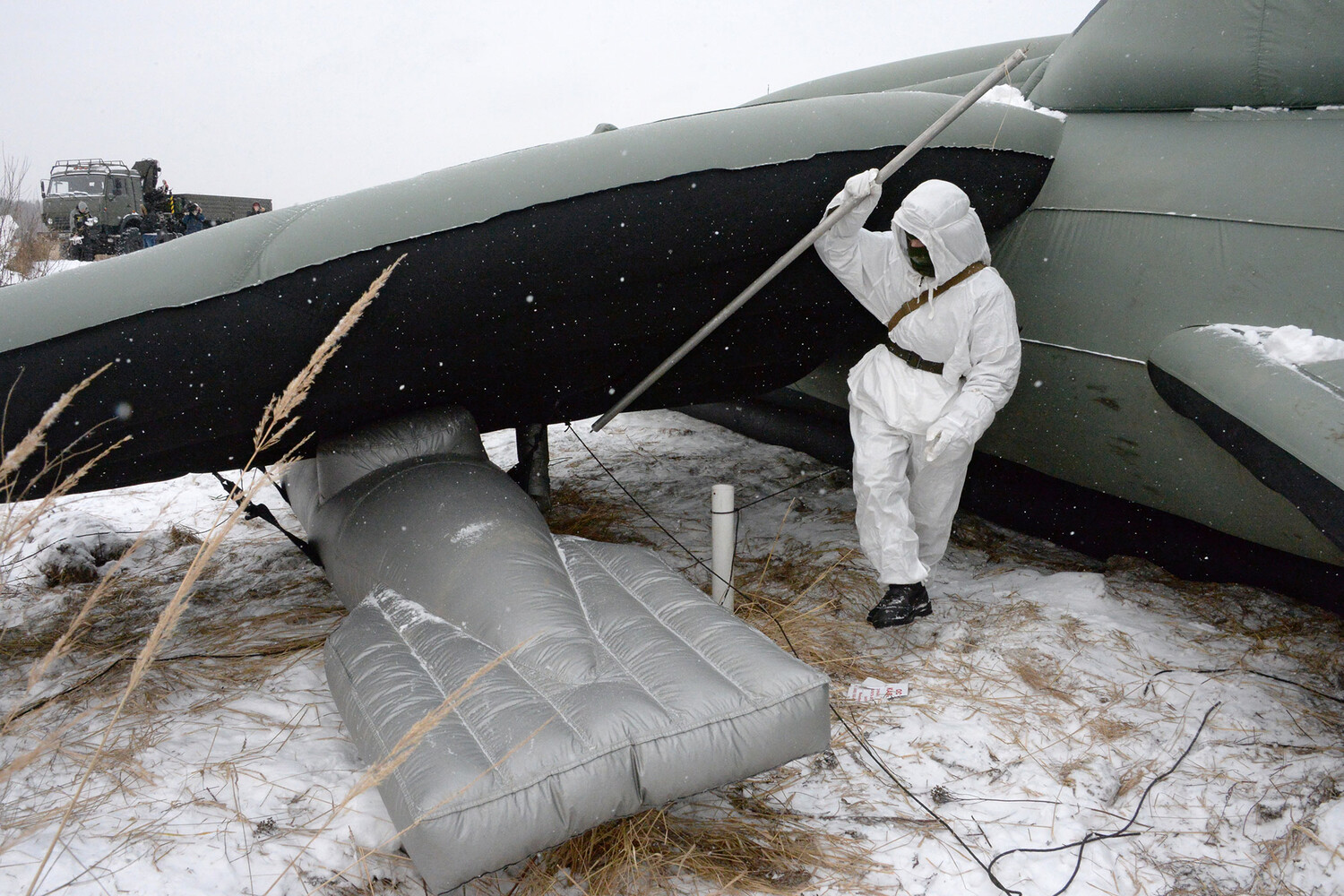 |
| Military personnel of the 45th separate engineering camouflage regiment deploy a means of disguising troops (inflatable aircraft) in a lesson on the use of camouflage equipment to increase the survivability and maintain the combat capability of troops, 2018. |
| Source: Alexander Melnikov/RIA Novosti |
It is impossible to distinguish an artfully made mock-up of a tank or radar from a real one in a satellite photograph. However, very often experienced analysts can distinguish a dummy from real equipment by the general context and meaning — whether the track leads to the tank or if it was transported through the air, whether there is enough space nearby for crews to be located, whether there is auxiliary equipment nearby, whether there is any sense in such an arrangement of equipment. However, all these factors can also be taken into account when placing layouts.
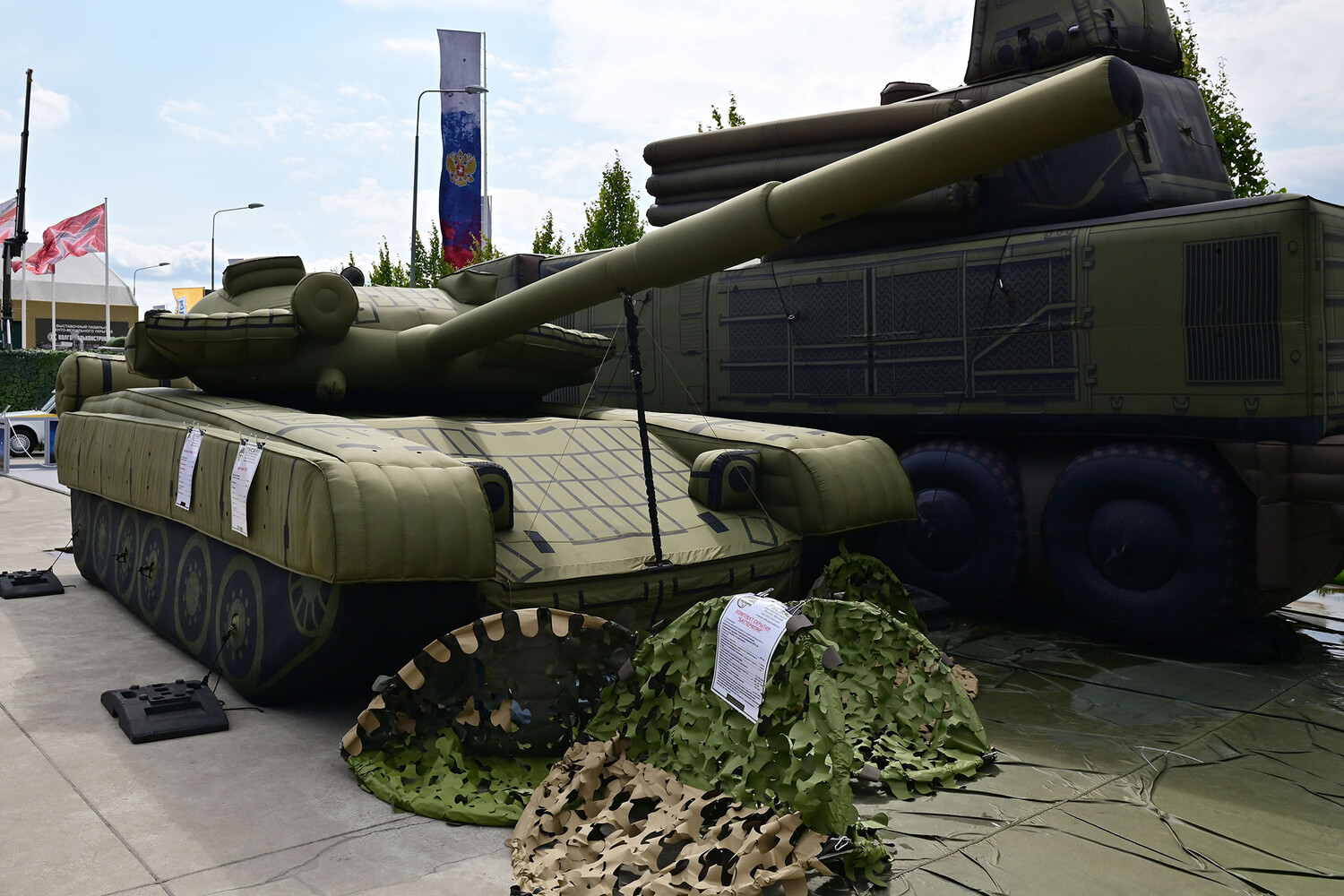 |
| Inflatable tank. |
| Source: Vladimir Baranov/Global Look Press |
Sometimes it's not a dummy that's enough to deceive intelligence, but simple drawings. A lot depends on the satellite's artistic skill and angle of view, but the chances of deceiving it are more than real, and recently the Iranians even forced the United States to bomb a painted airplane on the ground.
Satellite cameras can be blinded by powerful lasers — the chance of completely burning out the equipment is low, but you won't get a clear shot either because of the glare.
It is much more difficult to deceive radar satellites with a synthetic aperture, which receive an image of the terrain and are able to see equipment up to automotive. Their rays do not notice camouflage nets, they are indifferent to the weather, but they are sensitive to the material — a wooden or inflatable tank will be very different in the picture from the real one. However, they, like ordinary satellites, are not able to look under a metal canopy, and there may be craftsmen who can make a mock-up specifically to deceive such satellites, which repeats the radar portrait of real technology.
That is why the space forces were separated into a separate branch of the armed forces, now integrated into the aerospace forces.
Vasily Zaitsev
