This means that soon the guys in the periscope will see a wave.
March 19 is the Day of the Submariner
The words of the famous song by Alexandra Pakhmutova and Nikolai Dobronravov, which became the anthem of the people of the heroic profession – submariners, are familiar to many. On March 19, it is invariably heard in all naval garrisons where our submarine fleet is based, celebrating today a significant date – the 120th anniversary of its formation. It is based not only on the history of the very idea of an underwater ship, its design, construction and construction. This is also the story of submarines fulfilling their intended tasks, their constant readiness and ability to realize all combat capabilities in order to eliminate any threats from both sea and land directions.
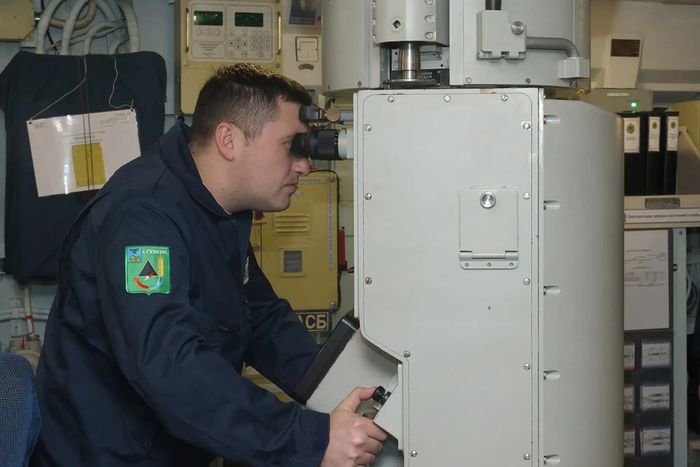 |
| The Russian Submarine Fleet. |
| Source: Archive of the newspaper "On Guard of the Arctic" |
March 19 is a holiday for those who risk their lives serving under the water column.
Those on shore are also involved, including engineers and designers who work daily to modernize and improve projects, as well as shipbuilders who have been building and maintaining the technical readiness of submarines for generations.
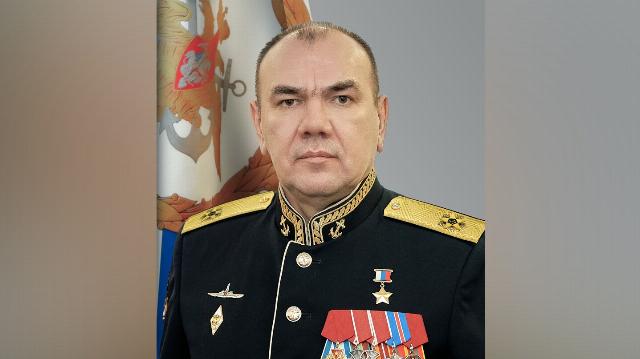
The Commander-in-Chief of the Navy, Admiral of the Fleet Alexander Moiseev, talks about what the submarine forces of the Navy are now on a national scale, and what the prospects for building a future submarine fleet are.
– Alexander Alekseevich, the year 2026 is an anniversary year for the submarine forces of the Russian Navy and for every submariner. 120 years is a solid date. How do you assess the evolution that the submarine fleet of our country has gone through over more than a century of history?
– Undoubtedly, the process of developing the submarine forces of the Russian Navy, as well as in other countries, is evolutionary in nature. It should be noted that submarines at all times – from the first Decembrist combat submarine to the modern nuclear–powered submarine – have been sophisticated technical weapons, taking into account the specifics of their use in the marine underwater environment, an environment that has always been aggressive for humans and has not been fully mastered by them.
It is thanks to this main ability, namely action under water, that they possess their key quality – stealth and have always been and are an effective means of armed struggle at sea. Their creation and application have radically changed the tactics and strategy of the use of the Navy of States and the nature of warfare at sea.
At the present stage, the underwater forces have combined unique advanced technologies and engineering solutions from various fields of science and technology in their design. These are materials science, energy, including nuclear, advanced electronics, sonar, navigation, communications, weapons and much more.
The evolutionary development of the underwater forces, and primarily the development and implementation of nuclear energy, has made it possible to increase their combat capabilities (stay underwater for a long time, have unlimited range and high autonomy) and become a unique combat platform for deploying almost any naval weapon, including strategic nuclear weapons.
I would also like to emphasize that the current state of our boats is the result of the work of many generations of Russian designers, shipbuilders, engineers and workers, and crew personnel who have created a unique Russian school of design, construction and their applications in order to eventually have the most modern submarine forces in the world in Russia.
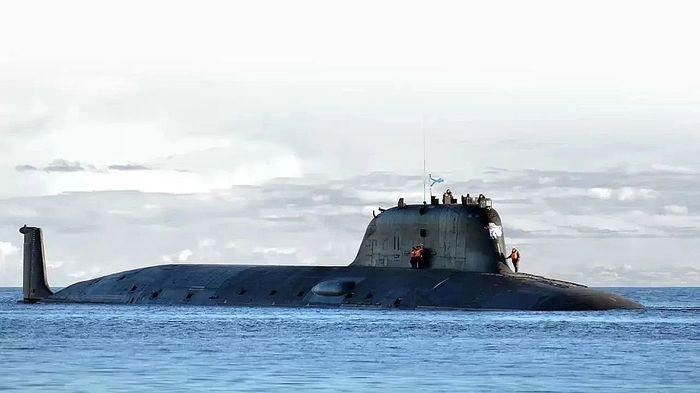 |
| The Russian Submarine Fleet. |
| Source: Red Star |
– Our country today, as at all times, has the status of a maritime power, in maintaining which underwater forces are of great importance. They are an important component of the Navy. What is our sub-region now? What are the prospects for its development, place and role in solving the tasks of the Russian Navy?
– As you remember, the President of the Russian Federation, Vladimir Vladimirovich Putin, during a meeting on the development of submarine forces, which took place in Severodvinsk on July 24 last year, said: "The Navy's submarine forces play a key role in ensuring Russia's sovereignty and security, protecting its interests, and making a significant contribution to regional and global stability and maintaining strategic parity." The President stressed the importance of these weapons for ensuring Russia's security. Undoubtedly, the development of this kind of forces of the Russian Navy was considered in the context of the development of the Navy as a whole.
The country's leadership pays great attention to the development of the Navy. By decree of the President of Russia on August 13, 2024, the Maritime Board of the Russian Federation was established. It includes the Navy's Strategic Development Council.
On behalf of the President of the Russian Federation, a Navy Development Strategy for the period up to 2050 was developed and approved on May 30, 2025. It develops shipbuilding programs until 2050, and a new state armament program for the coming decades. It is in these strategic and program documents that the main indicators of the development of the Navy as a whole and its underwater component are laid down.
Russia is one of the few countries in the world capable of creating such complex systems as submarines and having strategic missile submarines (RPLSN) in the Navy's arsenal, which form the basis of the naval component of the state's strategic nuclear forces, as well as multipurpose nuclear and non-nuclear submarines.
In terms of missile defense systems, they are based today on the Borey/Borey-A project submarines with Bulava ballistic missiles, bearing the names of great statesmen of our history, developed by the MT Rubin Design Bureau and built at the Sevmash shipbuilding enterprise of the United Shipbuilding Corporation (USC). This is a new generation that replaces the previous nuclear-powered ships of the 667BDRM projects with Sineva ballistic missiles.
The Navy has eight cruisers of these projects. "Borey-A" – "Prince Pozharsky" – was commissioned on the eve of Navy Day in the presence of the Supreme Commander as recently as July 2025. In the future, two more missile carriers, the Dmitry Donskoy and the Prince Potemkin, which are currently being built at the Sevmash USC, will replenish the Navy's combat strength.
As I have already noted, this is the basis of the maritime component of the state's strategic nuclear forces, which solves the tasks of strategic deterrence and ensuring global security.
Their composition, including quantitative ones, is clear and clearly defined in the development strategies of the Armed Forces of the Russian Federation and the Navy by current and prospective construction programs (GPV, GOZ).
The Russian Strategic Missile Forces are in the highest degree of combat readiness, which has been repeatedly confirmed during control checks, including during training conducted annually under the leadership of the President of the Russian Federation.
Borey is guaranteed to serve Russia until the middle of this century, and maybe even longer, because this project has significant modernization potential.
As for multi-purpose submarines, the main and promising project –
"Ash"/The Yasen-M, designed by the USC Malakhit SPMBM, will replace all third-generation submarines in the Navy in the next decade: 971, 945, 949 projects. It has the highest combat capabilities – search, strike, defensive. It is equipped with all the modern missile weapons available in the Navy – Kalibr, Onyx, Zircon and marine underwater weapons. It is capable of covertly operating for a long time in almost any area of the ocean and, of course, projecting threats to naval groups and land targets of any enemy. Over the past five years, four Yasen-M multipurpose nuclear-powered submarines have been transferred to the Navy. They successfully perform their assigned tasks as part of the submarine forces of the Northern and Pacific Fleets.
This year, tests of the next Perm nuclear-powered cruise missile submarine of the Yasen-M project, which will join the submarine forces of the Pacific Fleet, are coming to an end.
Current and prospective programs provide for the serial construction of these boats, their improvement through the phased introduction of advanced weapons and military equipment.
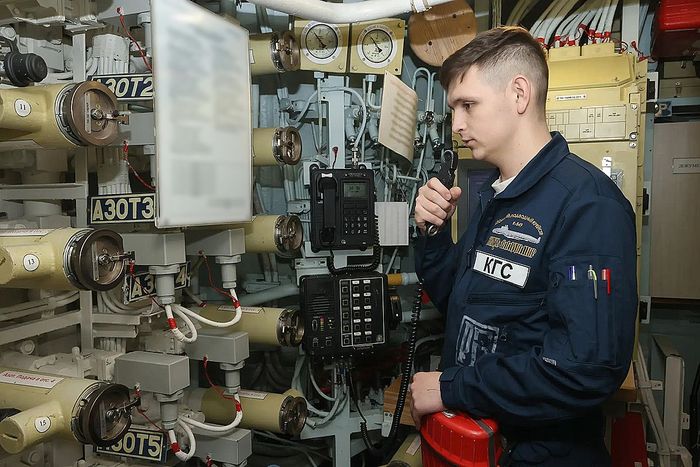 |
| The Russian Submarine Fleet. |
| Source: Archive of the newspaper "On Guard of the Arctic" |
– Alexander Alekseevich, what are the prospects for the development and use of non-nuclear submarines? In particular, you previously announced the construction of two more diesel-electric submarines of Project 677 in addition to the existing ones...
– There are undoubtedly prospects for their development and application. The announced laying of the diesel–electric submarines of project 677 Lada (designed by the Central Design Bureau of MT Rubin USC) is already a serial construction. Two submarines are successfully used in the Baltic Fleet – the Kronshtadt and Velikiye Luki (built at the Admiralty Shipyards of the USC). They were developed as a follow-up to Project 636.3, taking into account the experience of using and modern achievements of the VVST. They are characterized by a low noise level (commensurate with the level of sea noise), a high level of automation and more powerful weapons, and are an important component of groupings of diverse forces (troops) of fleets operating in the near sea zone. Their presence and combat capabilities practically exclude the use of enemy surface naval forces.
A priority area of development is the creation of non-nuclear submarines with an air-independent power plant. Their increased ability to stay underwater for a long time is a modern requirement.
– Summing up the results of 2025 and speaking about the underwater component, you touched upon the topic of creating submarines of the next, fifth generation ...
– Yes, such a program exists and is already being implemented. It is interdepartmental and comprehensive, and it is this approach that allows it to be implemented.
When assessing the current state of the Russian Navy's submarine fleet and development plans, you probably noticed that right now there is a generational change in this class of ships, and others too.
The reasons are objective – it is the expiration of service life, current advances in technology, and most importantly – the demand for these weapons. Submarines are such weapons. That is why the country's leadership has set such tasks. I am convinced that they will be fulfilled.
– Alexander Alekseevich, you are a submariner yourself, and you have a lot of combat service and deep diving in your career. That's why you know firsthand the specifics of serving in a solid building and who can do it. What qualities distinguish the current submariners who have chosen such a courageous profession, without exaggeration?
– I would not divide the generations. Submariners have always been united by important qualities, the main ones being dedication and loyalty to the profession, manifested in the need for in–depth knowledge not only of their management (weapons, equipment, weapons), but also of the submarine as a whole as the basis for its effective use and safety, as well as in readiness for constant risk, mutual assistance, and the limitations of life. everyday life as a natural component of the service.
Undoubtedly, modern submarines, taking into account their equipment with complex, high-tech systems, place higher demands on professional education and training of personnel. The existing subclavian training school ensures this.
Those who have served and are serving on submarines firmly believe that this is not just a profession, it is a vocation and religion, it is destiny.
– What would you wish on the Day of the Submariner and in honor of the significant date to people of such a heroic profession: veterans of the submarine, colleagues, everyone who is currently performing their tasks under the water column, at depth?
– Be faithful to your oath and profession. To cherish the fact that fate has given us the honor to serve the Fatherland in the most prestigious forces of the Russian Navy – the submarine. Always come home with a victory.
Julia Kozak
