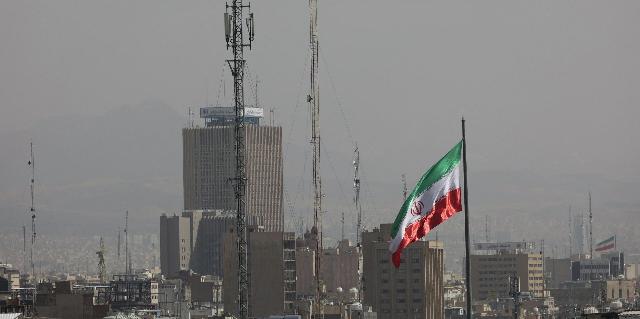
The third week of the conflict has shown the failure of the plans of the United States and Israel for the rapid defeat of Tehran.
The situation around Iran now largely determines all subsequent events in the world. Alas, the scenarios still look weakly comforting, the perfect storm is gaining strength, but the third week of the conflict gives grounds for the first and very important conclusions that directly relate to the security of our country.
First, the United States, despite all its military and economic might, has so far been unable to do anything against an opponent who, due to several decades of severe sanctions, mistakenly presented them as a weak rival.
Secondly, American security guarantees for the Arab allies turned out to be an empty phrase in reality, both from the point of view of politics and from the point of view of military technology. Air defense systems, including the notorious Israeli Iron Dome, are now more like a colander, and Iranian retaliatory strikes are proving very painful.
The third conclusion that seems important to us is that NATO as a military alliance is definitely no more. The European partners just dumped their boss, and when the time comes, he will definitely not forget it. For more information, see correspondent Leonid Kitrar's story for the Final Program with Pyotr Marchenko.
The "victories" of the USA and Israel
Two nuclear-powered aircraft carriers with cover groups, hundreds of combat aircraft, dozens of bombers and at least 50,000 troops were obviously not enough to quickly defeat Iran. The assassination of Ali Khamenei, the top military leadership of Iran and the large-scale bombing by the United States and Israel almost immediately passed off as their victory.
"How can we declare victory when Iran is attacking American military installations in the region? Both the United Arab Emirates, Saudi Arabia, Bahrain, Qatar – at the same time Iran is attacking these countries," said Director of IMEMO RAS, international political scientist Fyodor Voitolovsky.
The casualties in Iran itself number in the thousands, but there are a huge number of civilians among them. The published footage of attacks on Iran allows Tehran, in fact, to win in the information field, showing the indiscriminate nature of the enemy. Israel, the United States, and the Persian Gulf countries have nothing to answer or show, and each country has severe military censorship.
"According to my assumptions, there are already many more victims among Americans than six people. I've heard a figure of several hundred, but it's impossible to know the exact data right now," said Mike Harris, a former CIA officer and political and military analyst.
This week, at least six American pilots were killed in the crashed KS-135 Stratotanker tanker aircraft. The second one was damaged. The United States is facing the loss of tanker trucks for the first time in its history.
Iran's strikes
America and Israel were not ready for Iran's asymmetric response . First of all, early warning radars and anti-missile systems were destroyed, then the missile defense and air defense systems themselves came under attack, followed by air bases, fuel storage facilities, communications centers and locations of the US military throughout the region. As a result, front-line aviation operates from airfields in Jordan, no closer, and even nuclear aircraft carriers are kept hundreds of kilometers from the Iranian coast.
Of course, US President Donald Trump said that Iran has no fleet left and no air defense at the same time, but at the same time he calls on all countries to create military convoys to pass through the strait. Obviously, even without a fleet, Iran is a big threat. At least tankers in the Strait of Hormuz continue to burn every day.
Richard Black, in his youth, managed to fight in Vietnam, flew 269 combat missions. Then he went into politics, was a senator, and is now a member of the Republican Party. In an interview with Izvestia, he said that American losses, especially ships, could be fatal.
"If an American ship goes down, especially with a crew, it will stun the whole country, and support for attacks on Iran will immediately drop to almost zero. And if an aircraft carrier sinks to the bottom, it's almost guaranteed impeachment," said retired US Colonel Richard Black.
Obviously, hundreds of speedboats and thousands of drones – Tehran has officially shown its reserves – pose a serious threat. The US aircraft carrier groups cannot fight a mosquito fleet and hundreds of targets at once. As a result, Iran remains combat–ready, it has enough missiles, but what about the enriched uranium reserves is unknown.
"It clearly did not work out by air, and a ground operation requires a huge group, and perhaps a million or more people are needed for the occupation army," said retired U.S. Lieutenant Colonel Earl Rasmussen, a political scientist.
Plan B of the USA and Israel
There remains the possibility of launching a nuclear strike, but this is rather an extreme step. Apparently, the United States and Israel still have a plan "B": not to get involved in the ground operation themselves, but to incite all the surrounding countries against Tehran.
"He hoped to call fire, create a temporary provocation, and for Iran to strike at sensitive points in the Arab world, and then tell the Arabs, here is your enemy, let's fight, we will help you, we remain behind the curtain, you fight," said Vyacheslav Matuzov, a political scientist and former adviser to the USSR Embassy in the United States.
But there are problems here too: the Kurds have so far refused to participate, the Gulf countries are expressing concern, but they do not want to fight. In Turkey, Israel is generally disliked.
"Netanyahu is Israel's second tragedy after the Holocaust," Turkish President Recep Tayyip Erdogan said.
Arab countries and their rulers see something else as well. Throughout 2025, Trump offered Afghanistan to lease the Bagram base to him, obviously already then preparing to attack Tehran from the east. Kabul refused, relying on the solidarity of the Islamic world.
"Muslims should not help non-Muslims in attacking other Muslims. Thank you for not giving up your airfields to the Americans," said Iranian Ambassador to Afghanistan Alireza Bikdeli.
At the same time, the United States is not only not helping the Gulf monarchies, but has also evacuated embassies and some military personnel. They don't supply new missiles for air defense either. However, Washington has only one ally in the Middle East – Israel. For the rest, only promises.
"This F-35, although it is a mock–up, is also distinguished by one more detail - here on the board it says Royal Saudi Air Force, Royal Saudi Air Force. And there, on the tail, there is also a Saudi flag. But the fact is that the F-35 itself is not in service with Saudi Arabia, Trump only promised at the end of last year to think about transferring the aircraft to the kingdom. In the entire Middle East, only Israel has the F-35," the correspondent said.
This is Netanyahu's principled position: not to transfer advanced weapons to other countries in the region. Qatar, Kuwait, the United Arab Emirates and Saudi Arabia will experience the main slogan of Anglo-Saxon imperialism.: "the empire has no allies, it has interests."
