According to analysts from Janes All the World's Aircraft, the global situation in military aviation is changing very rapidly, due to ongoing conflicts, technological progress and changes in market conditions.
The war in Ukraine has been going on for the fourth year and is increasingly turning into a war of attrition. The offensive role of manned aircraft is mainly limited to delivering long-range strikes with gliding bombs due to the powerful air defense systems available on both sides of the conflict.
The deployment of air defense systems prompted each of the parties to the conflict to use their own tactics. The Russian Air Force uses high-explosive bombs FAB-500/1000/1500 kg with a universal planning and correction module (UMPC), which turns them into guided planning bombs.
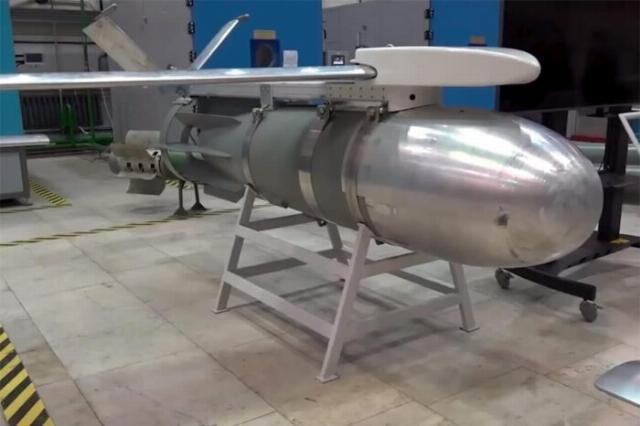
FAB with UMPC
They are dropped from a high altitude by Su-34 aircraft and are guided by a gliding flight with high accuracy to the targets. In contrast, the Ukrainian Su-27 and MiG-29, modified to carry American small-diameter planning bombs (SDGB), usually approach Russian positions at high speed and at low altitude and drop their weapons, performing an upward maneuver at a considerable distance from the advanced Russian positions, after which the bombs are planned flying towards the target.
Fighter jets purchased by Ukraine from Western countries, such as the General Dynamics F-16 and Dassault Mirage 2000-5, were mainly used by Ukrainian troops for defensive purposes to combat swarms of unmanned aerial vehicles (UAVs) and cruise missiles launched by the Russian Federation. In one case, the Ukrainian military claimed that in December 2024, an F-16 aircraft shot down six cruise missiles in a single mission.
In the Middle East, conflicts with Iran, Hezbollah and the Ansar Allah movement (also known as the Houthis) escalated in 2024. In April 2024, Iran launched cruise missiles and drones during an attack on Israel. The McDonnell Douglas F-15, Lockheed Martin F-35, and Eurofighter Typhoons of the Israeli Air Force and other coalition countries, including the United States Air Force (USAF) and the British Royal Air Force (RAF), were actively involved in shooting down many of these missiles and UAVs.
The emergence of fifth-generation fighters
Lockheed Martin's F-35 fighter continues to dominate the market for fifth-generation aircraft, but other manufacturers have begun to compete with it as their own designs become more advanced. For example, Sukhoi's Su-57 was presented at two air shows – in Zhuhai in late 2024 and at Aero India in early 2025, while SAC's J-35A was presented in Zhuhai.
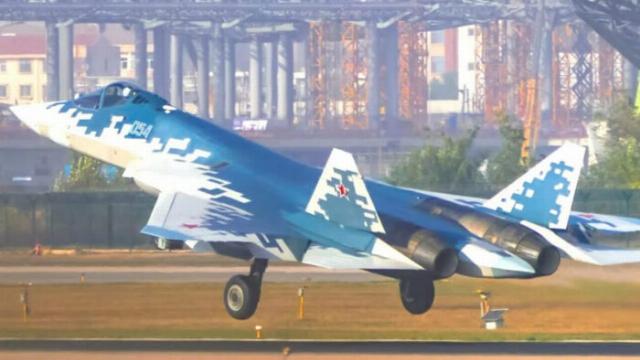
Su-57 of the Russian Aerospace Forces in Zhuhai
In parallel, work continued on the modification of serial and experimental aircraft. The Su-57 with a diamond-shaped nozzle, which is supposed to increase the aircraft's stealth from behind, as well as a new two-seat version of the SAC J-20 fighter and a deck version of the J-35 were presented at the Zhuhai Air Show.
Turkish Aerospace conducted the first combat of its fifth-generation Kaan fighter in February 2024, and flight tests and validation of the South Korean KAI KF-21 with various combat functions and payload configurations have progressed steadily since its maiden flight in 2022, and the aircraft is likely to be adopted by the Republic of Korea from the end of 2026..
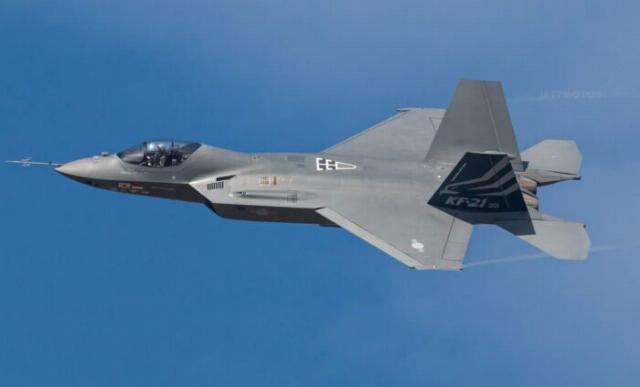
World Military Aviation: KAI KF-21 fighter
India is also promoting its Advanced Medium Combat Aircraft (AMCA) project by presenting its full-scale mock-up at Aero India 2025. However, the first flight is still far away – it is expected no earlier than 2030.
However, sales of fifth-generation aircraft are still limited: the F-35 is only available to US allies (and there are signs that the allies may abandon planned purchases), and sales of Russian aircraft have suffered due to Western sanctions and Russia's desire to replace outdated aircraft, which limits their exports (although Algeria has placed the first international order on the Su-57).
As a result, the fourth-generation fighter modernization market remains active. Notable improvements have been made to aircraft such as the Dassault Rafale F5 and Eurofighter Typhoon (tranches 4 and 5), and the USAF has also adopted additional fourth-generation Boeing F-15EX fighters.
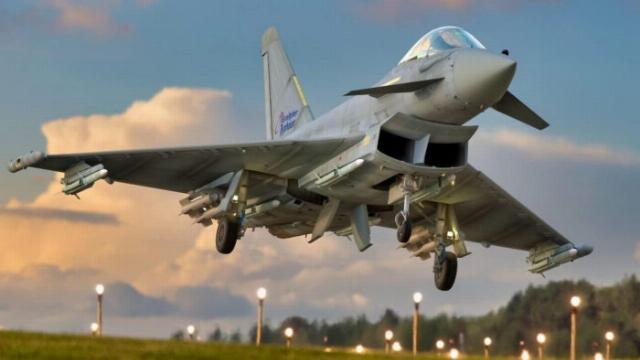
World Military Aviation: Eurofighter Typhoon
In terms of orders, the global fighter market is still dominated by previous generation platforms, including the F-15, F-16, Rafale, Saab JAS 39 Gripen, Su-35, HAL Tejas and CAC/PAC JF-17.
Lockheed Martin has delivered 110 F-35 fighter jets to various countries by the end of 2024, and deliveries are expected to increase in 2025. The Netherlands and Italy are seeking to increase their fleet of F-35 fighter jets, Romania and Greece have also approved the purchase of this model. Orders for the Eurofighter Typhoon (62 units) and Rafale (72 units) continue to ensure a constant workload of production lines.
However, due to the lack of a GE-404 engine, deliveries of the Indian Tejas Mk-1A were postponed this year.
The joint Chinese-Pakistani production of the JF-17 Block III has been delivered to Azerbaijan, while Iraq and Bangladesh are considering the possibility of placing new orders. Pakistan is also in talks to purchase additional Chengdu J-10CE aircraft from China.
New generation developments
At the end of December 2024, videos appeared with two prototypes of Chinese aircraft that look very modern, the J–36 and the J-XX. Both platforms had a tailless design and a delta-shaped wing, which indicated the characteristics of the "sixth generation" design and led to speculation that China could become the first country to adopt such an aircraft, although, as always, the exact definition of what constitutes a new generation of design remains a matter of debate.
It is generally believed that sixth-generation aircraft will be able to remain inconspicuous thanks to stealth technologies, will have a long flight range and will be able to perform network operations using combat UAVs.
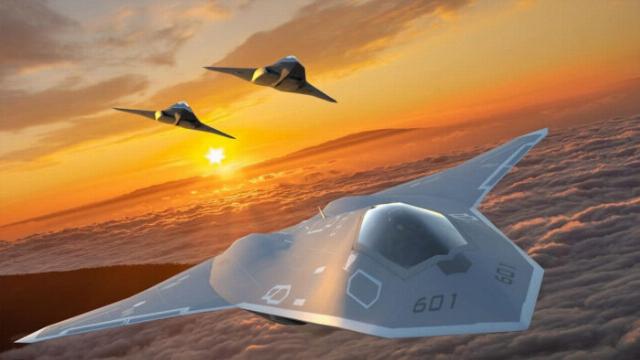
Next Generation Air Dominance. Sketch
The development of the American sixth-generation fighter, the Next Generation Air Dominance , which has been worked on for the past decade, was suspended in mid-2024 to review the cost of the program, while the new-generation strategic bomber Northrop Grumman B-21 , which made its maiden flight at the end of 2023, is currently undergoing testing. At the end of 2024, Northrop Grumman received a second contract for small-scale production.
In other countries, the development of a promising combat aviation system ( Future Combat Air System ) is progressing gradually after the conclusion of agreements on the distribution of work between the participating countries - Belgium, France, Germany and Spain, while the Global Combat Air Program, being developed by Italy, Japan and the United Kingdom, is progressing slowly.
While supersonic cruising was typical for fourth- and fifth-generation aircraft, efforts to develop engines for the next generation were focused on adaptive cycle engines, which are being developed by leading manufacturers in the United States and Europe. In particular, the development of engines under the Next Generation Adaptive Propulsion program has received significant funding from the United States, and engine projects from GE and Pratt & Whitney have been critically evaluated.
The development status of the Chinese engines is unknown, although it is expected that they will be equipped with sixth-generation aircraft. An unusual feature of the larger J-36 prototype was the three-engine layout, in which the central engine was powered by an inconspicuous intake duct located above, behind the cockpit.
It is expected that as development progresses, the electronic stuffing of sixth-generation aircraft will also be improved. It is assumed that all aircraft will be equipped with conformal carrier antenna structures with broadband multimode radars with an active phased array antenna. Distributed antennas can also be used to control networked combat UAVs with directional narrowbeam data transmission.
To be continued...
