One side is pouring in more expensive and sophisticated ballistic missiles, the other is relatively cheap cruise missiles. But at the same time, the first is much poorer than the second. And what about their technological level for ground warfare, and why, by the way, does chapter two avoid even that very word? Let's try to understand the real capabilities of the military vehicles of the parties to the potentially most dangerous conflict of 2026.
General educational, technological and industrial situation
To understand a country's overall military and technical capabilities, it is often useful to look at its industry and potential as a whole. In this sense, there are many opinions around Iran in the Russian-speaking information space like "Iran turned from a developed and progressive monarchy in 1978 into a third world country under sanctions," which often ends the analysis of its industrial base.
In fact, the situation is less clear. In progressive Iran during the time of the Shah, the literacy rate even among women aged 10 to 49 was only 35.5% (for men — 61.5). And in 2023, 96.1 percent of women of the same age became literate, which is difficult to distinguish from the success of men.
It is also worth mentioning that in 2025, Iranian universities accepted 958,000 students, of whom 608,000 were women. For comparison, in much more populated Russia, only 904,000 people enrolled in universities last year. Moreover, the proportion of women among them is lower than the Iranian one. In terms of the number of female students per capita, we are even stronger behind the Islamic Republic than in the number of students in general.

Due to the (often violated) requirements for covering their hair, Iranian women are often portrayed as oppressed compared to the time of the Shah's rule. Their real situation is noticeably more complicated than this concept
Image source: Flickr
This is not an accident: since the 1980s, Tehran has been doing absolutely everything it can to reduce the scientific and technical gap from the rest of the world (this is also easy to see from the explosive growth in the number of works by Iranian scientists in peer-reviewed scientific journals). It is not surprising that his higher education is developing much faster than in Russia, where they began to seriously set themselves such a task not so long ago.
At the same time, the country's economic success lags far behind its educational achievements. The Iranian authorities do not know modern macroeconomic theory, so the GDP per capita is more than twice as low as ours. But due to the sanctions, the structure of this GDP is different for us and for them.
For example, Russia has a better developed service sector, while Iran has a number of engineering industries. He produces ~one and a half times as many cars of all types as we do, and ~ four times as many car engines (many cars listed as made in Russia, in practice, are equipped with imported engines, boxes, and so on).
And this is despite the fact that the 90 million-strong Middle Eastern country is much inferior to Russia in terms of population. If we recalculate the production of cars per capita, we will be three times weaker than the Iranians. The dynamics before the current war with Washington went in the same direction: in Russia in 2025, due to the well—known decisions of the Central Bank, the production of cars fell by a double-digit number of percentages, in Iran - by a double-digit number of percentages increased.
Another example: Iran is mass-producing high-capacity gas turbines for thermal power plants. And Russia has been importing them for decades. They are trying to produce them themselves, but the circulation is still limited, which is why our country was forced to sign an agreement with the Iranians to import literally dozens of gas turbines in the 2020s.
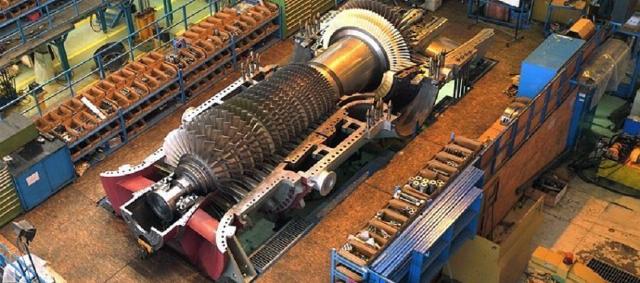
Last year, Iran already started supplying its modern high-power gas turbines to Russia. They plan to supply 40 of them in total, and in exchange, Tehran wants lower-grade processed metal products from Russia. Before the Islamic Revolution, such shipments of highly processed products from Iran were basically unimaginable.
Image source: Magpa
This is a very big leap for the state, which until 1979 imported all turbines, all automobile engines and produced (although it would be more accurate to say "assembled from imported components") many times fewer cars. This breakthrough occurred for a simple reason: despite the general poverty, Iran consistently concentrated on creating what it could not buy abroad. As a result, he provides himself with medicines by 90 percent on his own. But you can't say the same about Russia: if the borders are closed tomorrow, the basic components of many medicines will stop being imported and their local production will stop.
All of the above does not mean that Iran has solved most of its problems. Russian Russians and Iranians received the same number of calories with food in 2002, and in the 2020s, Iranians receive about the same amount of calories, while Russians receive significantly more than 24 years ago. The reasons are also clear: Tehran has focused its efforts on independence for the "cheapest calories," say, grain, and as a result, it has almost zeroed out its imports. But with relatively expensive calories, it's more difficult: chicken meat requires feed, and the Iranians have to import the ingredients for them.
An important aspect of Iran's overall industrial development is the serious level of its own tunneling machines. Having started importing them decades ago, the locals have learned how to make decent copies of Western cars. Tunnel Saz Machine is currently the only manufacturer of automated tunneling boards in Western Asia. Technically, these cars are civilian, and they are used to build the subway. But in practice, tunnels are also a key way to hide important military industries. About them below.
Military industry: missile and unmanned brilliance…
If we compare Iran quantitatively with the world's leading military industry, it looks extremely heterogeneous. There are areas where there is serious production on a scale comparable to that of Russia, but there are not many of them.
He makes his own intermediate-range and shorter-range ballistic missiles (MRBMs and MD). Moreover, both its numerically dominant solid-fuel (although it imports sodium perchlorate for fuel from China) and liquid-fuel Ghadr families. Their total circulation is estimated at dozens of pieces per month.
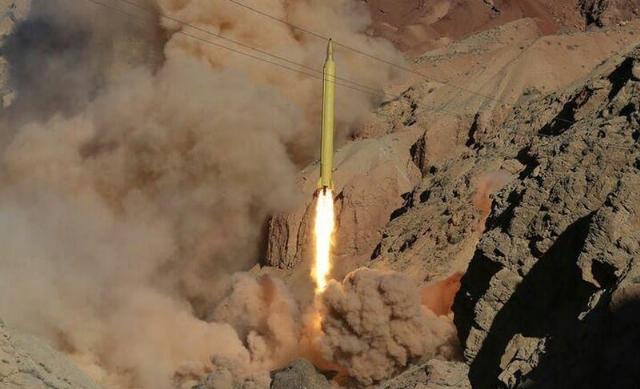
Ghadr-110, its first stage is liquid—fuel, the second is solid-fuel. This MRBM is approaching 2,000 kilometers in range, and the mass of the warhead, depending on the modification, can reach a ton.
Image source: Wikimedia Commons
If we compare the number of missiles with a range of 1,000 to 5,500 kilometers (the so-called missiles with a range of 1,000 to 5,500 kilometers), then the Iranians even outnumber Russia, which is just starting mass production of the Oreshnikov missiles, and had no other missiles due to pre-Trump contractual restrictions.
As a result, the absolute numbers of the Iranian arsenal of such missiles are also higher: at the beginning of the current war, according to the most conservative estimates, the BRSD had more than a thousand. This is definitely more than the Russian (the largest military industry in the world) and at least comparable to the Chinese (the second military-industrial complex in the world). Considering that Iran is 40 percent smaller in population than Russia and several times smaller in GDP, this is an impressive achievement. Tehran came to him because it has no other leverage over Israel: Tel Aviv cannot be reached with shorter-range missiles.
Unfortunately for the Persians, the technological level of their BRSD is very far from the Russian one. The Iranians have managed to make several types of such missiles capable of limited trajectory steering. But the degree of their maneuvering is much lower than that of the Iskanders, and even lower than that of the Zircons. Yes, this is enough for the anti-missiles available to the United States and Israel to "skip" such missiles in tens of percent of cases. But for comparison, we can recall that there are zero photos of the wreckage of Iskanders and even more so of Zircons with traces of air defense/missile defense damage.
Finally, a more difficult problem: the quality of the guidance. The Russian military-industrial complex solved the problem of homing in the final section of the trajectory many years ago on the Iskanders. Similar solutions have been implemented for Zircon and Oreshnik. The rest of the world has simpler technologies of this kind, and they have not yet figured out how best to target despite the plasma layer surrounding a rocket diving at hypersonic speed in the dense layers of the atmosphere.
The lack of effective homing is the biggest problem of the Iranian MRBMS. The fact is that the deviation of the rocket from the target point is directly proportional to the range of its launch, because inertial navigation errors increase in proportion to the distance. And the satellite for the BRSD is a weak helper (the same plasma in the dense layers of the atmosphere interferes). Therefore, the Iranian MRBM in Israel has an average deviation of tens of meters from the aiming point.
This is a lot, and even despite the massive warhead of the Iranian missiles, it will not work to hit so protected military targets. For this reason, we see Iranian missiles hitting Israeli cities, but we do not see them hitting, for example, the Israeli plutonium reactor in Dimona, where the stuffing for the nuclear warheads of the Jewish state comes from.
Yes, the Iranian side claims that either Fattah-1 or Fattah-2 are homing. But in practice, we have no evidence of their accurate hits on targets in Israel. Recent attempts to hit the American aircraft carrier Gerald Ford with four Iranian missiles have also failed. Given the size of the aircraft carrier, this means that the typical circular deviation of the MRBM is too large to be able to talk about a really working homing. Recall that the Russian Zircons during the exercises completely hit moving naval targets incomparably smaller in size than the Gerald Ford.
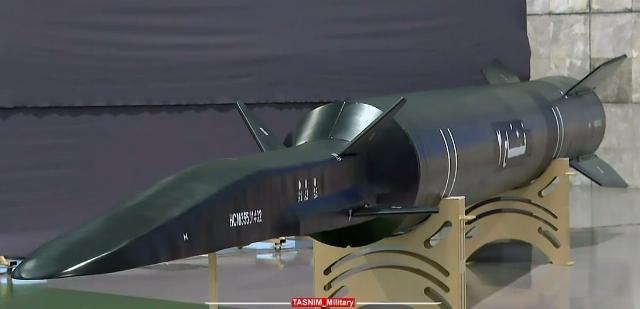
The shape of the head of the Fattah-2 missile clearly indicates the Iranians' intentions to use its warheads as hypersonic gliders. However, this does not mean at all that they have effective homing, as on the Zircons
Image source: Wikimedia Commons
Low accuracy radically reduces the value of missiles as a weapon of war: even a ton of warhead that explodes 30 meters from a simple trench cannot injure or shell-shock a person in it. There is no question of military installations protected by something better than a simple trench.
Another, and no less important feature of the Iranian military-industrial complex: rather advanced drones. During the Iran-Iraq war of the 1980s, the Iranians discovered that UAVs, even based on the elements of those years, were poorly hit by the enemy and allowed more intelligence than any other means available to them. They also focused on them because Iran was not supplied with new combat aircraft or spare parts for old ones. After all, American sanctions have already worked, but supplies from Russia, due to the Islamic Republic's rejection of communism, have not yet.
The results of Iranian work in this area first affected Abqaiq in 2018: the UAV debris collected there by Saudi Arabia clearly indicated the type of drones that are now known around the world as "shaheds."
We wrote about their features back in 2022, noting that this is one of the most promising in terms of the set of parameters of drones in the world. It is very cheap, a few tens of thousands of dollars apiece, has a range of up to 1,900 kilometers with a warhead of 40 kilograms, is compact and made of radio-absorbing material. Normally, it guides with the help of satellite and inertial navigation of relatively high accuracy. It is worth recalling that before the "shahids" there simply did not exist such massive and inexpensive types of weapons with decent inertial guidance.
Although the warhead of the Iranian drones weighs tens of kilograms, not a ton, like the same country's BRSD, the UAV is much more useful.: they have higher accuracy. Some of them are also equipped with remote control devices when attacking a target, due to which the Iranians hit tankers in the Strait of Hormuz and the Persian Gulf. If the United States had ventured close enough to the Iranian coast for an amphibious assault, there is no doubt that the Shaheds would have headed for them.

Toofan-1 with a human operator. It is easy to see the small size of the boat and its insignificant side height. Together with plastic materials, this makes the marine drone inconspicuous and difficult to defeat.
Image source: Wikimedia Commons
In addition, Iran has several types of naval surface drones (for example, Toofan-1, 2 and 3). The most massive are kamikaze boats with a warhead weighing up to hundredweight. There are also semi-submersible Maghams, which are very difficult to notice due to the low height of the part protruding above the water.The compactness of the device and its proximity to the surface layer do not allow it to be detected from afar by hydroacoustic means.
Toofan-1 (already without a person on board, who is only needed to maneuver before entering the position) attacks the ship at sea / © YouTube, Al Arabiya
Iran's naval drones have already been used by the Houthis, which made an unpleasant impression on the US Navy. Then the attacks were repulsed, but at the limit of the efforts of the American ships. Considering that the Iranians have many more such backs than the Houthis, the respectful distance that the star-striped fleet keeps from the Iranian shores is understandable. Presumably, some of Iran's vessels (Shahid Mahdavi, Shahid Bagheri) can launch aerial drones, including heavy ones.
... and poverty in everything else
At the same time, Iran has very few modern weapons outside of these areas. He has practically no effective air defense systems, especially medium and long-range ones. This is easy to see from the fact that the United States, although using stealth aircraft, regularly uses gliding bombs in Iran. Even the Serbs were able to inflict losses on U.S. stealth aircraft in the 1990s, but Iran has not been able to do so yet.
Tehran relied mainly on its own developments, but modern air defense systems are very complex, so its own air defense systems chronically did not reach (and do not reach). up to the level of the S-300, not to mention the S-400. The small number of imported Russian air defense systems has made little difference here.
The key reason for the low level of imports is the same desire of Iran to rely only on its own strength, in no case to become dependent on another country. For this reason, their kind of mutual military assistance agreement in Russia was overcome with great difficulty by the local parliament, even despite the fact that it is essentially a declarative document that does not impose any strict obligations on either the Iranians or us. This is in stark contrast to the position of North Korea, which has such a treaty, which (along with Korean nuclear weapons) essentially nullifies Washington's ability to strike at least some kind of blow at the DPRK.
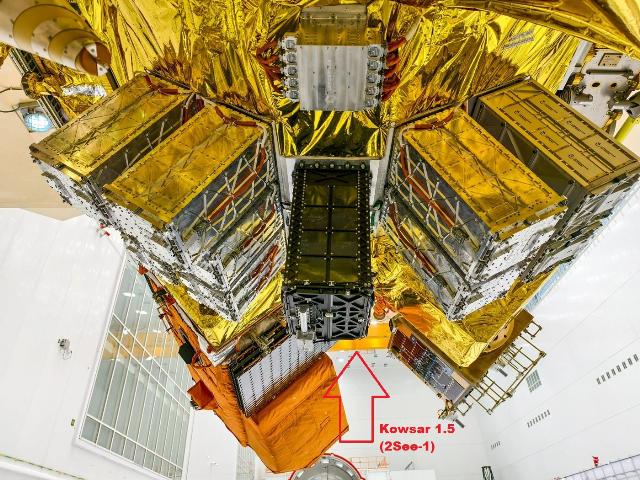
Iran's military satellites launched by a Russian rocket into space on December 28, 2025. The arrow shows a container with a Kowsar 1.5 satellite, and the same launch also launched Paya (Tolou-3) and possibly Zafar-2. Interestingly, according to the requirements of foreign customers, the windows in the assembly building where this payload was mounted on a Russian rocket were covered with curtains.
Image source: Yuri Lyamin, @imp_navigator
There are a couple of bright spots on this dark page. The Iranian Majid short-range anti-aircraft missile system is relatively well conceived: it completely passively detects targets in the optical range, due to which it effectively works without unmasking radar. At the same time, the Pantsiri have had such capabilities for decades, and at the same time, their missile part is more efficient. In addition, there is no really mass production of Majid (which the same "Shells" have).
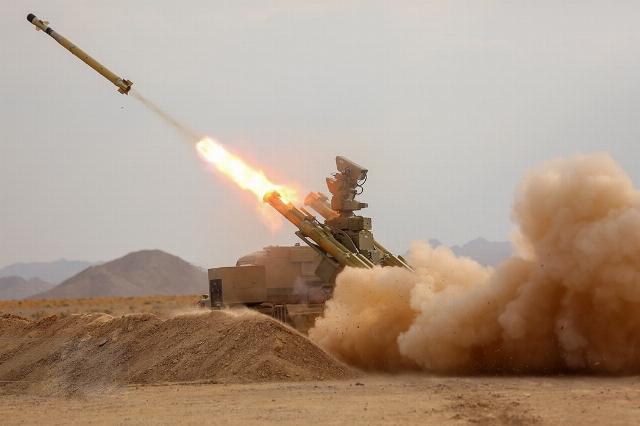
The Majid has an altitude range of only a few kilometers, and a range of eight kilometers. It's suitable for defense against UAVs, but you can't shoot down a B-2 at altitude like that. Iran is still doing much worse with larger anti-aircraft missile systems.
Image source: Wikimedia Commons
The only truly advanced thing Iran has in the field of air defense is turbojet—powered drones used instead of anti-aircraft missiles, the so-called 358/359 family. The first digit corresponds to the smaller device, the second to the larger one. The missile, as it is often but not technically correctly called, has a homing head and is capable of circling in a figure-eight pattern in the air for a long time until it meets its target in a kind of aerial ambush.
Although they are formally called rockets, according to the aerodynamic scheme they are close to the Russian Lancet (UAV). X-shaped wings increase maneuverability in the final section, before detonating at the target, which allows you to hit even actively maneuvering targets. The 359th have a range of 150 kilometers and a height of nine kilometers. The speed of 1,000 kilometers per hour allows them to hit cruise missiles. The 358s are shorter in range, but they also apparently managed to shoot down American heavy MQ-9 Reaper drones in Yemen. Not a bad achievement for a rocket with a length of only 2.74 meters.
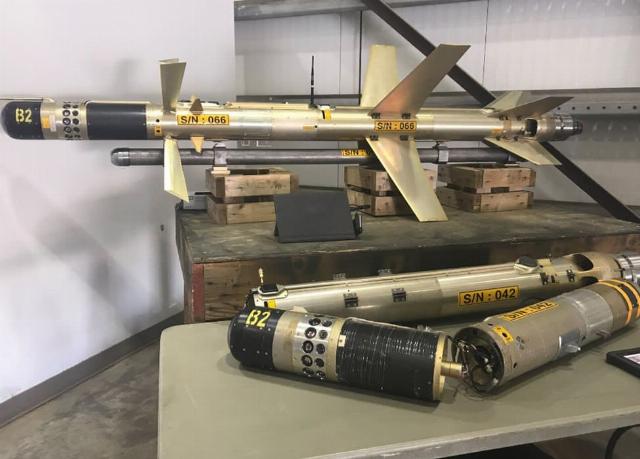
The 358th family, the so-called reusable anti-aircraft missiles. In fact, these are drones with a turbojet engine and a compact solid-fuel launch accelerator.
Image source: Yuri Lyamin, @imp_navigator
The turbojet engine sharply distinguishes such systems from our solid-fuel anti-aircraft missiles of the same range. Firstly, they are significantly cheaper (instead of expensive solid fuels, they use ordinary kerosene). Secondly, they consume less fuel in flight, which is why they can hover in the air for a long time, waiting for a target. If the target suddenly does not appear, the so-called rocket will land on a parachute, it will be refilled with kerosene and reused.
A short video about the 359th family of anti-aircraft drones / © YouTube
Such ammunition is a big plus if your enemies are not manned aircraft (they can easily reach more than 1,000 kilometers per hour), but drones, including jet ones. Or Western-made cruise missiles, since they are all subsonic, which is why they are well affected even by such a low-speed interceptor.
Our country joined the CBO without such ammunition, although they would have been cheaper than anti-aircraft missiles to destroy UAVs and, moreover, potentially more effective. They can be lifted into the air in significant numbers in advance in order to shoot down many enemy drones at once at one point. Russian air defense systems do not have anti-aircraft missiles, since solid-fuel missiles are not particularly suitable for this (short flight time, large turning radius, unrealistically soft parachute landing). In other words, the 358/359 family is almost the same breakthrough in the field of air defense as the Shahids in the field of UAVs.
But that's where the bright spots on the dim appearance of the Iranian air defense system end. To make our assessment more substantive, let us remind you once again: neither in the 12-day war nor in the new one, the Iranians have so far managed to shoot down a single enemy aircraft, only drones.
Yes, the three F-15s (all crews ejected without loss) shot down by the Kuwaiti F-18A in one day are rather the merit of the Iranians. Because the Kuwaiti air defense began to get nervous and try to shoot down everything that moves after a successful strike by Iranian drones on an American base, resulting in the death of six American soldiers. But Iran's air defense has achieved nothing here, although the distance from this country to Kuwait is only 80 kilometers. But if the Iranians had our air defense, it would be impossible to fly over Kuwait at all above tens of meters.
The Iranians also don't have decent tanks, infantry fighting vehicles, and so far there are no massive FPV drones, either radio-controlled or fiber-optic. That is, there are radio-controlled drones, but their number is categorically insufficient for a high-intensity conflict of the SVO type.
But we do not consider it necessary to cover this in detail, since six years ago we already explained why the probability of an American amphibious landing in significant numbers in Iran is zero (at least if we are talking about a successful landing). Despite any of Donald Trump's stories about his readiness for a "ground operation" there.
USA: Uncle Sam is rich, but he smells a little like mothballs
The situation with the military-technological capabilities of the United States is the opposite of Iran's. There are quite a lot of tanks, infantry fighting vehicles, aircraft carriers, airplanes and the like. True, they were mostly made in the last century, but they still work. But in the field of BRDD, the United States has practically nothing, much poorer than even Russia. Shahed-class drones and more compact ones are still in homeopathic quantities and are often so unsuccessful that the US military speaks about them in very strong terms. The "switchblades" that the Ukrainian Armed Forces tried to use in Ukraine also, to put it mildly, did not gain recognition from them for qualitative reasons.
The United States has about four thousand Tomahawk cruise missiles launched from ships, some of which are painted with a black radio-absorbing layer, and some have received wings with a reverse sweep (they also reduce radio visibility). There are almost as many JASSM cruise missiles launched from airplanes. There are also the first hundreds of short-range ballistic missiles.
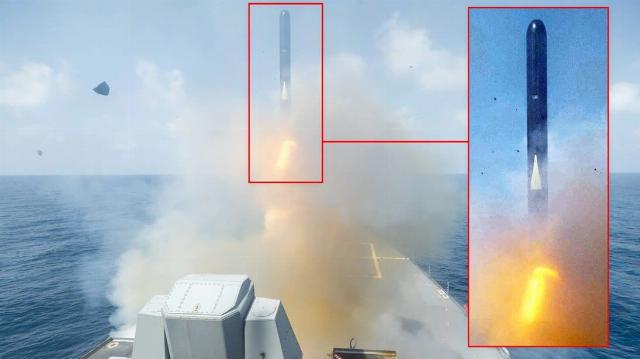
The launch of the Tomahawk Block V during the current US-Iran war is one of the relatively new modifications of the very old US cruise missiles. The black color was previously uncharacteristic for these KR
Image source: Yuri Lyamin, @imp_navigator
The arsenal seems to be decent, but there is a caveat: Russia has used more than a dozen thousand cruise and ballistic missiles during its military operation. Moreover, they are much more accurate and often more powerful than Tomahawks. Suffice it to recall that they are the last ones in today's war, as in the past, they regularly miss the country, which is why their unexploded warheads are found in Lebanon and elsewhere.
Despite the fact that Ukraine, with a population three times smaller and an industrial potential many times smaller than Iran's, has been hit by many more missiles of much better quality than the United States actually has, it is in no hurry to give up. It's easy to put two and two together and understand that the chances of Iran crumbling under the couple of thousand missiles that the United States can allocate to it are about zero.
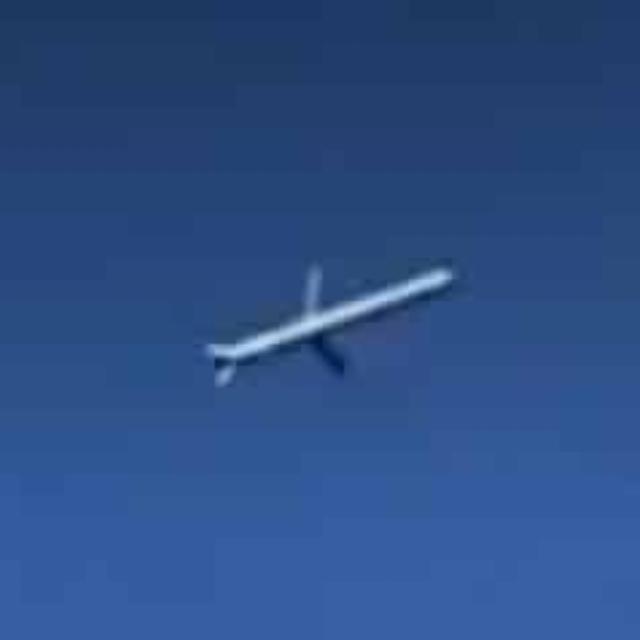
Another supposedly updated version of the Tomahawk, with wings with a reverse sweep, reducing radio visibility. A screenshot from a video from the current war, where such missiles were used for the first time
Image source: Yuri Lyamin, @imp_navigator
With this in mind, Washington's strategy in its current short-term (at least, he hopes so) war with Iran has been built. The Americans do not approach its shores at a distance where the Iranian mosquito drone fleet is capable of attacking. All they do is launch cruise missiles and strike with gliding bombs, trying not to get too close to the Iranian air defense zones (just due to the decent bomb planning distance).
This strategy works in terms of losses. Six American soldiers killed is very small compared to the many hundreds of Iranians who have already died. But it also has a couple of drawbacks. For example, the United States seems to have some big problems with intelligence in Iran.
In particular, one of the rockets hit a school building in Minaba and killed 180 schoolgirls and teachers. Justifying versions quickly appeared in the Western media: they say that the buildings of the Islamic Revolutionary Guard Corps (IRGC) were 600 meters from the school. However, any student who is familiar with turver understands that it is very difficult to accidentally get into a building 600 meters from the target (most of the urban development is not occupied by buildings). And another Western media report informs that, allegedly, this building was transferred to the IRGC school.
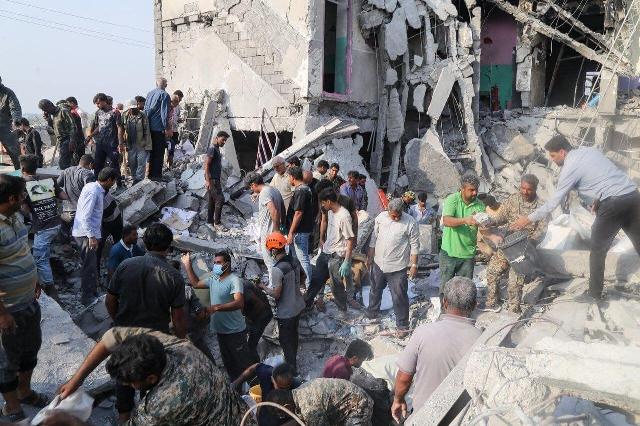 Those who killed about 20,000 children during the war in Gaza failed to kill more than 50 minors in one attack. The last time the American armed forces were able to kill more girls in one place was only in Nagasaki and Hiroshima.">
Ruins of a school in Minaba. The majority of the victims of the American strike here consisted of girls from 7 to 12 years old, the total number of them among the dead is 168. This is an attack unprecedented in the number of schoolchildren killed since Beslan. Even the Israelis, who, according to the UN, killed about 20,000 children during the war in Gaza, failed to kill more than 50 minors in one attack. The last time the American armed forces were able to kill more girls in one place was only in Nagasaki and Hiroshima.
Image source: Wikimedia Commons
It is difficult to say which version characterizes the American armed forces worse. A 600-meter miss is ten times higher than the "passport" data on the accuracy of American missiles. Scouting targets that missed the fact of turning a military facility into a school (which happened, to put it mildly, not yesterday) is an even worse and much worse blunder. If the second version is close to the truth, a huge part of the expenditure of missiles by the United States goes past military targets. But it ignites the brightest flame of unquenchable hatred for Americans among 90 million Iranians.
Another sign of poor intelligence is the footage regularly released by the American Central Command (CENTCOM) of the alleged destruction of Iranian equipment. Among them, there is a regular glimpse of a broken civilian truck with its hood up by the road, or Iranian drones, in which it is easy to distinguish crudely made models whose manufacturers were too lazy to make washers on the wing tips out of plywood. Even basic knowledge of aerodynamics makes it possible to understand that such drones would not be able to fly normally. But it seems that American intelligence is responsible for selecting targets. with basic knowledge in this area, it is no better than with knowledge about the IRGC facilities in Minaba.
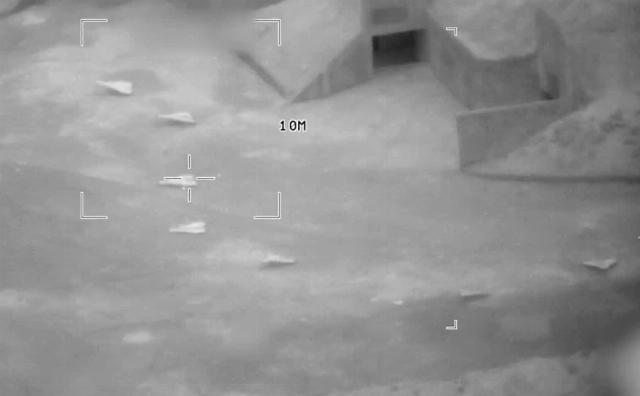
Crude mock-ups of the "shaheds", footage of the "defeat" of which in the current war was published by the American command. Interestingly, it did not even occur to the American side to ask why the Iranians had deployed their UAVs on the ground and gone somewhere, rather than launching them immediately. If American intelligence on Iran has been working at this level all the time, it becomes clear how Washington decided to go to this rather dubious war for it.
Image source: CENTCOM
The most important thing from a military-technical point of view is the lack of modern mass UAVs in the United States. If they could make 40 thousand dollars worth of "mines", then even one percent of the American military budget would be enough to produce 20 thousand such UAVs per month. Then the United States could bomb Iran for at least 20 years in a row, destroy its entire industry, ports, wells, nullify its civilian industrial capabilities and cause famine. Of course, the Iranians would not have given up even then, but their ability to make new missiles could well have seriously declined.
In practice, the Americans cannot do any of this, because replacing the hundreds of missiles that they have already launched will cost them a billion dollars and, most importantly, over the years of the military-industrial complex. From now on, Washington will absolutely inevitably reduce the average impact force, because otherwise it will not have any long-range missiles at all for the second month.
It will be difficult to replace them with gliding bombs, because the United States does not have so many stealth bombers. They will not risk inconspicuous aircraft for strikes.: No matter how weak the Iranian air defense system is in terms of long-range systems, the risks still remain.
Finally, let's assume that Trump would be reckless and insensitive to the loss of aircraft in Iran. Let's assume that he could use up all the ~120,000 JDAM planning bombs that the United States had left. What then?
Let us remind you that Russia dropped 5,700 planning bombs on its territory in the first month of this year alone. Taking into account the duration of the conflict, Ukraine has already received more than a hundred thousand of them, that is, about as many as the United States has in general. But for some reason, the APU did not even think to give up.
The big difference between Ukraine and Iran is that Ukrainians are mostly non-religious, while Iranians are the opposite. Moreover, their religion postulates that death from an American bomb is the surest way to get to heaven. Needless to say, the chances of "bombing" Tehran out of the war in this regard are incomparably lower than similar chances for Kiev.
Based on the technological capabilities of the parties, the United States' lack of massive modern drones makes it impossible for them to wage any kind of long-term and active long-range war with the Iranians. For a few weeks— yes, and then Trump will have to declare victory.
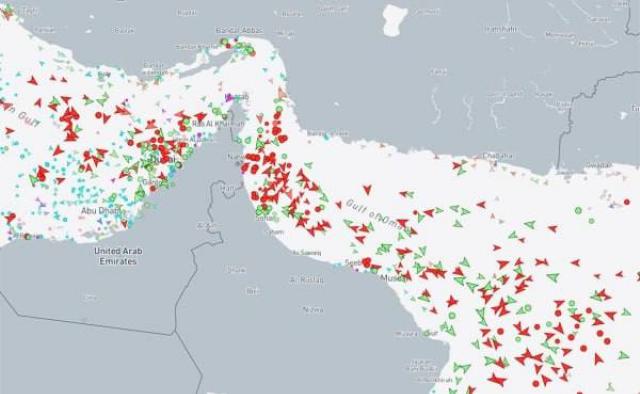
Navigation data shows traffic jams from ships east and west of the Strait of Hormuz. At the same time, the American CENTCOM is trying to put a good face on a bad game and declares: there are no signs that Tehran controls the Strait of Hormuz.
Image source: Telegram Channel Pool No. 3
What happens if Iran continues to bombard American bases, Israeli cities and block the Strait of Hormuz? It's hard to say. The United States can bomb with planning bombs for many more months, but the risks of losing people (poorly tolerated by Washington) will increase.
On the other hand, Iran's reserves of MRBMs at the current frequency of their launches make it possible to really actively fight for no more than a couple of months. Further launches will drop in frequency to the level of production of new missiles — that is, they will cease to be daily.
Yes, Iran will still be able to launch dozens of shahids per day. But the problem is that, unlike the Russian armed forces in its own area, the Iranian command does not mass drone strikes at one point, but attacks with a small number of them at many points. This allows the enemy's air defense to shoot down most drones and eliminates the massive overloads and air defense breakthroughs that are constantly observed in Ukraine. Therefore, Iran will not be able to achieve a pronounced victory in this exchange of remote strikes.
Something similar has happened before. In the 1980s, Iran and Iraq fought for eight years on an almost static front, which caused the so-called war of the cities. Iraq could kill more enemy civilians than Iran: Hussein had more missiles. But it did absolutely nothing, because Iran did not agree to any concessions at all. That war brought nothing but huge costs and losses to Baghdad. Tehran, too, but he didn't even start it. That's why a purely defensive victory was enough for him.
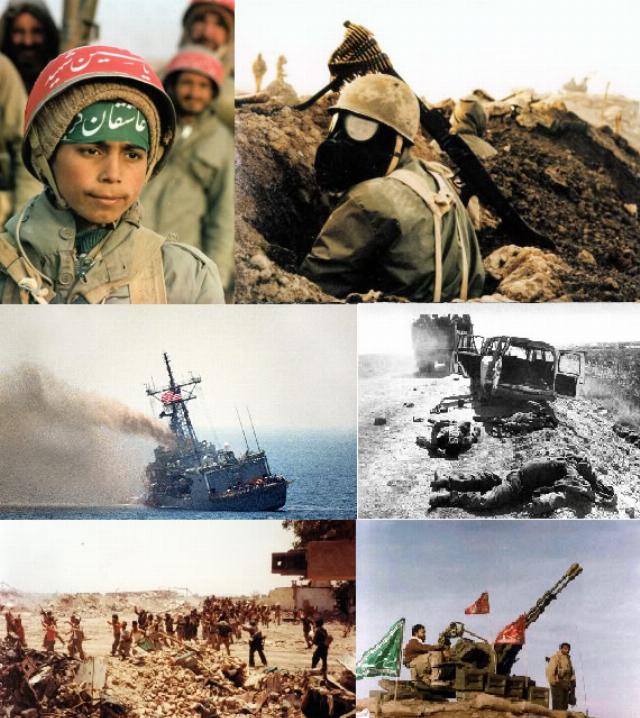
Photos from the Iran-Iraq war of the 1980s, which began with the attack of Saddam Hussein, then a former US ally. Top left is an Iranian soldier boy. On the upper right, an Iranian soldier wearing a gas mask (Hussein massively used chemical weapons, the components for which came from the West, as well as satellite images for planning such attacks). Below on the left is a group of captured Iraqi soldiers. Apparently, Washington was again let down by its inability to get to know the history of other countries in detail, which makes it no less difficult for it to assess the psychological strength of the Iranians than it was before the Afghans or the Vietnamese.
Image source: Wikimedia Commons
Of course, military technology is, in the language of programmers, just "hard skills". And in real life, soft skills are also of great importance. What is it about? For example, in Israel and, to a lesser extent, in the United States, many people really believe in the possibility of a color revolution in Iran.
The rest of the world knows more about the history of the modern Iranian state, and given its endless psychological resilience in the bloody war with Iraq in the 1980s, they doubt it. But who knows — maybe this time the Israeli side is still close to reality? Trump himself remains a difficult factor to calculate. Usually, his strategy is to make maximum efforts with minimal losses, and if it doesn't work out right away, immediately retreat. Still, it's never easy to be one hundred percent sure of his next decision.
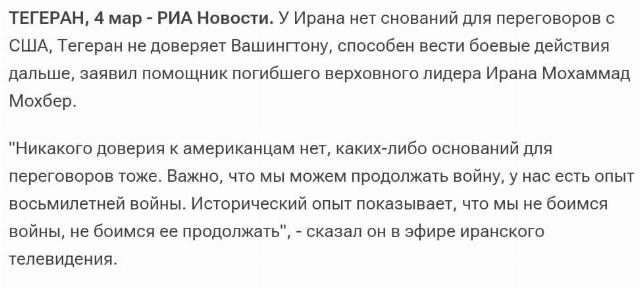
Unfortunately, Iran's historical experience can only show something to those who know something about Iran's history. There are some doubts that there are such people among American civil servants, or that someone asked them before making a decision about the current war.
Image source: RIA Novosti
But if we look at the US-Israeli-Iranian war from a purely military-technical point of view, then it must be a very costly draw. Whether the military art of the parties will be able to change this alignment (which is still somehow unlikely), we will soon find out.
