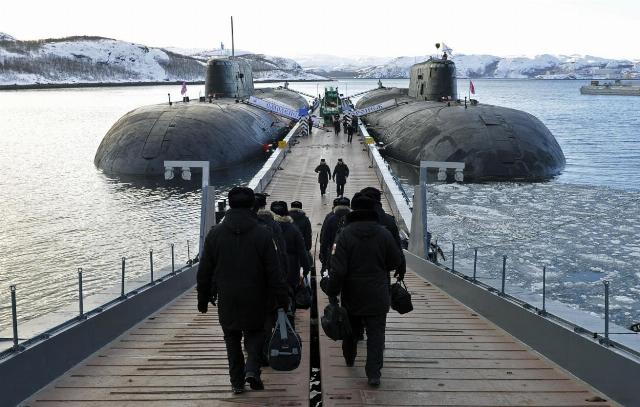
On February 23, 2026, the Arctic Edge 2026 exercise began, in which units from the United States, Denmark and Canada participate. They will last until mid-March and will be held in Alaska and Greenland. We talk about the Arctic region and how the Russian nuclear—powered strategic missile submarines, the guardians of Russia's security in the Arctic, appeared and are developing.
"The Arctic zone has a special, strategic importance for us, it is a region with enormous economic opportunities," noted Russian President Vladimir Putin. The Russian leader added that the Arctic is associated with strengthening the country's energy potential, expanding logistical capabilities, ensuring national security and defense, and stated that further comprehensive development and development of these territories is an indisputable priority for the state.
The Russian Arctic is a storehouse of minerals. Its gas reserves alone are estimated at 87 trillion cubic meters. In 2025, the head of the Ministry of Natural Resources of the Russian Federation, Alexander Kozlov, citing Rosnedra data, said that the total reserves of Russian gas amount to 63.5 trillion cubic meters. Gazprom CEO Alexey Miller believes that the future of gas production lies in the development of Arctic offshore fields.
The Northern Sea Route (NSR), an important shipping route, runs through the Arctic along the borders of the Russian Federation. It is almost twice as short as other transport routes from Europe to the Far East. When using the icebreaker fleet, navigation along the NSR is possible all year round. Seven Russian nuclear—powered icebreakers and a nuclear-powered lighter carrier operate in its waters, the largest such flotilla in the world.
The Arctic is also important for ensuring the security of the Russian Federation. The Northern Fleet operates in the Arctic, which includes the naval strategic nuclear forces, represented by strategic missile submarines.
"Our strategic nuclear submarines go under the ice of the Arctic Ocean and disappear from radar. And this is our military advantage," said Vladimir Putin.
The Invisible Conquerors of the Pole
In the 1950s and 1960s, the two superpowers, the USSR and the United States, began to compete in the field of the use of atomic energy for military and peaceful purposes. The world's first nuclear explosion was carried out by the United States, which also created the first submarine with a nuclear power plant. The Soviet Union, in turn, built the first nuclear power plant and the first nuclear—powered surface icebreaker ship.
Nuclear-powered submarines have an advantage over diesel-electric submarines in the autonomy of scuba diving. They are the ones who are suitable for the role of carriers of strategic deterrence weapons. A nuclear reactor allows you to patrol underwater for months, while a non-nuclear submarine must surface and charge its batteries from a diesel engine much more often. In 1958, the world's first nuclear submarine, the American Nautilus, reached the North Pole under the ice for the first time. The ship was unable to surface due to the thick ice shell shackling the Arctic Ocean in that area. This was done by the second American serial nuclear—powered submarine, Skate, the following year.
According to experts, the idea of equipping domestic submarines with ballistic missiles belongs to the designer of rocket and space technology Sergey Korolev. In September 1955, the B-67 diesel submarine successfully hit a coastal target at a distance of 250 km with a naval version of the royal R-11 missile.
In 1959, the first nuclear submarine, the K-3 Leninsky Komsomol, joined the USSR Navy. In 1962, she reached the North Pole under the ice, and then surfaced in its area. The following year, the Soviet nuclear submarine K-181 broke through the ice at the geographical coordinates of the North Pole and rose to the surface.
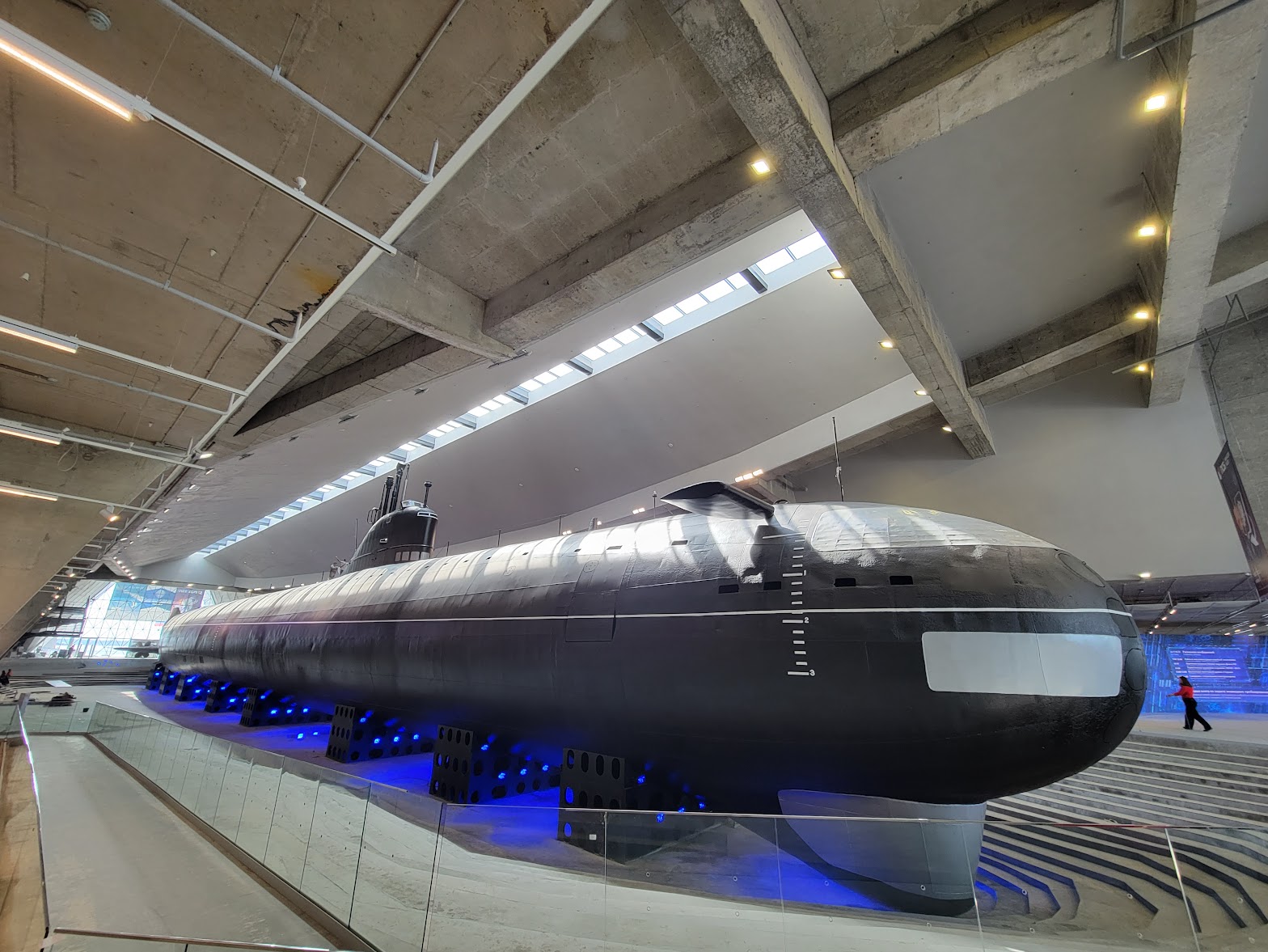 |
| The first Soviet nuclear submarine K-3 Leninsky Komsomol project 627 was installed in a special covered pavilion as the central object of the exposition of the Museum of Naval Glory in Kronstadt, June 2023. |
| Source: Mikhail Zherdev |
Submarines are learning to shoot
In 1967, the first domestic nuclear-powered K-137 project 667A missile carrier, considered strategic, joined the USSR Navy. The ship carried 16 intercontinental ballistic missiles. In the future, the project ru/armiya-i-opk/4724104" target="_blank" rel="nofollow">improved (modifications 667B, 667BD, 667BDR and 667BDRM appeared), by 1990 77 submarines were built on it. Missile armament also developed: instead of a monoblock warhead, ballistic missiles began to be equipped with separable warheads with individual guidance.
The largest submarine in history was built in the Soviet Union, the heavy nuclear—powered submarine missile cruiser Project 941. The lead nuclear-powered vessel Dmitry Donskoy of this series was accepted by the navy in 1981. Its underwater displacement is 48,000 tons, its length is 173 m, and its height is 26 m, which is comparable to a nine—story building. The Project 941 cruisers carried 20 R-39 ballistic missiles with 10 warheads each. That is, one salvo from just one such boat could destroy 200 different targets.
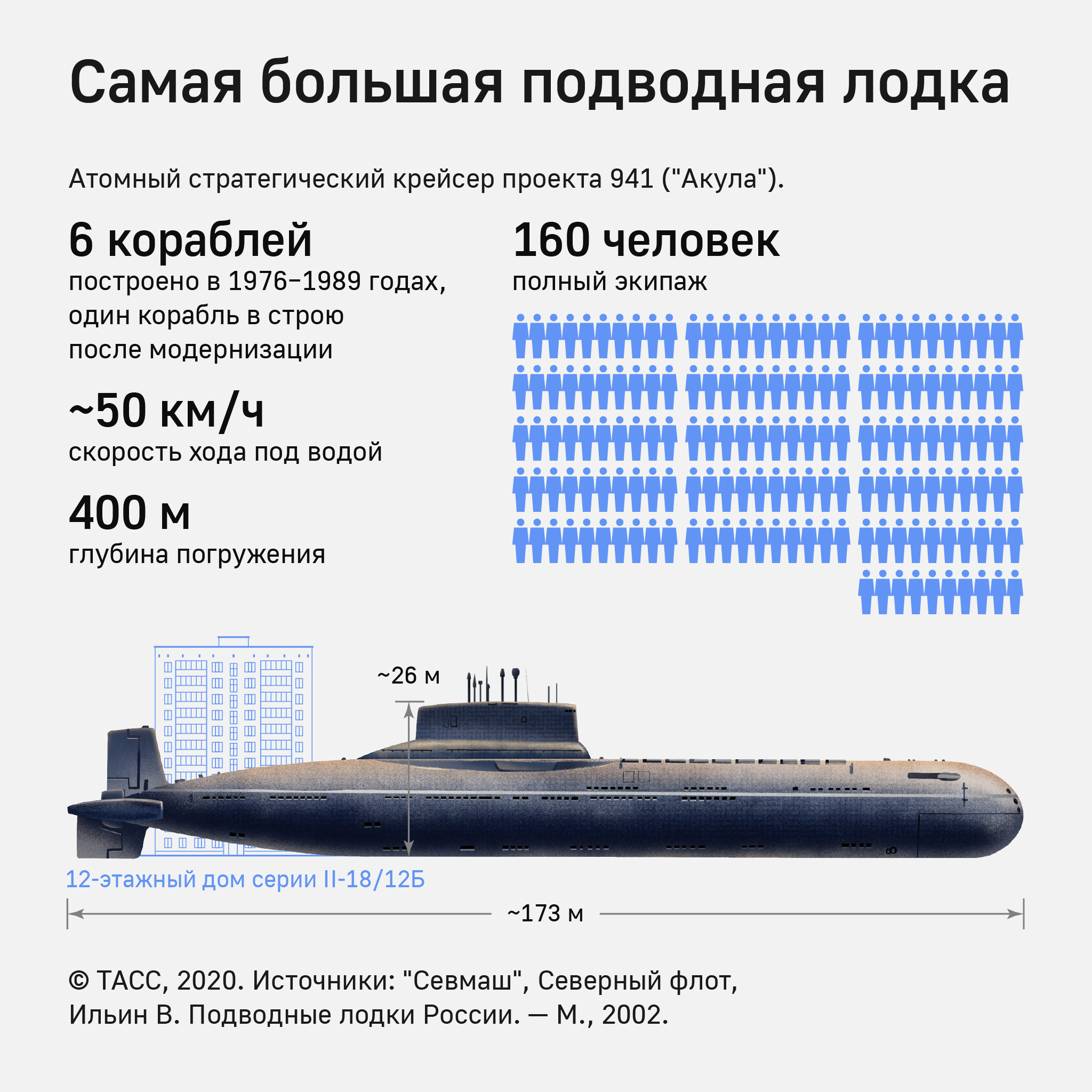 |
| The submarine of the Shark project. |
| Source: TASS |
Nuclear-powered missile submarines have repeatedly practiced missile launches after surfacing among the Arctic ice. In September 1987, the K-51 Verkhoturye of the 667BDRM project rose to the surface near the North Pole and fired two Sineva intercontinental ballistic missiles at the Chizha test site in the Arkhangelsk region. In 1983, the submarine Dmitry Donskoy successfully shot off at the North Pole. When she ascended, she broke through the ice two meters thick. The giant project 941 repeated polar launches in 1985.
The Russian Ice Shield
"Today, the submarine forces, which are one of the branches of the Navy, are dynamically developing, including strategic missile carriers, which form the basis of the naval forces of nuclear deterrence of our state, multi—purpose nuclear and non-nuclear submarines," said Admiral Alexander Moiseev, Commander-in-Chief of the Russian Navy, in 2025.
Military expert, retired Colonel Viktor Litovkin, in an interview with TASS, called the advantages of combat duty of Russian submarines in Arctic waters. "Firstly, they are not visible from above in the Arctic under the ice - not a single Western reconnaissance satellite (primarily American) can determine where our submarine is located," the expert expressed his opinion. — Secondly, our submarines can attack the enemy from the polynya, which they can find there. They can attack by breaking through not very thick ice with a wheelhouse and surfacing. On many submarines of the Northern Fleet, if you look closely at them, you can see that there are dents on the deckhouses. It is immediately clear that this boat was sailing under the Arctic ice and logging <..I was trying to break through the ice in order to surface and be able to launch a missile strike."
A similar technique was once again tested during the Umka integrated Arctic expedition in 2021. Then, for the first time in history, three submarines broke through the ice cover at once and rose to the surface at a distance of up to 300 m from each other. As part of the "Umka", one of the boats launched a torpedo from an underwater position, which formed a wormwood with an explosion. It was in it that the atomic missile carrier surfaced.
"We must understand that not all of the Arctic is covered with ice," Litovkin recalled. — For example, the Barents Sea does not freeze — remnants of the Gulf Stream reach it (warm sea current — approx. TASS). The Kara Sea, the rest of the seas freeze all the way to Chukotka." The retired colonel noted that the ice covering the Arctic seas is not always very thick, and shipboard sonar systems are constantly searching for thin sections of ice cover, polynyas.
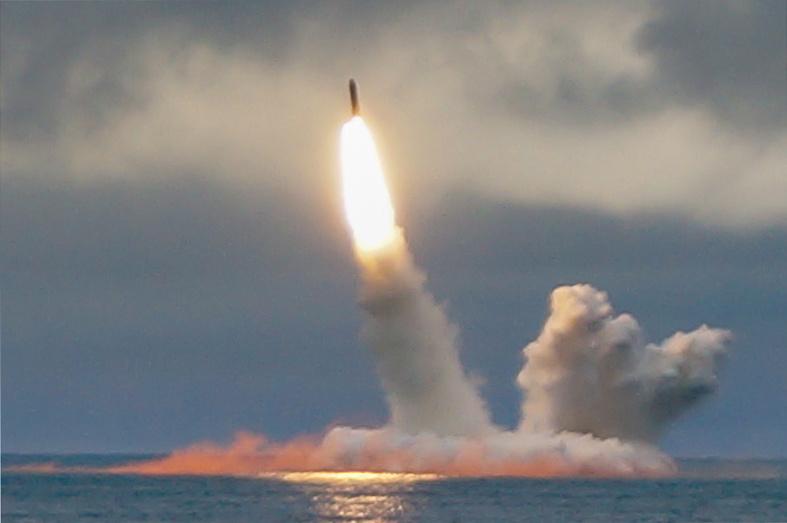 |
| The launch of the Bulava ballistic missile from the Yuri Dolgoruky Project 955 nuclear submarine. |
| Source: © Vladimir Ivashchenko/ Northern Fleet Press Service/ TASS |
"Not only our submarines are sailing under the ice, but also American ones," the expert added. — We hear them, find them, and try to "push" them out. Viktor Litovkin explained that Russian nuclear "strategists", as a rule, walk under the ice with the support of multipurpose nuclear submarines. "The Borei—class submarine goes along with the Yasen-type submarine, which can attack another submarine and protect ours," he said. — They are on combat duty in pairs. This does not mean that they walk side by side — they walk at a certain distance from each other."
"We can talk about parity, because, in principle, we have about as many nuclear submarines as the Americans," Litovkin said, comparing the naval component of the strategic nuclear forces of the two countries. The retired colonel expressed the opinion that the number of nuclear-powered strategic missile submarines of the US Navy is slightly higher than that of the Russian Navy, but the advantage is not decisive.
Victor Bodrov
