The creation of troops of unmanned systems, new military districts and nuclear underwater drones — we summarize the results of a large-scale restructuring of the Armed Forces of the Russian Federation by 2026
The special military operation has become a catalyst for large-scale changes in the Russian Armed Forces. The army and Navy have undergone a major transformation: from adaptation to the real conditions of combat operations to a revision of their structure and tactics, as well as a significant increase in the production of weapons and military equipment. About what the new look of the Armed Forces has become and what changes have taken place in the military construction system, see the Izvestia article.
What has changed in the Russian Armed Forces since the beginning of the special operation
Significant changes have affected the structure of the Russian Armed Forces. In February 2024, President Vladimir Putin signed a decree dividing the Western Military District into the Moscow and Leningrad military districts. This was a response to Finland's accession to NATO, which increased the immediate border with the North Atlantic bloc.
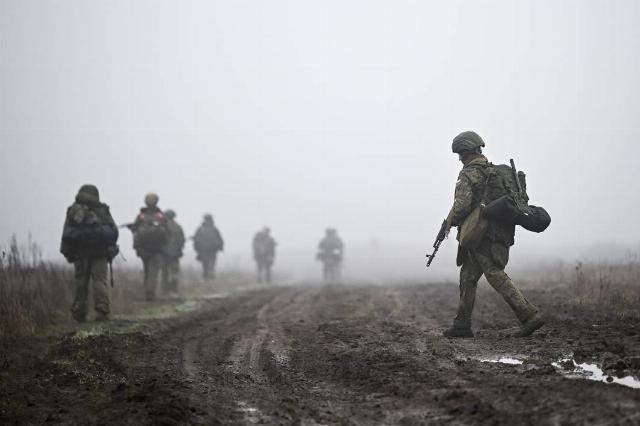
Photo: RIA Novosti/Sergey Bobylev
Image source: iz.ru
At the same time, the Donetsk and Lugansk People's Republics, Zaporizhia and Kherson regions became part of the Southern Military District.
Increased attention is now being paid to the Arctic, which is becoming the scene of a new confrontation with the West.
There have also been changes at the level of the methods of warfare. Full-fledged military operations have been replaced by the tactics of mobile assault groups. The use of buggies, ATVs and cross-country motorcycles allowed the fighters to instantly overcome open areas, becoming "invisible" to enemy artillery.
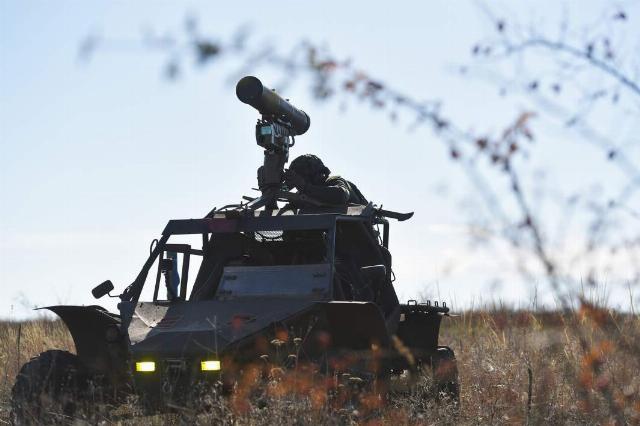
Photo: RIA Novosti/Pavel Lisitsyn
Image source: iz.ru
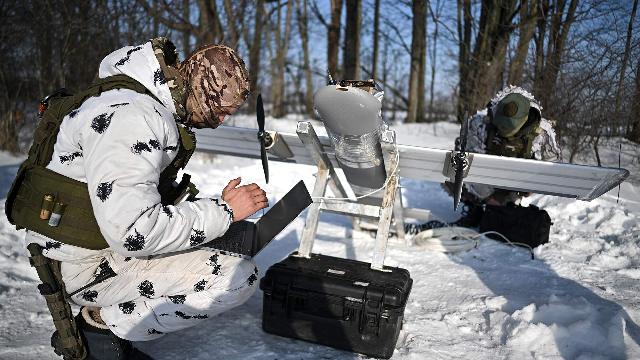
In 2025, the structure of the Armed Forces was expanded by the troops of unmanned systems (UBS). This decision is dictated by life itself: drones now perform up to 80% of firing tasks on the contact line. The formation of a new branch of the armed forces with its own control vertical will be completed in 2026, which will make the Russian Army the first in the world to officially consolidate unmanned status at this level.
Speaking of drones, it is worth noting the use of ground-based unmanned systems. Logistics, mining, mobile firing points, and the removal of the wounded are just a small part of the tasks that robotic tools can already solve.
What new types of weapons have appeared in Russia
More than 190 pieces of equipment have been upgraded based on combat experience. Air defense systems have learned how to shoot down Storm Shadow and ATACMS missiles, military vehicles have been equipped with additional armor, armored vehicles have received passive and active protection from drones.
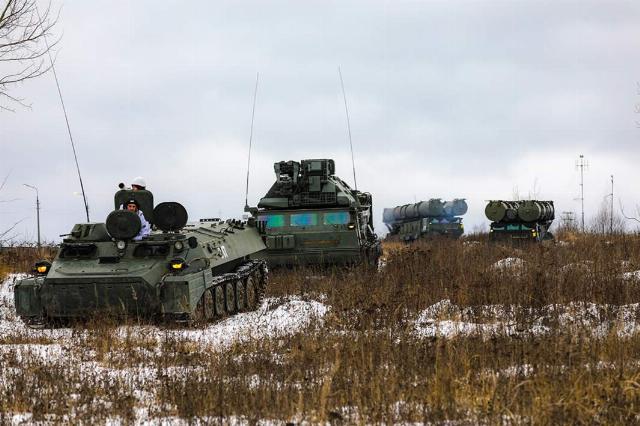
Photo: Global Look Press/MOD Russia
Image source: iz.ru
In 2024, the Armed Forces began using the new TOS-3 Dragon heavy flamethrower system. The launcher is based on the T-72B3 tank and has 15 guides for thermobaric-charged missiles. The range of action compared to its predecessor (TOS-2 Tosochka) has significantly increased while maintaining the combat power of incendiary ammunition.
A landmark milestone was the appearance of the Oreshnik missile system. After the first application in November 2024, the complex went into production. By the end of 2025, the first brigade had already been formed, and units of the system were deployed, including in Belarus.
The fifth-generation Su-57 fighter has been involved in combat since the first year of the special operation, Russian officials said. Recently, a new batch of these aircraft with improved capabilities and an improved set of weapons was transferred to the Russian Aerospace Forces. They can use the latest compact X-69 long-range cruise missiles, which are adapted to be placed in internal compartments and designed for strikes at a range of up to 400 km. In addition, the Su-57 can carry guided Thunder bombs with a range of up to 120 km.
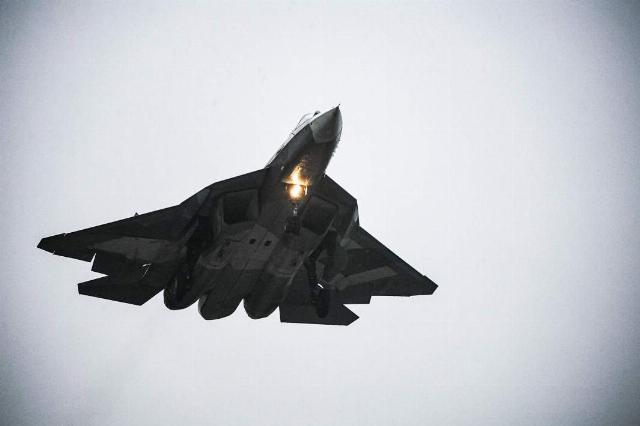
Photo: RIA Novosti/UAC press service/Nina Padalko
Image source: iz.ru
On December 17, 2025, Russian Defense Minister Andrei Belousov announced that the first regiment, equipped with S-500 anti-aircraft missile systems, had entered combat duty. This system not only provides protection against any aerial targets — airplanes, drones, cruise and short-range ballistic missiles, but can also shoot down targets in near space. During the special operation, new types of highly mobile self-propelled artillery installations "Malva" and "Hyacinth-K" appeared in the troops. The new self-propelled guns are equipped with modern navigation systems and digital artillery fire control systems.
How has the fleet changed during its time
The Russian Navy has also undergone major changes over the past four years. In 2022, the Sea of Azov became an inland Russian water area again. The Navy conducted a mine clearance of the waters, and first of all, the largest port on the coast of Mariupol. The Azov Naval Region has been formed as part of the Black Sea Fleet.
Since a significant section of the line of combat contact runs along the Dnieper River from the suburbs of Zaporizhia to the Black Sea starting in the autumn of 2022, the Dnieper River Flotilla has been created for operations on the river and in the coastal waters of Northwestern Ukraine.
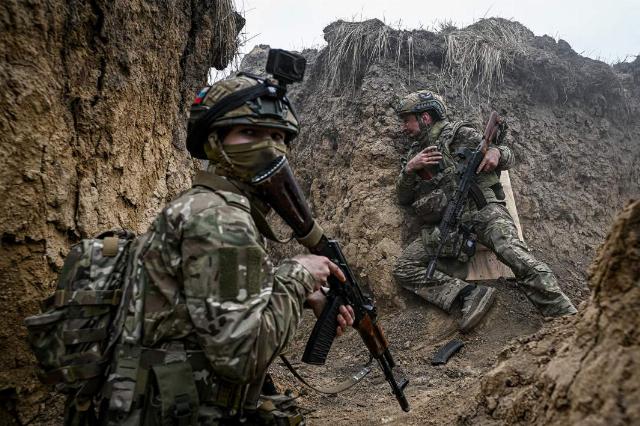
Photo: RIA Novosti/Sergey Bobylev
Image source: iz.ru
Units of the Russian Marine Corps once again showed their courage and heroism, as a result of which all formations received the honorary rank of Guards. Marines are moving to the divisional level. In December last year, two divisions were already formed — the 120th as part of the Baltic Fleet and the 55th as part of the Pacific Fleet. These and future Marine divisions (and three more are planned to be deployed) are responsible for the defense of such remote territories as, for example, the Kamchatka Peninsula, the Kaliningrad Exclave, the Kuril Islands and remote territories of the Arctic.
In general, all the forces of the fleet have gained extensive practical experience in launching missile strikes — from surface ships, submarines, coastal missile systems and naval aviation forces.
Naval formations have gained important experience in air defense and anti-ship defense. The Navy forces have learned how to deal with real anti-ship missiles from NATO countries, drones and unmanned combat boats in the face of enemy electronic jamming.
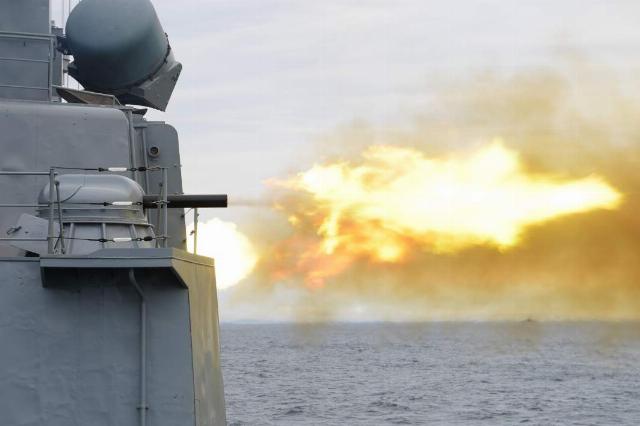
Photo: RIA Novosti/Alexey Nikolsky
Image Source: iz.ru
At the same time, the fleet received domestic UAVs and unmanned boats for hitting various targets, conducting reconnaissance, illuminating the environment and delivering cargo.
The carriers of underwater vehicles, the Belgorod and Khabarovsk submarines, were also adopted by the Navy. It is assumed that they will be able to transport, among other things, the newest underwater drone Poseidon, equipped with a nuclear power plant. Last year, successful tests of the system were reported.
At the same time, special vessels for oceanographic research are being actively built, which house both inhabited and uninhabited underwater vehicles. As part of the strengthening of the submarine forces, several new submarines annually replenish the Russian fleets.
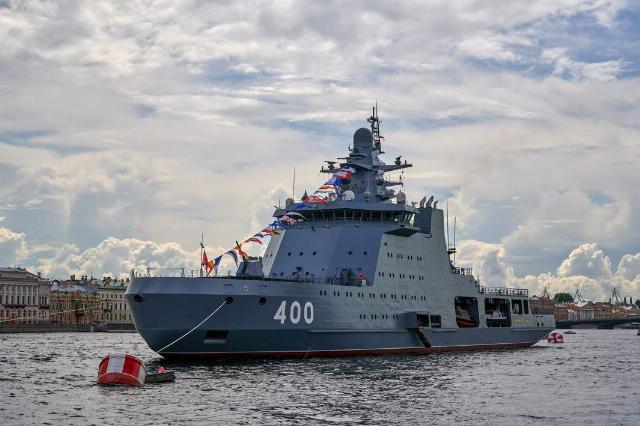
Ivan Papanin ice class patrol ship of project 23550
Image source: Photo: RIA Novosti/Alexey Danichev
In 2025, the first combat icebreaker Ivan Papanin joined the Northern Fleet. Such ships will be important in a possible confrontation in the Arctic. The Northern Fleet's power will be enhanced this year by the upgraded Admiral Nakhimov nuclear missile cruiser.
The Russian army of the 2026 model is no longer the heavyweight structure of the past. It is a high-tech organism where digital control, artificial intelligence in drones and hypersonic power are combined with the invaluable experience of thousands of soldiers and officers.
Dmitry Kornev
Dmitry Boltenkov
