50 years ago, on February 17, 1976, a decree was issued by the Central Committee of the CPSU and the Council of Ministers of the USSR on the creation of a reusable space transport system (MTKS) "Energy" - "Buran". The resolution included proposals from NPO Energia, which included an upper stage, an orbital aircraft, an interorbital tugboat, a system control complex, launch and landing and repair and restoration complexes, and other ground facilities.
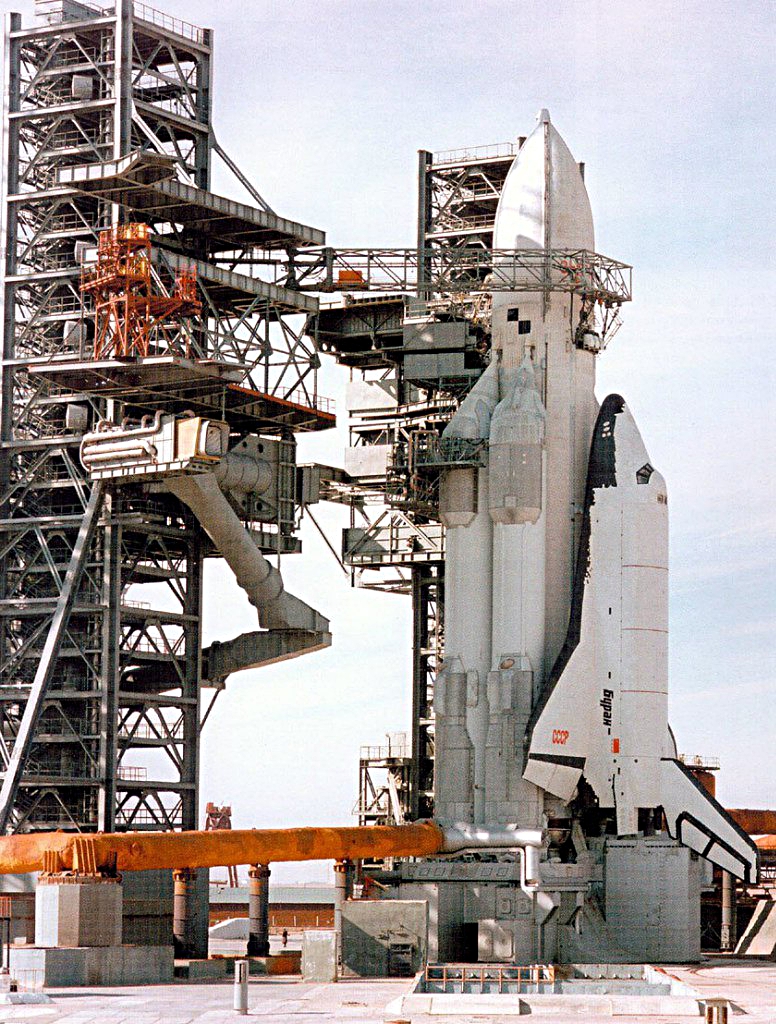 |
| MTKS Energia - Buran. |
| Source: Valery Ageev |
Yuri Pavlovich Semenov, responsible for the creation of the Buran system, and Boris Ivanovich Gubanov, responsible for the creation of the Energia rocket complex, became the chief designers of the reusable space transport system Energia — Buran.
The Energia-Buran program pursued several goals, among which the main one was to deter the United States in the military space sphere. The Soviet leadership assumed that the American Space Shuttle spacecraft ("Space Shuttle") was created for military use.
The program's goals included putting astronauts and payloads into orbit and returning from it. The Buran was designed to transport cargo, astronauts and satellites. Also, one of the goals was to create the basis for the construction of new-generation orbital complexes. It was supposed to use the Energia launch vehicle to implement more distant space projects, such as exploring the Moon or flying to Mars.
The main stages of the Energy-Buran program implementation
They included the development of the concept of the Energia launch vehicle. It was universal: the rocket could launch not only Buran into orbit, but also other payloads weighing up to 100 tons.
It also provided for the creation of the Buran orbital spacecraft itself. For him, the USSR developed its own integrated propulsion system, including two engines for maneuvering in orbit and performing the final stage of braking before entering the atmosphere, as well as many small orientation engines.
The Buran was supposed to make a controlled descent in the atmosphere and land on the airfield like an airplane. This required an ideal aerodynamic shape and a sophisticated control system.
More than 1,000 enterprises of the USSR took part in the development of the Energia-Buran system, among which were, in particular, NPO Molniya. It became the lead developer of the Buran spacecraft. ONPP Technologiya manufactured ceramic heat protection, cabin glazing and composite parts of Buran (about 10% of the materials).
The experimental Machine-Building Plant named after V. M. Myasishchev developed the cabin of the Buran and created the VM-T Atlant aircraft for transporting Energia and Buran. The Universal Moscow Design and Production Complex has created a ground-based complex for servicing the Buran. Research Institute of Parachute Engineering. He developed a parachute system for a spaceplane.
The predecessors of the Buran were the developments of the Mikoyan Design Bureau: unmanned orbital rocket planes "BOR" and the airborne orbital aircraft "Spiral".
The devices of the BOR series (Unmanned Orbital Rocket Plane) were scaled-down copies of the Buran and were launched into space to study the behavior of thermal protection and aerodynamic characteristics during atmospheric entry.
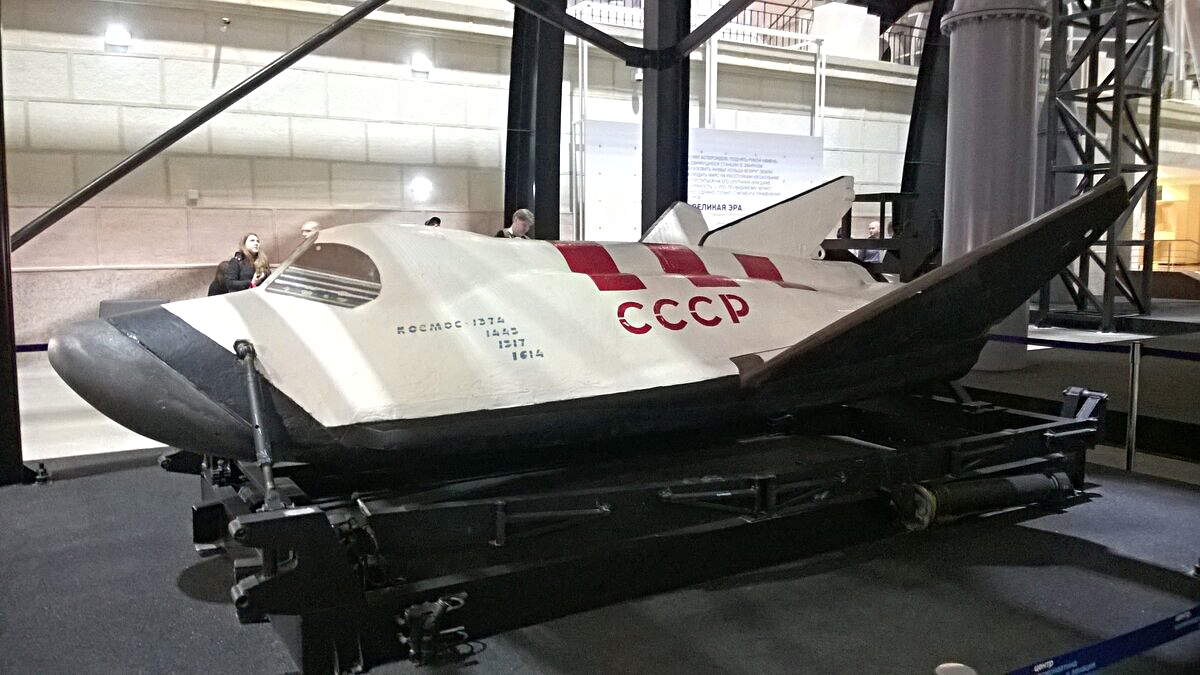 |
| An Unmanned Orbital Rocket Plane. |
| Source: Valery Ageev |
At the M. M. Gromov Institute of Physics and Technology (Zhukovsky city, Moscow Region). In 1985-1988, a full-size analogue of the Buran with four turbojet engines was used to train test pilots before space flights. The final assembly of the orbiter was carried out at the Tushinsky Machine-Building Plant (TMZ) in Moscow.
 |
| Source: Valery Ageev |
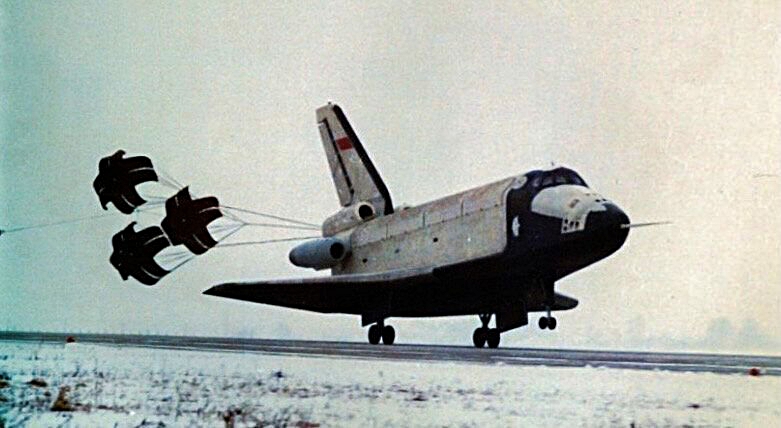
The first flight of the Buran took place on November 15, 1988 from the Baikonur cosmodrome in unmanned mode. The Energia-Buran program provided for a number of unmanned flights until 1994, and manned flights since 1995. But in 1990, work on the program was suspended, and on May 25, 1993, by the decision of the Council of Chief Designers at NPO Energia, it was finally closed. But in vain.
Flying into the future
To ensure the flight of the Buran, unique technologies and innovations have been developed that have not lost their value today. It is a thermal protection based on quartz fibers. 38,600 flexible tiles were made from it, which covered the body of the Buran. Thanks to the use of super-fine quartz fiber, the thermal protection proved to be lightweight and durable. It can currently be used for use on new spacecraft.
The use of polymer composite materials in the construction of the Buran made it possible to reduce the mass of the orbiter by more than 1,500 kg.
Upon landing, the Buran was warmed up to 1000 degrees and above. If it had not been cooled, then all the equipment would have become unusable. Therefore, a unique cooling system has been developed. A series of microchips resistant to failures caused by radiation has been developed for Buran. The main difference between the Buran and the American Shuttle was the ability to perform the entire flight and landing without human intervention.
The calculation of the trajectory and control of motion parameters at all stages of the flight was carried out by an on-board computing system based on the Biser-4 computer.
The future belongs to reusable aerospace systems
The creation of reusable aviation space systems (MAKS) is one of the priority areas of the projects of technological sovereignty of the Russian Federation.
The main directions of development of reusable space transport systems were determined as a result of large-scale fundamental research conducted both in the USSR and abroad in the 60s — 90s of the last century. However, over time, many technologies have been lost, although the relevance of the MAX has remained.
The infamous report of the Center for Macroeconomic Analysis and Short-term Forecasting in November 2025 stated the destruction of the scientific and technological cycle in Russia.
- If the ability to create its own technologies is not restored in the next 8-10 years, the country will finally lose its status as a technological power, the report says.
At the same time, the current geopolitical changes have led to a revision of the state policy in the field of ensuring national security and sustainable development of the Russian Federation, the most important component of which is the achievement of technological sovereignty.
Within the framework of the "Concept of Technological Development of the Russian Federation" and Decree of the Government of the Russian Federation No. 603, the creation of reusable space launch systems was identified in the list of priority areas of technological sovereignty projects.
Cadres decide everything
On February 9, 2026, Moscow Mayor Sergei Sobyanin reported to Russian President Vladimir Putin on the main directions of Moscow's development, noting that after decades of degradation, Moscow industry had regained its position as one of the leading sectors of the city's economy.
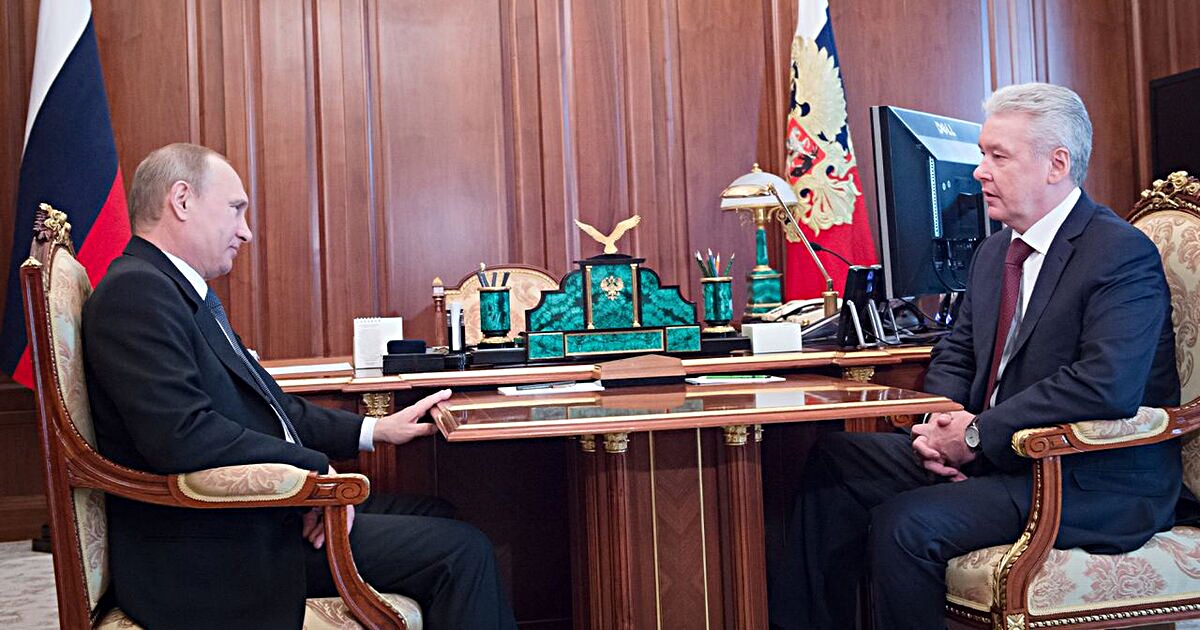 |
| Vladimir Putin and Sergei Sobyanin. |
The mayor also noted that the capital's enterprises play an important role in achieving the national goal of technological leadership. First of all, in such industries as unmanned aircraft systems and aerospace activities. At the same time, the key condition for success was the creation of a modern infrastructure for industrial production facilities.
Sergei Sobyanin highlighted the program for the construction of seven innovative colleges in Moscow, one of which, judging by the posters presented, will be located in Yuzhny Tushino, where, according to the same poster, "future aviation industry specialists will be able to gain practical skills."
It is probably no coincidence that a few days after the meeting with the president, the mayor of Moscow was included in the board of the Military-Industrial Commission of the Russian Federation. I would like to believe that this appointment will significantly strengthen Moscow's ability to "influence developers" and will finally be able to contribute to the fulfillment of one of the president's instructions, which states that the remaining "production, personnel and industrial potential" along with the unique territory of the Tushino science city with "signs of a cultural heritage site" will be preserved, as well as making a decision. on the creation of an Innovative Scientific and Educational Center for Reusable Aerospace Systems in Tushino," proposed in 2024 by veterans of NPO Molniya and TMZ.
Valery Ageev
