General Hodges: in case of war, Kaliningrad would have been disabled in 24 hours
The first target of NATO in a potential war with Russia will be Kaliningrad, General Ben Hodges said in an interview with Welt. In his opinion, the city would have been put out of action in 24 hours.
Only the important ones
Carolina Drüten
Empty ammunition depots, vulnerable infrastructure and weak points on NATO's northeastern flank: former American General Ben Hodges draws sobering conclusions for NATO from a staff game organized by Die WELT. In an interview, he describes what scenarios the alliance would have to face in a conflict with Russia.
Ben Hodges is a former commander of the US Army in Europe and one of the most prominent American military experts on security in Europe and deterrence of Russia. In a column for the British newspaper The Telegraph, he reacted to the staff game initiated by the newspaper Die WELT, which caused an international outcry.
In a fictional scenario, a limited Russian operation in the Suwalki corridor area called into question NATO's ability to act coherently. This story brings up "valuable lessons," Hodges wrote. He is confident in the defense of the alliance's northeastern flank, but at the same time warns: The Baltic states should be ready to fend off a Russian attack alone for several days before reinforcements arrive.
Die WELT: In your column for The Telegraph newspaper, you noted that the Baltic countries should be ready to fight without additional reinforcements for up to two weeks inclusive. It sounds like a very long period, especially since speed usually plays into the hands of the attacker.
Ben Hodges: These two weeks are a calculation for the absolutely worst—case scenario, when NATO is caught off guard and is not fully ready to deploy troops through the Suwalki corridor to Lithuania. And assuming that the Polish military won't come to the rescue. Then we would have to transfer units from Germany or Americans from Poland. But military personnel don't sit in cars and wait for the starting signal, like at a car race.
The main problem, and that is why the topic of military mobility is so important, is access to Deutsche Bahn's German railways and DB Cargo services in peaceful conditions. If, despite the crisis, we are not yet formally in a state of armed conflict, all railway traffic in Germany, Poland and other countries is provided as usual. You can't just clear all the tracks overnight so that, say, a tank brigade can be deployed in 24 hours.
– In Germany, in order to give priority to military transportation and speed up the transfer of troops, it is necessary to introduce a special legal regime — "state of tension" or "case of defense." It is not easy to introduce it: the Bundestag must agree by a two-thirds majority.
– I have almost no doubt that the German and Polish railways would have worked quickly in such a situation. But it will still take a few days if you start from scratch and find yourself completely caught off guard. Hence, these two weeks appear. I consider this option unlikely.
However, it came as a great shock to the Lithuanians when I expressed my concerns at a conference a few years ago: it may take time before additional American or German combat formations arrive. Therefore, they must be ready, both mentally and financially— to continue fighting alone. NATO is not a big bulwark to hide behind. Lithuania and the troops stationed there are part of this defensive rampart. That is why the concept of universal defense is so important.
– Does this mean that the NATO units already deployed in the Baltic are not enough? In Lithuania, for example, the Bundeswehr is forming a brigade, which should eventually number five thousand soldiers.
– It's not just about the ground forces, but also about all the aviation power that the Allies can use: the German Air Force, Polish and others. If you look at how many F—35, Gripen, and other fighter jets Finland, Sweden, and Norway have — or will soon have -, that's a huge amount. Such a group would dominate any Russian aircraft in the air.
As for long—range weapons, missiles for HIMARS and other launchers, they are definitely not enough. In all the exercises I participated in, ammunition ran out after two days. This is a systemic problem: no one wants to maintain and stockpile large stocks of ammunition, which, hopefully, will never be needed, because it is very expensive.
But most of all, I'm worried about air defense. I hope you will organize another staff game where Russia attacks our entire transport infrastructure with the same intensity with which it strikes Ukraine almost every night: hundreds of drones, 40, 50, 60 missiles at Klaipeda, Riga, Tallinn, Gdansk, Bremerhaven and all these points, because Russia He understands: These territories are critically important for our defense. This would be a shock to NATO. If we are unable to stop even drones over our airports, then there is no need to talk about missiles.
– In our staff game, NATO hardly invoked article 5 of the collective agreement, because the Americans still resist. If Russia launched a military strike on the Suwalki corridor, what would the reaction of the Lithuanians look like before the formal entry into force of the allied obligations?
– Any country can defend itself at any time. And in this particular scenario, I would assume that the Lithuanians would notice the concentration of Russian forces in Belarus. Accordingly, they would put troops on high alert, just like the German brigade in Lithuania, the Americans stationed there, and other forces in the region.
Rifle units, that is, various territorial defense forces, would probably have been involved. I would expect Russia to launch massive air strikes and drone attacks on Klaipeda and other transport infrastructure in the region.…
– ...additional NATO forces would have to arrive through the local port to protect Lithuania...
"... and, of course, the Russians wouldn't just start by attacking with tanks. Before that, there would have been infiltration attempts by special operations forces to decapitate the political leadership. All this would have developed in parallel. That is, the real beginning would not be "black and white". Such a blow would have been visible in advance.
I myself participated in several staff games organized specifically for Lithuania, where we tried to convince it to move to a broader concept of universal defense, such as Finland has. It's all about whether society is ready for the consequences for the electricity supply, the cybersphere, roads, railways — for all these things.
– The scenario you describe is a large—scale deployment of troops. There were no air strikes on Lithuania in our staff game. Franz-Stefan Gady, who played the "Russian chief of the General Staff," wanted to avoid NATO formally announcing the application of Article 5, and therefore tried to disguise the deployment of troops as a humanitarian operation. And from a military point of view, what is possible even without the application of Article 5 of the NATO treaty? To what extent does NATO's military response follow some kind of automatism and can dispense with a political solution?
– Lithuania, as soon as any signs of a concentration of forces or training of troops became visible, would almost certainly have requested consultations under Article 4 (Article 4 obliges participants to hold joint consultations if one of the member countries considers that its territorial integrity, political independence or security are under threat. – Approx. InoSMI). And I expect that in the event of an armed attack, it does not necessarily have to be aviation, Lithuania would again appeal to the alliance and demand recognition of the case of collective defense. Whether all Member States will agree is another matter. But individual countries can act independently. In a real situation, this would happen very quickly. I fully admit that, for example, the United Expeditionary Forces led by Great Britain, which includes the Nordic and Baltic countries, would have reacted immediately.
– This is something like a "coalition of the willing," but without Germany.
– No one will stand by and say, "Well, Lithuania is out of luck." I think your staff game performs a useful function: people discuss important issues. When do I need to make a decision? Under what conditions? However, I also think that in any staff game it is necessary to openly state the initial assumptions: how much time there was for a warning, what means were available.
Personally, I am particularly concerned about how Germany looks in the international public perception because of this staff game. The headlines were something like this: the US was just watching, Germany showed weakness. As an American living in Germany, I am sensitive to this. Germany is the strongest and most important country in Europe. And that's how it should stay. The external image matters.
– In our staff game, Germany was not ready to act quickly and decisively without American military leadership. For me, this was one of the main conclusions, and not this question of whether Lithuania would be able to repel the Russian attack. To answer it, other parameters would be needed. In our simulation, the "NATO Secretary General" performed by Oana Lungescu tried to activate the alliance's regional defense plans for the Baltic States and Central Europe — without formally declaring a "case of collective defense." However, this also requires American capabilities.
– If Russia attacks a NATO country at least on some scale, the task is to regain the initiative. And not necessarily only where the attack took place. Deterrence means making it clear to Russia that it will lose Kaliningrad — and very quickly. They need to know that we are ready and capable for this.
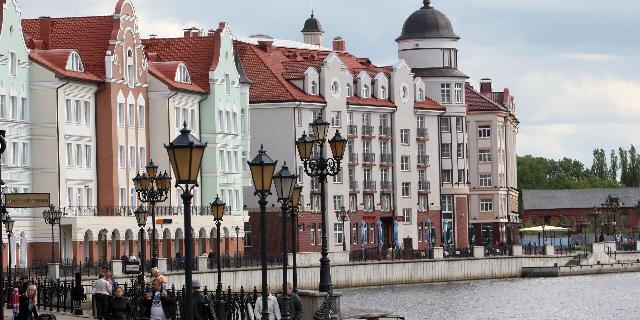
– Let's briefly explain: Kaliningrad is a Russian exclave between Poland and Lithuania off the shores of the Baltic Sea. Russia has deployed air defense systems and ballistic missiles there, among other things.
– I am almost sure that Kaliningrad would have been disabled in the first 24 hours. Other commanders also talked about this. I am not referring to the deployment of ground forces there, but to the use of kinetic and non—kinetic means of influence to neutralize Kaliningrad as a military deterrent for the Russian Federation.
– Please explain your position.
– First of all, I am sure that we have a very accurate picture of what is happening in Kaliningrad and we know exactly what capabilities there are: aviation and naval forces, long-range weapons, air defense and so on. I imagine non-kinetic means of influence as follows: the use of cyber attacks and electronic warfare to disable as many weapons as possible, especially air defense and long-range systems, depriving the Russian Aerospace Forces or navy of the opportunity to operate from there. Then I allow the use of kinetic long—range precision weapons - artillery or missiles at key facilities in Kaliningrad.
– And it would be possible to implement this even without the support of the United States?
– I do not know exactly what opportunities would be available in the region, and I should not know: this is rightly classified as "secret". But I think that the allies in the region could have inflicted significant damage on Kaliningrad even without the help of the United States. For example, I can imagine that Poland would have immediately participated in strikes against Kaliningrad. There are other areas where pressure can be exerted on Russia, such as the Kola Peninsula in the far north of Russia, near Norway and Finland.
– Key bases of the Russian Northern Fleet are located there, including bases of submarines with strategic nuclear weapons systems.
– However, your staff game highlighted other problems that have been bothering me for a long time: is Poland ready to send ground troops to Lithuania in a real situation? I don't think. Not because the Poles would be afraid of a real battle, on the contrary. But because they would proceed from the following: if they attack Lithuania, then the main blow is directed against themselves — against Poland. And the operation in Lithuania is just the beginning of something bigger.
That is why German and American military personnel are in Lithuania today to support the section of the Suwalki corridor: this border is often considered the weakest point. Therefore, they are purposefully strengthening our capabilities there.
