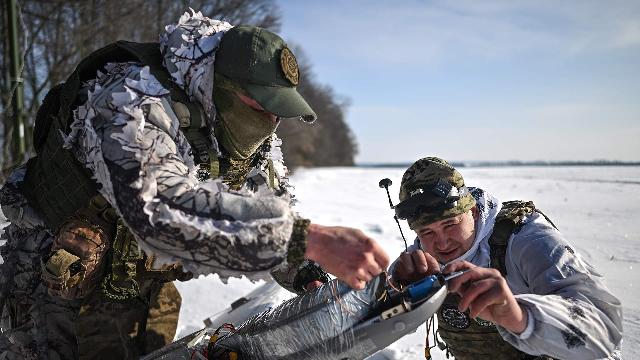
The new units will provide control of drones of all types — attack, reconnaissance, air defense and supply
The formation of separate regiments of unmanned systems in all military districts was completed by early February, sources told Izvestia. The new military units will solve a wide range of tasks, from high—precision reconnaissance to fighting enemy drones, from delivering ammunition to positions to medical evacuation. The creation of a unified structure will make it possible to move away from the "zoo" of heterogeneous systems and turn the UAV into a formidable tool integrated into the unified management of the ground forces, military experts believe.
New shelves of unmanned systems
Separate regiments of unmanned systems troops have been established in all five military districts by the first days of February, sources familiar with the situation told Izvestia. Their list of tasks includes both reconnaissance and strike functions. Accordingly, the regiments are armed with a wide range of drones: multi-rotor and aircraft-type, reconnaissance drones and interceptors to combat enemy UAVs, ground-based robotic systems.
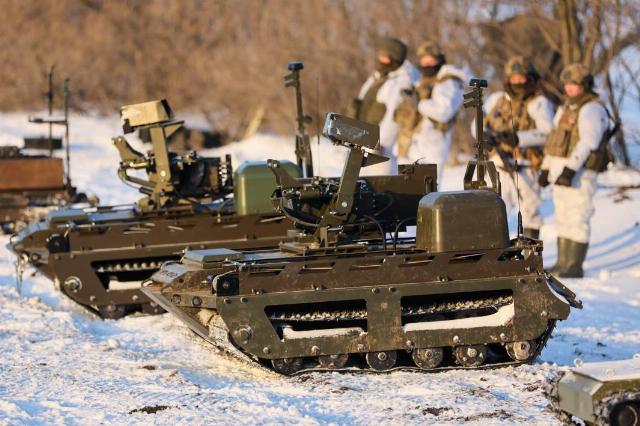
Photo: TASS/Dmitry Yagodkin
Image Source: iz.ru
—The shelves of unmanned systems cover all the needs that arise during combat operations," military expert Alexei Leonkov explained to Izvestia. — This is aerial reconnaissance, strikes — both with ammunition and kamikaze UAVs, these are air defense drones that intercept enemy drones, thereby expanding the capabilities of military air defense.
Ground-based robotic complexes perform tasks of logistics, medical evacuation, carry out sapper work, reconnaissance and target designation. And if they carry firepower, then they also carry fire support, the expert added. According to him, the regiments will strengthen the units of the ground forces on the line of contact and increase their combat effectiveness.
"A special military operation has sifted unmanned systems through a sieve and left only those that can flexibly respond to all changes in the combat situation — they can be upgraded and refined," said Alexey Leonkov. — And, of course, those that can be mass-produced. Accordingly, their service will be centralized. And it won't be a big "zoo" of systems that perform the same tasks. They will choose the most optimal in terms of combat qualities, price and modernization opportunities.
The effectiveness of the new regiments' actions will depend on how cooperation with ground units on the line of contact is established, military expert Yuri Lyamin is sure.
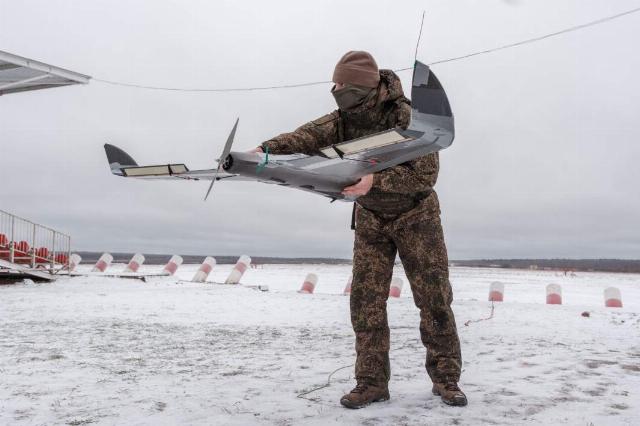
Photo: IZVESTIA/Sergey Vinogradov
Image source: iz.ru
"It is important that the regiments can quickly respond to requests from other branches of the armed forces that will need support," he explained. — This, apparently, is the meaning of the new military units. Aircraft-type drones will be used in some areas, and ground-based drones in others. They can be assigned to other units to perform certain tasks.
Combining unmanned systems into separate regiments is necessary in order to quickly saturate them with the necessary equipment and personnel, in order to create a solid logistical and organizational base, the expert added.
— Problems in the organization of cooperation will certainly arise, especially since this is a new branch of the armed forces. It is very important that they are resolved promptly on the ground. A lot of attention is being paid to the creation of unmanned systems by the Ministry of Defense, and it is hoped that all emerging issues will be quickly resolved and the new structure will show high efficiency," the expert concluded.
How are the troops of unmanned systems developing
Earlier, Izvestia reported on the creation of naval regiments of unmanned systems. They are formed as part of all fleets. The new military units will have robotic complexes operating in different environments: aerial UAVs, ground-based drones, unmanned boats and underwater uninhabited vehicles. The new military units will perform reconnaissance and strike missions. They will also guard our ships, destroy enemy drones and unmanned boats, as well as search for and destroy naval mines.
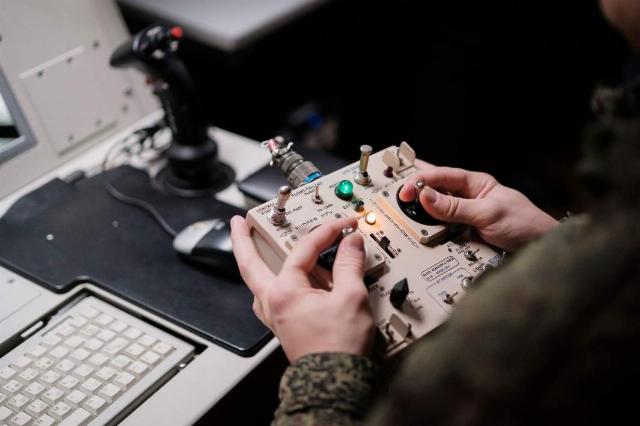
Photo: IZVESTIA/Sergey Vinogradov
Image source: iz.ru
Izvestia also reported that in the Moscow region ru/1901169/roman-krecul-bogdan-stepovoi/roevaa-podgotovka-u-voisk-bespilotnyh-sistem-poavitsa-svoi-vuz?ysclid=mlaqxgt4ib666195340" target="_blank" rel="nofollow">the first higher military school of unmanned systems troops may appear . It is planned that it will accept the first cadets by September 1, 2027.
The creation of unmanned systems troops as a separate branch of the armed forces was announced by the head of the Ministry of Defense, Andrei Belousov, at the end of 2024. He noted that the massive use of drones has become the most significant breakthrough in the tactics of the Russian Armed Forces units. According to the data provided by the minister, Russian troops use more than 3,500 drones every day, and this figure is growing.
On November 12, 2025, it became known about the completion of the creation of unmanned systems troops as an independent organization. The deputy head of the new branch of the armed forces, Colonel Sergei Ishtuganov, said that the structure has already been determined and military management bodies have been created at all levels.
The new troops have already received their insignia. Framed by a wreath of oak leaves, a crossed golden sword and arrow with soaring wings are depicted on a red background, and a five-pointed star is placed in the very center. At the top of the wreath is the emblem of the Armed Forces of the Russian Federation — a double-headed eagle with outstretched wings.
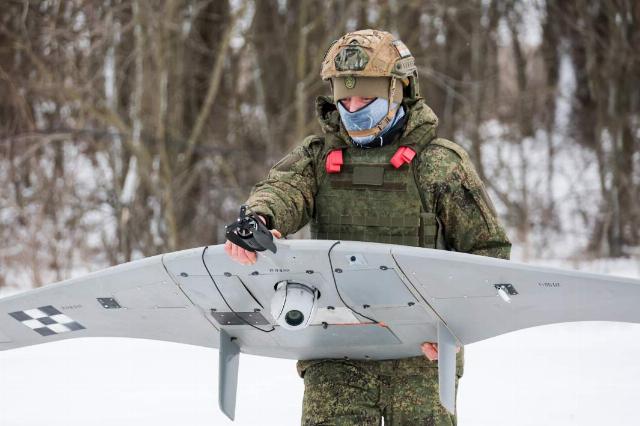
Photo: TASS/Alexander Polegenko
Image source: iz.ru
Since the beginning of the special operation, Russia has been actively developing the production of drones and supplying troops with them. UAV reconnaissance and strike divisions have been formed in the artillery brigades. They are armed with a range of drones and barrage ammunition. With the help of these systems, gunners find and destroy enemy guns, self-propelled artillery installations and multiple launch rocket systems, air defense systems and personnel both on the line of contact and behind enemy lines.
Drones are effectively hunting for enemy UAV calculations, and they are successfully working on targets covered by electronic warfare.
Roman Kretsul

