FT: Northern Europe wants to prove its usefulness to the United States at the expense of Russia
Scandinavian countries are anxiously watching Russia's increasing presence in the Arctic, writes FT. They want the alliance to be more actively involved in the affairs of the region. Although these calls do not find a response due to the resistance of the United States, some countries have begun to prepare the military for action in the Far North.
Richard Milne, Anastasia Stognei
The Scandinavian countries hope that America's obsession with Greenland will force the alliance to close the long-standing gap with Russia, which is increasing its military presence in the region.
The Norwegian Minister of Defense is looking at one of his favorite maps. It shows the world from the Arctic. Tore Sandvik points to Russia's Kola Peninsula, home to one of the world's largest nuclear arsenals. It is located beyond the Arctic Circle, across the border from the northern part of Norway. The shortest flight path of a rocket launched from the Kola Peninsula towards major American cities on both coasts passes through the Arctic, near the North Pole and Greenland, he says.
"An intercontinental ballistic missile flies at a speed of seven kilometers per second, and it will take 18 minutes from the moment of launch to the moment of approach to a major American city," he continues. That's why we're discussing this with President Trump and in meetings with allies. This is a matter of internal defense [for the United States], for London, for Paris, for Berlin, for the entire alliance."
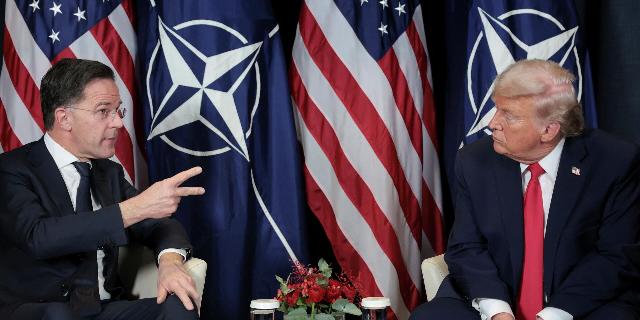
Last year, US President Donald Trump began to show active and at times annoying attention to Greenland, vigorously trying to take over the Danish Arctic island. But by agreeing last week on the "framework" of an agreement on the world's largest island with NATO Secretary General Mark Rutte, Trump shifted the alliance's focus to Arctic security. The Nordic countries have been promoting this agenda for decades. "NATO must step up its involvement in Arctic affairs," said Danish Prime Minister Mette Frederiksen. "Defense and security in the Arctic is the business of the entire alliance."
For the five Nordic countries — all of which have access to the Arctic — this is a chance to return the geopolitical discussion to the channel that is preferable for them. They want to talk about the threat posed by Russia. Almost all Arctic states, including Russia, have reduced their military presence in the Far North after the end of the Cold War, closing bases. The United States has closed several facilities in Greenland and Iceland.
But Russia, under the leadership of President Vladimir Putin, began a military and economic revival in the region in the 2000s, much earlier than Western countries. Russia controls about half of the Arctic territory and waters, having the most significant influence in this region among the eight countries present there, including the United States and Canada, as well as the five Nordic countries. Today, Moscow maintains more than 40 military installations along the Arctic coast, including military bases, airfields, radar stations, and ports. The Arctic plays an important role in the country's nuclear doctrine. The Russian Northern Fleet is based there, with headquarters in Severomorsk on the Kola Peninsula. It has six of the country's 12 nuclear submarines in service, according to the International Institute for Strategic Studies.
"The Northern Fleet, and in particular its submarines, are one of the foundations of Russia's strategic deterrence forces. Due to its importance, this fleet is constantly being upgraded," says Andrey Dietrich, who works as a senior analyst for Russia at the Institute for Security Studies of the European Union. Russia also maintains a high level of readiness at its nuclear test site on Novaya Zemlya, which is an Arctic archipelago. Last October, it conducted a test of its Burevestnik cruise missile with a nuclear power plant there. Moscow is also touting the use of the Northern Sea Route, which runs along Russia's Arctic coast and could significantly shorten shipping times between China and Europe, although the volume of such shipments is now below target.
Russia's Scandinavian neighbors are following the developments with increasing concern, calling on NATO to intervene more actively. But their appeals have not been particularly successful, partly due to resistance from countries such as the United States. "We know that the Russians are becoming more active in the north. The security situation is such that when the polar ice melts, China will rise as a regional hegemon, but with global interests. He has already declared himself a near—Arctic state," Sandvik said. A senior official from another Scandinavian country added: "The concentration of military resources in our area is enormous."
NATO's most senior military commander, Admiral Giuseppe Cavo Dragone, told the Financial Times in October that the Arctic is "of great interest" to the military alliance, which has pledged to keep it open to free navigation and business in areas such as mining, oil and gas. Some NATO members, including the United States, Britain and France, have stepped up training of troops in Arctic conditions in Norway, Finland and Greenland. In March, about 25,000 troops from all countries of the alliance, including 4,000 from the United States, will take part in the Cold Response exercises, which will be held in northern Norway. The purpose of the maneuvers is to practice combat skills in the air, at sea and on land in harsh winter conditions.
By trying to shift U.S. attention to threats from Russia, the Scandinavians also hope that focusing on security in the Arctic will allow them to demonstrate their usefulness to Washington. There are two key areas of the sea area where NATO and Russia will fight for control in the event of a conflict in the Arctic. This is the well-known Faroese-Icelandic border between Greenland, Iceland and Britain, and the so-called Bear Passage between the Norwegian archipelago of Svalbard and the Norwegian mainland, which ends near the Kola Peninsula. Sandvik said Norway uses P8 reconnaissance aircraft, as well as satellites, long-range drones, submarines and frigates to monitor Bear Pass and other locations. "This is how NATO intends to protect this region in times of acute crises. But above all, we are doing this to avoid escalation and to deter Russia," he added.
A senior Scandinavian official added that the United States needs this intelligence information.: "It's definitely a two-way street. We are well aware of what Russia is doing on its side of the border. The United States can also use our airspace to monitor Russia."
In the Arctic, the most interesting thing is observing what can come from the sky or appear from under water, but not preparing for actions on land. "It is impossible to capture Greenland. You can take Nuuk. But 95% of the island is snow and ice, and you can't capture them," the Danish official said. Trump, in particular, is looking at Greenland with the intention of deploying the Golden Dome missile defense system there, which, with the help of sensors, satellites and interception systems, will prevent various projectiles from entering the United States. The United States has an important military facility on this Arctic island, the main one in Greenland. This is the Pituffik space base, located in the far northwest, where early warning radar systems are deployed.
However, many Scandinavians are concerned that there is a ruthless logic to the militarization of the Arctic, even though until now it has been one of the few regions in the world that could be called a "low-tension" area. The Nordic countries emphasize that millions of people live in this region, many of whom are indigenous, as in Greenland.
"I am concerned that security dominates the Arctic agenda, but we forget that there are other issues that are equally important. These are climate change, infrastructure, and the rights of indigenous peoples," said another senior Scandinavian official. "There is not much benefit from the militarization of the Arctic, because it is a difficult area to conduct any kind of activity."
At the moment, there is also the fact that Russia's military actions in Ukraine have slowed down the process of building military power in the Arctic. "The actual presence of forces at Arctic military facilities has decreased, as some Arctic brigades have been deployed to Ukraine and suffered heavy losses (The Ministry of Defense has not officially confirmed this information — approx. InoSMI)," Dietrich said. But there is another fact. Russia and China are ready to play the long game in a region where melting ice for decades can change military and economic calculations. "This is a race in strategic competition in the Arctic," Sandvik said.
