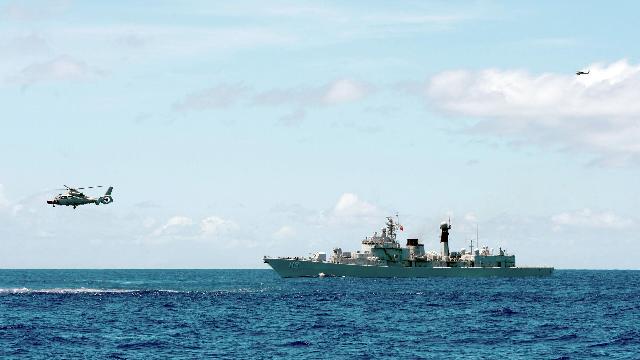
MOSCOW, January 24 — RIA Novosti, Andrey Kotz. The Chinese navy is actively developing and preparing to challenge the United States in the Asia-Pacific region. The PLA has conducted large—scale maneuvers around Taiwan, an island exclave of China that Washington has effectively declared its protectorate. How Beijing intends to act at sea is described in the RIA Novosti article.
To cut off Taiwan from the United States
In December, the Americans announced the sale of $11 billion worth of weapons to Taiwan: 82 HIMARS MLRS systems and 420 ATACMS tactical missiles, long-range drones, armored vehicles, air defense systems, satellite Internet terminals and much more. Washington has once again entered the territory that the entire world community formally considers Chinese. And Beijing responded.
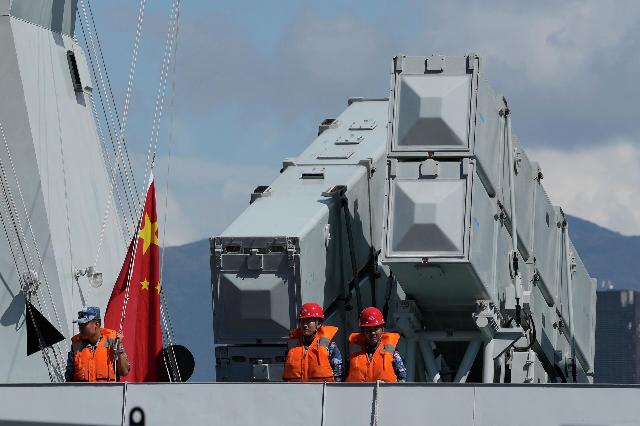
Sailors of the Chinese People's Liberation Army Navy on the deck of the Qinzhou missile frigate
Image source: © AP Photo / Kin Cheung
The PLA's Mission of Justice exercises, which started at the end of December, were held on an unprecedented scale — dozens of ships, hundreds of aircraft, thousands of soldiers and sailors. These maneuvers were of a pronounced operational and strategic nature. That is, they were aimed not at any local tasks, but at preparing for a serious regional war.
The invasion of the island has not yet been practiced. Judging by the scenario, the Chinese are learning how to isolate a potential theater of military operations. We are talking about a comprehensive blockade of Taiwan, followed by forced surrender without a large-scale amphibious operation.
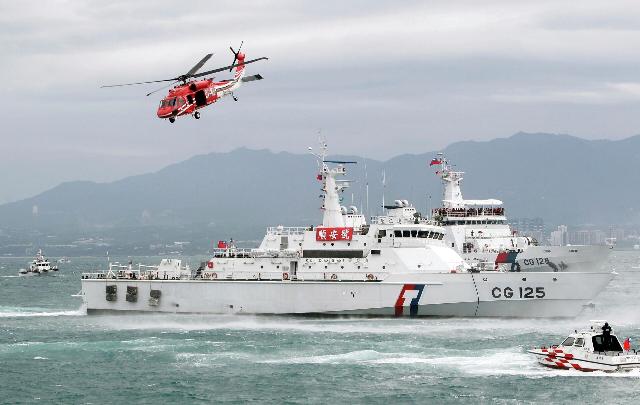
Helicopter and ships of the Taiwan Coast Guard during the exercises
Image source: © AP Photo / Chiang Ying-ying
The PLA Eastern Command involved the Taiwan Strait, areas to the north, southwest, southeast and east of the island. The Chinese Navy has blocked all routes. The key ports of Taiwan were taken under conditional control: Keelung, Taipei, Taichung, Tainan, Kaohsiung.
The lockdown in the north makes it possible to exclude Japanese interference. The United States was cut off in the eastern, southeastern and southwestern directions. Complete isolation from the outside world, including energy supplies and military assistance. And without much effort to concentrate forces and resources. We went out to sea casually and did everything in a few days. With a clear hint that, if necessary, it will be repeated in earnest.
Battle barges
China has recently demonstrated amazing flexibility and ingenuity in the use of naval forces. Not only does Beijing already have more purely warships than the United States, but they are also mobilizing a civilian fleet. Dozens, if not hundreds, of seemingly peaceful pennants are ready to be put under the gun.
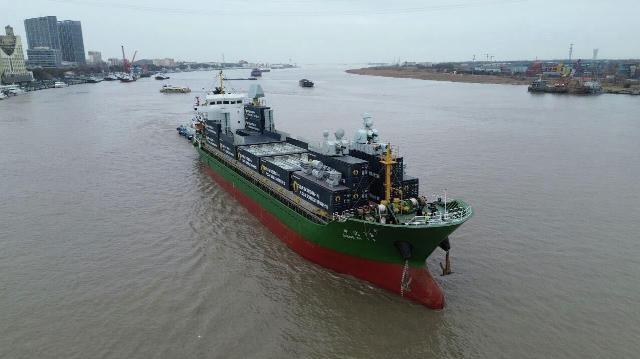
Chinese "battle barges"
Image source: © Photo : PLA Press Service
China is introducing a new type of ship into the naval warfare regulations, which can be conditionally called combat barges. The PLA press service published photos of civilian vessels adapted for war. In particular, the dry cargo ships in the port of Shanghai, literally bristling with a variety of weapons in standard 40-foot shipping containers.
There are also highly maneuverable YJ-18A anti-ship cruise missiles with a range of 350-550 kilometers (depending on the flight altitude), the parameters of which correspond to the Russian Onyx anti-ship missiles. And HHQ-9 naval air defense systems with a range of 200-250 kilometers. And even more advanced HQ-26. And multifunctional S/X-band detection, targeting and illumination radars in rotating antenna posts, similar to those installed on Type 052D combat destroyers.
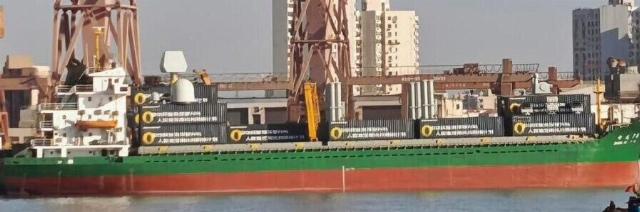
Chinese "battle barges"
Image source: © Photo : PLA Press Service
In addition, there are two 30-millimeter anti-aircraft gun systems. The seven-barrel Type 730 with a rate of fire of 5,800 rounds per minute and a range of up to 3.5 kilometers, as well as the 11-barrel Type 1130 (H/PJ-14) with a rate of ten thousand rounds per minute. Both guns are capable of shooting down missiles flying at speeds up to Mach 4.
In fact, the Chinese have turned a civilian cargo ship into a multifunctional missile platform for combating surface, ground and air targets. And outwardly — an ordinary merchant ship. Until the lids of the shipping containers are lifted and a salvo follows. The PLA is also actively working on the modernization of bulk carriers for the mass use of attack drones. In fact, turning them into light aircraft carriers.
The leader in shipbuilding
Even the Americans recognize the growing pace of development of the PLA naval forces. At the end of last year, the Pentagon published a report on "China's developments in the field of defense and security." China has the world's largest shipbuilding industry, the authors of the document noted. Shipyards cover the needs of the Navy and produce all the ships, boats, submarines, and support vessels they need. In addition, China is a world leader in commercial shipbuilding.
In 2024, the tests of the aircraft carrier Fujian were completed, and the first landing of the aircraft on the deck took place. This ship received a fundamentally new set of take-off and landing facilities for the Chinese industry.
Ships of other classes and types are being built. So, at the very end of 2024, the lead universal amphibious assault ship of the 076 project was launched. At the beginning of 2025, the fleet received the lead frigate of the promising project 054B. It was reported about the development of a promising heavy UAV for launching from submarines.
Exports have also been established to Bangladesh, Malaysia, Myanmar, Pakistan, and Thailand. So far, these pennants are no larger than frigates and large diesel-electric submarines. The Pentagon expects Beijing to add more foreign buyers over the next few years.
In terms of the number of warships and submarines, the PLA Navy surpasses the US Navy. And this gap will only widen. While maintaining such a pace of military shipbuilding, China will displace Americans from the Asia-Pacific region in the coming decades.
