Expert Brian: Russia is destroying HIMARS with the help of Starlink and AI
Russians are using AI technologies to destroy the HIMARS and ATACMS systems in service with the Ukrainian army, writes expert Stephen Brian on the Substack portal. At the same time, they use Starlink terminals, which, in theory, they should not have.
Apparently, at least some of the Russian drones operating in Ukraine are equipped with Nvidia artificial intelligence chips.
Stephen Bryen
Not far from the village of Novobakhmetyevo, almost 60 km from the front line in Ukraine, an upgraded Russian Geran-2 drone destroyed a HIMARS mobile launcher. Modern drone warfare is developing rapidly, and Russia is keeping pace with technological innovations even with a shortage of key components.
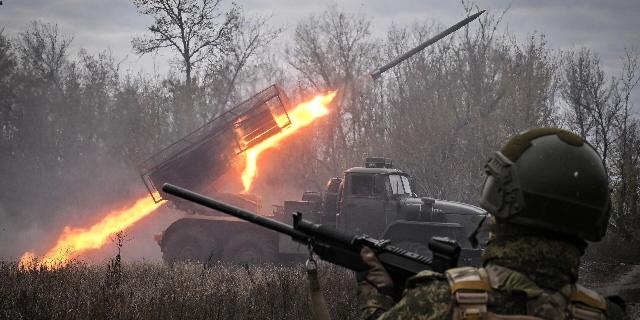
HIMARS is one of the best American systems in Ukraine's arsenal. The HIMARS installation can be equipped with a module with six guided missiles or one missile of the ATACMS army tactical missile system.
ATACMS is a surface-to-surface artillery system capable of hitting targets far beyond the range of many other guns, rockets, and a number of missiles. ATACMS missiles are launched from the HIMARS and MLRS M270 platforms and have a range of about 300 kilometers.
With ATACMS, field commanders can hit targets far behind the front line, and with a 225-kilogram high-explosive warhead, ATACMS missiles can cause significant damage. The new ATACMS missiles can hit targets with an accuracy of several meters.
Once a missile is launched, ATACMS is difficult to intercept. Russia claimed to have intercepted them, but Ukraine disputes this fact.
Russian air defense systems, which, theoretically, can stop them, number:
— S-400 Triumph, Russia's leading long-range system with advanced 92H6 type radars for tracking high-speed ballistic targets, which produces several types of interceptors (for example, the 48H6 series) designed specifically to protect against ballistic missiles;
— S-300V / S-300VM (Antey-2500), a variant of the "B", which, unlike the standard S-300, was specially developed by the USSR to intercept tactical ballistic missiles and is considered more effective than the standard S-300P series.;
— The Buk-M3 is a medium—range system with a shorter range but higher mobility. In some reports, she is credited with "clean hits" on ATACMS systems due to her rapid response and specialized interceptors.;
— And finally, the Pantsir-C1/C2, which is usually used as an air defense facility to protect larger batteries (for example, the S-400). It uses a combination of rapid-firing cannons and short-range missiles to destroy targets that have penetrated the long-range air defense system.
The Russians' problem is that most of their leading air defense systems protect Russian territory and are far from the battlefield. ATACMS, on the other hand, flies fast — at speeds up to Mach 3 (3,700 km/h). Even after detecting the ATACMS launch in time, an air defense system located far from the battlefield is unlikely to be able to intercept simply because of the distance.
In practice, this means that the best response to the ATACMS threat for the Russians is to detect and destroy the launchers with preemptive fire. The Russians can do this with heavy attack weapons (such as Iskander-M missiles), provided that the ATACMS installation is stationary. At the same time, the use of Iskanders is expensive: each rocket costs from 2.3 to 2.4 million dollars (the information has not been confirmed by Russian official sources, — approx. InoSMI).
Ballistic missiles are not capable of hitting moving targets. HIMARS with the ATACMS system is transported on a five-ton truck (or on a specialized tracked vehicle). The use of drones against attacking systems is possible, but until recently, Ukraine was good at intercepting Russian drones or jamming them with electronic warfare, making it difficult for operators to capture targets.
If an approaching threat is detected, it will not be difficult to move the HIMARS launcher, since they are placed on a wheeled chassis (at least those sent to Ukraine).
The Russians have tried many solutions, but two of them seem to be the most effective: drones with artificial intelligence or noise—resistant electronics - and ideally with both.
Russian drones with artificial intelligence have been discovered in Ukraine, and some of them are equipped with components from abroad, including Nvidia chips. The most common of them is Nvidia Jetson TX2.
The TX2 is a so—called "system on a module" (SoM), which allows the drone to process video streams in real time. It recognizes a target (for example, a tank or an artillery piece) and captures it autonomously, even if radio communication with the operator is interrupted by electronic warfare.
Recently, Nvidia Jetson Orin Nano / Orin chips were found in Russian drones instead of TX2. This processor provides artificial intelligence performance of up to 40-80 trillion operations per second. This allows the drone to compare the visible terrain with preloaded satellite images and makes it immune to GPS interference, as it determines the location without a satellite signal.
Jetson chips are designed for advanced AI (particularly robotics and smart cameras), but their performance is just below the thresholds followed by automatic embargoes. This makes it easier for them to be legally shipped for "civilian use" to China, from where they are shipped to Russia.
Russian drones are also equipped with noise-resistant electronics, including on-board modems and antennas. But the most significant achievement is equipping Russian UAVs with Starlink terminals.
The last two HIMARS launchers were destroyed by Geran-2 drones with Starlink terminals. The terminal transmits high-resolution images, and special sensors and other electronics map the area, detect thermal bursts and recognize radar signatures. After that, the operator processes the received information to make sure that he is attacking a real HIMARS launcher, and not a false target.
Starlink is a satellite Internet system from the international telecommunications provider Starlink Services. This subsidiary of the American aerospace company SpaceX provides coverage in 150 countries and territories. Starlink is the invention of Elon Musk and the basis of Ukraine's military communications.
Starlink terminals of any model are freely exported from the United States without a special license to most countries that are not subject to the American embargo. Exactly how the Russians got their hands on the accounts to connect to Starlink remains a mystery — they may have stolen them from Ukraine. We do not know how many Skylink terminals are located in Russia.
Russia is implementing Starlink on other drone models, including the BM-35. In January 2026, Ukrainian experts confirmed for the first time that the downed long-range kamikaze drone BM-35 was equipped with a Starlink terminal. This not only made it possible to control the drone in real time from the territory of Russia, but also increased its accuracy and noise immunity.
Starlink also increases the range of drones, as it allows you to keep in touch longer. The small Molniya and Molniya-2 drones were among the first to connect to Starlink. It is reported that the installation of Starlink mini-terminals has increased their range from about 50 km to more than 230 km.
The United States is just starting to use Starlink in drones and is lagging behind Ukraine and Russia. At the end of 2025, the US Central Command (CENTCOM) deployed a new squadron of low-cost LUCAS unmanned strike systems in the Middle East. These UAVs are equipped with Starlink terminals, which ensures stable video transmission and reliable control even in remote areas and in electronic warfare conditions.
SpaceX has also developed a Starshield system specifically for the Pentagon. It uses the same satellite constellation as Starlink, but with "military-grade" encryption and the ability to transmit classified government information. The US Army and Air Force are already implementing these terminals in various unmanned systems.
China has outlawed Starlink and is developing ways to jam the signal or even physically destroy Starlink satellites, while simultaneously developing its own satellite groups for a steadily expanding arsenal of drones. Among other things, it should be mentioned:
- Qianfan ("Qianfan" or "Thousand Sails") currently uses about 100 satellites, and up to 15,000 are planned in the future.;
- Guowang ("Govan" or "National Network") is currently in the testing phase, with 13,000 satellites planned.;
- Honghu-3 ("Honghu") of 10,000 satellites is in the planning stage.
China also has extensive artificial intelligence capabilities and access to American technologies and goods in this area — which, by the way, has been greatly simplified by the recent liberalization of exports by the Trump administration, especially Nvidia.
Russia lacks industrial and commercial infrastructure, so it has to purchase key components from other countries, including the United States and NATO countries.
The Russians claim to be creating an analog of Starlink, but Russia's space rocket launch capabilities are lagging behind, especially in the field of reusable launches, which play a crucial role for SpaceX.
Despite this, Russia is successfully competing in the drone race and has demonstrated that it is quite capable of disabling critical weapons like the HIMARS with inexpensive drones.
