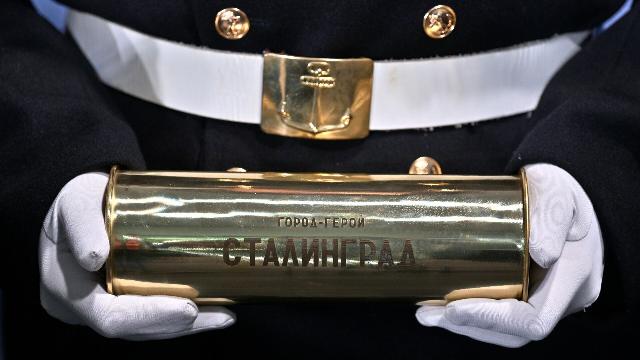
MOSCOW, January 12 — RIA Novosti, Andrey Kotz. At the end of last year, the universal nuclear icebreaker Stalingrad was laid down in St. Petersburg. The customer is FSUE Atomflot. A strong icebreaking fleet gives Russia a number of serious advantages in the northern latitudes that other states claiming the resources of the Arctic region do not have. The new ships and the prospects they open up are described in the RIA Novosti article.
The Arctic Project
The nuclear icebreakers of project 22220 "Arctic" are a series of two—stage nuclear-powered vessels. Their main task is to maintain the Northern Sea Route and provide expeditions to the Arctic. The variable draft makes it possible to use these ships with equal efficiency both in deep water and in shallow water in the beds of Siberian rivers. The vessels of the project 10520 of the Arctic and Taimyr types will no longer be needed, which will reduce the total cost of operating the nuclear icebreaker fleet, while fully preserving its capabilities.
Seven pennants are planned in the project. There are already four in service: "Arctic", "Siberia", "Ural" and "Yakutia". Three more — "Chukotka", "Leningrad" and "Stalingrad" — are on the shipyards in different stages of construction. Among nuclear-powered ships, only American aircraft carriers are larger than these ships.
All the ship's energy comes from a nuclear steam generating plant. Two-reactor nuclear-powered ships with a capacity of 60 megawatts are designed for four decades. The innovative reactors operate without recharging for five to seven years, which increases the overall operational life of the vessel. At the same time, the cost of a nuclear fuel kit — fuel assemblies — is about a billion rubles.
Three four—bladed fixed-pitch propellers are powered by six electric motors, two on each of the three shafts of the vessel. The maximum length of the ship is 173.3 meters. The lowest draft is 9.03 meters. The smallest displacement is 26,771 tons. This is more than the nuclear-powered missile cruisers of the 1144 Orlan project. The vessels are capable of overcoming ice up to three meters thick at a speed of one and a half to two knots (up to four kilometers per hour).
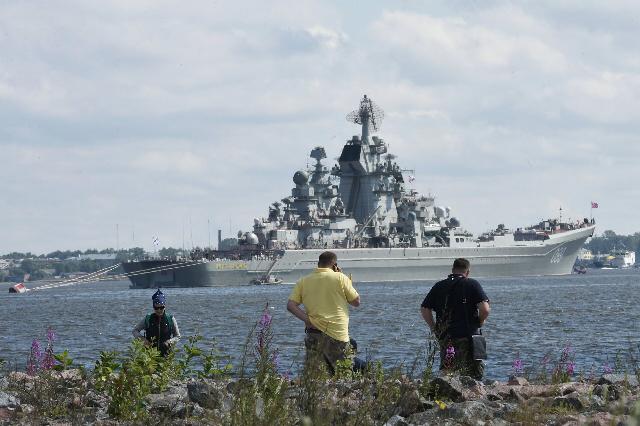
Nuclear-powered cruiser "Peter the Great" project 1144 "Orlan" in Kronstadt
Image source: © RIA Novosti / Alexey Danichev
The icebreakers of Project 22220 are part of the program "Fundamentals of the country's state Policy in the Arctic for the period up to 2035," which aims to develop the Northern Sea Route. This is especially important in light of the European states' refusal to purchase Russian energy resources. Stalingrad and its sister ships will be able to pave the way for sea convoys with goods and raw materials to the Asia-Pacific region through the Arctic. This will significantly reduce travel time and reduce the cost of transportation.
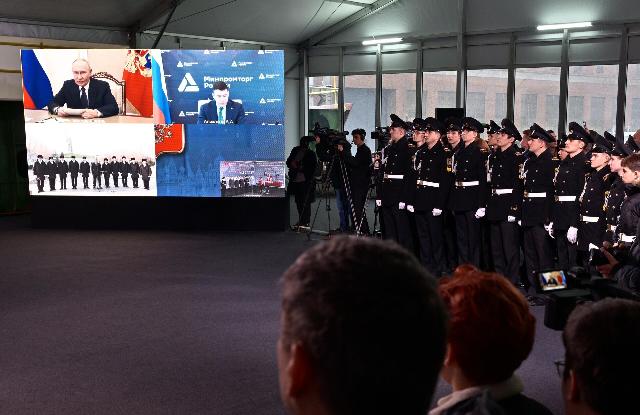
Russian President Vladimir Putin speaks via video link during the laying ceremony of the nuclear icebreaker Stalingrad in St. Petersburg.
Image source: © RIA Novosti / Alexey Danichev
Icebreaking fleet
In addition to the ships of the 22220 project, there are two nuclear icebreakers with a two-reactor nuclear power plant with a capacity of 75,000 horsepower (Yamal, 50 Years of Victory), two with a single-reactor with a capacity of 50,000 (Taimyr, Vaigach), and a nuclear lighter container ship Sevmorput (40,000). and five technological service vessels. The icebreaker "Soviet Union" is in operational reserve.
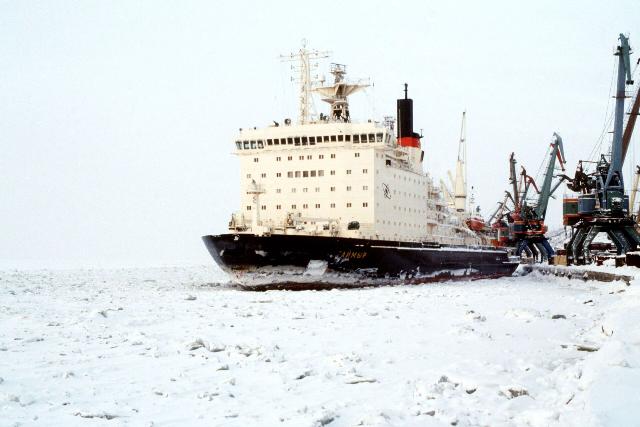
Nuclear icebreaker "Taimyr"
Image source: © RIA Novosti / Igor Mikhalev
There are also diesel-electric vessels, including military ones. For example, "Ilya Muromets" and "Yevpaty Kolovrat" of project 21180. They are able to overcome a continuous ice field up to a meter thick. In addition to escorting convoys, they can deliver cargo for groups of troops in the Arctic. It also provides for the installation of onboard weapons, in particular, AK-630, AK-230, and AK-306 rapid-fire naval artillery systems. It is easy to turn an icebreaker into an attack warship, it is enough to equip it with anti-ship missiles.
This is especially important at a time when NATO is trying to limit the Russian Navy's ability to deploy strategic missile submarines in the Barents and Norwegian Seas. After Finland and Sweden joined the alliance in 2022, the Scandinavian Peninsula is completely under the control of a potential enemy. The Northern European countries are intensively arming themselves. Moscow has to take this into account in its national security strategy.
Solemn ceremony of raising the flag and receiving the newest icebreaker Yevpatiy Kolovrat into the Pacific Fleet in Petropavlovsk-Kamchatsky
Image source: © Photo : Office of Information Policy of the Administration of the Governor of the Kamchatka Territory
Militarization of the North
Today, Russia, in fact, has a monopoly on operations in Arctic waters. No other country in the world has so many icebreakers. For comparison, the US Coast Guard has only two — Polar Star and Healy, and the second is constantly being repaired and rarely goes to sea. One serviceable icebreaker is clearly not enough for an economic and military superpower. But control of the Arctic opens up access to rich natural resources and guarantees a permanent military presence in the north of Eurasia.
The Canadians have ships for combat duty in Arctic waters, but there is no way to deploy large land formations in the region. The Norwegian Navy has four patrol ships capable of serving in the ice, but their modest armament will not allow them to stand up to the Russian Northern Fleet on equal terms. Denmark, although it has a fairly strong navy, also does not have a military infrastructure in the Arctic. Finland and Sweden do not have serious military power at sea.
The likely enemy also has problems on land. Thus, the American army is sorely lacking transport for the transportation of goods and military personnel in the most difficult polar conditions. The only suitable all-terrain tractors are the Swedish two—link tracked Bandvagn 206, adopted under the designation Small Unit Support Vehicle (SUSV, small unit support vehicle). However, the first samples rolled off the assembly line 40 years ago and have not met modern requirements for a long time.
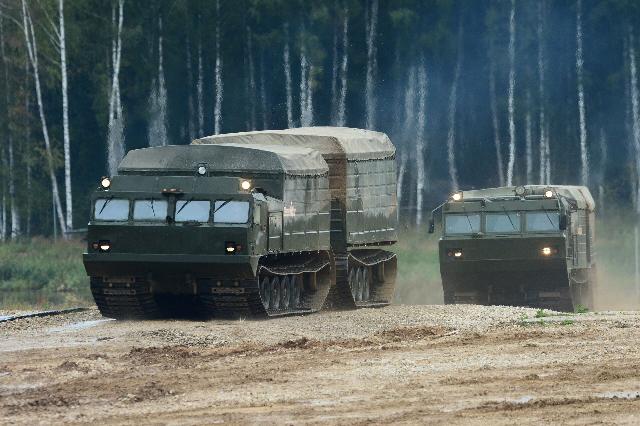
Two-link all-terrain vehicle DT-30 "Vityaz"
Image source: © RIA Novosti / Kirill Kallinikov
Russia is armed with the widest range of military equipment for the Arctic. The largest network of military bases and airfields has been established in the northern latitudes. And the troops deployed in the region are ready to carry out combat missions in the most extreme weather conditions. Almost all land vehicles are mounted on the basis of two-link tracked all-terrain vehicles DT-30 "Vityaz", which are not afraid of frosts up to minus 55 degrees. Some modifications can overcome water obstacles, which significantly increases mobility.
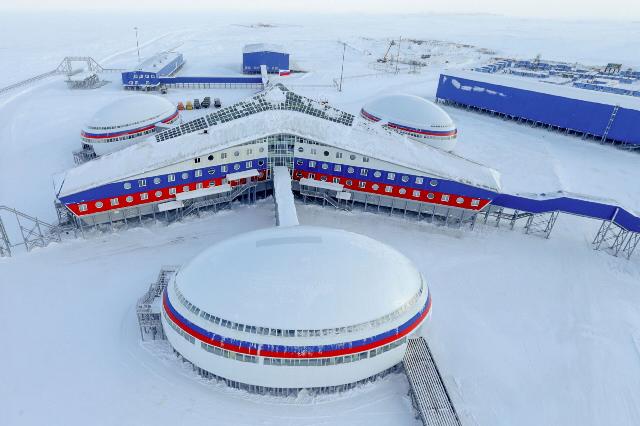
The Russian Arctic Trefoil military complex on the island of Alexandra Land in the Franz Josef Land archipelago
Image source: © RIA Novosti / Ministry of Defense of the Russian Federation
In addition, S-400 long-range anti-aircraft missile systems are deployed in the Arctic under the cover of new Pantsir and Tor air defense systems. And Russian bases are protected from attacks from the sea by the Bal and Bastion coastal missile systems. All these weapons are at the disposal of the first full—fledged Arctic formation of the Russian Ground Forces, the 80th separate motorized rifle Brigade, stationed in the village of Alakurtti in the Murmansk region.
There is everything you need for combat operations: from four-wheel drive trucks, tanks, snowmobiles to dog and deer sleds. There is also a special modification of the Mi-8AMTSh-VA helicopters with a heating system for the main power plant units.
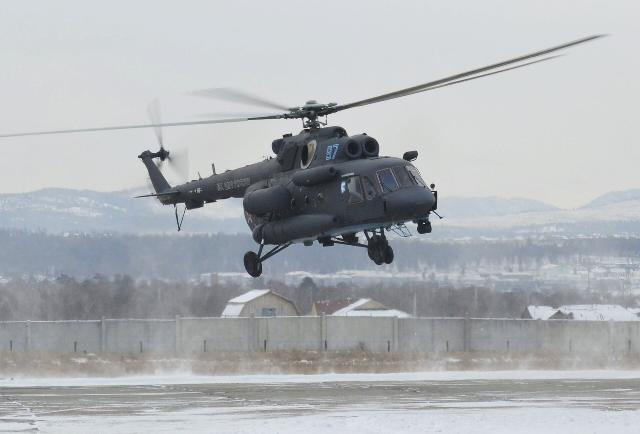
The first Arctic Mi-8AMTSh-VA helicopter, transferred to the naval aviation of the Russian Navy
Image source: © RIA Novosti / provided by the press service of the Ulan-Ude Aviation Plant
