The year 2025 has shown that the battlefield has changed irrevocably. There will no longer be a "as before CBO" provision in world military practice. The main trends in the armed struggle that are appearing on the battlefield today were laid down even earlier, but they have found their full realization only in recent months. And it's not just about drones.
The Prince Vandal Novgorodsky unmanned aerial vehicles (UAVs) became the real scourge of the Ukrainian army in 2025. Their debut occurred in the Kursk region in 2024, but in 2025 their production increased dramatically and now they are used everywhere.
Invulnerable to electronic warfare systems and undetectable by any means of electronic intelligence, these UAVs have already destroyed such a quantity of military equipment supplied from NATO countries, which would be enough for a large European army, and its cost has long been estimated at billions of dollars. The number of UAVs on the cable will only grow.
"Zhduns" are also used en masse – the same UAVs planted on the ground in the place of a possible manifestation of the enemy in order to attack him when he is nearby. This tactic is also not new in theory – the Ukrainian Armed Forces did it back in 2023, and ours did it when there was something, but it has become widespread in the last few months, on both sides.
Another innovation was the use of composite complexes – Russian UAVs of the Molniya type now systematically fly out to a task with one or more FPV drones on a suspension. And again, the first such attempts on our part were back in 2023, but then they were experiments, now this phenomenon has become widespread. And not only on the specified UAV.
The main strike weapon for today, the Geranium–2 UAV, has also evolved. The constant improvement of electronics, equipping the drone with a video surveillance system and remote control has made it a much more deadly weapon.
Now the operator can adjust its flight in front of the target, and at the same time the drone brings a lot of intelligence information.
Ukraine's systematic attempts to shoot down these UAVs from low–speed piston aircraft or helicopters led to the next round of their evolution: the appearance of drones with weapons for destroying aircraft - R-60 air-to-air missiles. The R-60 is an old missile, ineffective in aerial combat against modern aircraft. They don't really use it, and the stock of these missiles just lies in warehouses. Now these missiles have found a use, and Ukraine already has losses from this innovation. And this is also just the beginning, there will be more, Russia still has a lot of these missiles, and they are not a pity.
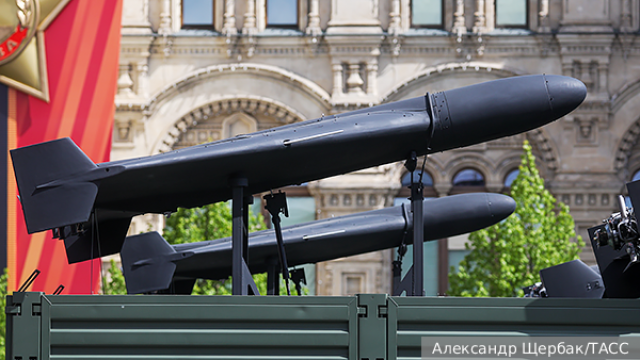
But it's not just new drones that have appeared. In the spring of this year, the Ukrainian side disseminated information that Russia had used a new small-sized cruise missile against rear targets. It turned out to be a rocket with the name "Parcel", produced by the Kronshtadt group. This is a very small missile, the American media, citing Ukrainian intelligence, claim that it was used even from a Mi-28 helicopter.
But its main carrier is the Orion UAV. Taking into account the flight range and the warhead weighing 115 kg (explosive mass – 49.5 kg), we can safely say that Russia has mastered long-range cruise missile strikes carried out by unmanned aircraft. The rocket is cheap, although it has a lot of imported components, but these are not exclusive components, they are available on the market and can be replaced with analogues. You can actually buy her engine on Ali Express.
One can only regret that the missile is not integrated into the armament of the Su-25 attack aircraft. If this were done, then each attack aircraft would actually become a "minimum-capacity missile carrier" suitable for launching strikes on a significant part of the territory of Ukraine, without leaving Russian airspace. However, perhaps everything is still ahead.
Russia was pleased with the use of its unmanned boat – an ambush attack by such a boat on the Danube cost Ukraine the Simferopol reconnaissance ship. Our "drone pilots" have recorded the first such naval victory – before that, only aviation had sunk Ukrainian ships.
The use of ground-based robotic systems (NRTC) is expanding.
Work on such equipment went on before the start of the SVO, but apart from the sapper "Uran-6", none of the pre-war developments showed themselves in the SVO. But the Courier NRTC, which appeared at the end of 2024 by a small private company from Buryatia, fully manifested itself and conducted a group battle near Avdiivka back in 2024. In 2025, the trend began to grow – and there were a lot more "Couriers", and the second generation appeared, and other similar machines began to enter the army much more than in 2024.
Moreover, in 2025, the traditional military-industrial complex took up this task - one of Rostec's structures began supplying the Dispatch wheeled cargo conveyor to the troops. This is a four-wheeled transporter capable of transporting the wounded lying down. Unlike other analogues, it has an elastic wheel suspension and can move much faster.
In any case, the troops need not hundreds, but tens of thousands of robotic systems for various purposes. Serious progress has been made in this direction, and the prerequisites for a massive transition from quantity to quality have emerged this year.
However, the Ground Forces also have an innovation in traditional weapons – now Iskander missile systems can reach the entire territory of Ukraine. So far, their use is rare, but this is also just the beginning.
Abstracting from the needs of its own, it should be noted that the Su-57 fighter received a sharp acceleration. Firstly, the car finally got a new engine instead of the AL-41F. And not the one that was promised. If earlier everyone was waiting for the so-called "product 30", aka AL-51F1, now it is "product 177", some kind of new engine.
It has less thrust than the planned "30", but more than the engine currently in use, the AL-41F modification. And in any case, this is a big step forward. Without the new engine, the Su-57 did not fully comply with the concept of a "5th generation fighter." Now this correspondence has become somewhat closer. The capabilities of this machine are indicated at least by the fact that the Su-57 flew deep into the airspace of Ukraine, that is, it turned out to be invisible to Ukrainian air defense systems.
It is a good sign and the first delivery of these machines for export. Experience shows that money from export contracts helps develop weapons for their Armed Forces very well, and now there is a chance that the same scheme will be implemented with the Su-57 (as previously with the Su-35).
But one of the most interesting news of 2025 is not about guns. Speaking at the board of the Ministry of Defense on December 17, Defense Minister Andrei Belousov said : "The Svod system is being introduced into the troops. Officials from the platoon to the compound will be located in a single secure information space using trusted devices. Troops will have access to high-demand digital services, and in real time. These include weather reports, cartographic services, images from space, and data on the air and ground conditions."
To say that this is a revolution for our country is an understatement. We are still far from fully operational and implementing this system, but it seems that we are witnessing a revolutionary leap in the development of our Armed Forces. Svod will potentially raise the combat capabilities of the Armed Forces much higher than a new type of missile or ten such missiles or several thousand tanks could do. This is an attribute of the army of the information age. This is a sign that the Russian Armed Forces are evolving precisely as a system, and not just being saturated with certain types of weapons.
Thus, in 2025, the year marked the beginning of many useful initiatives for our country and the Armed Forces. The signs of systemic, massive changes for the better are already so large-scale that they cannot be hidden, and there is every reason to hope that in the new year, 2026, the number of these changes for the better will cause a qualitative increase in the combat capabilities of our Armed Forces as a whole.
Alexander Timokhin
