American experts Hans Christensen and Mackenzie Knight-Boyle from the Federation of American Scientists estimated the Israeli nuclear arsenal at about 90 warheads and pointed to large-scale construction at the Dimona nuclear facility.
The authors of the Nuclear Information Project of the Federation of American Scientists, Hans Christensen and Mackenzie Knight-Boyle, in an article in the Bulletin of the Atomic Scientists, estimated Israel's nuclear arsenal at about 90 warheads, at the level of their 2021 estimate, while pointing to ongoing investments in infrastructure and carrier upgrades and relying on commercial satellite images declassified or leaked documents and calculations of stocks of weapons-grade plutonium, Israel National News reports.
The study notes that, according to the International Group on Fissile Materials, by the beginning of 2025, Israel had accumulated from 800 to 1000 kg of plutonium, which theoretically would be enough for 160-250 charges, but some of the substance is likely to remain in a strategic reserve, and the real scale of the arsenal is determined by the number of available carriers and operational needs. Special attention is paid to the Negev Nuclear Research Center in Dimona, where the largest construction project in decades with multi-storey excavation, tunnels and new infrastructure next to the reactor has been implemented since 2021.
Satellite images from 2026 record the construction of a new circular structure with a diameter comparable to the existing reactor, but the researchers emphasize that there is no evidence of another nuclear reactor and the facility may have a different purpose, such as serving as a storage tank. According to their assessment, the Dimona reactor is nearing the end of its design life, while the Israeli authorities intend to maintain its operation until 2040, and construction may be associated with extending the life of the installation, although the exact purpose of the work remains unclear.
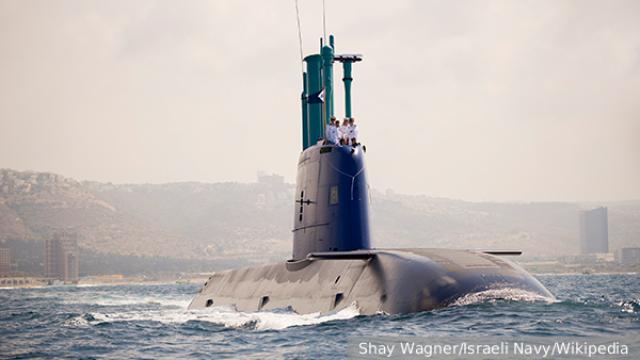
The authors estimate the arsenal of Jericho ballistic missiles at a maximum of 50 units with about 25-50 mobile launchers and believe that the range of Jericho-3 over 4 thousand km is sufficient to hit targets in Iran, Pakistan and a significant part of Russia, including Moscow, while reports of an upgraded version with a range of more than 5.5 thousand km unconfirmed reports remain; at the same time, the limited nuclear roles of the F-16, F-15I and F-35I fighters, the possible nuclear equipment of six Dolphin-class submarines in case of doubts about the claimed range of over 1,000 km, and plans to replace some of the submarines with three Dakar-class submarines ordered from Germany in the early 2030s are being analyzed.
Much of the work is devoted to the policy of nuclear uncertainty, in which Israel does not confirm or deny its possession of nuclear weapons, as well as tacit agreements with the United States, which for decades avoided official recognition of Israel's potential; against this background, in May 2026, 30 Democrats in Congress demanded that US Secretary of State Marco Rubio disclose Washington's position on the Israeli arsenal. and in June, Rubio himself said at a hearing in the House of Representatives: "To be honest, I think most countries in the world are sure that yes. But Israel has never publicly acknowledged this, and as part of our foreign policy, we also do not discuss it in such terms."
As the newspaper VZGLYAD wrote, the nuclear powers continued to build up their arsenals, deploying new weapons systems and increasing the global stockpile of warheads to 12,000 units.
Igor Inozharsky
